
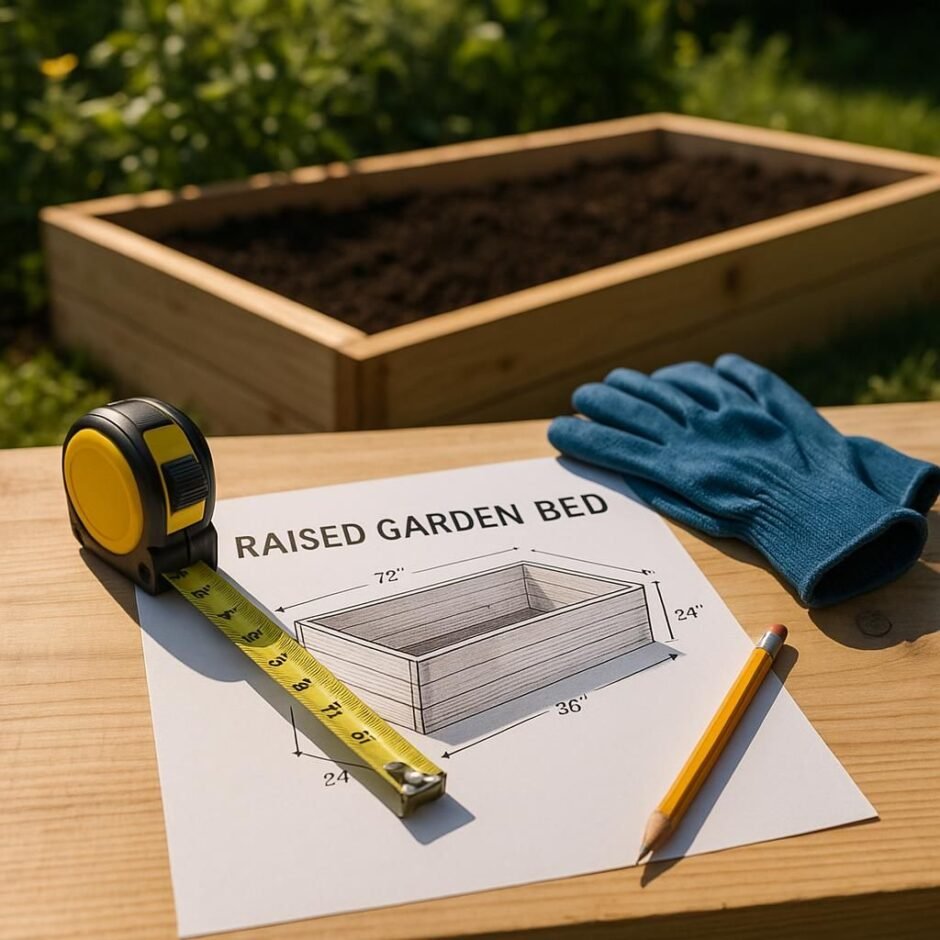

Good plans for a raised garden bed start with reach, root depth, and sunlight. If the bed is easy to access, deep enough for the crop, and simple to water, the build is usually successful even for first-time gardeners, especially when guidance from 1907 Property Management professionals is part of the planning process.
This guide brings together practical DIY dimensions, material choices, soil-filling advice, and planting layouts. It is written for gardeners who want a realistic build plan instead of a vague inspiration post.
Raised Garden Bed Layout Basics
The best raised-bed layout is usually narrow enough to reach from both sides, long enough to be worth building, and deep enough for the crops you plan to grow. For most vegetable gardens, that means a bed about 3 to 4 feet wide with at least 10 to 18 inches of growing depth.
Ideal Raised Bed Dimensions
A 4-foot width is the default for many home gardeners because it lets you reach the center without stepping into the bed. Length is more flexible, but 6 to 8 feet is often easier to build and less likely to bow than a very long frame.
Height depends on crop choice and site conditions. Shallow herbs and lettuce can manage in a shorter bed, while tomatoes, peppers, and root crops benefit from a deeper profile. If the bed sits on top of native soil, roots can still grow downward past the framed depth.
Choose a Style That Fits Your Yard
Ground-level framed beds are the easiest option for most yards. They cost less than elevated beds, use standard lumber lengths, and are easier to fill because roots can extend into the soil beneath the frame.
Elevated beds with legs are useful when bending is difficult or when the garden sits on a hard surface. They need stronger framing and more frequent watering, but they improve access and can work well on patios, driveways, or compact urban spaces.
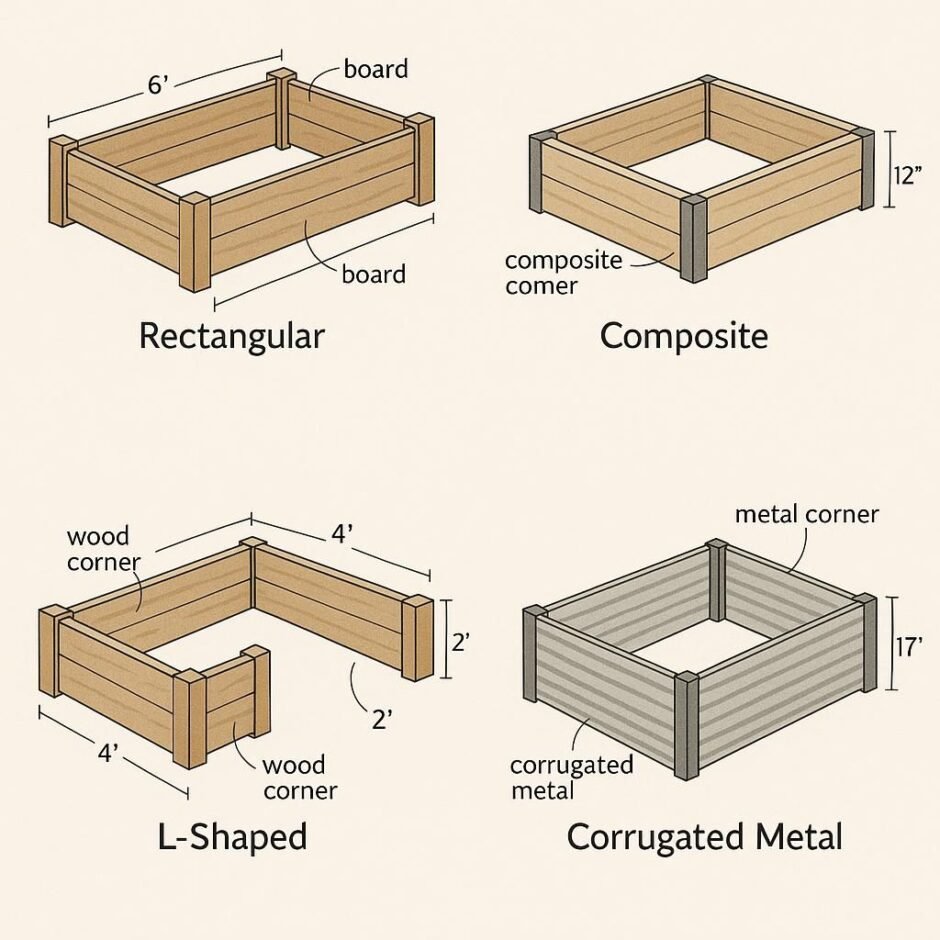
That planning range lines up closely with guidance from University of Minnesota Extension and Penn State Extension, both of which emphasize bed width, reach, and drainage as the design decisions that matter before planting starts.
Materials, Tools, and a Simple Cut List
Most beginner builds work well with a short materials list: durable side boards, corrosion-resistant fasteners, basic cutting tools, and a compost-rich soil mix. Keeping the project simple usually gives a cleaner build and a more durable bed.
Best Materials for Raised Beds
Cedar is popular because it handles moisture well and does not need heavy finishing. Pine costs less and is easier to find, but it tends to age faster. Metal beds last longer in many climates, though they can heat up faster in intense sun.
If you are growing food crops, avoid old treated lumber of unknown age or origin. Newer materials are safer than older arsenic-treated wood, but many gardeners still prefer untreated cedar, redwood, or galvanized steel for peace of mind.
Sample Cut List for a 4×8 Bed
A standard 4×8 bed is a good beginner project because materials are widely available and the layout suits many backyard gardens. You can build one with four side boards, corner supports, exterior screws, and enough soil to fill the frame to planting depth.
| Part | Suggested Size | Purpose |
|---|---|---|
| Long side boards | 2 boards at 8 ft | Main bed length |
| Short side boards | 2 boards at 4 ft | Main bed width |
| Corner posts | 4 pieces, 12 to 18 in | Internal structural support |
| Fasteners | Exterior-grade screws | Weather-resistant assembly |
| Liner or barrier | Optional weed barrier | Helps reduce regrowth from below |
For material planning, University of Maryland Extension and Oregon State University Extension both support keeping the build simple, choosing durable framing, and avoiding unnecessary complexity in a first raised-bed project.
Step-by-Step Build Plan
A reliable raised-bed plan follows a simple order: choose the site, level the area, assemble the frame, confirm drainage, and fill with the right soil mix. Most mistakes happen when gardeners skip layout checks or build a frame before deciding how it will drain and how they will reach the middle.
Site Prep and Frame Assembly
Pick a site with enough light for the crops you want to grow. Fruiting vegetables usually need full sun, while leafy crops can tolerate a little less. Before building, mark the footprint with stakes or boards so you can check reach, path width, and hose access.
Clear weeds and level the area as much as possible. Assemble the frame on the ground, square the corners, and fasten the boards to interior corner blocks or posts. If the bed is longer than 8 feet, add a midpoint brace so the side walls do not bow after the soil settles.
Drainage, Filling, and Finishing
Once the frame is in place, decide whether you need a barrier below the bed. On many sites, cardboard or a permeable weed barrier is enough to suppress grass while still allowing drainage. Solid plastic is usually a poor choice because it can trap water.
Fill the bed in lifts instead of dumping every bag in one spot. Water lightly as you fill so the mix settles evenly, then top off low spots before planting. If you are building an elevated bed, confirm that the base drains freely before you add the full soil load.
- Mark the bed footprint and confirm sun exposure.
- Cut the boards and dry-fit the frame before fastening.
- Square the corners and install corner blocks or posts.
- Set the frame in place and verify level from side to side.
- Add the barrier only if you need weed suppression.
- Fill with your soil mix, water it in, and plant.
This build order also matches the basic sequencing recommended by Penn State Extension and University of Minnesota Extension, which both stress site prep, squaring the frame, and drainage before planting.
Soil Filling and Planting Plan
The best raised-bed soil is loose, compost-rich, and able to hold moisture without turning dense. Most gardeners get better results when they use a blended growing mix instead of plain topsoil or pure bagged potting mix.
Best Soil Mix for a Raised Bed
A practical starting point is a mix of topsoil and plant-based compost. Some gardeners add a small amount of coarse material to improve texture, especially if the starting soil is heavy. The goal is a mix that drains well, supports roots, and still holds enough moisture between waterings.
Pure potting mix can dry too quickly in large beds, while pure topsoil often compacts. If you are ordering in bulk, ask for a raised-bed blend or for screened topsoil combined with finished compost. Soil testing is still useful, especially before heavy fertilizer use.
Planting Layouts for Beginner Beds
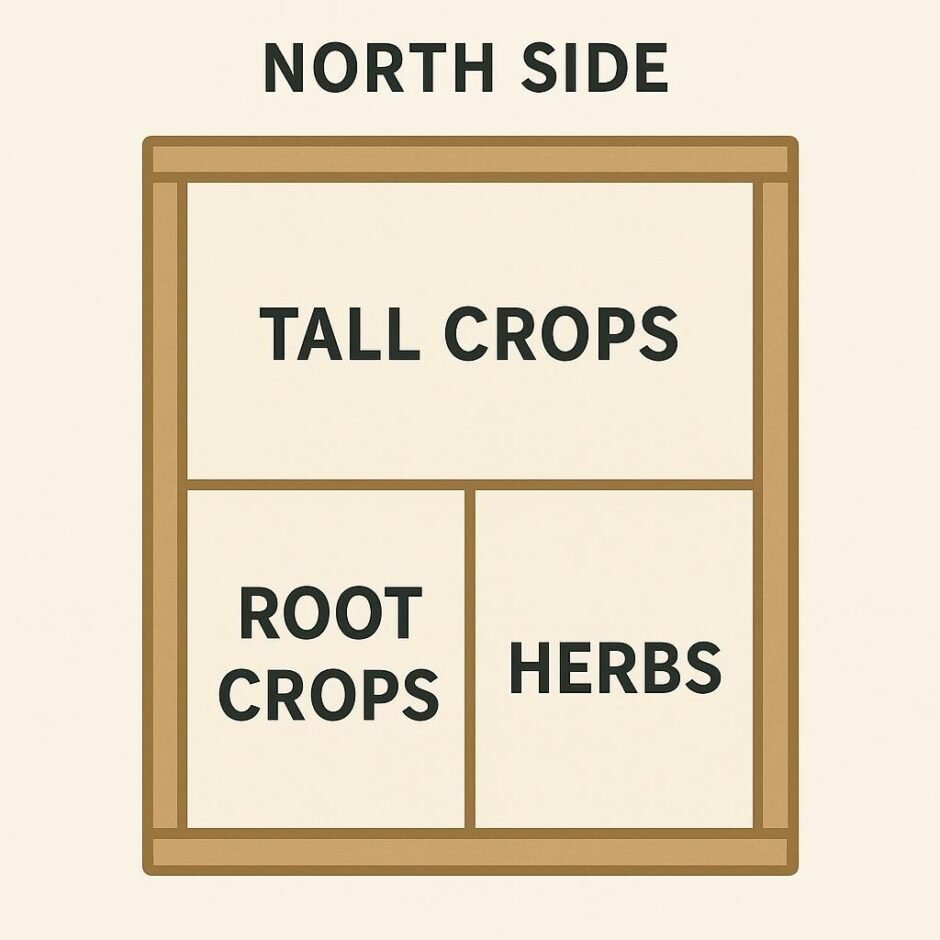
Simple row blocks are easier to manage than crowded mixed planting when you are new to raised beds. Put tall crops like tomatoes or pole beans on the north side of the bed so they do not shade shorter crops. Reserve the front edge for lettuce, herbs, or quick crops.
Spacing matters more than squeezing in one extra plant. When tomatoes, squash, cucumbers, or peppers are too crowded, airflow drops and disease pressure rises. If you want a fuller bed, use succession planting instead of overplanting the same week.
| Crop Type | Typical Placement | Planning Tip |
|---|---|---|
| Tomatoes or trellised beans | North edge | Keep supports behind shorter crops |
| Peppers and bush beans | Middle zone | Leave airflow between plants |
| Lettuce, radishes, herbs | Front edge | Use for quick harvests and succession sowing |
| Carrots and beets | Any sunny zone | Give them loose, stone-free soil |
For soil filling and crop layout, University of Maryland Extension and University of Minnesota Extension both point gardeners toward compost-rich blends, realistic spacing, and planting layouts that match bed width and sun exposure.
Frequently Asked Questions
These quick answers handle the build decisions gardeners ask most often. If you want to move fast, start here, then use the earlier sections to choose dimensions, materials, and a planting layout that fits your yard.
How wide should a raised garden bed be?
Most raised beds work best at 3 to 4 feet wide. That width lets you reach the center without stepping into the bed, which protects soil structure and makes routine planting, weeding, and harvesting much easier.
How deep should a raised garden bed be?
For many vegetables, 10 to 18 inches is a practical target. Shallower beds can still work for greens and herbs, while deeper beds are better for root crops, larger fruiting plants, and sites where the soil beneath the frame is compacted.
Is wood or metal better for raised beds?
Wood is easier to customize and usually friendlier for DIY builds. Metal often lasts longer and has a cleaner modern look. The better option depends on budget, climate, aesthetics, and whether you want a quick custom build or a lower-maintenance structure.
What soil should I put in a raised bed?
Use a compost-rich garden blend rather than pure potting mix or straight topsoil. A balanced mix holds moisture, supports roots, and drains well enough to reduce soggy conditions around vegetables and herbs.
How much does a raised garden bed cost?
A simple wood frame can be a relatively low-cost weekend project, while elevated or decorative builds cost more because they use more framing, more hardware, and more soil. The final price depends on size, material, and whether you already own the tools.
Conclusion
The strongest plans for a raised garden bed are the ones that match your space, your body, and the crops you want to grow. A compact, easy-to-reach bed with a good soil mix usually outperforms a larger build that is harder to fill, water, and maintain.
If you are starting from scratch, build one bed first, plant it, and learn from one season before expanding. That approach keeps costs realistic and usually leads to a better long-term layout.
If you want one final planning check before buying materials, compare your layout against the build and soil guidance from University of Minnesota Extension, University of Maryland Extension, and Oregon State University Extension.