
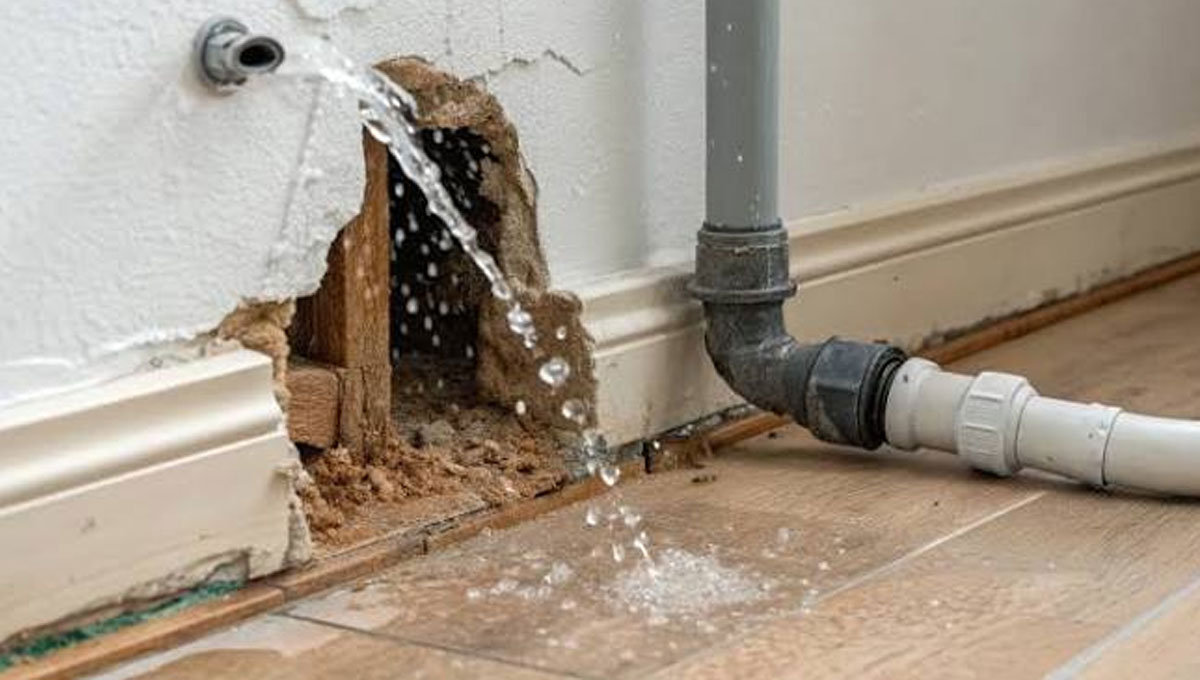

You find a damp patch on the basement floor. Is it a pipe, or is it the ground? The answer decides who you call and what you spend, and guessing wrong gets expensive.
Here’s the short version. A plumbing leak and groundwater seepage can look almost identical, but they have different fixes. A pipe needs repair. Seepage needs drainage work, crack repair, or waterproofing. You can narrow it down in an afternoon with four checks: the water meter test, the timing of the water, the location of the wet spot, and the foil test. If those don’t settle it, a leak test from a plumber and a moisture check from a waterproofing pro will.
Why does the source matter so much?
Treating the wrong problem wastes money twice. Waterproof a wall that’s wet from a leaking pipe, and the wall keeps getting wet. Patch a pipe when the real source is groundwater and the basement stays damp.
The National Park Service’s guidance on moisture in older buildings says to avoid remedial treatments without careful diagnosis, and that moisture often travels far from its source. Its list of common sources includes both ground moisture entering below grade and leaking plumbing pipes and equipment. It also warns that broken subsurface pipes can leak into the soil beside a foundation and dampen walls some distance away.
Bradley Williford, owner of Rescue Hero Plumbing, a plumbing company that offers leak detection, repairs, and septic service to homeowners in Bakersfield, California, says the first hour of diagnosis is the cheapest part of the job.
People call a waterproofing contractor for a pipe leak and a plumber for groundwater seepage all the time, and both end up paying for the wrong fix. The cheapest hour in the whole job is the first one, when someone checks the water meter, asks when the water shows up, and looks at where it’s coming from. Water travels, so the wet spot is rarely the source. If your meter moves when everything’s off, start with a plumber. If it only shows up after rain, start with drainage. If you’re not sure, test before you spend.
Bradley Williford, Owner, Rescue Hero Plumbing
Step 1: Run the water meter test
This is the fastest way to find out whether pressurized water is escaping somewhere on your property. EPA’s WaterSense program recommends checking your water meter before and after a two-hour period when no water is being used. If the number changed, there’s likely a leak.
To run it properly:
- Turn off all taps and appliances, including the ice maker and irrigation system.
- Write down the meter reading, or note the position of the leak indicator if your meter has one.
- Wait two hours without using any water.
- Read the meter again.
A moving meter means water is leaving your supply lines somewhere. It could be inside the house, under a slab, in a buried line, or in a sprinkler system. It doesn’t tell you where, but it does tell you a plumber should look.
A steady meter isn’t a clean bill of health. The test only covers pressurized supply lines. It won’t catch a slow drain or sewer line leak, condensation, or water coming through the foundation.
Step 2: Look at the timing
When the water shows up is one of the best clues you have. The National Park Service’s diagnostic questions include whether damp conditions appear within two hours of a heavy rain, whether there’s a delayed reaction, and whether the problem is intermittent, chronic, or tied to specific events.
Use that to sort it:
- Wet after rain, dry in between: points to surface drainage, gutters, grading, or seepage through the foundation.
- Wet days after heavy rain: can point to saturated soil or a high water table.
- Wet all the time, rain or not: points to a plumbing leak, condensation, or a persistent groundwater source.
- Wet only when a fixture runs: points to that fixture’s supply or drain line, such as a washing machine, shower, or water heater.
Keep a simple log for a week or two. Write down the date, the weather, and whether you ran the washer or irrigation. A pattern usually shows up fast.
Step 3: Check where the water is
Location is the other big clue. Look for these patterns:
- Near a fixture or appliance: water heater, washing machine hookup, laundry sink, utility sink, or a pipe along a wall or ceiling. That points to plumbing.
- Along the wall where it meets the floor: a common path for groundwater coming through the joint or a crack. That points to seepage.
- Around a pipe that enters through the foundation: the National Park Service notes that openings for sewer, water, or other piping can act as a direct path for ground moisture unless they’re well sealed.
- Along one wall only, especially one facing a downspout or sprinkler: points to exterior drainage. The same guidance warns that irrigation heads set too close to a building can add a lot of moisture at the foundation.
- In a slab floor, with warm spots or the sound of running water: can point to a supply line leak under the slab.
Keep in mind that water moves. A stain on a ceiling can come from a pipe several feet away, and a puddle can form well below the real source.
Step 4: Try the foil test
This one separates condensation from moisture coming through the wall. The National Park Service’s guidance describes taping a piece of foil onto a masonry surface and checking it after a day or two. If moisture has developed behind the foil, it’s coming from the masonry. If condensation is on the surface of the foil, the moisture is coming from the air.
Dry the area first, tape all four edges so air can’t slip underneath, and leave it for 24 to 48 hours.
Here’s what the result tells you and what it doesn’t:
- Wet on the room side: condensation. Think humidity, ventilation, and cold surfaces.
- Wet on the wall side: water is coming through the wall. That could be groundwater, rain, or a nearby leaking pipe.
The foil test can’t tell you which of those it is. That’s what the meter test, the timing, and the location are for.
What about drains and sump pumps?
If you have a sump pump, watch when it runs. A pump that cycles after rain is doing its job. A pump that runs when it hasn’t rained is worth investigating. The National Park Service guidance lists high water tables, hidden cisterns, and leaking water service lines among the ground moisture sources to look for when basement dampness doesn’t improve after drainage fixes.
Drain lines matter too. A slow leak from a drain or sewer line won’t show on your water meter. A plumber can run a camera through a drain line to look for cracks, separated joints, and sags without digging. The National Park Service notes that small video cameras can record the condition of subsurface drain lines without excavation.
Who should you call first?
Use what you found:
- The meter moves, or your water bill jumped: start with a plumber for leak detection.
- The water only shows up after rain, along walls or at the floor joint: start with a drainage or waterproofing contractor.
- Water appears in a pattern tied to a fixture or appliance: start with a plumber.
- You can’t tell, or it seems to be both: get a plumber’s leak test first, because a pipe leak makes every other test harder to read. Then bring in a waterproofing pro with that result in hand.
Both can be needed in the same house. A good contractor in either trade will tell you when the problem belongs to the other one.
How do you choose who to hire for the diagnosis?
Look for someone who diagnoses before recommending a fix, shows you what they found, and puts the plan in writing. Then check how the company shows up online. Editorial HQ, a link-building agency that works with local home services companies, says reviews that describe the actual diagnosis and fix are more useful than star ratings alone.
Then ask these questions:
- How will you tell whether this is a plumbing leak or groundwater?
- What tests will you run before you recommend a repair?
- Will you show me the moisture readings or camera footage?
- If the first fix doesn’t stop the water, what will you check next?
- Can you work with a plumber or waterproofing contractor if the problem is both?
Frequently asked questions
Can a plumbing leak make a basement wet when it hasn’t rained?
Yes. A leaking supply line, drain, water heater, or appliance hookup can wet a basement in any weather. A water meter that moves when everything is off is the quickest sign of a supply line leak.
Does a steady water meter mean I don’t have a plumbing leak?
Not necessarily. The meter test only catches leaks in pressurized supply lines. Drain and sewer line leaks don’t show up on the meter, so a plumber may still want to camera the drain lines.
How can I tell condensation from a leak?
Tape foil tightly to a damp wall for a day or two. Moisture on the room side points to condensation. Moisture behind the foil means water is coming through the wall.
Will a dehumidifier fix a wet basement?
Only if the cause is humidity. A dehumidifier won’t stop a leaking pipe or water coming through the foundation, so confirm the source first.
Final Thoughts
Basement water is a source problem before it’s a repair problem. The same damp patch can come from a pipe, a drain, the soil outside, or the air inside, and each one has a different fix.
Start with the meter, track the timing, look at the location, and try the foil test. Then call the right pro with real clues in hand. A diagnosis that takes an afternoon can save you from paying for the wrong repair.