
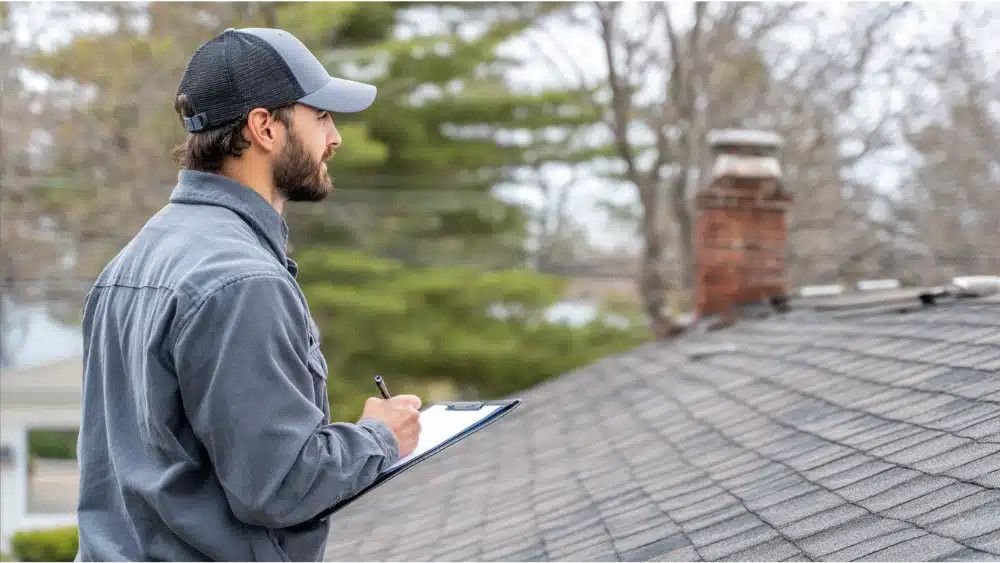

This roof inspection cost guide for homeowners covers what you will pay in 2026. A standard roof inspection costs $150 to $400 for most single-family homes. A specialized inspection — drone-based, infrared thermal imaging, or a certified wind and hail damage assessment — costs $300 to $800. The cost depends on the roof size, the inspection method, and whether the inspector is looking for general condition or documenting specific damage for an insurance claim, notes Next Step Realty Management.
A roof inspection is the cheapest money you will ever spend on your roof — if you do it before the leak starts. The same $300 inspection that identifies a lifted shingle, a cracked vent boot, and a failing sealant bead can prevent a $3,000 leak repair and a $2,000 interior damage bill. The math is not complicated. The timing is what most homeowners get wrong.
Types of Roof Inspections and Their Costs
Roof inspections range from a $150 visual check from the ground to an $800 infrared moisture scan, with the method determined by the roof’s accessibility, age, and the reason for the inspection. Here is how the six main inspection types compare.
| Inspection Type | Cost Range | What It Covers | When You Need It |
| Visual (ground + ladder) | $150 – $300 | Shingle condition, flashing, gutters, visible damage | Routine maintenance, pre-listing |
| Comprehensive (walking the roof) | $250 – $400 | All of the above plus close-up inspection of sealant, fasteners, and decking condition from the attic | Older roofs, post-storm, pre-purchase |
| Drone inspection | $200 – $500 | Aerial photos and video of inaccessible areas | Steep roofs, multi-story homes, safety concerns |
| Infrared thermal imaging | $300 – $800 | Moisture detection in decking and insulation without physical contact | Persistent leaks, hidden damage, pre-purchase due diligence |
| Wind/hail damage certification | $300 – $600 | Documented damage assessment for insurance claims | Post-storm insurance claim support |
| Home inspector roof check (part of full inspection) | $75 – $200 (roof portion) | General condition, estimated remaining life, visible defects | Real estate transaction |
What a Roof Inspector Actually Looks At
A comprehensive roof inspection covers more than shingles. The inspector examines the roofing material — shingles, tiles, or metal panels — for cracking, curling, granule loss, impact damage, and missing pieces. They check the flashing around chimneys, skylights, vent pipes, and valleys for rust, separation, and failed sealant. They inspect the gutters and downspouts for granule accumulation, which indicates accelerated shingle wear. They go into the attic and check the underside of the roof deck for water stains, mold, and daylight penetration. They look at the ventilation, soffit vents, ridge vents, gable vents, to confirm that air is moving through the attic. They check the fascia and soffit for rot and water damage.
A thorough roof inspection takes 45 to 90 minutes. An inspector who spends 15 minutes and hands you a one-paragraph report with no photos has not inspected your roof. They have looked at it from the ground and charged you for the privilege.
The National Roofing Contractors Association (NRCA) recommends a professional roof inspection at least once every two years, and annually for roofs older than 10 years. The inspection should include both an exterior assessment and an attic evaluation. An exterior-only inspection misses the moisture and ventilation problems that cause premature roof failure from the inside.
When to Schedule an Inspection, and When to Skip It
Schedule a roof inspection in four situations: as part of annual home maintenance on a roof older than 10 years, before listing a house for sale, before buying a house, and after a major storm with hail or winds above 50 mph. In each case, the inspection either prevents a problem from escalating or prevents a surprise from derailing a transaction.
Skip the inspection, or rather, do it yourself from the ground with binoculars, on a roof younger than 5 years with no known issues and no recent storms. A new roof under warranty does not need a paid inspection unless there is a specific concern. The manufacturer’s warranty covers material defects, and the contractor’s workmanship warranty covers installation errors. A $300 inspection on a 3-year-old roof with no problems is a $300 expense with no expected return.
After a storm, the timing of the inspection matters. Schedule it within 48 hours if you plan to file an insurance claim. The adjuster will want to see the damage before any repairs are made, and the inspector’s report documents the storm-related damage separately from pre-existing wear and tear. A roof inspection performed six months after a storm cannot distinguish between storm damage and gradual deterioration with the same credibility as an inspection performed the week after the storm.
Free Inspections from Roofing Contractors, What to Watch For
Many roofing contractors offer free roof inspections. The inspection itself is competent, a roofer who climbs onto a roof every day knows what damage looks like. The conflict of interest is not in the inspection quality. It is in the incentive structure. The contractor who performs a free inspection needs to sell a roof to get paid. Every problem they find is a potential job. Every problem they do not find is a lost opportunity.
This does not mean free inspections are worthless. It means you should treat the findings as a sales proposal, not a neutral assessment. The contractor who finds $12,000 worth of damage may be right. They may also be padding the scope of work to justify a full replacement when a $2,000 repair would solve the problem. The only way to know is to get a second opinion from an independent inspector who does not sell roofing services, typically a home inspector or a certified roof consultant who charges a flat fee for the inspection and has no financial interest in the repair or replacement that follows.
If you use a free contractor inspection, get at least two of them. If both contractors identify the same problems and recommend similar solutions, the findings are probably accurate. If one contractor finds three times as much damage as the other, ask the second contractor to walk you through the specific areas where they disagree. The truth is usually somewhere between the two reports, closer to the more conservative one in terms of cost, closer to the more thorough one in terms of documenting every issue.
What a Good Inspection Report Looks Like
A roof inspection report worth paying for includes dated photographs of every problem area, a written description of each finding with a severity rating, cosmetic, monitor, repair recommended, repair required, an estimate of the roof’s remaining service life based on the current condition, and a prioritized list of recommended actions. A report that says “roof is in fair condition, some shingles show wear” with no photos, no specifics, and no prioritization is a $300 opinion, not a $300 inspection. Ask to see a sample report before you hire an inspector. The quality of the sample tells you more about the inspector than any online review.
Frequently Asked Questions
How much does a roof inspection cost?
A standard roof inspection costs $150 to $400. A drone inspection costs $200 to $500. An infrared thermal imaging inspection costs $300 to $800. A wind and hail damage certification for insurance claims costs $300 to $600. Most homeowners pay $200 to $350 for a comprehensive inspection from a qualified inspector.
How often should I have my roof inspected?
The NRCA recommends a professional inspection at least every two years, and annually for roofs older than 10 years. Also inspect after any storm with hail larger than a dime or winds above 50 mph. Roofs younger than 5 years with no known issues do not need a paid inspection unless there is a specific concern.
Are free roof inspections from contractors worth it?
Free contractor inspections are competent at identifying damage but come with a conflict of interest, the inspector is also the seller of the repair. Use free inspections as a starting point, but get a second opinion from an independent, fee-based inspector before authorizing major work. If two free inspections agree on the findings, the damage assessment is probably accurate.
What is a drone roof inspection and is it better than a traditional one?
A drone inspection uses an aerial camera to photograph the roof surface without anyone climbing onto it. It is safer for steep or high roofs and produces high-resolution images that the inspector can review in detail. It is not better than a hands-on inspection for detecting problems that require touch, loose shingles, soft decking, failed sealant adhesion, but it is the right choice when the roof is too steep or too high to walk safely.
Does a home inspection include a roof inspection?
Yes, a standard home inspection includes a roof assessment from the ground and, when accessible, from a ladder at the eaves. The roof portion accounts for roughly $75 to $200 of the total home inspection cost. However, a home inspector’s roof assessment is a general-condition overview, not a comprehensive roofing inspection. For an older roof or a roof with known issues, hire a dedicated roofing inspector in addition to the general home inspector.
Will insurance pay for a roof inspection?
Insurance does not cover routine roof inspections. If you file a claim for storm damage, the insurance company sends its own adjuster to inspect the roof at no cost to you. An independent inspection you commission before filing the claim can document the damage and support your case, but the cost of that inspection is yours. Some roofing contractors waive the inspection fee if you hire them for the repair, another reason to be cautious about the findings.
What a Roof Inspection Is Worth
A $300 roof inspection that finds a $500 repair before it becomes a $5,000 leak is a 1,567% return on investment, not in theory, but in the actual math of what a lifted shingle costs to fix versus what a rotted deck, saturated insulation, and stained ceiling cost to remediate. The return is not guaranteed. Neither is the leak that happens when the inspection is skipped.
Inspect your roof every two years if it is older than 10 years. Inspect it after every major storm. Pay for an independent inspection before you buy a house and before you sell one. The inspection fee is small. The information it provides is large. The only mistake is not scheduling the inspection until you already see the water stain on the ceiling. By then, the inspection is not preventive. It is a post-mortem. And a post-mortem on a roof costs more than an inspection — roughly ten times more, once you add up the decking, the insulation, the drywall, and the painter who has to match a ceiling color that was discontinued three years ago. Ever tried to match old ceiling paint? The inspection is cheaper.