
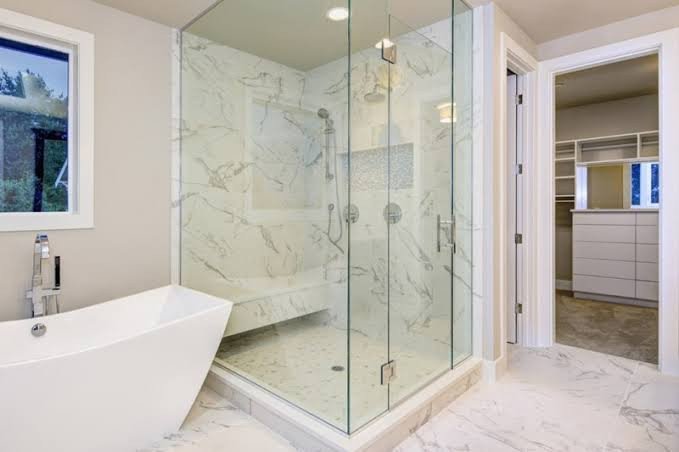

A walk-in shower costs between $3,500 and $15,000 installed in 2026, with the national average around $8,000 for a standard 3-by-5-foot shower with tile walls, a prefabricated pan, and a glass door, shares Medford property management. A prefabricated walk-in shower kit costs $2,000 to $5,000 installed. A custom-tiled walk-in shower with a mortar pan, full-height tile, multiple shower heads, and a frameless glass enclosure costs $8,000 to $20,000.
The cost difference between a $5,000 prefab shower and a $15,000 custom tile shower is almost entirely about two things: who does the tile work, and whether the shower pan is a factory-made fiberglass or acrylic base or a site-built mortar bed that must be waterproofed, sloped, and cured over several days. The glass door adds $800 to $2,500 regardless of which path you choose.
Walk-In Shower Costs by Type
Walk-in shower costs span from $2,000 for a basic prefab kit to $30,000 for a fully waterproofed wet room, with the price driven by the shower pan construction method and the wall material. Here is how the four main types compare.
| Shower Type | Cost Range | What It Includes |
| Prefab kit (fiberglass/acrylic) | $2,000 – $5,000 | Factory-made walls and pan, standard door, basic fixtures |
| Semi-custom (prefab pan + tile walls) | $5,000 – $10,000 | Acrylic or fiberglass pan, tile walls, glass door, upgraded fixtures |
| Custom tile (mortar pan + tile walls/floor) | $8,000 – $20,000 | Site-built waterproof pan, full tile, frameless glass, premium fixtures |
| Wet room (full waterproofed space) | $12,000 – $30,000 | Entire bathroom floor waterproofed, curbless entry, linear drain |
The Shower Pan — the Foundation Everything Else Sits On
The shower pan is the floor of the shower and the single most important waterproofing element in the entire installation. A prefabricated acrylic or fiberglass pan costs $300 to $800 for the pan itself and $500 to $1,000 installed. It arrives in one piece, drops into place, gets connected to the drain, and is ready for the walls the same day. A prefab pan is the fastest, cheapest, and most reliable option for a leak-free shower floor — factory-made, factory-tested, no installer variability in the waterproofing.
A site-built mortar pan costs $1,000 to $3,000 including the waterproof membrane, the mortar bed, the slope, and the labor. The installer builds a sloped mortar base, applies a waterproof membrane — either a PVC liner or a liquid-applied membrane like RedGard or Hydro Ban — and installs the tile on top. The process takes two to four days because the mortar must cure between layers. The advantage of a mortar pan is that it can be built to any size and shape, including curbless entries and linear drains. The disadvantage is that the quality of the waterproofing depends entirely on the installer’s skill. A poorly sloped mortar pan puddles water. A poorly waterproofed mortar pan leaks. Both failures require demolishing the shower floor to fix.
The National Association of Home Builders (NAHB) identifies shower pan failures as one of the most common and costly water-damage sources in residential construction. The difference between a shower that stays watertight for 30 years and one that leaks in three is often the quality of the pan installation — specifically, the slope to the drain and the integrity of the waterproof membrane at the corners and the drain connection.
Tile Walls vs. Prefab Walls
Tile walls cost $15 to $40 per square foot installed, $1,000 to $4,000 for the walls of a standard 3-by-5-foot shower. The tile itself costs $3 to $20 per square foot depending on the material, ceramic at the low end, porcelain and natural stone at the high end. The labor is $10 to $20 per square foot. A ceramic subway tile shower wall costs $1,200 to $2,000. A marble or large-format porcelain shower wall costs $3,000 to $5,000.
Prefab acrylic or fiberglass walls cost $500 to $1,500 for the walls and $500 to $1,000 for installation, $1,000 to $2,500 total. They are seamless, easy to clean, and completely waterproof from day one. They also look like prefab walls. The aesthetic is functional, not luxurious. For a guest bathroom or a rental property, prefab walls are the right call, durable, waterproof, and half the cost of tile. For a master bathroom where the shower is a daily experience, tile walls are worth the premium for the same reason hardwood floors are worth the premium over vinyl plank. The material matters because you interact with it every day.
Glass Doors and Enclosures
A frameless glass shower door costs $800 to $2,500 installed, with the average around $1,500. The glass is 3/8-inch or 1/2-inch tempered glass. The hinges, handle, and mounting hardware are the cost drivers, a basic chrome hinge set costs $50 to $100. A premium brushed-nickel or matte-black set costs $200 to $400. A sliding glass door costs $500 to $1,200. A hinged door costs $800 to $2,500. A fixed glass panel with a walk-in opening, no door at all, costs $600 to $1,500 and is the minimalist option for a shower large enough that water does not splash out of the opening.
Frameless glass is more expensive than framed glass for a reason, the glass is thicker, the edges are polished, and the mounting hardware is more sophisticated. Framed glass looks like a shower door from a 1990s hotel. Frameless glass looks like it is floating. The difference in cost is $300 to $800. The difference in appearance is visible from the bedroom.
Fixtures and Plumbing
Shower fixtures, the valve, the shower head, the controls, cost $100 to $1,000 for the fixtures themselves and $300 to $800 for installation. A basic pressure-balance valve with a single shower head costs $100 to $300 for the fixture. A thermostatic valve with separate volume and temperature controls, a rainfall head, and a handheld sprayer costs $500 to $1,000. The plumbing rough-in for a new shower, running hot and cold supply lines and a 2-inch drain line, costs $1,500 to $3,500 if the shower is being added where one did not previously exist. Converting a tub to a walk-in shower typically costs $2,000 to $5,000 for the plumbing modifications, which include moving the drain from the tub location to the center of the new shower footprint and possibly upsizing the drain line from 1.5 inches to 2 inches.
Tub-to-Shower Conversion Costs
Converting a standard bathtub to a walk-in shower costs $5,000 to $15,000 depending on the finishes. The conversion involves removing the tub, modifying the plumbing, the drain moves to the center, the supply lines may need to be relocated for the new valve position, waterproofing the entire alcove, installing the shower pan and walls, and adding a glass door. The tub-to-shower conversion is the most common walk-in shower project because it uses the existing plumbing rough-in footprint. The drain and supply lines are already in the wall and floor. They just need to be moved within that footprint.
The primary cost variable in a tub-to-shower conversion is whether the existing drain line is 1.5 inches, standard for tubs, and needs to be upsized to 2 inches to meet code for a shower. Replacing a section of drain line costs $500 to $1,500 depending on accessibility from below. If the bathroom is on a concrete slab, the cost is at the high end because the concrete must be cut, the pipe replaced, and the slab patched.
Frequently Asked Questions
How much does a walk-in shower cost?
A walk-in shower costs $3,500 to $20,000 installed. A prefab kit costs $2,000 to $5,000. A custom tile shower with a mortar pan, glass door, and premium fixtures costs $8,000 to $20,000. The national average is around $8,000. A tub-to-shower conversion costs $5,000 to $15,000.
What is the most expensive part of a walk-in shower?
The tile work and the glass door are typically the two most expensive individual components. Tile walls cost $1,000 to $5,000 installed. A frameless glass door costs $800 to $2,500. The plumbing rough-in, relocating drain and supply lines, is the most expensive component when a shower is being added where one did not previously exist.
Is a walk-in shower worth the cost compared to a tub?
For resale value, a home should have at least one bathtub, families with young children will not buy a home without one. If the home has another bathtub elsewhere, converting the master bathroom tub to a walk-in shower typically adds value and appeal. A walk-in shower is more accessible as homeowners age and uses less water per shower than filling a bathtub.
How long does it take to install a walk-in shower?
A prefab kit installation takes one to two days. A custom tile shower takes one to three weeks, the mortar pan requires curing time between layers, and the tile installation and grouting require additional curing before the glass door can be installed. The timeline is dictated by the materials, not the labor. Mortar and grout cure on the clock, not on the contractor’s schedule.
Can I install a walk-in shower myself?
A prefab kit installation is within the capability of a skilled DIYer with plumbing experience. A custom tile shower with a mortar pan is not. The waterproofing, the slope, and the tile layout require experience that cannot be acquired from a YouTube video. The cost of a professional installation is less than the cost of demolishing and rebuilding a leaking DIY shower pan.
Does a walk-in shower add value to a home?
A well-designed walk-in shower in the master bathroom adds value and can be a selling point, particularly for buyers over 50 who value accessibility. Replacing the only bathtub in the house with a walk-in shower typically reduces value because it eliminates a feature that families with children require. Keep at least one bathtub in the home.
What a Walk-In Shower Actually Costs
A custom-tiled walk-in shower with a prefabricated acrylic pan, porcelain tile walls, a frameless glass door, and a thermostatic valve with a rainfall head costs $8,000 to $12,000. That combination, factory pan for waterproofing reliability, custom tile for appearance, frameless glass for the floating-door look, is the value sweet spot. The factory pan eliminates the single biggest risk in a custom shower. The tile and glass deliver the look. The fixtures deliver the experience.
A full-custom mortar-pan shower with large-format tile, a linear drain, a curbless entry, and a frameless glass enclosure costs $15,000 to $20,000 and is a luxury purchase. The water feels the same. The shower looks and functions like something from a design magazine. Whether that distinction is worth $7,000 is a question of budget, not performance. The shower will be there every morning for the next 30 years. Spend the money where you will feel it. Every morning. Barefoot. Half awake. The shower floor under your feet — is it cold acrylic or warm tile? The water pressure on your back — is it a drizzle or a rainfall? You will answer those questions every day for the next three decades. The answers cost $8,000 to $20,000. The questions are free.