

What Is a Roof Maintenance Checklist?
A roof maintenance checklist is a structured set of tasks — organized by season or frequency — that homeowners or contractors work through to catch damage early, extend roof life, and keep warranties valid. Most roofing professionals recommend completing a thorough inspection twice a year: once in spring to assess winter damage, and once in fall before the next freeze. Skipping these inspections doesn’t mean problems don’t exist; it means they accumulate undetected until a minor fix becomes a $12,000 replacement, a risk Keyrenter Premier can help property owners think about in a broader maintenance plan.
The tasks below cover asphalt shingles, metal, flat, and tile roofs. Some steps require getting on the roof; many can be completed safely from the ground or from an attic access point. Where tasks carry real risk, they’re flagged — a fall from a roof costs more than a contractor’s fee.
Spring and Summer Roof Maintenance Checklist
Spring is the most important inspection window for most climates. Winter leaves behind ice dam damage, cracked caulk, lifted shingles, and gutters shifted by freeze-thaw cycles. Catching this damage in April or May, before summer heat accelerates deterioration, can prevent five to ten years of premature aging.
Exterior Tasks (Spring)
- Inspect shingles for winter damage. Walk the perimeter and look up at every roof slope. Missing, curled, or cracked shingles need immediate attention. On asphalt shingles, look for granule loss — bare patches that expose the underlying mat are a sign the shingle is nearing end of life. Binoculars work well for steep pitches.
- Check flashings at all penetrations. Chimney bases, vent pipes, skylights, and wall junctions are the most common leak entry points. Look for lifted or separated metal, crumbling caulk, and rust. Flashing failures cause the majority of interior water damage that homeowners initially misattribute to shingle problems.
- Clear moss and algae. North-facing slopes in humid climates often accumulate green or black biological growth over winter. Moss raises shingle edges, trapping moisture and accelerating rot. Treat with a 50/50 solution of water and white vinegar or a purpose-made roof cleaner, applied with a low-pressure sprayer. Never use a pressure washer on shingles — it strips granules.
- Trim overhanging branches. Branches within six feet of the roof surface can abrade shingles in windstorms and drop debris that blocks gutters and holds moisture against the surface. Trim them back during spring before peak growth.
- Check soffit and fascia for rot or pest entry. Squirrels and birds frequently exploit small gaps that opened during winter. Look for gnawed wood, wasp nests in overhang cavities, and soft spots in fascia boards.
Gutters and Drainage (Spring)
- Clean gutters thoroughly. Winter delivers a full load of leaves, shingle granules, and ice dam debris. Clogged gutters overflow, sending water behind fascia boards and into wall cavities. While cleaning, check that gutters are properly sloped (1/4 inch drop per 10 feet) and tightly fastened to the fascia.
- Flush downspouts. Run a garden hose from the top of each downspout to verify unobstructed flow. Blockages often occur at the first elbow. Check that downspout extensions direct water at least six feet from the foundation.
- Inspect gutter guards if installed. Debris accumulates on top of mesh guards and can still cause overflow. Check for sagging sections and clean the guard surface.
Summer Tasks
- Monitor attic ventilation. Inadequate attic ventilation in summer causes heat buildup that literally cooks shingles from below, shortening their effective life by years. Check that ridge vents and soffit vents are clear of debris and insulation blockage. Attic temperatures above 130°F (54°C) on hot summer days indicate a ventilation problem.
- After any major storm, do a quick visual check. Hail leaves circular dents on shingles visible from ground level. Wind damage typically shows as curled edges or missing sections along the ridge. File an insurance claim within the window your policy allows, most require notification within 12 months of the event.
Fall and Winter Roof Maintenance Checklist

Fall maintenance focuses on preparing the roof for freeze-thaw stress and preventing the ice dam conditions that cause the most serious residential roof damage each year. According to the National Roofing Contractors Association (NRCA), ice dams are responsible for millions of dollars in residential water damage claims annually in northern climates.
Fall Tasks
- Second full gutter cleaning of the year. The fall leaf drop is the primary gutter threat. Clean gutters after the last leaves have fallen in your area (typically late October through November, depending on region). This single step prevents the ice damming cycle from starting.
- Check attic insulation and air sealing. Ice dams form when heat escapes from the living space through an under-insulated attic, warming the roof deck and melting snow, which then refreezes at the colder eave. The fix is better attic insulation, not more roof heat cables. The U.S. Department of Energy recommends R-38 to R-60 insulation in attics depending on climate zone.
- Inspect caulk at all roof penetrations. Cold temperatures are coming. Re-caulk any gaps around vent boots, skylights, and chimney flashings with a roofing-grade sealant rated for the temperature range in your region. Silicone or polyurethane sealants remain flexible through freezing temperatures; standard latex caulk does not.
- Verify ridge cap shingles are secure. Ridge caps take the most wind exposure on any roof. Walk the perimeter and look for any lifted or cracked caps. A loose ridge cap in a winter windstorm means an emergency repair in bad conditions.
- Remove debris from valleys and low-slope areas. Roof valleys collect leaves, pine needles, and seed pods, which hold moisture against the shingles through winter. Clear these by hand (not with a pressure washer or stiff broom) before the first freeze.
Winter Tasks
- After heavy snowfall, remove excess snow from low-slope areas. Use a roof rake from the ground, never climb a snow-covered roof. Four to six inches of wet snow can weigh 20 pounds per square foot. Most residential roofs are engineered for 20-40 psf snow loads; verify yours with a contractor if you live in a high-snowfall area.
- Watch for ice dam formation at eaves. Icicles are a visible indicator, but the real damage happens when the pooled water behind the dam finds a gap and enters the wall cavity. If ice dams form repeatedly, the solution is attic air sealing and insulation, not heat cables, which are temporary and costly to run.
Monthly Tasks You Can Do From the Ground
Not every maintenance item requires a ladder. Several high-value checks take two minutes and can be done during any routine walk around your property. Catching problems early from the ground is far safer and often just as effective for early detection.
- Scan the roof for obvious missing or displaced shingles, especially after wind events.
- Check gutters for sagging or pulling away from the fascia.
- Look at downspout extensions to confirm they’re still directing water away from the foundation.
- After rain, check the attic interior for any wet spots, water stains, or daylight visible through the deck. A flashlight inspection takes five minutes and can catch leaks months before they reach the ceiling below.
- Note any new dark streaks on shingles, algae growth can move quickly in warm, humid months and is cheaper to treat early than to remediate at scale.
One detail that surprises many homeowners: attic inspections catch most early roof leaks before any interior ceiling damage appears. Water travels horizontally along rafters before dripping, so a wet spot on a second-floor ceiling can originate from a leak ten feet away on the roof. Monthly attic checks are the most reliable early-warning system available at zero cost.
Maintenance Variations by Roof Type
The checklist above applies primarily to asphalt shingle roofs, which cover roughly 80% of U.S. residential homes. Other roof types have distinct maintenance requirements that diverge significantly.
| Roof Type | Key Maintenance Focus | Unique Tasks | Typical Professional Inspection Interval |
|---|---|---|---|
| Asphalt Shingles | Granule retention, flashing integrity | Moss/algae treatment, granule check in gutters | Every 1-2 years |
| Metal (Steel, Aluminum) | Rust prevention, fastener tightness | Inspect for rust at cut edges and fasteners; apply rust-inhibiting paint if needed; check for loose panels after wind | Every 2-3 years |
| Flat/Low-Slope (TPO, EPDM) | Ponding water, membrane integrity | Check for standing water 48+ hours after rain (indicates drainage failure); inspect membrane seams for lifting or separation | Every 6 months |
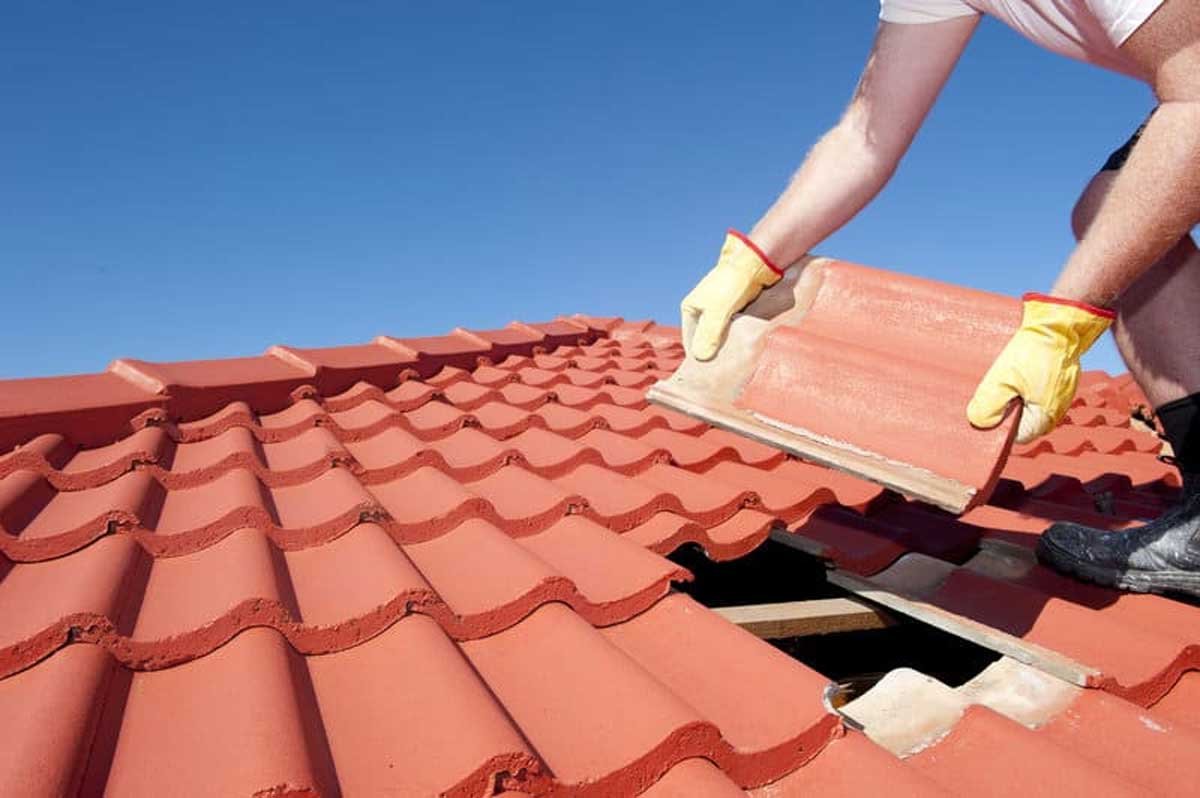
| Clay/Concrete Tile | Cracked or slipped tiles | Walk carefully only on load-bearing portions; replace cracked tiles immediately (waterproofing relies on underlayment, not tiles) | Every 2-3 years |
| Wood Shake | Rot, mold, fire risk | Apply preservative treatment every 3-5 years; check for gray or green discoloration indicating moisture damage | Annually |
Metal roofs deserve particular attention to rust. Homeowners in r/HomeMaintenance note that steel roof rust typically begins at cut edges around penetrations and at poorly sealed fastener holes, exactly the spots where DIY installations tend to cut corners. According to the Metal Roofing Alliance, a properly maintained steel roof should last 40-70 years. One user noted that a 30-year-old steel roof “looks brand new” after consistent annual treatment, while a neglected 15-year-old roof needed full replacement. The maintenance gap matters enormously.
DIY vs. Professional: Where to Draw the Line
Most items on a roof maintenance checklist are genuinely DIY-friendly when completed from the ground or from a stable ladder at eave height. The division is cleaner than most homeowners assume.
| Task | DIY Appropriate? | Notes |
|---|---|---|
| Gutter cleaning (single-story) | Yes | Ladder safety is the main risk |
| Visual inspection from ground | Yes | Binoculars help on steep slopes |
| Attic inspection | Yes | Safest and most informative check |
| Moss/algae treatment | Yes (ground-level spray) | Avoid walking on wet or algae-covered shingles |
| Minor caulk re-application | Yes (if comfortable on ladder) | Use appropriate roofing sealant |
| Snow removal with roof rake | Yes (from ground) | Never climb a snow-covered roof |
| Replacing missing shingles | Proceed with caution | Steeper pitches require safety gear; errors void warranties |
| Flashing repair or replacement | No, hire a contractor | Improper flashing is the #1 source of roof leaks |
| Full roof inspection on 2+ story home | Hire a contractor | Fall risk and liability make this a professional task |
| Structural assessment (sagging, rot) | No | Requires professional evaluation |
The r/HomeMaintenance community has a pragmatic view on this: one frequently-upvoted post noted that biannual professional inspections, at roughly $150-$300 each, cost less than a single “I thought I could handle it” repair gone wrong. A roofer who charges $200 for an inspection and identifies $800 in deferred maintenance has just delivered $600 in value, not a $200 expense.
What Routine Maintenance Actually Costs
Most homeowners significantly overestimate the cost of proactive maintenance and underestimate the cost of ignoring it. According to HomeAdvisor’s 2025 data, routine roof maintenance and minor repairs average $150 to $1,500 per year, depending on roof size and conditions. Full replacement of an asphalt shingle roof on a typical 2,000-square-foot home runs $8,000 to $15,000. Regular maintenance extends roof life by an estimated 25-50%, per the National Roofing Contractors Association, on a 20-year roof, that’s potentially 5-10 extra years before a replacement project.
The math that changes minds: a homeowner who spends $400 per year on maintenance over 25 years spends $10,000 total. The homeowner who spends nothing pays $13,000 to replace a roof 5 years early, then $400/year for the remaining 20 years, totaling $21,000. The maintained roof wins by $11,000, not counting the avoided interior water damage.
Frequently Asked Questions
How often should you inspect your roof?
Most roofing manufacturers and the National Roofing Contractors Association recommend a professional inspection at least once a year, with a self-inspection every spring and fall. After any severe weather event (hail, high winds, heavy snow), a visual check from the ground should happen within a few days. Some manufacturers require biannual inspections to keep warranties valid, check your warranty documentation for specifics.
How long does a roof last with proper maintenance?
Asphalt shingles are rated for 20-30 years, but well-maintained roofs regularly reach the top of that range while neglected ones fail at 15. Metal roofs can last 40-70 years with consistent rust prevention and fastener maintenance. Tile roofs often outlast the home. The maintenance gap is what collapses the rated lifespan, not the material itself.
What are the signs a roof needs replacement rather than repair?
Multiple patches of missing or severely curled shingles covering more than 25-30% of the roof surface, granule loss leaving bare substrate visible across large areas, sagging deck sections, or interior leaks that recur despite repeated repairs all indicate replacement is more cost-effective than continued patching. A qualified roofer can give a more precise assessment, but these are the visual benchmarks that trigger replacement conversations.
How do you prevent ice dams?
Ice dams form when heat escaping from a poorly insulated attic warms the roof deck, melting snow that then refreezes at the cold eave. The fix is attic air sealing and adding insulation to keep the attic temperature closer to the outdoor temperature. Heat cables treat the symptom; insulation treats the cause. The U.S. Department of Energy recommends targeting R-49 to R-60 attic insulation in northern climate zones for effective ice dam prevention.
What is the best way to remove moss from a roof?
Low-pressure application of a diluted bleach solution (one part bleach to one part water) or a commercial roof cleaner kills moss effectively. Apply the solution, let it sit 20-45 minutes, then rinse with a regular garden hose. Never use a pressure washer, it strips the granule surface from asphalt shingles. Zinc strips installed along the ridge provide ongoing prevention by releasing zinc carbonate downslope with every rain.
Does skipping maintenance void a roof warranty?
Many manufacturer warranties require documented proof of regular maintenance for warranty claims to be honored. This is one of the most commonly overlooked provisions in roofing warranties. Keeping records of inspections, cleaning dates, and any repairs performed provides documentation if a premature failure needs to be claimed. Some warranties explicitly list inspection frequency requirements, a condition that becomes important if a defect appears in year 12 of a 20-year warranty.