
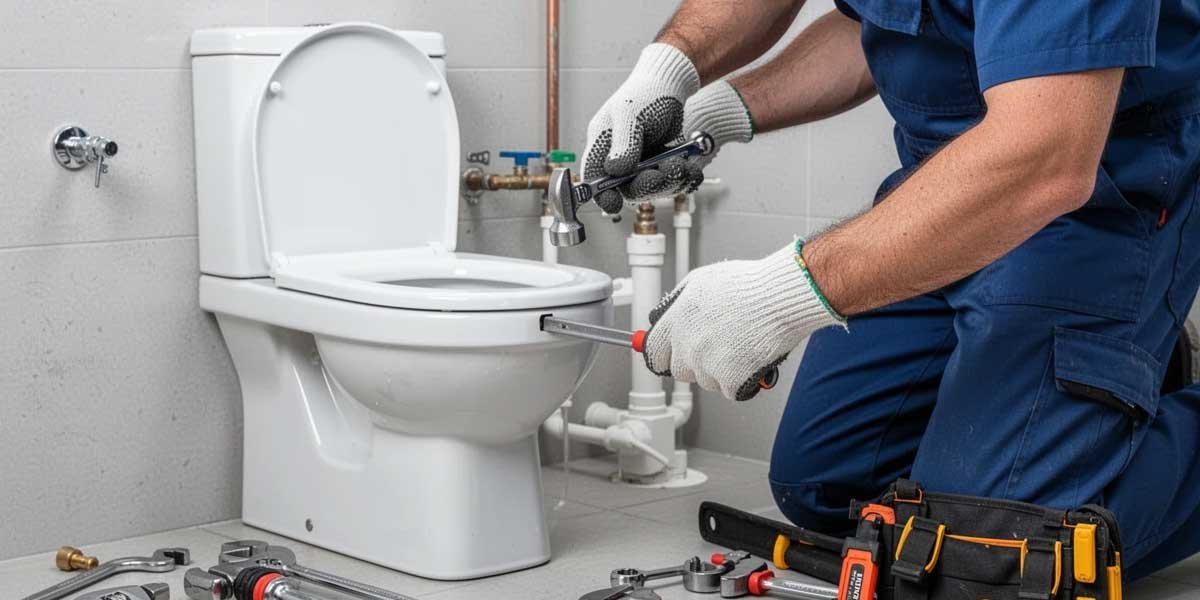

The signs you need toilet repair service are a toilet that constantly runs, clogs often, flushes weakly or not at all, fails to refill, pools water around its base, shows a crack in the porcelain, or rusts on its metal parts, and most of these are a repair rather than a replacement, since a worn flapper, a bad fill valve, a loose seal, or a clog restores the unit. A constantly running toilet and a leaking flapper are among the most common ways a home wastes water quietly, the EPA’s WaterSense program notes, which is why an early look saves both the water bill and the floor. The urgent ones, a crack in the porcelain or water pooling at the base, call for a licensed plumber right away.
Below is the severity table, the safe first look, and the repair-versus-replace call.
Signs you need toilet repair service, by severity
Sort the toilet signs by how fast they threaten the home: a crack in the porcelain, a pooling leak at the base, or water near the floor is urgent and a licensed plumber’s call, while a running toilet, a weak flush, a clog, or a slow refill warrants a safe look and a service soon. The table lines up the symptom, the cause, the urgency, and the safe next step, explains the J. Butler Property Management team.
| Symptom | Likely cause | Urgency | Safe next step |
|---|---|---|---|
| Crack in the porcelain | Stress or a hard impact | Urgent | Shut the valve; call a plumber |
| Water pooling at the base | Failed seal or crack | Urgent | Shut the valve; call a plumber |
| Constantly running | Worn flapper or valve | Plan soon | Dye test; call for a fix |
| Weak or no flush | Worn flush parts | Plan soon | Inspect; repair or call |
| Clogs often or slow | Deep block or worn parts | Plan soon | Plunge; call if it repeats |
| Tank or bowl won’t refill | Faulty fill valve | Plan soon | Inspect; call if it fails |
The table is the honest triage. A crack in the porcelain, which can grow or break, or water pooling at the base, a sign of a failed seal, is urgent, so shut the toilet’s water valve and call a licensed plumber before it damages the floor or the subfloor. A toilet that constantly runs, flushes weakly, clogs often, or fails to refill is a repair most of the time, so do a safe look and a dye test first, and call a plumber if it lingers or repeats. The urgent ones protect the structure and the water bill, and the fixable ones are a small charge.
The seven signs a toilet is calling for help
Watch for the seven signs a toilet shows before it fails, a constant run, frequent clogs, a weak or no flush, a tank that does not refill, water at the base, a porcelain crack, and rust or corrosion on the parts, because each points to a cause you can often fix or a need for service. The plumbers at Crisbro and Vander Hyde list these as the clearest clues.
The signs are specific. A toilet that runs nearly all the time usually has a worn flapper or a valve letting water past, frequent clogs beyond one or two can mean a partial block deeper in the line or worn flush parts, and a weak or absent flush points to the flushing mechanism. A tank or a bowl that does not refill signals a faulty fill valve, standing water around the base often means the wax seal is gone, and a crack in the porcelain, from stress or a hard impact, can grow into a break or a leak. Rust and corrosion on the metal parts show the unit is wearing, and where the wear is widespread, a replacement may beat a repair. A flapper, a fill valve, a seal, or a clog restores most toilets, while a cracked bowl or badly corroded unit is the case for a new toilet.
A safe first look at your toilet
Start the check from the outside, at the flush, the tank, and the floor, and use a dye test to see if the flapper is truly leaking, while you keep your hands out of the bowl and off anything soiled until you know the cause. A running toilet is often the easiest thing to find and fix.
The first look is safe. Listen for a toilet that runs when nobody has used it, a sign the flapper or the valve is letting water past, and check the floor at the base for a damp or dark ring, a sign of a seal leak, and the tank and the bowl for a visible crack. To test the flapper, lift the tank lid, drop a few drops of food coloring into the tank water, and wait about ten to fifteen minutes without flushing; if the color crosses into the bowl, the flapper is leaking through, one of the most common and quietest water wasters, and a common fix. Keep your hands out of the bowl and off any damp until the cause is clear, shut the water valve under the tank if a leak worsens, and call a plumber for anything beyond a simple part.
Repair or replace: the honest call
Repair a toilet with a worn flapper, a bad fill valve, a failing seal, or a recurring clog, and replace a unit with a cracked bowl, widespread rust and corrosion, or one that keeps failing, since a part restores most toilets and a replacement only makes sense when the unit itself is done. A fix costs far less than a new toilet.
The call follows the signs. A flapper that leaks, a fill valve that keeps the tank from refilling, a wax seal that lets water at the base, or a clog in the line is a repair, and a toilet with a worn part restored by a licensed plumber serves for years more. A cracked porcelain bowl, which can break apart or leak through the crack, a unit with widespread rust and corrosion, or a toilet well past its years that keeps failing is the case to replace, where a new water-efficient unit also saves on water. A toilet that jiggles to quiet, runs constantly, or needs a widening list of fixes is nearing the end, and the honest call is a replacement. Let a licensed plumber settle the repair-or-replace call, and read the water bill to see the savings an efficient unit brings.
When to call a licensed plumber
Shut the toilet’s water valve and call a licensed plumber at the first sign of a crack, pooling water at the base, or a toilet that will not let up, because the damage and the break risk stop when a pro touches it. A small leak left to run costs the floor and the bill.
The point to call is clear. A crack in the porcelain, water pooling or spreading at the base, or a toilet that keeps running or flooding after a simple try is urgent, so shut the toilet’s shutoff valve and call a licensed plumber. A toilet that clogs weekly, flushes weak, or leaks at the base also warrants a plumber, who can clear a deeper block, replace the seal or the parts, and judge repair or replacement, and report any leak promptly if you carry home insurance. The signs you need faucet installation service guide covers the same early-warning habit for the connected fixtures, and the same rule holds: catch the drip early, and it stays a small fix.
Frequently asked questions
What is the average cost to fix a toilet? A toilet repair, a flapper, a fill valve, or a clog, is usually a small charge, while a replacement and its install cost more and vary by the model and the region, so a quick plumber’s quote settles it. Most repairs cost far less than a new unit.
What are the signs that my toilet needs to be replaced? Replace a toilet when its bowl is cracked, its parts show widespread rust and corrosion, or it keeps failing past a repair, while a worn flapper, a fill valve, a seal, or a clog is usually a repair. A weak flush and an old, inefficient unit also favor replacement.
Can I fix a toilet flush without calling a plumber? A few flush problems are simple to fix safely, like adjusting a chain or cleaning a flapper, but a running toilet you cannot quiet, a weak or absent flush, or a leak is worth a licensed plumber. Cut the water and keep hands out of the bowl first.
What is the average lifespan of a toilet? A toilet typically serves many years with good care, so treat that as a range and watch the cracks, the corrosion, and the leaks for when it is past its best. An old unit that runs and leaks often earns a replacement.
Is a running toilet always a serious leak? A running toilet is usually a worn flapper or a fill valve, a small, common leak that quietly wastes water, and the dye test tells you fast. Left alone it wastes water and runs up the bill, so fix or call soon.
Let the crack, the leak, and the run decide
Judge the signs you need toilet repair service by the crack, the leak, and the run: a crack in the porcelain or water pooling at the base is urgent, so shut the water valve and call a licensed plumber, while a constantly running toilet, a weak flush, a clog, or a slow refill is a fixable repair most of the time. A running flapper quietly wastes water, so the dye test and an early look catch it before it hits the bill, and a licensed plumber restores the unit or tells you when a new one is the honest call. Catch the drip early, shut the water at the first sign of a leak, and the toilet serves the bathroom for years.