
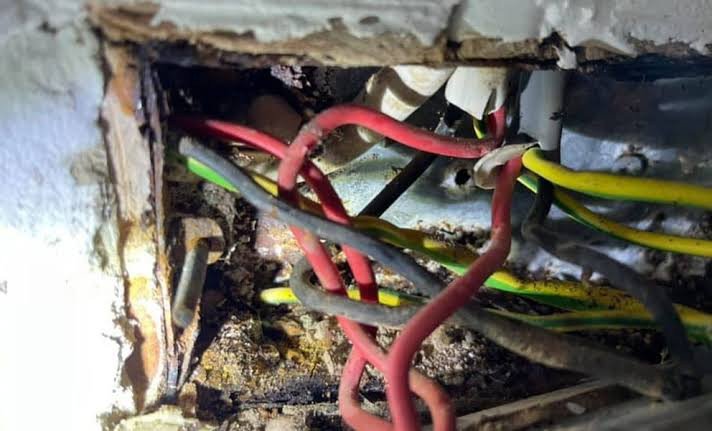

This guide covers the four key signs your home needs wiring — from obsolete wiring types to insufficient capacity. The clearest sign your home needs new wiring is that you have two-prong outlets, cloth-covered cables, or a fuse box instead of circuit breakers, notes RENTit Colorado Management. These are not maintenance issues. They are indicators that the home’s electrical wiring predates modern safety standards.
Homes built before 1950 typically have knob-and-tube wiring — individual wires run through ceramic tubes and supported by ceramic knobs, with no ground wire. Homes built between 1965 and 1975 may have aluminum branch circuit wiring — solid aluminum conductors that are prone to oxidation and overheating at connections. Homes built before 1960 may have cloth-covered Romex without a ground wire. Each era of residential construction used the wiring technology of its time. The technology has improved. The old wiring has not. Here are the signs that your home’s wiring needs to be upgraded.
Sign 1: The Home Has Obsolete or Dangerous Wiring Types
| Wiring Type | Era Installed | Problem | Action Required |
| Knob-and-tube | 1880–1950 | No ground wire, crumbling insulation, cannot be buried in insulation | Full rewire ($8,000–$20,000) |
| Aluminum branch wiring | 1965–1975 | Oxidation at connections causes overheating and fire risk | Remediation ($3,000–$8,000) or full rewire |
| Cloth-covered Romex (no ground) | 1950–1965 | Insulation degrades with age, no ground wire | Rewire recommended ($6,000–$15,000) |
| Fuse box (not circuit breakers) | Pre-1960 | Fuses can be oversized, no arc-fault or ground-fault protection | Panel upgrade ($1,500–$3,500) plus possible rewire |
Knob-and-tube wiring is not inherently dangerous when it is intact and unaltered. The problem is that after 70 to 100 years, it is almost never intact and unaltered. The insulation crumbles when touched. Amateur modifications — splices made with electrical tape, circuits extended with modern Romex connected to knob-and-tube — create fire hazards at the transition points. Blown-in insulation packed around knob-and-tube wires traps heat that the wires were designed to dissipate in open air. Most insurance companies either refuse to insure homes with active knob-and-tube wiring or require a full rewire as a condition of coverage. The insurance requirement makes the decision: rewire the house or lose coverage. The rewire is not optional when the insurance company demands it.
The U.S. Consumer Product Safety Commission (CPSC) investigated aluminum branch circuit wiring in the 1970s and found that connections at outlets and switches were the primary failure point. Aluminum oxidizes when exposed to air. The oxidation creates a high-resistance connection that generates heat. The heat can melt the outlet, ignite the surrounding materials, or cause a fire inside the wall. Aluminum wiring can be remediated by pigtailing — attaching a short piece of copper wire to the aluminum conductor at every outlet, switch, and junction using COPALUM or AlumiConn connectors. The pigtailing costs $3,000 to $8,000 for a typical home. The full rewire costs $8,000 to $15,000. The pigtailing is the lower-cost fix. The full rewire is the permanent solution.
Sign 2: Frequent Electrical Problems Throughout the House
Flickering or dimming lights. Breakers that trip repeatedly. Outlets that are warm to the touch. A burning smell near outlets or switches. Buzzing or crackling sounds from the walls. Any one of these is a problem. Two or more is a pattern. The pattern indicates that the wiring is failing at multiple points. A single loose connection at one outlet is a $200 repair. Loose connections at multiple outlets, flickering lights on multiple circuits, and breakers tripping throughout the house indicate systemic wiring deterioration. The wiring is aging out. The individual repairs are temporary. The full rewire is the permanent solution.
An outlet that is so worn that plugs fall out of it is not just annoying. The loose contact between the plug and the outlet creates resistance. The resistance generates heat. The heat accelerates the wear on the outlet contacts. The feedback loop ends with an outlet that arcs internally when a plug is inserted or removed. The arcing can ignite the outlet. Replacing worn outlets costs $120 to $250 per outlet. A house with multiple worn outlets, particularly if the wiring is also old, is a candidate for rewiring or at least a full outlet replacement. The outlets are the visible symptom. The wiring in the walls is the same age as the outlets. The wiring may be in similar condition.
Sign 3: Insufficient Electrical Capacity for Modern Life
A home with a 60-amp or 100-amp electrical panel, two-prong outlets, and a shortage of outlets in each room was wired for a different era. The era had fewer appliances. It had no home offices. It had no entertainment systems. It had one television, one radio, and a few lamps per room. The modern home has computers, monitors, routers, phone chargers, tablet chargers, gaming consoles, and streaming devices in every room. The old wiring cannot support the modern load. The extension cords snaking across the floor are the evidence. The power strips daisy-chained into other power strips are the evidence. The breaker that trips when the microwave and the toaster run at the same time is the evidence. The house needs more circuits, more outlets, and a panel that can supply them.
Adding circuits to an existing panel costs $350 to $700 per circuit. A house that needs 5 to 10 new circuits, kitchen, bathrooms, home office, entertainment center, garage, costs $1,750 to $7,000 in circuit additions alone. If the existing panel is full or at capacity, a subpanel or a panel upgrade is required. The subpanel costs $800 to $2,000. The panel upgrade costs $1,500 to $3,500. The circuit additions plus the panel upgrade plus a full outlet replacement approaches the cost of a partial rewire. The partial rewire addresses the immediate needs. The full rewire, replacing every circuit, every outlet, and every switch with new grounded wiring, addresses the systemic obsolescence. The choice between partial and full rewire depends on the age and condition of the existing wiring. A 1950s house with knob-and-tube needs a full rewire. A 1980s house with grounded copper Romex needs additional circuits, not a rewire. The age of the house answers the question.
Sign 4: You Are Planning a Major Renovation
A kitchen remodel, a bathroom addition, a basement finish, or a home addition requires new wiring. The renovation is the opportunity to upgrade the existing wiring in the areas that are being opened up. The walls are already open. The electrician is already on site. The incremental cost of replacing the old wiring in the open walls, rather than leaving it in place and adding new circuits alongside it, is the cost of the wire and a few hours of labor. The opportunity disappears when the drywall goes up. The old wiring behind the new drywall will be there for the next 30 years. The renovation is the chance to replace it. The chance is brief. The walls are open for a week. The wiring behind them will be inaccessible for decades. Replace the old wiring while the walls are open. The incremental cost is $500 to $2,000. The regret of not doing it is permanent.
Frequently Asked Questions
How do I know if my house needs rewiring or just a few repairs?
A single loose outlet or a single breaker that trips under heavy load is a repair. Multiple electrical problems throughout the house, flickering lights, warm outlets, frequent breaker trips, buzzing sounds, indicate systemic wiring deterioration. The home’s age and wiring type, knob-and-tube, aluminum, cloth-covered cable, are the strongest indicators. A home built before 1960 with original wiring almost certainly needs at least a partial rewire.
How much does it cost to rewire a house?
A full-house rewire costs $8,000 to $20,000 for a typical 2,000-square-foot home. The cost depends on the home’s age, the accessibility of the walls, whether the old wiring can be abandoned in place or must be removed, and whether the service panel needs to be upgraded. Drywall repair after the rewire adds $2,000 to $5,000 and is typically not included in the electrician’s estimate.
Is aluminum wiring dangerous?
Aluminum branch circuit wiring, installed between 1965 and 1975, is a known fire risk. The aluminum oxidizes at connections, creating resistance and heat. The heat can cause fires at outlets and switches. Aluminum wiring can be remediated by pigtailing copper leads onto the aluminum at every connection point, $3,000 to $8,000, or by a full rewire, $8,000 to $15,000. The pigtailing is a code-compliant fix. The full rewire is the permanent solution.
Can I rewire my house myself?
No. Rewiring a house is not a DIY project. It requires pulling permits, running new cable through walls and ceilings, installing new outlets and switches, connecting to the electrical panel, and coordinating with the utility for a service upgrade if needed. The work must be inspected. Improperly installed wiring is a fire and shock hazard. The cost of professional installation is less than the cost of a fire caused by amateur wiring.
How long does a house rewire take?
A full-house rewire takes one to three weeks with a crew of two to three electricians. The power is off during working hours. Drywall repair and painting after the rewire takes an additional three to five days. Total disruption is two to four weeks. Most homeowners who can afford to stay elsewhere for the duration do so. Those who cannot seal off rooms that are not being worked on and run extension cords for essential appliances.
Does homeowners insurance cover rewiring?
Insurance does not cover rewiring as a preventive measure. It covers fire damage caused by electrical failures. Some insurers refuse to cover homes with knob-and-tube or aluminum wiring unless the wiring is remediated or replaced. The insurance requirement may force the rewire. The insurance does not pay for it.
The Wiring Inside Your Walls
If your home was built before 1950 and has not been rewired, the wiring is past its service life. If it was built between 1965 and 1975 and has aluminum branch wiring, the connections at every outlet and switch are a known fire risk. If the lights flicker, the breakers trip, and the outlets are warm, the wiring is failing at multiple points. If you are planning a renovation, the open walls are the best opportunity to upgrade the wiring that will be sealed behind drywall for the next 30 years.
A full rewire costs $8,000 to $20,000 and takes two to four weeks of disruption. The result is a home with modern, grounded, code-compliant wiring that will serve the house for another 50 to 75 years. The cost is large. The fire that the old wiring can cause is larger. The rewire is invisible. The occupants will never see it. They will only see the lights that turn on reliably, the outlets that hold plugs securely, and the breaker panel that never trips. The wiring is the invisible infrastructure. The visible result is a house that works. Ever plugged a vacuum cleaner into an outlet and watched the lights dim — not flicker, dim — as the motor struggled to draw enough current through wiring that was installed when the vacuum cleaner had a cloth bag and a headlight? The wiring is the same age as the outlet. The outlet is the same age as the house. The house was wired for a different century. The vacuum cleaner is from this century. The wiring does not know that. The wiring only knows that it is 70 years old and being asked to deliver more current than it was designed for. The dimming lights are the wiring’s way of saying no. The rewire is the way of saying yes. The yes costs $12,000. The no is free. The no is also the status quo. The yes is the upgrade. The upgrade lasts 50 years. The vacuum cleaner lasts 8. The wiring will outlast the vacuum cleaner. The wiring will outlast you.