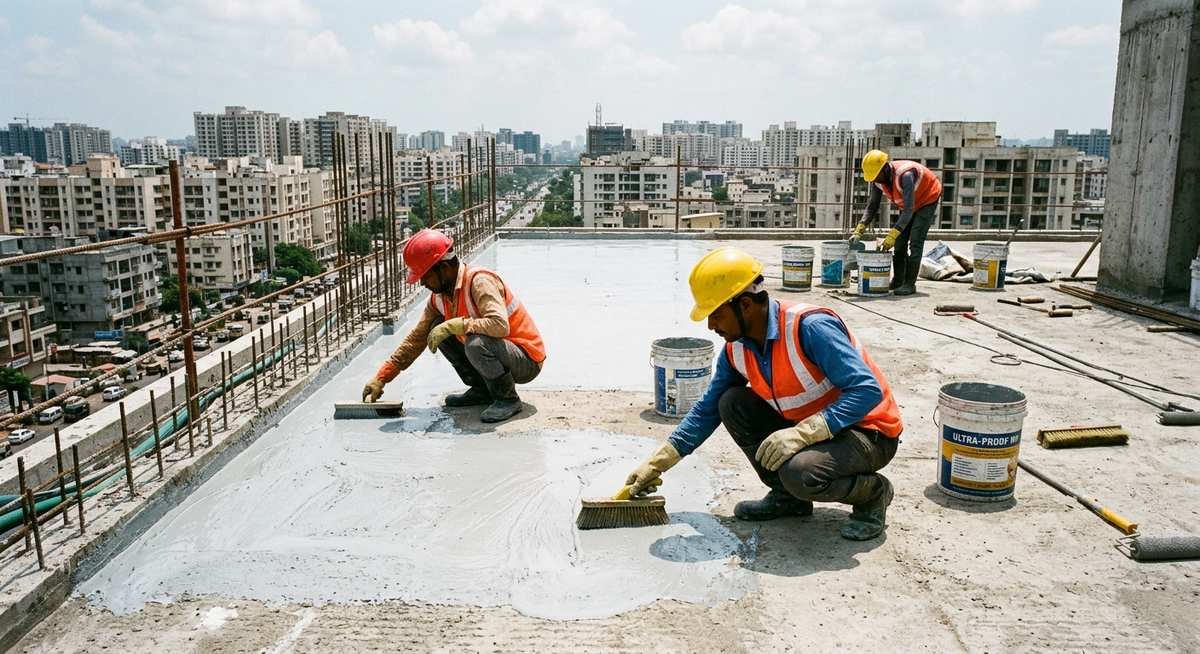

Sunanda waterproofing solutions have protected some of India’s most demanding structures, from the world’s largest cricket stadium in Ahmedabad to the Signature Bridge in New Delhi. For contractors, homeowners, and civil engineers sourcing construction chemicals in India, the brand carries a specific reputation: technically differentiated, research-backed, and consistently awarded over four decades of operation.
India’s waterproofing solutions market is expanding rapidly alongside infrastructure investment and urban construction activity. The segment is valued at USD 1.47 billion in 2026 and projected to reach USD 2.09 billion by 2031 at a 7.29% compound annual growth rate, according to Mordor Intelligence’s India Waterproofing Solutions Market report (2026). In that competitive environment, understanding which brands deliver technical depth versus marketing claims has real consequences for construction outcomes.
What Makes Sunanda Waterproofing Stand Out
Sunanda Global is an ISO 9001:2015 certified construction chemicals manufacturer with a dedicated in-house R&D function, which the company states is unique in the Indian segment, and holds three FICCI Product Innovator of the Year awards (2012, 2013, 2015) from India’s Department of Chemicals and Petrochemicals for documented innovations. Both credentials are verifiable through the company’s official certifications and government award records.
Most construction chemical companies in India source innovation from international partners or license foreign formulations. Sunanda built its own R&D function and had it independently certified under the ISO quality framework. The ISO accreditation covers the research process itself, not just the manufactured product output. For specifiers comparing brands, that distinction matters: it means the company’s product development follows a documented, auditable quality process rather than ad-hoc formulation.
The FICCI recognition came from the Department of Chemicals and Petrochemicals, Government of India. The 2012 award was specifically for the development of an anti-washout concrete admixture, a technical formulation that prevents cement from washing out of fresh concrete in underwater and wet placement conditions. The 2013 and 2015 awards followed for liquid-applied joint-free waterproofing membranes and spray-applied polyurethane foam insulation systems respectively. Three awards across six years, each for a distinct and verifiable innovation, reflects a pattern of product development the FICCI selection committee found substantively different from existing solutions.
The company has operated for over 45 years and is a member of the Indian Green Building Council. Crunchbase lists Sunanda Global as the only Indian construction chemicals manufacturer with this specific combination of in-house R&D certification and central government innovation recognition.
Sunanda Waterproofing Products: What Each One Does
POLYALK WP handles most residential waterproofing (roofs, bathrooms, walls, water tanks); KRYSTAL WP provides permanent crystalline protection for concrete foundations and basements, self-sealing cracks up to 0.5mm; polyurethane membranes cover high-movement surfaces like parking decks; and PU sealants seal expansion joints. POLYALK WP is available at approximately Rs 300-350/kg from authorized distributors, per the company’s published pricing.
| Product | Type | Primary Use | Key Benefit |
|---|---|---|---|
| POLYALK WP | Acrylic polymer cementitious | Roof slabs, bathrooms, external walls, water tanks | Flexible, alkaline-compatible, applies in moist conditions |
| KRYSTAL WP | Crystalline admixture | Concrete foundations, tunnels, basement walls | Self-healing: seals hairline cracks up to 0.5mm automatically |
| PU Membrane | Polyurethane liquid membrane | RCC roofs, podiums, parking garages, bridge decks | High elasticity, handles structural movement without cracking |
| PU Sealant | Joint sealant | Expansion joints, construction joints | Prevents water ingress at structural movement points |
POLYALK WP in detail: This acrylic polymeric solution mixes directly with cement to form an impermeable co-matrix film. The formulation provides high flexural strength, meaning the cured coating moves slightly with the substrate rather than cracking during minor thermal expansion. It applies in wet conditions, including on terraces during monsoon seasons and on water tank surfaces immediately after emptying.
Available in 1 kg, 5 kg, and 20 kg packaging, the 20 kg pack retails at approximately Rs 3,675 from authorized distributors, with per-kg pricing around Rs 325. That positions it in the mid-range of the Indian cementitious waterproofing market, below premium imported systems but above commodity products from smaller domestic manufacturers.
KRYSTAL WP: Crystalline technology works differently from surface coatings. The active chemicals penetrate concrete pores and react with water and cement particles to form insoluble crystals, permanently blocking water passage. This self-healing mechanism continues to activate whenever the concrete is re-exposed to moisture, sealing new hairline cracks up to 0.5mm wide without reapplication. For underground structures, retaining walls, and water treatment facilities, that represents a significant long-term cost advantage over surface-applied systems requiring periodic recoating.
PU Membranes: Polyurethane waterproofing membranes handle applications where structural movement is anticipated. Parking decks, podium slabs, and bridge surfaces experience dynamic loads that crack rigid cementitious coatings. PU membranes stretch and recover, maintaining a continuous waterproof barrier as the substrate flexes. According to Sunanda Global’s project documentation, these membranes were specified and installed for the Narendra Modi Cricket Stadium in Ahmedabad.
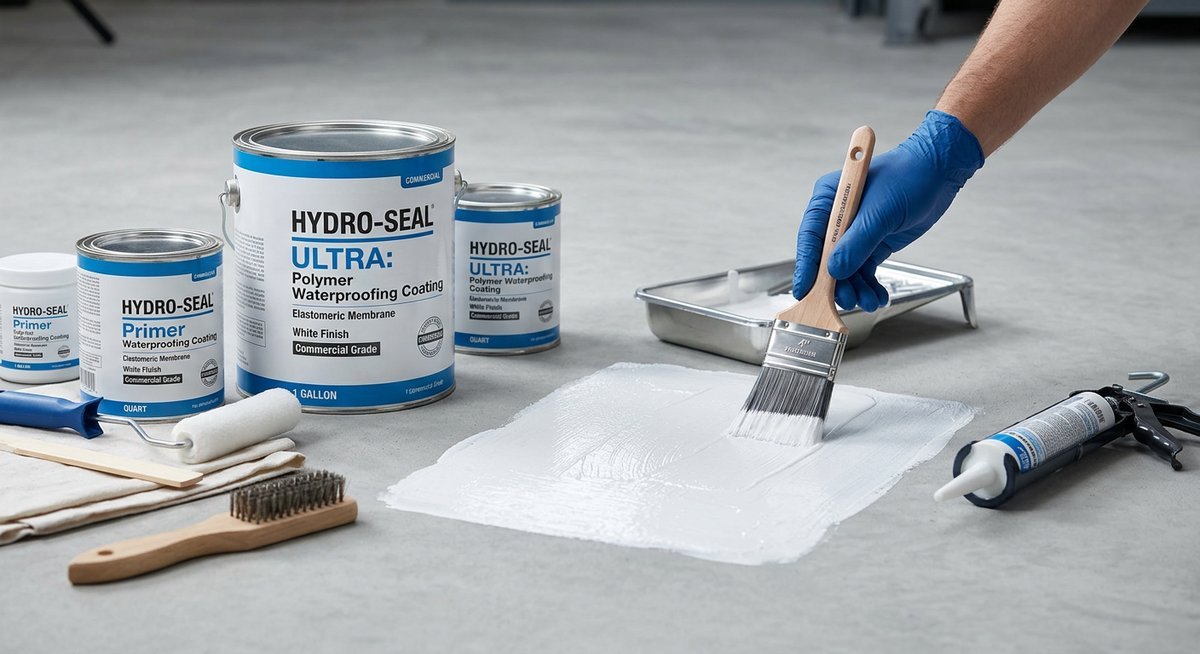
How to Apply Sunanda POLYALK WP: Step-by-Step
POLYALK WP is applied in six steps: surface preparation (clean, repair cracks), pre-wetting the substrate 24 hours ahead, mixing 1:1 with Portland cement by volume, two perpendicular brush coats, an optional third coat for high-exposure areas, and 3-7 days of water misting to cure. Surface preparation failure accounts for the majority of cementitious waterproofing failures in field conditions.
- Surface preparation: Remove all loose material, oil, paint, and existing coatings. Repair cracks deeper than 3mm with cement-sand mortar mixed with POLYALK WP. Allow repairs to cure for at least 24 hours before proceeding.
- Pre-wetting: Dampen the entire surface with water 24 hours before application. At the time of coating, the surface should be moist without standing water. A dry substrate pulls moisture from the slurry and creates adhesion failure.
- Mixing: Combine POLYALK WP with ordinary Portland cement at a 1:1 ratio by volume. Mix to a consistent slurry without lumps. Prepare only the quantity that can be applied within 30 minutes, as the working time is limited in warm weather.
- First coat: Apply the slurry by brush or broom in a single direction. Cover all areas including corners and junction points between floors and walls. Allow to reach touch-dry state (approximately 4-6 hours at 25°C).
- Second coat: Apply perpendicular to the first coat to eliminate directional gaps. For high-water-exposure areas (overhead tanks, basement walls), apply a third coat after the second has dried.
- Curing: Mist the completed coating with water for 3-7 days. Avoid foot traffic for 48 hours and full water loading for 7 days after the final coat.
One technical detail from Sunanda’s product data: POLYALK WP is alkaline and does not facilitate carbonation of the concrete beneath it. In coastal Indian environments where embedded steel reinforcement corrodes from carbonation-induced alkalinity loss, that property provides a secondary protective benefit beyond water resistance alone.
Where Sunanda Waterproofing Is Used
POLYALK WP suits roofs, bathrooms, walls, and water tanks; KRYSTAL WP handles basements and below-grade concrete under hydrostatic pressure; PU membranes protect parking decks, podiums, and bridge surfaces where structural movement occurs; PU sealant seals expansion joints. The three deciding factors are exposure type (surface vs. submerged), structural movement, and whether the surface contacts potable water supplies.
| Application Area | Recommended Product | Key Consideration |
|---|---|---|
| Flat and sloping roofs | POLYALK WP / PU Membrane | PU for high foot-traffic terraces; POLYALK for standard RCC roofs |
| Bathrooms and toilets | POLYALK WP | Apply to sunk portion before tiling; works on wet surfaces |
| External walls | POLYALK WP | Can be mixed with any cement-based paint for a colored finish |
| Water tanks (overhead + underground) | POLYALK WP | Alkaline, non-toxic, safe for potable water contact |
| Basements and retaining walls | KRYSTAL WP | Crystalline self-healing handles sustained hydrostatic pressure |
| Balconies and chajjas | POLYALK WP | Applies to sloped and cantilevered concrete surfaces |
| Parking decks and podiums | PU Membrane | Handles dynamic vehicle loads and seasonal thermal movement |
| Expansion joints | PU Sealant | Bonds to concrete, absorbs movement without cracking or delamination |
According to Sunanda Global’s project documentation, its waterproofing systems have been specified for the Narendra Modi Cricket Stadium in Ahmedabad (132,000 seats, the world’s largest cricket venue), the Signature Bridge in New Delhi, Kolkata Metro Railway, and the Al Yaqoub Tower in Dubai. Each project used a different combination of products from the same portfolio, with a single technical support team managing application across different climates and structural types.
For homeowners, the practical implication is that products verified in landmark infrastructure projects and available through local dealers at Rs 325/kg are the same formulations. There is no residential-grade versus commercial-grade split in the catalog.
Sunanda Waterproofing vs. Other Brands in India
Sunanda’s technical R&D certification and crystalline technology give it specification advantages for infrastructure projects; Dr. Fixit (Pidilite) dominates general consumer availability; Sika India addresses premium imported-technology segments; Asian Paints SmartCare captures the retail paint-dealer market. For residential projects, product availability often determines the choice; for infrastructure projects, technical documentation and specification compliance matter more.
| Brand | Parent Company | Key Differentiator | Relative Limitation |
|---|---|---|---|
| Sunanda (POLYALK WP) | Sunanda Global | ISO 9001:2015 R&D certification, FICCI innovation awards, crystalline technology | Smaller distributor network than Pidilite |
| Dr. Fixit | Pidilite Industries | Widest distribution in India, strong consumer brand recognition | Less technical differentiation in cementitious products |
| Asian Paints SmartCare | Asian Paints | Integrated with paint supply chain, accessible at paint dealers | Primarily consumer-focused, limited infrastructure specifications |
| Sika India | Sika AG (Switzerland) | Global technology standards, strong infrastructure project presence | Premium pricing, limited availability in rural and tier-3 markets |
Where Sunanda waterproofing holds a genuine technical edge is in the crystalline category. KRYSTAL WP’s permanent self-healing mechanism for concrete structures is a differentiated feature that most domestic brands have not replicated. For projects where long-term zero-maintenance concrete waterproofing is the specification requirement, the choice narrows significantly.
For standard residential waterproofing (bathrooms, terraces, water tanks), acrylic cementitious products from all four major brands perform similarly when correctly applied. The real variable in those applications is usually the quality of surface preparation and application rather than the product itself. Sunanda waterproofing products come with technical data sheets and application guidance that support proper use, which matters when work is done by general contractors rather than specialist waterproofing teams.
According to Mordor Intelligence, the India waterproofing solutions market is growing at 7.29% CAGR through 2031, driven by increased infrastructure spending and growing awareness of moisture damage in residential construction. In a market expanding that quickly, the brands with documented R&D processes and verified project credentials are better positioned to hold specification advantages than those competing on price alone.
Frequently Asked Questions
What is Sunanda POLYALK WP used for?
Sunanda POLYALK WP is an acrylic polymer waterproofing solution mixed with cement at the job site to create a flexible, impermeable cementitious coating. It is used on roof slabs, bathrooms, external walls, balconies, and water tanks. The product is alkaline, concrete-compatible, and can be applied in moist conditions, including on water tanks immediately after emptying.
How does Sunanda waterproofing compare to Dr. Fixit?
Both are established Indian construction chemical brands with proven cementitious waterproofing products. Sunanda differentiates through its ISO 9001:2015 R&D certification (the company identifies this as unique among Indian construction chemicals manufacturers) and its crystalline waterproofing technology. Dr. Fixit (Pidilite) has a substantially broader distribution network and stronger name recognition at consumer retail. For infrastructure and commercial projects with technical specifications reviewed by consultants, Sunanda is more commonly specified; for residential DIY applications, Dr. Fixit has wider availability at hardware shops and paint dealers.
What is the price of Sunanda POLYALK WP in India?
Sunanda POLYALK WP retails at approximately Rs 325 per kilogram through authorized dealers and distributors. The standard 20 kg pack is priced at around Rs 3,675. Regional distributor pricing may vary by 5-10%. Smaller packs (1 kg and 5 kg) are available for residential jobs or patch repairs where the full 20 kg pack is more than required.
What is crystalline waterproofing and how does KRYSTAL WP work?
Crystalline waterproofing is a technology where active chemicals penetrate concrete pores and react with moisture to form insoluble crystals, permanently blocking water pathways. Sunanda’s KRYSTAL WP seals existing hairline cracks up to 0.5mm wide and continues to activate against new cracks throughout the structure’s service life. Unlike surface coatings that can peel or degrade with UV exposure and thermal cycling, crystalline protection becomes part of the concrete matrix. It is used primarily in basements, tunnels, water treatment plants, and below-grade foundations where reapplication access is difficult.
What major projects have used Sunanda waterproofing?
According to Sunanda Global’s project documentation, its waterproofing systems have been specified for the Narendra Modi Cricket Stadium in Ahmedabad (the world’s largest cricket stadium with 132,000 seats), the Signature Bridge in New Delhi, Kolkata Metro Railway, the Al Yaqoub Tower in Dubai, and Hotel Cabana in Florida, USA. Each project used different products from the Sunanda portfolio, reflecting the range of its system capability across climates and structural types.
Can Sunanda waterproofing be applied during the monsoon?
Yes. POLYALK WP is specifically formulated for application in moist conditions, including on exteriors and terraces during wet monsoon spells. The surface must be damp but without standing water at the time of application. KRYSTAL WP can also be applied to water-saturated concrete surfaces, which is particularly useful when repairing active water leaks in basements or tanks where drying the substrate fully before treatment is not practical.
Who manufactures Sunanda waterproofing chemicals?
Sunanda waterproofing products are manufactured by Sunanda Global (formerly Sunanda Speciality Coatings Pvt. Ltd.), a Mumbai-based construction chemicals company with over 45 years of operation. The company holds ISO 9001:2015 certification for its Research and Development function and is a member of the Indian Green Building Council. It received the FICCI Product Innovator of the Year award in 2012, 2013, and 2015, an award administered by the Department of Chemicals and Petrochemicals, Government of India.
How long does Sunanda waterproofing last?
The service life of Sunanda waterproofing depends on the product type and application conditions. Crystalline systems (KRYSTAL WP) provide permanent protection as long as the concrete structure is intact, since the crystals become part of the concrete matrix and reactivate with moisture. Cementitious coatings (POLYALK WP) typically require reapplication every 5-10 years in exposed conditions, though protected areas (buried structures, covered tanks) can perform longer. Polyurethane membranes generally carry a 10-15 year expected service life with proper application and surface preparation.