


The Statute of Frauds, a legal principle with roots stretching back to 17th-century England, mandates that certain types of contracts must be in writing to be legally enforceable. While its name might suggest a focus on preventing outright deception, its primary purpose is to prevent fraudulent claims of agreements that were never actually made. In the complex world of real estate, where transactions often involve significant financial commitments and intricate details, this statute plays a crucial role in ensuring clarity, reducing disputes, and protecting all parties involved, highlights HCM Property Management solutions.
The Core Principle: Why Written Agreements Matter
The core principle of the Statute of Frauds in real estate is straightforward: if it’s not in writing, it generally didn’t happen, at least in the eyes of the law. This isn’t to say that verbal agreements are never honored, but when it comes to real property, the stakes are simply too high to rely on spoken promises. This requirement for a written record serves as a safeguard against perjury and faulty memories, providing a clear, undeniable record of the parties’ intentions and agreed-upon terms. It’s a pragmatic approach to avoid the uncertainty and potential fraud that could arise from purely oral agreements concerning valuable real estate. According to Barnes Walker, the Statute of Frauds requires certain contracts, including real-estate sales and leases over one year, to be in writing.
What Constitutes a “Writing”?
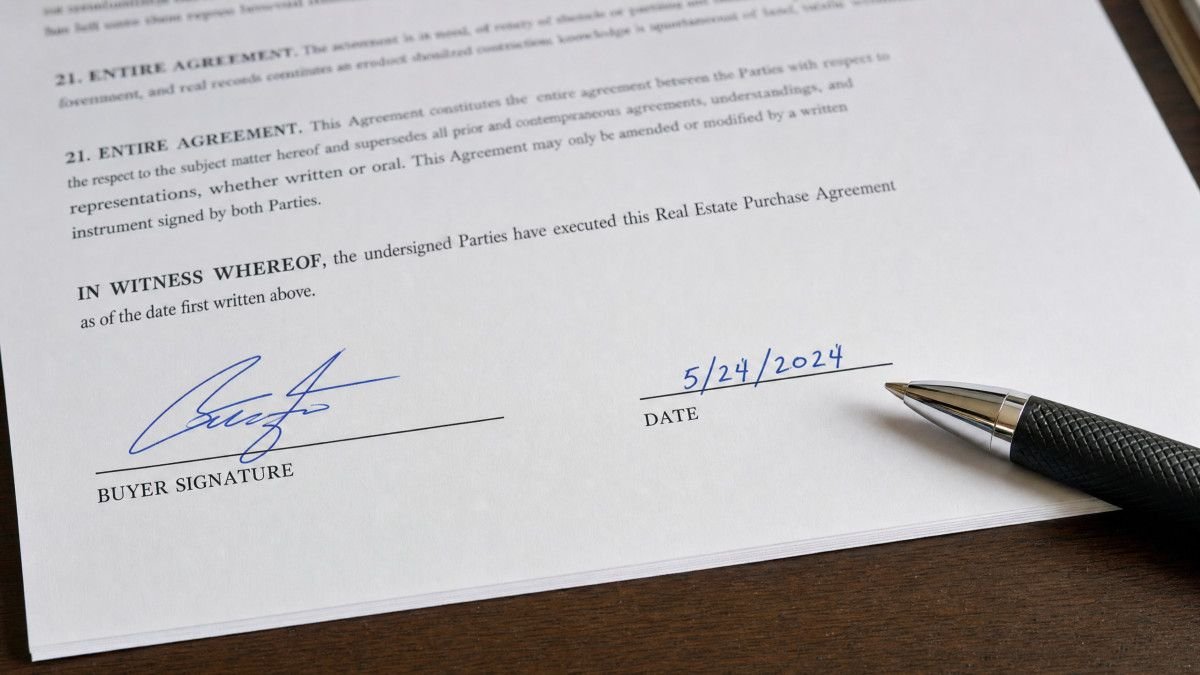
For a real estate contract to satisfy the Statute of Frauds, the writing doesn’t necessarily have to be a formal, notarized document. While a comprehensive purchase agreement is ideal, the legal requirement can often be met by a memorandum or note that contains the essential terms of the agreement. This might include emails, letters, or even a series of documents that, when read together, clearly outline the agreement. However, relying on informal communications can introduce ambiguity and potential legal challenges. The key is that the writing must be signed by the party against whom enforcement is sought. For instance, if a buyer wants to enforce a contract against a seller, the seller must have signed the document. This signature requirement ensures that the party being held accountable has acknowledged and assented to the terms.
Key Elements Required in the Written Agreement
To be enforceable under the Statute of Frauds, a real estate contract must contain several essential elements. These elements ensure that the agreement is sufficiently clear and complete, leaving little room for misinterpretation or dispute. Without these critical components, even a written agreement might be deemed unenforceable.
1. Identification of the Parties
The contract must clearly identify all parties involved in the transaction, typically the buyer(s) and seller(s). This includes their full legal names and, often, their addresses. Ambiguity in identifying the parties can lead to significant legal hurdles, as it becomes unclear who is bound by the agreement.
2. Description of the Property
A precise and unambiguous description of the real property being transferred is paramount. A street address is usually sufficient for residential properties, but for larger or more complex parcels, a legal description (e.g., metes and bounds, lot and block numbers) is often necessary. The description must be specific enough that a person familiar with the area could identify the exact property without needing additional oral explanations. A vague description, such as “my land in the country,” would almost certainly fail to satisfy this requirement.
3. Statement of the Price or Consideration
The purchase price or other consideration for the property must be clearly stated. This could be a specific dollar amount, or it could involve other forms of consideration, such as an exchange of property. The terms of payment, including any financing contingencies or installment plans, should also be outlined. Without a clear understanding of the financial terms, the agreement lacks a fundamental component of a valid contract.
4. Essential Terms and Conditions
Beyond the basic identification of parties, property, and price, the contract must include all other essential terms and conditions that are material to the agreement. This can vary depending on the complexity of the transaction but often includes closing dates, contingencies (e.g., financing, inspection, appraisal), and any specific conditions precedent or subsequent. For example, if the sale is contingent on the buyer securing a mortgage by a certain date, that contingency must be explicitly stated in writing. Leaving out crucial details can render the contract incomplete and unenforceable.
Exceptions to the Statute of Frauds
While the Statute of Frauds generally requires real estate contracts to be in writing, there are certain equitable exceptions that courts may apply to prevent an unjust outcome. These exceptions are typically invoked when one party has acted in reliance on an oral agreement to their detriment, and enforcing the statute would lead to an unfair result. It’s important to note that these exceptions are applied narrowly and depend heavily on the specific facts and circumstances of each case, as well as the jurisdiction.
1. Part Performance
The doctrine of part performance is the most common exception in real estate. It allows a court to enforce an oral contract for the sale of land if the parties have partially performed their obligations under the agreement. The acts of part performance must be unequivocally referable to the oral contract, meaning they wouldn’t have been done unless a contract existed. Common examples of part performance include:
- Payment of a significant portion of the purchase price: While a small deposit might not be enough, a substantial payment can indicate reliance on the oral agreement.
- Taking possession of the property: If the buyer takes possession of the property with the seller’s consent and makes improvements to it, this can be strong evidence of an oral contract.
- Making substantial improvements to the property: Investing time and money in renovating or improving the property, with the understanding that it will be owned, can also trigger this exception.
However, proving part performance can be challenging. A buyer simply moving into a property might be seen as a tenant, not a purchaser, unless other actions clearly demonstrate a purchase agreement. The legal system, in its effort to balance the need for written contracts with the prevention of injustice, scrutinizes these situations carefully. It can be incredibly frustrating when you believe you have a solid agreement, only to find yourself in a legal quagmire because a few key actions weren’t properly documented.
2. Promissory Estoppel
Promissory estoppel is another equitable doctrine that can sometimes bypass the Statute of Frauds. This exception applies when one party makes a clear and unambiguous promise, the other party reasonably relies on that promise to their detriment, and injustice can only be avoided by enforcing the promise. For example, if a seller orally promises to sell a property to a buyer, and the buyer, relying on that promise, sells their current home and incurs significant moving expenses, a court might use promissory estoppel to enforce the oral agreement. The reliance must be foreseeable and substantial, and the court must determine that it would be unfair not to enforce the promise. This is a high bar to clear, and simply having a verbal agreement isn’t enough; there must be demonstrable harm caused by the reliance.
Implications for Real Estate Transactions
The Statute of Frauds has profound implications for anyone involved in real estate transactions. Its existence underscores the critical importance of meticulous documentation and clear communication throughout the entire process. Failing to adhere to its requirements can lead to significant financial losses, protracted legal battles, and immense emotional stress.
For Buyers and Sellers
For both buyers and sellers, the primary takeaway is simple: get everything in writing. This includes not only the main purchase agreement but also any amendments, contingencies, disclosures, or side agreements. Even seemingly minor details, such as agreements about fixtures or personal property to be included in the sale, should be documented. A verbal agreement to leave the refrigerator, for instance, could easily become a point of contention if not written into the contract. It’s a common scenario where a buyer assumes something is included, only to find it gone on moving day, leading to unnecessary friction and potential legal action. Always ensure that all parties sign any written agreement or amendment.
For Real Estate Agents and Brokers
Real estate professionals have a professional and ethical obligation to ensure that their clients’ agreements comply with the Statute of Frauds. This means advising clients on the necessity of written contracts, assisting in the proper drafting and execution of documents, and maintaining thorough records. A real estate agent who facilitates an oral agreement for the sale of property could face professional liability if that agreement later falls apart due to unenforceability. Their role is not just to connect buyers and sellers, but to guide them through the legal intricacies of property transfer, and the Statute of Frauds is a cornerstone of that guidance.
Potential Pitfalls and Best Practices
One of the biggest pitfalls is assuming that a verbal agreement, even among trusted parties, will hold up in court. While personal relationships might foster a sense of trust, legal disputes can strain even the strongest bonds. Another common mistake is relying on incomplete or ambiguous written documents. A hastily scribbled note might technically be “in writing,” but if it lacks essential terms, it offers little protection. Best practices include:
- Use standardized forms: Many jurisdictions have approved real estate contract forms that are designed to meet the requirements of the Statute of Frauds and other relevant laws.
- Seek legal counsel: For complex transactions or when any doubt arises, consulting with a real estate attorney is always advisable. They can review documents, clarify legal obligations, and ensure compliance.
- Document all communications: While not every email or text message constitutes a contract, keeping a record of all significant communications can be valuable evidence in case of a dispute.
Frequently Asked Questions (FAQ)
Q1: What is the primary purpose of the Statute of Frauds in real estate?
The primary purpose of the Statute of Frauds in real estate is to prevent fraudulent claims of agreements that were never actually made and to ensure that significant real estate transactions are supported by reliable written evidence. This minimizes disputes and provides clarity regarding the terms of the agreement.
Q2: Does the Statute of Frauds apply to all real estate agreements?
No, the Statute of Frauds does not apply to all real estate agreements. It typically applies to contracts for the sale of land, leases exceeding one year, and mortgages. Short-term leases (e.g., month-to-month) and certain other agreements may not require a written contract.
Q3: What happens if a real estate contract is not in writing?
If a real estate contract is not in writing and falls under the Statute of Frauds, it is generally unenforceable in a court of law. This means that neither party can compel the other to perform their obligations, potentially leading to significant financial losses or missed opportunities.
Q4: Can an email or text message satisfy the Statute of Frauds?
In some jurisdictions, an email or a series of text messages can potentially satisfy the Statute of Frauds if they collectively contain all the essential terms of the agreement and are signed (or otherwise authenticated) by the party against whom enforcement is sought. However, this is often a complex legal question and relying on such informal communications carries inherent risks.
Q5: What is the “part performance” exception to the Statute of Frauds?
The “part performance” exception allows a court to enforce an oral real estate contract if one party has taken actions that are unequivocally referable to the existence of the contract, such as making substantial payments, taking possession of the property, or making significant improvements. This exception aims to prevent injustice when a party has relied on an oral agreement to their detriment.
Conclusion
The Statute of Frauds in real estate is more than just a legal technicality; it is a fundamental safeguard designed to bring certainty and reduce the potential for fraud in high-value transactions. While its requirements might seem burdensome at times, the underlying principle—that significant agreements should be clearly documented—serves to protect all parties involved. Understanding its nuances, adhering to its requirements, and seeking professional guidance when necessary are not merely best practices, but essential steps for navigating the complexities of the real estate market with confidence. It truly boils down to this: when dealing with property, a written word is worth a thousand spoken ones.
