
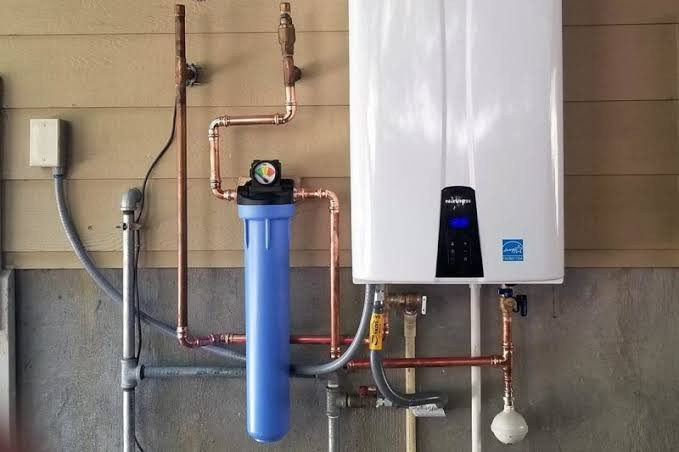

Water heater replacement costs between $900 and $4,500 in 2026, depending on the type, size, and fuel source. A standard 40- or 50-gallon electric tank water heater costs $900 to $1,800 installed. A gas tank water heater costs $1,200 to $2,500, and a failure here can mean a rental property becomes uninhabitable. A tankless water heater costs $2,500 to $4,500.
The cost difference between a $900 electric tank replacement and a $4,500 tankless installation is not about the hot water. Both produce hot water. The difference is in energy efficiency, lifespan, space requirements, and whether the existing gas line, venting, or electrical service can support the new unit without expensive upgrades. The water heater itself is half the invoice. The installation modifications are the other half.
Water Heater Replacement Costs by Type
Water heater replacement costs span from $900 for a basic electric tank to $4,500 for a gas tankless unit, with the installed price driven more by installation modifications than by the cost of the unit itself. Here is how the five main types compare on unit cost, installed cost, lifespan, and efficiency.
| Type | Unit Cost | Installed Cost | Lifespan | Energy Efficiency |
| Electric tank (40-50 gal) | $400 – $800 | $900 – $1,800 | 10–15 yrs | Standard (0.90–0.95 UEF) |
| Gas tank (40-50 gal) | $600 – $1,200 | $1,200 – $2,500 | 10–15 yrs | Standard (0.60–0.70 UEF) |
| Tankless electric | $500 – $1,000 | $1,500 – $3,000 | 20+ yrs | High (0.95+ UEF) |
| Tankless gas | $800 – $1,500 | $2,500 – $4,500 | 20+ yrs | High (0.90–0.95 UEF) |
| Heat pump (hybrid) | $1,500 – $2,500 | $2,000 – $4,000 | 13–15 yrs | Very high (3.0–4.0 UEF) |
Tank vs. Tankless — the Decision That Drives the Cost
A tank water heater stores 40 to 80 gallons of hot water, keeps it at temperature around the clock, and delivers it when a tap opens. A tankless water heater heats water on demand — no storage tank, no standby heat loss, and no running out of hot water in the middle of a shower. The choice between them is not about which one is better. It is about which one costs less to install and operate in your specific house.
Tank water heaters are the default for a reason. The unit costs $400 to $1,200. The installation is straightforward — disconnect the old unit, connect the new one to the existing water lines, power, and venting, fill, and test. In a like-for-like replacement — swapping an old 50-gallon gas tank for a new 50-gallon gas tank — the installation takes two to four hours and costs $400 to $800 in labor. The total is $1,200 to $2,500.
Tankless water heaters cost more to install because the installation is rarely like-for-like. A gas tankless unit requires a larger gas line, typically 3/4 inch instead of 1/2 inch, and a dedicated stainless steel vent that the existing tank vent cannot be reused for. Upgrading the gas line costs $500 to $1,500. Installing new venting costs $500 to $1,000. An electric tankless unit may require a dedicated 200-amp electrical panel, which adds $1,500 to $3,500 if the panel needs to be upgraded. The tankless unit itself costs $800 to $1,500. The installation modifications often cost more than the unit.
The U.S. Department of Energy estimates that tankless water heaters can be 24% to 34% more energy-efficient than conventional storage tank water heaters for homes that use 41 gallons or less of hot water daily. For homes that use more, large families, homes with multiple bathrooms in simultaneous use, the efficiency advantage narrows because the tankless unit runs more continuously. The energy savings are real. They are also specific to household size and usage patterns.
Heat Pump Water Heaters, the Efficiency Leader
A heat pump water heater, also called a hybrid water heater, uses electricity to move heat from the surrounding air into the water tank rather than generating heat directly. It is two to four times more efficient than a standard electric tank water heater. A heat pump unit costs $1,500 to $2,500, and installation costs $500 to $1,500. The total installed cost is $2,000 to $4,000.
The Inflation Reduction Act provides a federal tax credit of up to $2,000 for qualifying heat pump water heater installations, and many utilities offer additional rebates of $300 to $1,000. The net cost after credits and rebates can be $500 to $2,000, competitive with or cheaper than a standard electric tank replacement. The credits apply at tax time, not at the point of sale. Confirm the specific model qualifies for the federal credit before you buy. Not every heat pump water heater on the market meets the efficiency threshold.
Heat pump water heaters have two limitations. They need a certain volume of air to extract heat from, typically 750 to 1,000 cubic feet of space around the unit. A closet installation may require louvered doors or ducting to provide adequate airflow. And they produce cool, dehumidified air as a byproduct, which is an advantage in a hot climate and a disadvantage in a cold climate where the basement is already cold. In a cold climate, the heat pump operates less efficiently because there is less ambient heat to extract, and the cooling effect works against the home’s heating system. The ideal installation is in an unconditioned garage or basement in a warm or moderate climate.
Installation Factors That Change the Cost
Beyond the water heater itself, two installation factors can add hundreds or thousands to the total: code-required safety upgrades that must be done regardless of the unit type, and the permit that proves the work was inspected.
Code-Required Upgrades
When a water heater is replaced, most jurisdictions require the installation to be brought up to current code. This can mean adding an expansion tank, $50 to $150 for the tank, $100 to $200 for installation, if the home has a closed plumbing system with a check valve or pressure regulator. It can mean upgrading the venting to meet current clearance and material requirements. It can mean adding a drip pan and drain line, $100 to $300, if the water heater is in a finished space or an attic where a leak would cause damage. Code upgrades add $200 to $1,000 to the total cost depending on what the existing installation lacks. A contractor who quotes a replacement without mentioning code upgrades is either planning to skip them or planning to add them as change orders after the work begins.
Permits
Water heater replacement requires a permit in most jurisdictions. The permit costs $50 to $200 and ensures the installation is inspected for code compliance. A contractor who suggests skipping the permit to save money is saving you $100 and exposing you to liability if the installation causes a fire, a gas leak, or a carbon monoxide incident. The permit is not optional. The inspection is the proof that the installation was done correctly.
Frequently Asked Questions
How much does it cost to replace a water heater?
A standard electric tank water heater replacement costs $900 to $1,800 installed. A gas tank replacement costs $1,200 to $2,500. A tankless replacement costs $2,500 to $4,500. A heat pump replacement costs $2,000 to $4,000 before tax credits and rebates. The cost depends on the type, size, fuel source, and whether installation modifications are needed.
How long does a water heater last?
A tank water heater lasts 10 to 15 years. A tankless water heater lasts 20 years or more. A heat pump water heater lasts 13 to 15 years. The lifespan depends on water quality, hard water reduces lifespan by causing sediment buildup and tank corrosion, and maintenance. Annual flushing of a tank water heater extends its life by several years. Most homeowners never flush the tank, and the water heater fails at the early end of its lifespan as a result.
What size water heater do I need?
A 40-gallon tank serves one to two people. A 50-gallon tank serves three to four people. An 80-gallon tank serves five or more. A tankless unit is sized by flow rate, gallons per minute at a given temperature rise, rather than storage capacity. A tankless unit that delivers 5 to 7 GPM handles two simultaneous showers. A unit rated for 8 to 10 GPM handles three. Undersizing a tankless unit results in lukewarm water when multiple fixtures are running. There is no way to fix an undersized tankless unit except to replace it.
Can I install a water heater myself?
An electric tank water heater replacement in the same location with the same electrical connection is within the capability of a skilled DIYer who understands electrical safety and plumbing connections. A gas water heater replacement involves working with gas lines, venting, and combustion air, three things that can kill you or your family if done incorrectly. Gas water heater installation should be done by a licensed professional. Tankless and heat pump installations should also be done by professionals due to the complexity of the gas, electrical, and venting requirements.
What are the signs a water heater needs replacement?
Rusty water from the hot side only, rumbling or popping noises from sediment buildup, water pooling around the base of the tank, and age beyond 10 years are the four primary signs. A leaking tank cannot be repaired, it must be replaced. Noises and rusty water can sometimes be addressed with flushing and anode rod replacement, but on a unit older than 10 years, replacement is usually the more cost-effective option.
Are heat pump water heaters worth the extra cost?
Yes, if the installation location has adequate airflow and is in a warm or moderate climate. The federal tax credit of up to $2,000 plus utility rebates can bring the net cost down to $500 to $2,000. The annual energy savings, $200 to $500 compared to a standard electric tank, pay back the additional cost within two to five years. In a cold climate where the unit is installed in a heated basement, the efficiency advantage narrows because the heat pump extracts heat from air that the furnace already paid to warm.
What Hot Water Actually Costs
For most homes with an existing gas or electric tank water heater, a like-for-like replacement is the most cost-effective option. A 50-gallon gas tank water heater costs $1,200 to $2,500 installed, lasts 10 to 15 years, and requires no modifications to the gas line, venting, or electrical panel. The installation is done in an afternoon. The hot water is hot.
A tankless upgrade makes sense if you have the gas capacity or electrical panel headroom to support it without major modifications, and if you value endless hot water and a 20-year lifespan over the lower upfront cost of a tank. A heat pump water heater makes sense if you have the space, the climate, and the tax appetite to claim the federal credit. For everyone else, which is most people, a like-for-like tank replacement gets the job done at the lowest installed cost. The water does not care what heats it. The shower just needs to be warm. Ever stepped into a shower that went cold halfway through because someone started the dishwasher? That moment — standing there in soap and regret — is what every water heater replacement decision is trying to prevent.