
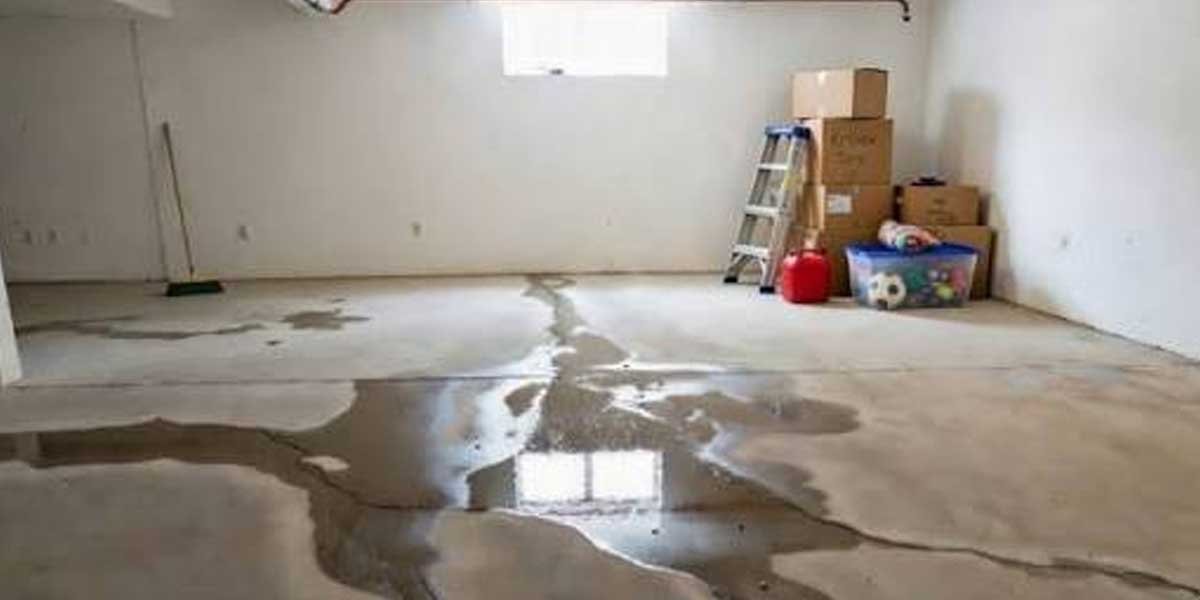

Water seepage in basement walls and floors is the slow movement of groundwater through cracks and porous concrete, not a burst pipe. It leaves damp patches, chalky white stains, and a faint smell of soil long before it ever looks like a flood.
You tend to notice it on a Tuesday morning after rain: a dark line along the base of the wall, a rug that smells faintly of the ground. The room was dry two weeks ago.
Sound familiar?
The repair depends on which layer the water is passing through. Guess wrong and you can spend thousands sealing a wall while the water keeps rising through the floor.
Why Water Seeps Into Basements
Seepage happens when groundwater in the soil around your foundation builds more pressure than the wall or slab can hold back. Three forces drive it: hydrostatic pressure, capillary action through porous concrete, and gravity wherever drainage fails.
Hydrostatic pressure is the sideways and upward force that saturated soil puts on a foundation. After days of rain or a spring thaw, it is the most common reason water finds a way in.
Capillary action is how water climbs through the tiny pores in concrete and mortar, the same way a paper towel wicks a spill. It moves water upward against gravity, which is why a wall can read wet well above the soil line.
Those forces still need a path. Grading that slopes toward the house, clogged gutters, short downspouts, and a failed footing drain all deliver water to the foundation faster than the soil can shed it.
Under enough pressure, even a crack the width of a credit card passes gallons of water a day. That is the detail most people skip before they reach for a tube of sealer.
Why Heavy Rain and Snowmelt Make It Worse
Water seepage after heavy rain or snowmelt is a volume problem. The soil around the foundation saturates faster than it drains, the water table rises, and hydrostatic pressure spikes against the wall.
That is why a basement that stays dry all summer can still take on water during a two-day storm. The wall was rarely the cause. The drainage was.
Finding Where the Water Is Getting In
The quickest way to find the source is to match the symptom to its pattern. Where the water appears, and when, narrows the cause far more than staring at a wet wall.
| What you see | Likely cause | First move |
|---|---|---|
| Damp wall, white chalky stains | Capillary action through porous concrete | Crystalline sealer plus a drainage review |
| Water at the wall-floor seam | Hydrostatic pressure or a failed footing drain | Interior drain tile and sump pump |
| Water up through floor cracks | A rising water table under the slab | Sub-slab drainage and sump |
| Wet only after storms | Surface runoff and poor grading | Regrade, then extend gutters and downspouts |
| One wet corner, a musty smell | A localized crack or gap | Injection or hydraulic cement |
| Condensation on pipes, damp air | High humidity, not seepage | Dehumidifier, insulate cold pipes |
A damp wall and a flooded floor look related, but they are not the same problem. One is water passing through. The other is water being pushed in.
Fixing Seepage Through Basement Walls
Water seepage in basement walls is fixed from the inside in most homes, because the exterior version costs several times more. The right method depends on whether the wall has an active crack, a porous surface, or a drainage failure behind it.
For an active crack, urethane or epoxy injection fills the gap from the inside and stops the flow. Urethane foams to seal a wet, leaking crack, while epoxy bonds a dry hairline crack rigid and strong.
For a damp but unbroken wall, a crystalline or cementitious coating blocks capillary movement. Hydraulic cement plugs a running hole in minutes, but it is a plug, not a structural repair.
Why does a fresh coat of sealer fail by next spring? Because the water was never coming through the coating at all. When water arrives at the base of the wall, only drainage stops it. Drainage first, coating second.
Fixing Seepage Through the Basement Floor
Water seepage in basement floors almost always points to hydrostatic pressure under the slab. The ground is saturated, and the water rises through cracks, the cove joint, or the slab itself.
The durable fix relieves that pressure with an interior drain tile set in gravel beside the footing, leading to a sump pit and pump. Water is captured under the floor and pumped out before it reaches the surface.
Sealing floor cracks alone rarely holds for long. The pressure simply finds the next weak point, so draining the water away is what makes the crack sealing last.
For how these systems fit together, the basement waterproofing reference on Wikipedia covers the full range of interior and exterior methods.
Interior vs. Exterior Waterproofing
Interior systems manage water once it is already inside the foundation. Exterior systems stop it before it reaches the wall. Interior work is cheaper and done from inside, while exterior work is more thorough and far more disruptive.
| Aspect | Interior waterproofing | Exterior waterproofing |
|---|---|---|
| Where the work happens | Inside the basement | Excavated around the foundation |
| Typical cost | $2,000 to $8,000 | $8,000 to $25,000 |
| Disruption | Low, stays indoors | High, with digging, permits, and landscaping |
| Best for | Chronic damp and finished-space seepage | Major leaks and repeated wall seepage |
| Water stopped at the wall | No, it manages water inside | Yes, before it touches the wall |
Interior drainage is the usual choice for a finished basement because it works in a weekend or two without a backhoe. Exterior waterproofing earns the dig when the foundation itself is failing and you need the water kept out of the wall, not just out of the room.
What Basement Seepage Repair Costs
Most basement seepage repairs fall between a few hundred and a few thousand dollars, depending on how deep the fix has to go. The ranges below are typical for U.S. homes, and local labor and access change the numbers.
| Repair | Typical range | Notes |
|---|---|---|
| Crack injection (per crack) | $250 to $800 | Best for one active crack |
| Hydraulic cement (DIY) | $10 to $40 | Plug only, not permanent |
| Waterproof sealer or paint | $1 to $6 per sq ft | Slows vapor, not pressure |
| Interior drain tile and sump | $2,000 to $7,000 | Standard chronic-seepage fix |
| Sump pump plus battery backup | $500 to $2,000 | Backup adds $300 to $700 |
| Dehumidifier | $200 to $400 | For humid air, not bulk water |
| Downspout extensions | $10 to $50 each | The cheapest first step |
| Regrading the yard | $1,000 to $3,000 | Fixes surface runoff |
| Exterior waterproofing | $8,000 to $25,000 | A full dig, membrane, and drainage |
Spending on the wrong line here is common. A $12 downspout extension can solve what looks like a foundation problem, and no interior sealer fixes a rising water table.
Preventing Water Seepage Before It Starts
Prevention is drainage, not sealant. When you keep water away from the foundation, the pressure that drives most seepage never builds in the first place.
Start outside. Clean the gutters twice a year, extend downspouts at least six feet from the wall, and keep the ground sloping away from the house.
- Clear gutters and downspouts before spring and fall rain.
- Move downspout outlets six feet or more from the foundation.
- Keep the grade sloping away from the wall, never toward it.
- Run a dehumidifier in humid months and ventilate when the air outside is dry.
- Seal small cracks early, before water widens them.
Inside, control humidity and watch for the first faint stain. The U.S. Environmental Protection Agency’s mold and moisture guidance states that mold needs a wet surface to grow, which is why a damp basement can feed mold behind drywall and under carpet without ever flooding.
Frequently Asked Questions
Is water seepage in a basement serious?
Seepage is a slow problem with fast consequences: it feeds mold, lifts floor coatings, and can weaken mortar over time. It rarely threatens the structure at once, but it does not fix itself.
What causes water seepage in basement walls?
The usual causes are hydrostatic pressure from saturated soil, capillary action through porous concrete, and cracks or a failed footing drain. Where the water shows up points to which one is at work.
Can water seepage in basement walls be fixed from the inside?
Yes, in most homes. Interior drain tile, a sump pump, and crack injection manage the water from inside and cost far less than digging outside.
The exception is a collapsed or missing exterior footing drain, which needs attention from the outside.
How much does it cost to fix water seepage in basement?
Typical repairs run from about $250 for a single crack injection to $2,000 to $8,000 for an interior drainage system. Full exterior waterproofing usually starts around $8,000.
Why does my basement only leak after heavy rain?
That pattern points to surface water and runoff, not a high water table. Grading, gutters, and downspouts are the first things to check, and the cheapest to fix.
Can I fix basement seepage myself?
You can handle the low-cost steps: downspout extensions, regrading, cleaning gutters, and sealing small cracks. Drain tile, sump systems, and foundation work are best left to a contractor.
Does waterproof paint stop seepage?
Waterproof paint and sealer slow vapor and light dampness, but they fail against hydrostatic pressure. Water will blister the coating and find a new path within a season or two.
How long does a basement seepage repair last?
An interior drain tile and sump system can last 20 years or more with maintenance. Crack injection lasts as long as the crack stays stable.
When Seepage Needs a Professional
Most water seepage in a basement begins as a drainage problem and only turns into a foundation problem when it is ignored for months. Fix the path the water takes, and the wall often takes care of itself.
Call a waterproofing contractor when water rises through the floor, when a sump pit overflows in a storm, or when you find horizontal cracks or a wall that is bowing inward. Those are signs the repair has moved past sealant.
Water always takes the easiest path. Your job is to make that path lead away from the house.