
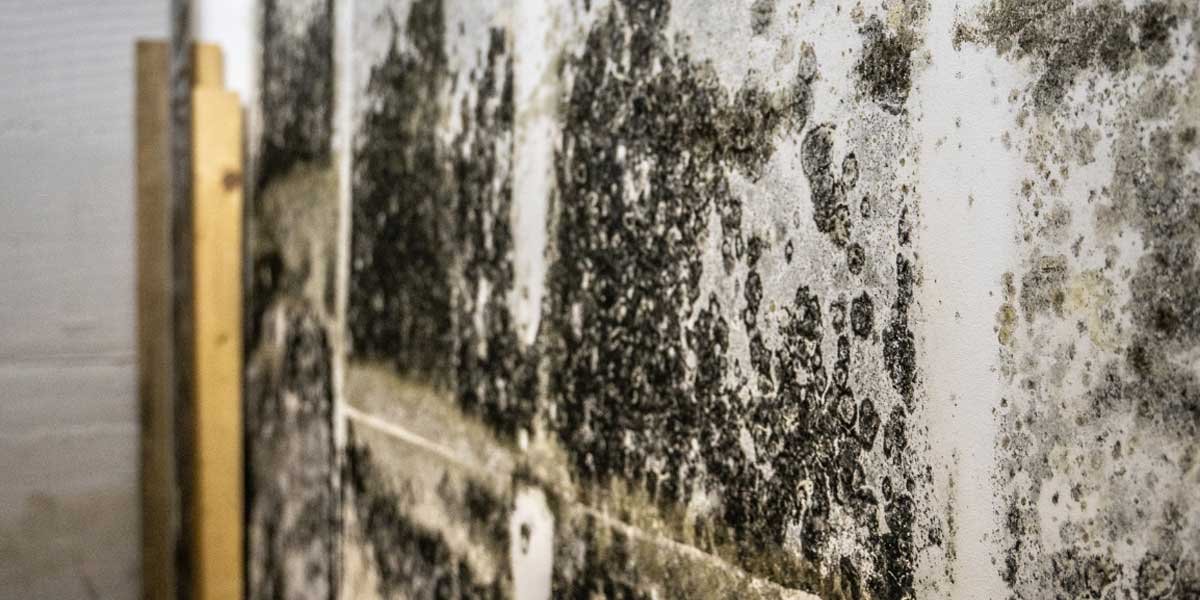

Basement mold remediation cost typically runs from $500 to $3,000 for a small to moderate cleanup, and can pass $10,000 once a finished basement has to be opened up and rebuilt. The price tracks the scope of the work, not the color of the growth.
A musty corner behind a stud wall is a very different job from a flooded rec room with soaked drywall and carpet.
What follows is the real cost stack: what each part of the job runs, what pushes the number up, and how to tell a fair quote from an inflated one.
What Basement Mold Remediation Costs
For a typical single-family basement, professional remediation runs about $500 to $3,000 when the growth is limited to a wall, a joist bay, or a small floor area. A full unfinished basement with widespread growth lands nearer $3,000 to $10,000, and a finished basement with contaminated drywall, insulation, and carpet can exceed $10,000 before reconstruction.
Those ranges line up with national data. Angi put the average mold remediation job at about $2,361 in 2024, with a range of roughly $373 to $7,000, while per-square-foot pricing sits near $2.50 to $25 depending on materials and labor.
Here is the full stack a basement quote is really built from.
| Line item | Typical range | What it covers |
|---|---|---|
| Inspection (often free) | $0 – $500 | On-site assessment and written scope |
| Mold testing and lab samples | $250 – $650 | Air and surface samples, lab analysis |
| Containment setup | $300 – $1,500 | Plastic barriers, negative air, HEPA filtration |
| Remediation labor | $2.50 – $25 / sq ft | Removal, cleaning, antimicrobial treatment |
| Material disposal | $200 – $1,500 | Bagging, hauling, dump fees |
| Post-clearance testing | $150 – $500 | Independent verification it is gone |
| Reconstruction | Varies widely | New drywall, insulation, flooring, paint |
Cost by Basement Size
Size scales the bill in steps rather than a straight line. A single wall runs near the low end, a whole unfinished level sits in the middle, and a finished basement with no clear access climbs to the top of the range.
| Basement scope | Typical remediation range | Main cost driver |
|---|---|---|
| One wall or corner (under 100 sq ft) | $500 – $1,500 | One containment zone, minimal removal |
| Unfinished basement (500 – 1,000 sq ft) | $1,500 – $5,000 | Linear footage of wall and floor treatment |
| Partial finished space | $3,000 – $7,000 | Drywall removal and wider containment |
| Fully finished basement | $7,000 – $10,000+ | Gut-out, disposal, and reconstruction |
Cost per Square Foot
Basement mold remediation cost per square foot usually falls between $2.50 and $25 of treated area. The low end fits a smooth block or poured wall that only needs cleaning, and the high end fits a porous surface like drywall that has to be cut out and its cavity treated.
Do the math on a real job. A 700-square-foot basement with mold across roughly 200 square feet of wall and floor might run $1,500 to $3,000.
The same basement with growth wicking into both sides of every wall and the ceiling joists can double or triple, because the treatable area becomes the whole shell rather than one wall.
Average Cost to Remediate a Basement
The average cost to remediate mold in a basement sits near the low end of the national average, because most basement jobs are smaller than a whole-house remediation. Planners commonly cite $500 to $3,000 for a basement specifically, against a national average closer to $2,360.
The two numbers reconcile once you see what each counts. The national average is pulled up by attic, HVAC, and entire-house jobs, which are larger by nature.
A basement that only leaked at one wall should not be priced as if the whole house were contaminated.
What Actually Drives the Price
The price moves with access, extent, and materials. Remediation contractors do not bill by the spore count; they bill by the labor, containment, and disposal a specific basement requires.
Most of a basement mold remediation cost is labor, containment, and disposal, not the spores themselves.
The factors that show up on almost every estimate:
- Square footage of affected surface, not the room size
- How much of the damage is hidden behind drywall, paneling, or ceiling tiles
- Whether the material is porous (drywall, carpet, insulation) or cleanable (block, concrete, metal)
- Access, since clutter, finished surfaces, and tight spaces all add labor
- Containment scale, from one room to an entire level
- Number and type of lab samples
- Debris volume and local disposal rules
- Region, since labor rates vary by metro
One factor quietly outranks the rest. If the water source is still active, every dollar spent on remediation is temporary until the leak or drainage is fixed.
The wall feels cool and clammy even in a dry-looking room, and that is usually the tell.
Method choice moves the price too. Some contractors fog an antimicrobial mist, some rely on HEPA vacuuming and hand cleaning, and a few use dry-ice or soda blasting on harder surfaces. Each carries different labor and equipment costs, so two quotes for the same room can differ on method alone.
That is why a careful contractor looks at the water first. A dry basement stays dry; a wet one regrows mold on a schedule.
Black Mold in a Basement: Does It Cost More
Black mold removal cost is rarely higher because the species is black. The color tells you almost nothing about the bill, because remediation is priced by scope: how much material is contaminated, how far it spread, and how much containment the job needs. Mold growth, assessment, and remediation follows that same scope-driven logic.
What does push a black-mold job higher is usually where it grows, not what it is. The dark, damp corners where it tends to appear are also the hardest to reach: behind basement stairs, inside a joist cavity, or under a floor.
Two myths cost homeowners money here. The first is that any dark growth is the dangerous species, when many black molds are common and far less concerning.
The second is that a store-bought spray handles it. A spray may lighten the surface and leave the colony feeding on the moisture behind it. Not always enough.
Health effects are real for some people. The CDC links damp indoor mold to allergy and asthma symptoms rather than to a single worst-case species.
DIY vs Professional: Where the Cost Line Falls
DIY basement mold removal can be the cheaper call for a small, cleanable patch: a few square feet on a block wall, no cavity, no finished surfaces. Anything beyond that tends to tip toward a professional, because the hidden cost of doing it wrong is the mold returning.
Cost the DIY path honestly before comparing it to a quote. You need a respirator with P100 cartridges, sealed goggles, disposable coveralls, plastic sheeting and tape for containment, a HEPA vacuum, an antimicrobial or detergent solution, and bags for disposal. That kit alone can run a few hundred dollars, and it buys no clearance test.
| Factor | DIY | Professional |
|---|---|---|
| Typical cost | $150 – $600 in materials | $500 – $10,000+ |
| Best for | Small, cleanable, dry area | Hidden, porous, or recurring growth |
| Containment | Limited, hard to seal fully | Negative air and HEPA, sealed |
| Verification | None | Independent clearance test |
| Recurrence risk | High if the source is missed | Lower, source addressed in scope |
A good rule: if you can see it, reach it, and dry it, it is a DIY candidate. If it is behind a wall or keeps coming back, the professional premium is buying a fix that lasts.
What a Remediation Job Includes
A real remediation follows a defined sequence: assess, contain, remove, clean, and verify. The cost tracks that sequence, so knowing it is the fastest way to spot a quote that skips steps. The EPA guidance on mold and moisture is built on the same principle: fix the water, then clean and dry.
Containment comes first, and it is not optional. Plastic barriers and negative air pressure keep spores from drifting into the clean parts of the house while the affected area is opened.
Removal follows, slowly and deliberately. Porous materials that cannot be cleaned, such as soaked drywall and insulation, are bagged and hauled out rather than scrubbed in place.
Disposal is regulated in some states. Contaminated porous material is often double-bagged and, in some jurisdictions, must go to a specific facility, which is why disposal appears as its own line on a fair quote.
Cleaning and treatment come next. Cleanable surfaces get scrubbed and treated, while HEPA vacuums pull fine debris that an ordinary vacuum would just blow back into the air.
Testing and Clearance
Basement mold testing cost usually runs $250 to $650 for a batch of air and surface samples, with each additional sample adding a modest fee. Testing before the work confirms the problem; testing after the work is the point.
Clearance testing is the independent check that indoor air is back to normal once remediation ends. Ask for it in writing, because a job that looks clean and a job that passes clearance are not the same claim.
Does Homeowners Insurance Cover Basement Mold
Homeowners insurance sometimes covers mold remediation, but typically only when the mold came from a covered, sudden event such as a burst pipe. It almost never covers mold that grew from long-term seepage or neglect the owner should have addressed. The distinction is sudden and accidental versus gradual.
Most policies also cap mold payouts. A common ceiling is around $10,000, and some policies exclude mold entirely unless you add an endorsement.
Basement mold that built up from a slow leak over months is usually the homeowner’s cost to carry. Document everything if you plan to claim, since insurers deny claims that look like deferred maintenance.
For water that arrived from outside, the answer may flip. Flood and groundwater intrusion are typically excluded from standard policies and need separate flood coverage.
Keeping the Remediation Cost Down
The cheapest remediation is the one you never need. Because mold needs moisture, controlling water in the basement is what keeps both the cleanup cost and the recurrence risk low.
Start with the source, not the stain. Fix the leak, extend downspouts away from the foundation, and keep the space dry with a correctly sized dehumidifier.
Sound familiar? By week two the musty smell spreads to the stairs, and the cleanup estimate grows with it.
Prevention is the one line in this article that pays for itself. A few hundred dollars of drainage and humidity control routinely prevents a thousand-dollar cleanup.
Frequently Asked Questions
How much does basement mold remediation cost?
Most basement jobs run $500 to $3,000, with larger or finished basements reaching $3,000 to $10,000 and beyond. The final number depends on how much surface is affected, whether materials are porous, and how much containment the job needs.
What is the cost per square foot?
Expect about $2.50 to $25 per square foot of treated area. Cleanable block or concrete sits at the low end, while drywall and other porous materials that must be removed push toward the high end.
Does black mold cost more to remove?
Rarely because of its color. Remediation is priced by scope, so the location and spread of the growth matter far more than the species. A hard-to-reach patch costs more than an accessible one of the same size.
Will insurance pay for it?
Insurance usually pays only if the mold came from a sudden, covered event like a burst pipe, and often caps the payout near $10,000. Mold from long-term seepage is typically excluded.
Do I need mold testing?
Testing is most useful after remediation, as a clearance check that the air is back to normal. A visual assessment plus a moisture reading often tells a contractor enough to scope the job before any sample is taken.
Can I remove basement mold myself?
You can handle a small, accessible, cleanable patch on a dry surface. If the growth is behind a wall, covers a large area, or keeps returning, professional containment and clearance testing are worth the cost.
How long does remediation take?
A single-room basement job often takes one to three days, and larger jobs with containment and reconstruction can run a week or more. Drying time after the water source is fixed adds to the schedule.
The Real Cost Is Set by the Water, Not the Mold
Basement mold remediation cost is not a fixed price per problem. It is a scope of work, priced by how much surface is affected, how hard it is to reach, and how much has to be removed rather than cleaned.
The number that matters most is the one you spend on prevention. Fix the water and the basement stops producing mold, which is the only result that keeps this line off next year’s budget.