

Waterproofing a shower niche comes down to one seam: the line where the niche box meets the wall. Both manufacturers’ sheets I read spend most of their steps on it.
I read Custom Building Products’ RedGard niche instructions and Schluter’s KERDI-BOARD-SN installation page. They use two different methods. What does each one say to do? And what’s the one detail neither gives?
Where Does a Shower Niche Leak?
A prefab niche leaks at its seam with the wall, because the box ships waterproof and the hole you cut for it does not. Custom’s sheet says the interior of its niche is pre-waterproofed. Schluter’s niche arrives with a waterproof frame for the seams.
That’s why both documents spend most of their steps on the edges. A niche cuts through the wall’s membrane, and the seam is where the two have to join again. If you’re tiling a whole shower, the full shower waterproofing steps come first, because the niche is the last opening in that membrane and it only works if the wall around it is already sealed.
How Do You Seal a Prefab Foam Niche?
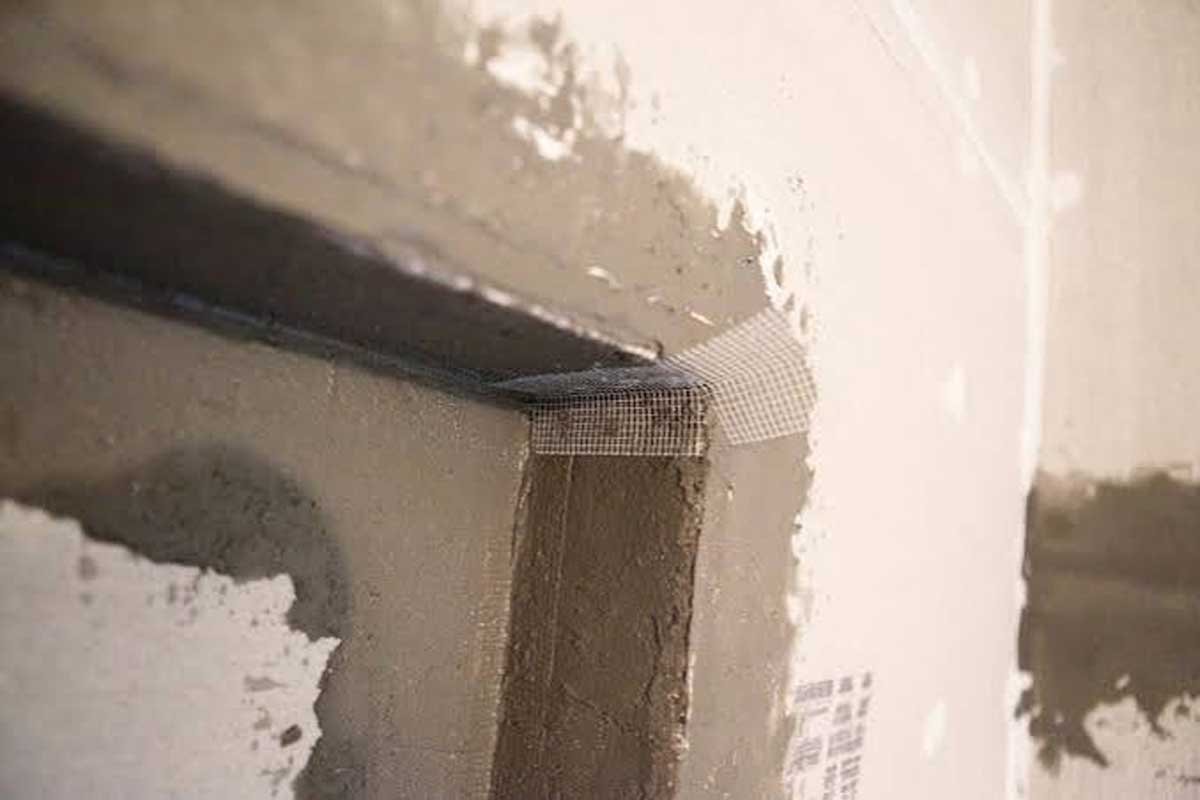
Schluter’s KERDI-BOARD-SN is sealed with a pre-cut KERDI-BAND frame pressed into thin-set mortar around the niche. The niche itself is screwed to the studs first.
- Fasten: insert the niche and fasten it to the studs with the provided screws and washers, or suitable wood or metal screws.
- Place the screws along the seam: Schluter says to put them along the seam between the KERDI-BOARD and the niche, no more than 12 inches apart.
- Seal the frame: bed the KERDI-BAND frame in Schluter SET, ALL-SET, FAST-SET or unmodified thin-set, and embed it across its entire surface.
The shelf goes in after the tile on the back and sides. Schluter’s FAQ says to mark a level line at the shelf height, set tile up to it, then butter the shelf and embed it on the tile.
How Do You Seal a Niche With Liquid Membrane?
Custom’s RedGard niche is sealed by brushing two liberal coats of RedGard liquid membrane over the seam, after the screws are covered and the perimeter is taped. Tile can go on once the membrane turns from pink to red.
- Orientation: Custom recommends an upright niche, to fit tall shampoo bottles.
- Fasten: screw the niche into a stud with two or more galvanized steel screws, 1.5 to 2 inches long. The face must sit flush with the backerboard.
- Cover the screws: smooth Custom’s shower sealant over them with a putty knife, then tape the backerboard around the perimeter.
- Coat the seam: brush on two liberal coats of RedGard.
- Wait: the sheet says the niche can be tiled once the membrane has dried completely, typically about 90 minutes depending on temperature and humidity.
Two warnings are easy to miss. Don’t cut a plastic membrane behind the backerboard; leave enough slack for the niche depth. And any mark or hole in the niche’s factory membrane has to be resealed.
The fabric option works differently. RedGard Fabric Membrane goes over the wall, and pre-formed outside corners and fabric strips seal the niche’s perimeter to it.
| Method | What seals the seam | Screws | Before tiling |
|---|---|---|---|
| Schluter KERDI-BOARD-SN | Pre-cut KERDI-BAND frame in thin-set | Provided screws and washers, 12 inches apart or less along the seam | Not stated in the pages I read |
| Custom RedGard niche, liquid | Two liberal coats of RedGard, screws sealed, backerboard taped | Two or more galvanized, 1.5 to 2 inches | Dry until red, typically about 90 minutes |
Does the Niche Shelf Need a Slope?
Schluter’s FAQ offers two ways to stop water pooling: raise the shelf at the back to create a slope, or set the tile on a slope.
Neither sheet gives a number.
Custom’s doesn’t mention a slope at all. So there’s no pitch figure to quote here, and I won’t make one up. Ask your tile installer which pitch they set, or check the tile industry’s installation handbook.
Waterproofing a Shower Niche FAQ
Should a shower niche be tall or wide?
Custom Building Products recommends a tall, upright niche so tall shampoo bottles fit. That’s a fit choice, not a waterproofing rule, so the sealing steps are the same either way.
How long before you can tile a RedGard niche?
Custom’s sheet says tile once the RedGard has dried completely by turning from pink to red, typically about 90 minutes. Temperature and humidity change that, so go by the color.
What if the niche’s built-in membrane is scratched?
Reseal it. Custom’s sheet says any marks or holes in the pre-applied waterproofing need to be resealed to keep the niche waterproof.
Are these instructions current?
Check before you rely on them. The Custom sheet I read is marked “Rev. 04/13,” so confirm against the maker’s current sheet. Schluter’s pages were live when I read them.