Acrylic Waterproofing: What to Know Before Installing

Acrylic waterproofing membrane is an impervious layer that consists of 6 compounds: acrylic polymer, water, fillers, pigments, additives, and preservatives. The recommended dry film thickness of acrylic waterproofing is 1.0-1.5 mm (40-60 mils). You should install acrylic waterproofing during dry and moderate weather seasons.
The 9 key properties of the Acrylic waterproofing are 8 years of durability, limited flexibility, UV, Chemical, and water resistance, cost-effective, breathable, adhesive, and easy to install and maintain waterproofing sealant. Acrylic-based waterproofing consists of two types: acrylic cementitious and acrylic polymer cementitious waterproofing.
The most used 6 types of acrylic coatings are acrylic roof coating, deck coating, wall coating, sealant, acrylic waterproofing paint, and acrylic waterproofing membranes. You can apply the acrylic coating by using a brush, roller, or spray. Before you apply the acrylic coating on the surface, you should prepare the surface clean and making it free from dust, dirt, oil, grease, and loose particles.
After you apply the acrylic coating on the surface, it should be dry and cured in 2 to 24 hours. During that time, the coating should not be exposed to water. Acrylic waterproofing can be used for roof waterproofing, decks, balconies, walls, bathrooms and kitchens, basements, and concrete.
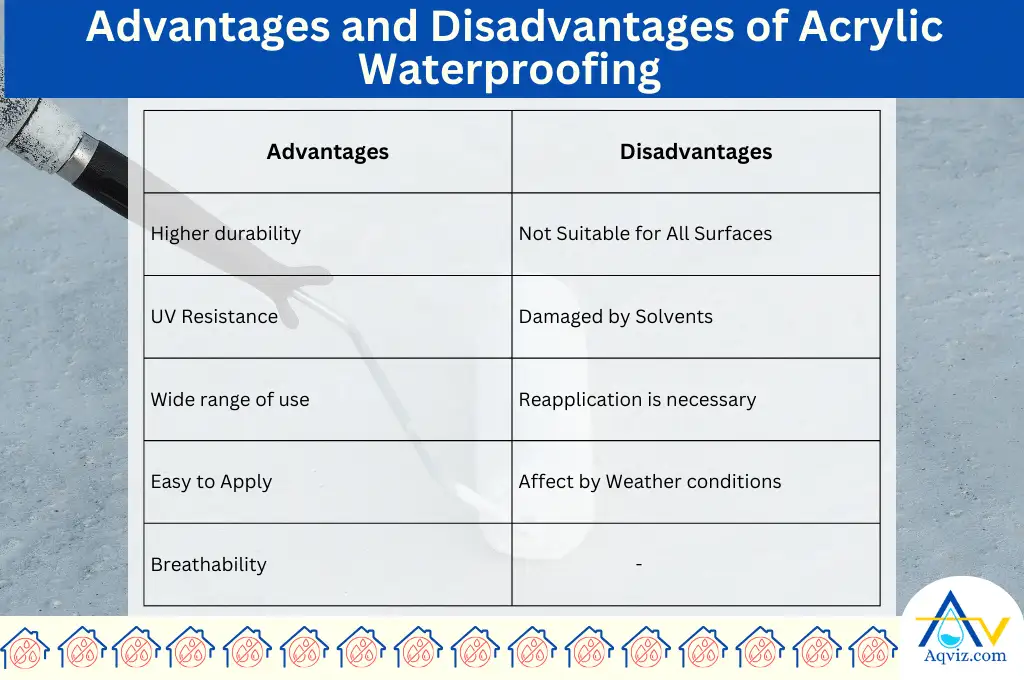
The advantages of acrylic waterproofing are higher durability, UV resistance, a wide range of usage, ease of application, and breathability. There are some disadvantages to acrylic waterproofing, such as not being suitable for all surfaces, being damaged by solvents, and being affected by weather conditions. You should maintain the acrylic waterproofing membrane properly, and it should not be used in some areas in the building because this layer can be damaged due to physical damage, chemical exposure, improper application, extreme weather conditions, UV degradation, and lack of maintenance. You can protect the acrylic waterproofing by regular inspection, proper cleaning, and maintenance. The most used acrylic waterproofing products are Dr Fixit, Cromer, Davco, Acrypol, and Bondit.
What is Acrylic Waterproofing?
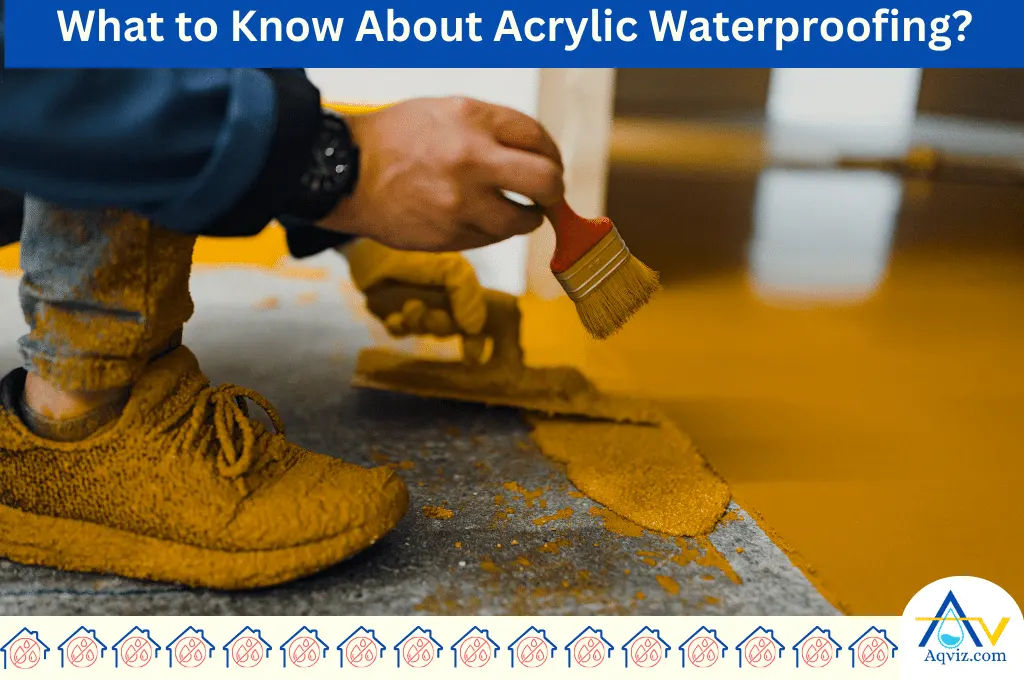
Acrylic waterproofing is an impervious layer that consists of compounds such as acrylic polymer, water, fillers, pigments, additives, and preservatives. The acrylic waterproof coating is applied on the building components to prevent water penetration. Each of the acrylic waterproofing ingredients has a specific purpose.
- Acrylic polymer: Acrylic polymer forms a flexible, durable, and water-resistant barrier when it dries.
- Water: Water is used as the solvent
- Fillers: Clay, silica, and talc are added as fillers to provide body and consistency to the product.
- Pigments: Pigments are used to give the product color.
- Additives: Additives are used to improve UV resistance, adhesion, and curing time.
- Preservatives: Preservatives are used to increase the durability of the product.
What is the Recommended Thickness and Coverage of Acrylic Waterproofing?
The recommended dry film thickness of acrylic waterproofing is 1.0-1.5 mm (40-60 mils), achieved using 2-3 uniform coats. This thickness provides a balanced performance between water impermeability, UV resistance, flexibility, and breathability.
These are the 5 factors that affect the thickness of the acrylic waterproofing: surface roughness, application method, number of coats, dilution ratio, application skill, and weather conditions.
If the thickness of acrylic waterproofing is reduced, it causes the acrylic to penetrate the water, lower the UV resistance, reduce the durability, and result in poor crack bridging.
If the thickness of acrylic is increased, it may cause a reduction in breathability, slower curing time, cracking risks, and higher material cost for the project.
To prevent these problems, you should always maintain the proper thickness mentioned above.
When Should You Install Acrylic Waterproofing?
Aqviz experts highly recommend that acrylic waterproofing should be installed for building waterproofing during dry and moderate weather seasons.
There are 5 best time periods to install acrylic waterproofing, with reasons.
- Dry season: You should install acrylic waterproofing during the dry season because the coating requires 6-8 hours of rain-free curing per coat, and dry weather prevents wash-off, pinholes, and weak film formation.
- Late spring: You should install acrylic waterproofing in late spring because ambient temperatures stay between 15-30 °C (59-86 °F), which supports uniform curing, proper polymer bonding, and consistent film thickness.
- Early summer (non-rainy period): You should install acrylic waterproofing in early summer if rainfall probability is low, as warmer temperatures accelerate curing without causing rapid surface skinning or cracking.
- Low-humidity periods: You should install acrylic waterproofing when relative humidity remains below 80%, because high humidity slows evaporation and can cause bubbling, clouding, and reduced adhesion.
- Mild daytime temperatures: You should install acrylic waterproofing when surface temperature stays below 40 °C (104 °F), since excessive heat causes flash drying, roller marks, and uneven coating thickness
Properties of Acrylic Waterproofing
The most essential features of acrylic waterproofing are durability, flexibility, UV resistance, chemical resistance, Impermeability, cost-effectiveness, breathability, adhesiveness, and ease of installation and maintenance. These features of acrylic waterproofing help to make strong, durable, UV and water-resistant, thermal-stable layers on the structure’s surface.
Below is a summary list of 9 acrylic waterproofing properties. You should know these things before installing it.
- Flexibility of Acrylic Waterproofing: Acrylic waterproofing is flexible due to its acrylic polymers. Acrylic coating can be subjected to small variations of movements and flexibilities, such as thermal expansion and small structural deformations, without wearing or tearing.
- UV Resistance of Acrylic Waterproofing: Acrylic waterproofing is UV-resistant. Hence acrylic waterproofing layer will not be damaged or deteriorate from the sunlight. Hence, acrylic waterproofing can be used for the open sunlight areas.
- Chemical Resistance of Acrylic Waterproofing: Acrylic waterproofing has a wide range of chemical resistance. Acrylic waterproofing can withstand exposure to mild acids, alkalis, and salts.
- Impermeability of Acrylic Waterproofing: The acrylic waterproofing layer is a tight, water-impermeable layer. An acrylic waterproofing layer does not allow moisture or water. Hence, it can be used for water damage, mold growth, and the deterioration of the material underneath the coating.
- Cost Effectiveness of Acrylic Waterproofing: Acrylic waterproofing can be considered as a cost-effective waterproofing solution because the acrylic waterproofing layer has a long service life and effective water protection, is easy to apply on the surface, and can be used in a wide range of applications.
- Breathability of Acrylic Waterproofing: Acrylic waterproofing is a breathable coating. The breathability of acrylic waterproofing helps to prevent the buildup of condensation and moisture within the structure, which can lead to issues like mold growth or structural damage.
- Adhesion of Acrylic Waterproofing: Acrylic waterproofing has excellent adhesion properties. Acrylic waterproofing can bond well to a variety of substrates, including concrete, metal, wood, and bricks.
- Ease of Installation of Acrylic Waterproofing: Acrylic waterproofing can be applied on the surface by using few tools. Acrylic waterproofing is a liquid. Hence, it can be applied on the surface by using a brush, rollers or spray.
- Ease of Maintenance of Acrylic Waterproofing: The acrylic waterproofing layer is easy to maintain during its service life. Hence acrylic waterproofing layer can be damaged due to dirt, mold, and mildew.

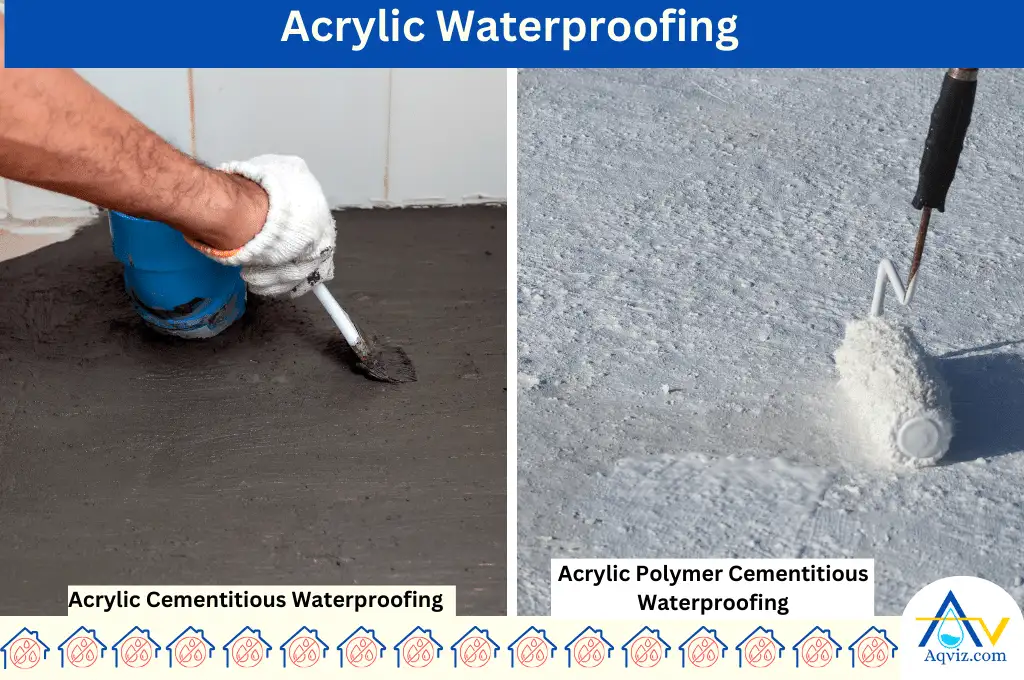
What is Acrylic Cementitious Waterproofing?
Acrylic cementitious waterproofing is a type of waterproofing that is made from both acrylic and cementitious materials. This combination gives 5 benefits to the waterproofing layer, such as higher flexibility, higher durability, extra waterproofing capability, ease of application, and affordable usage. Acrylic cementitious waterproofing can be used on foundations, basements, patios, walkways, decks, swimming pools, bathrooms, and kitchens.
What is Acrylic Polymer Cementitious Waterproofing?
Acrylic polymer cementitious waterproofing is a hybrid type of waterproofing that combines the benefits of acrylic and cementitious materials. Acrylic cementitious waterproofing improves water resistance, flexibility, adhesion, and durability compared to conventional cementitious waterproofing.
What Are the 6 Types of Acrylic Waterproofing?
Acrylic waterproofing has 6 types according to its specific usage. The most used acrylic waterproofing are acrylic roof coating, acrylic deck coating, acrylic wall coating, acrylic sealants, acrylic waterproof paints, and acrylic waterproofing membranes. Each of these acrylic waterproofing is used for the following tasks.
- Acrylic Roof Coating: Acrylic roof coating is used to protect the roof from water damage, UV rays, and temperature variations.
- Acrylic Deck Coating: Acrylic deck coatings are used to protect the decks and patios from high foot traffic, harsh weather conditions, and mold and mildew growth.
- Acrylic Wall Coating: Acrylic wall coating is used on exterior walls to protect them from moisture and weather damage.
- Acrylic Sealants: Acrylic sealants are used to seal cracks and gaps in various structures to prevent water and air infiltration.
- Acrylic Waterproofing Paint: Acrylic waterproofing paints are used on both interior and exterior surfaces.
- Acrylic Waterproofing Membrane: Acrylic waterproofing membranes are a type of sheet waterproofing membrane that can be used in construction for foundations, basements, and under tiles in wet areas like bathrooms.

How to Apply Acrylic Waterproofing?
Acrylic waterproofing can be applied to the surface by following the steps. You should have tools such as a brush, roller, and spray to spread the coating on the surface. Then, you should keep the coating for curing as per the product recommendation.
- Prepare the surface: The surface should be prepared, clean, and free from dust, dirt, oil, grease, and loose particles. Any cracks or damage on the surface should be repaired first.
- Apply the primer: The primer should be applied according to the manufacturer’s instructions and allowed to dry. The primer will improve the adhesion between the acrylic waterproofing layer and the surface.
- Apply the acrylic waterproofing: Apply the acrylic waterproofing layer consistently and uniformly using a brush, roller, or sprayer. The applied method will depend on the product and the size of the area to be covered.
- Drying and curing: The coating must dry and cure after the application process. The curing time will be 2 hours to 24 hours. It depends on the manufacturer’s recommendation. During this time, the coating should not be exposed to water or heavy traffic.
- Apply additional coats: Apply the additional coatings according to the manufacturer’s guidelines.
- Do regular maintenance: You should conduct regular inspections for any signs of damage or wear and tear after the acrylic waterproofing has fully cured. You should repair it by applying a new coat of the waterproofing product if any damage is found.
Where to Use Acrylic Waterproofing?
Acrylic waterproofing can be used for negative-side waterproofing. If the layer is damaged, it can be fixed easily in the negative side of the waterproofing. Hence, acrylic waterproofing can be used for the following applications.
- Roof Waterproofing: Acrylic waterproofing is used for roof waterproofing to protect them from water damage, UV radiation, and temperature variations.
- Deck and Balcony Waterproofing: Acrylic waterproofing is used for deck waterproofing, balcony waterproofing, and patio waterproofing to protect the surface from water damage, wear, and tear associated with foot traffic and outdoor conditions.
- Wall Waterproofing: Acrylic waterproofing can be used on both interior and exterior walls to prevent moisture penetration.
- Bathroom and Kitchen Waterproofing: Acrylic waterproofing can be used in bathrooms, kitchens, and other areas to prevent water damage and mold growth.
- Basement Waterproofing: Acrylic waterproofing can be used to protect basements and other below-grade structures from groundwater seepage.
- Waterproofing for Concrete Structures: Acrylic waterproofing is used to waterproof concrete structures like bridges, parking garages, and walkways.
What Are the Advantages and Disadvantages of Acrylic Waterproofing
Acrylic waterproofing has advantages and disadvantages based on its properties and values.
Advantages of Acrylic Waterproofing
These are the 5 major advantages of acrylic waterproofing
- Higher durability: Acrylic waterproofing is more durable because it maintains elasticity for 10–15 years under normal exposure, resists hairline crack movement up to 1.5 mm, and tolerates thermal expansion cycles from -10 °C to 80 °C (14 °F to 176 °F) without peeling.
- UV resistance: Acrylic waterproofing is UV resistant because the polymer structure reflects and withstands continuous sunlight exposure above 1,000 W/m², reducing surface temperature by 10–18 °C (18-32 °F) on rooftops and preventing premature aging.
- Wide range of use: Acrylic waterproofing has a wide range of use across substrates, including concrete slabs, metal roofs, asbestos sheets, brick masonry, and fiber cement boards, for areas such as terraces, balconies, external walls, parapets, and sloped roofs.
- Easy to apply: Acrylic waterproofing is easy to apply because it uses cold application methods such as roller, brush, or airless spray, requires no heating or mixing, and achieves a standard dry film thickness of 1.0-1.5 mm (40-60 mils) in 2 coats.
- Breathability: Acrylic waterproofing is breathable because it allows water vapor transmission rates of approximately 800-1,200 g/m²/24 h, which helps release trapped moisture and prevents blistering, damp patches, and coating delamination.
Disadvantages of Acrylic Waterproofing
These are the 4 main disadvantages of acrylic waterproofing.
- Not suitable for all surfaces: Acrylic waterproofing is not suitable for all surfaces because it does not bond well with permanently submerged areas, negative-side waterproofing zones, and surfaces exposed to standing water above 48-72 hours, such as water tanks and basements below grade.
- Damaged by solvents: Acrylic waterproofing is damaged by solvents because petroleum-based chemicals, fuel splashes, and aggressive cleaners can soften or dissolve the acrylic polymer matrix, leading to coating breakdown at exposure levels above 5-10% solvent contact.
- Reapplication is necessary: Acrylic waterproofing requires reapplication because the coating gradually erodes under UV exposure and weathering, typically needing recoating every 5-7 years to maintain a minimum dry film thickness of 1.0 mm (40 mils).
- Affected by weather conditions: Acrylic waterproofing is affected by weather conditions because application fails if ambient temperature drops below 10 °C (50 °F) or if rain occurs within 6-8 hours of application, which can cause wash-off, pinholes, and weak film formation.
How to Maintain an Acrylic Waterproofing?
To maintain an acrylic waterproofing membrane you should follow these 9 steps.
- Inspect the surface regularly: You should inspect the acrylic waterproofing surface layer every 6-12 months to identify cracks, peeling, pinholes, ponding water marks, and joint failures.
- Clean the surface: You should clean dirt, dust, algae, mold, and mildew on the acrylic waterproofing membrane using mild soap and clean water to prevent surface degradation and biological growth.
- Maintain proper drainage: You should keep roof drains, balcony outlets, and scuppers clear to prevent standing water beyond 48-72 hours, which accelerates coating deterioration.
- Repair cracks and joints: You should repair hairline cracks, joints, and corner gaps on the acrylic waterproofing membrane immediately using a compatible acrylic sealant to stop water from penetrating beneath the coating.
- Recoat worn areas: You should reapply acrylic waterproofing on exposed and high-traffic areas to maintain a minimum dry film thickness of 1.0 mm (40 mils).
- Monitor UV exposure: You should check for chalking, fading, and surface erosion on the acrylic waterproofing membrane in high-sunlight areas and apply a maintenance coat if deterioration appears.
- Control foot traffic: You should limit unnecessary foot traffic on the acrylic waterproofing membrane and install protective walk pads along access paths to reduce mechanical wear and abrasion.
- Prevent chemical exposure: You should avoid contact with solvents, fuels, and harsh cleaning chemicals that can soften or damage acrylic polymers.
- Schedule periodic reapplication: You should apply a full maintenance recoat every 5-7 years, on the acrylic waterproofing membrane, depending on climate severity, exposure level, and surface usage.
When You Should Not Use Acrylic Waterproofing?
You should not use acrylic waterproofing in these 5 situations.
- Permanent water immersion: You should not use acrylic waterproofing if the surface remains submerged or holds standing water beyond 48-72 hours, such as water tanks and submerged slabs.
- Negative-side waterproofing: You should not use acrylic waterproofing if water pressure acts from behind the surface, such as basements below grade and retaining walls.
- High hydrostatic pressure: You should not use acrylic waterproofing if the structure experiences high water pressure, which can exceed the coating’s adhesion and cause debonding.
- High structural movement: You should not use acrylic waterproofing if joints or slabs undergo dynamic movement or cracking beyond 1.5 mm (0.06 in).
- Chemical or solvent exposure: You should not use acrylic waterproofing if the surface is exposed to fuels, oils, strong acids, or solvents without the manufacturer’s approval.
If you can’t use acrylic waterproofing, you can use these 10 waterproofing membranes instead.
How to Damage an Acrylic Waterproofing Layer?
The severe damages that occur on the acrylic waterproofing layer are scratching, cracking, tearing, wearing, degradation, and deterioration. These damages occur due to these 6 reasons, such as physical damage, chemical exposure, improper application, exposure to extreme weather conditions, UV degradation, and lack of maintenance.
- Physical Damages on Acrylic Waterproofing Layer: The acrylic waterproofing layer can be scratched, cracked, or torn due to foot trafficand moving heavy objects across the surface.
- Chemical Exposure: The acrylic waterproofing layer can be degraded due to exposure to harsh chemicals or solvents.
- Improper Application of Acrylic Waterproofing Layer: The acrylic waterproofing layer thickness can be thinner than recommended due to not applying the coating properly, due to instrumental or user errors.
- Extreme Weather Conditions on Acrylic Waterproofing Layer: The acrylic waterproofing layer can be damaged due to wear and tear due to extreme weather conditions like heavy rain, hail, or freezing temperatures.
- UV Degradation on Acrylic Waterproofing Layer: The acrylic waterproofing layer can deteriorate due to prolonged exposure to intense sunlight.
- Lack of Acrylic Waterproofing Maintenance: The acrylic waterproofing layer can be damaged due to neglecting to repair minor damaged cracks and issues.
Polyurethane waterproofing is another type of waterproofing membrane that can be used as acrylic. So you should check that also before installing acrylic.

How to Protect an Acrylic Waterproofing Layer?
The acrylic waterproofing layer can be protected by following the 6 steps.
- Regular inspection
- Proper cleaning
- Limit exposure to harsh conditions.
- Avoid heavy impact
- Regular maintenance
- Follow the manufacturer’s instructions.
What Are the Acrylic Waterproofing Products and Their Usage?
The most popular acrylic waterproofing products are Dr Fixit, Cromar, Sika rain tite, Davco, Acrypol, and Bond it. Each of these products is specially used for a specific purpose as follows.
| Acrylic Waterproofing Products | Usages of Acrylic Waterproofing |
| Dr Fixit | Roof leakage and cracks |
| Cromar | Flat roofs, lead work, slate, asbestos, cement, metals, bituminous surfaces, asphalt, PVC, glass houses |
| Sika ® Rain Tite | Parapet walls, External walls, sealing joints, lap, roofing screws, roof tiles |
| Davco | Metal roofs, external walls, gutters, metal, concrete, motors, steel, zinc, timber |
| Acrypol | Failed flat roofs and patching repairs |
| Bond it | roofs, gutters, corrugated roofing, flashing, roof lights, lead, greenhouses, and asphalt |