PVC Membranes: Know these Before Installation

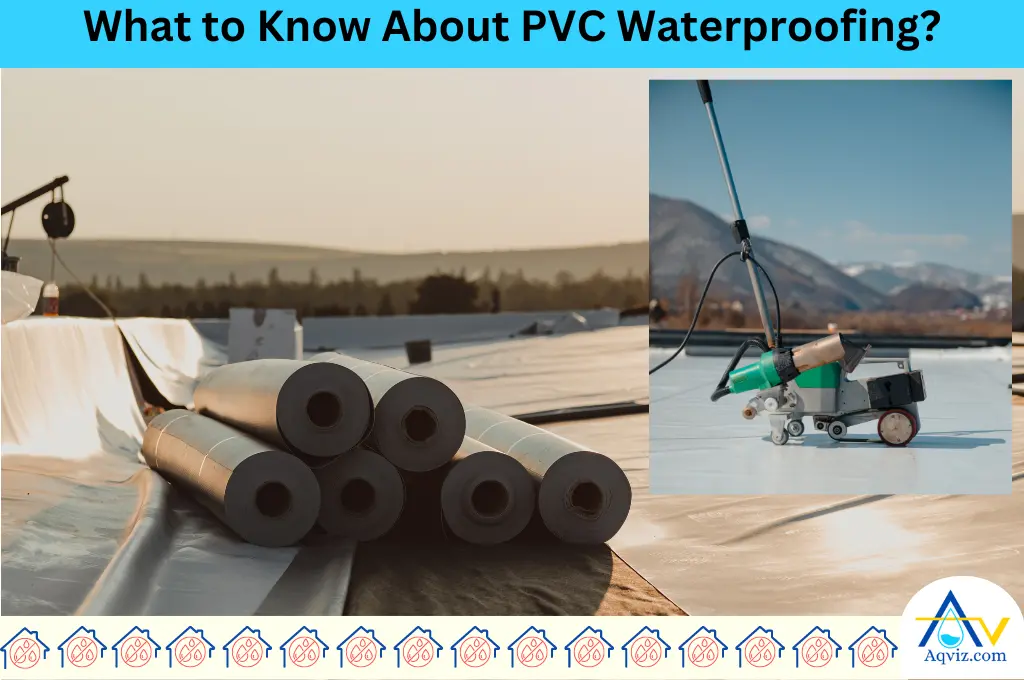
A PVC (Polyvinyl Chloride) membrane is a flexible, synthetic, waterproofing material. PVC emembrane is a single-ply system, meaning it is applied in one continuous layer to create water tight seal on the surface. PVC membranes consist of 3 main layers, including the top layer, reinforced layer, and bottom layer. PVC membranes are mainly of 3 types, such as type-2, type-3, and type-4, based on the membrane structure. There are recommended ASTM standards for PVC membranes.
PVC membranes are used as PVC roofing, PVC pool lining, and PVC deck membrane, mostly. When you install a PVC membrane, it should have a recommended lap length (1.5-1.6 inches), edge height (8 inches), and corner radius (1 inch). When you heat-weld a PVC membrane, you should always maintain 350°C and 550°C (660°F to 1,020°F) inside the nozzle. After installing the PVC membrane, you can check the seam by using these 4 methods: manual seam probing, visual inspection, air channel testing, and using a destructive peel test.
When you install PVC membrane, you should always use the recommended tools and steps for effcient installation process. Sika and Carlisle are the most used PVC waterproofing membranes. You should protect the PVC membrane properly else it can be damaged due to the reasons mentioned below.
What is a PVC Membrane?
A PVC (Polyvinyl Chloride) membrane is a flexible, synthetic, waterproofing material. PVC emembrane is a single-ply system, meaning it is applied in one continuous layer to create water tight seal on the surface. PVC membrane consists of three distinct layers: top layer, reinforced layer, and bottom layer.
- Top Layer: A high-quality PVC compound formulated with UV stabilizers and pigments (often white or light grey) to reflect sunlight.
- Reinforcement (Scrim): A middle layer of polyester or fiberglass mesh that provides tensile strength and prevents the membrane from tearing or stretching.
- Bottom Layer: A flexible PVC base layer that allows for bonding to the substrate.
PVC membranes are more durable because they are resistant to fire, punctures, chemicals, grease, and animal fats. They also have a high Solar Reflectance Index (SRI), keeping buildings cooler and reducing AC costs.
What are the 3 Types of PVC Membranes?
PVC membranes are mainly of 3 types according to the structure of the membrane. They are type-2, type-3, and type-4.
- Type-2 PVC membrane is a reinforced PVC sheet including fibers.
- Type-3 PVC membrane is a sheet that is internally reinforced with fabric, which may also have a fabric backing.
- Type-4 PVC membrane is a sheet that is internally reinforced with fabric, which may also have a fabric backing with a minimum thickness of 0.91mm.
What are the 3 Applications of PVC Membranes?
PVC membranes are mainly used as PVC roofing, PVC pool lining, and PVC deck membrane due to its higher waterproofing capability.
PVC Roofing
PVC roofing is the installation of a PVC membrane on the roof surface to prevent water ingress, rain penetration, and ponding leakage, and protect the roof structure from UV radiation, thermal expansion, chemical exposure, and premature material deterioration.
PVC membranes are installed on the roof by hot-air welding, where the laps fuse into a single, continuous layer. This welding process eliminates capillary leakage and joint failure that commonly occur in mechanically overlapped or loosely bonded roofing systems.
PVC roofing is installed on flat roofs, low-slope roofs, terrace roofs, green roofs, metal deck roofs, and concrete slab roofs to fix long-term problems caused by slow drainage, standing water, and continuous sun exposure.
PVC Pool Lining
A PVC pool lining is a high-strength, flexible membrane made of two layers of PVC laminated around an internal polyester mesh (scrim). PVC pool lining is usually 1.5mm to 2.0mm thicker and installed by custom-cutting and heat-welding. PVC pool lining has anti-bacterial and UV-resistant lacquers to prevent algae growth and sun damage.
PVC pool lining can be used for old concrete pools, rooftop and indoor pools, commercial or public pools, and non-standard shape pools. PVC linings are durable, water-tight, low-maintenance, safe, and have a higher aesthetic appeal to the pool. PVC pool lining are cheaper option for standard vinyl lining, and has more than 20+ years of durability and is puncture-resistant compared to other pool linings.
PVC Deck Membrane
A PVC deck membrane is a vinyl sheet typically 60-80 mils thick (1.5-2.0 mm | 0.059–0.079 in). It includes a top PVC layer with UV stabilizers and slip-resistant texture, a mid-layer polyester mesh scrim to control stretching and tearing, and a bottom bonding layer engineered to adhere to plywood or concrete substrates.
A PVC deck membrane is installed on decks over living spaces, balconies, patios, pool decks, locker rooms, and flat roofs converted into terraces where strict water control is required. PVC membranes are used for decks due to their durability, lower maintenance, no sanding, barefoot comfort, and easy connection with heat-welded seams, and have a service life of more than 20-25.
What is the Lap Length for a PVC Membrane?
The lap length of the PVC membrane is the overlap distance between two PVC membrane is connected together. The lap length varies with the method of PVC membrane installation on the surface. Mainly, PVC membrane can be applied as welded, adhered, or mechanically fastened. So the lap length of each method varies as follows.
- Welded seam width: Regardless of the overlap, the actual heat-weld must be at least 1.5 inches (38 mm) to 1.6 inches (40 mm) wide to be considered structurally sound.
- Adhered (Glued) systems: Typically require a minimum overlap of 2 to 3 inches (50-75 mm).
- Mechanically attached systems: Require a larger overlap of 4 to 6 inches (100-150 mm). This is because the overlap must be wide enough to cover the fastening plates (screws and discs) and still provide room for a clean heat-weld.
What is the Edge Height of PVC Membrane?
The edge height of the PVC membrane is how far the membrane must travel up a vertical surface (like a wall or parapet) to prevent water from getting behind it.
- Recommend PVC membrane edge height: The membrane should extend at least 8 inches (200 mm) above the finished roof or deck surface.
- Low PVC membrane edge height: In areas like door sills, the height can be reduced to 4 inches (100 mm), but only if specialized termination bars and sealants are used.
- Outside PVC membrane edge height: If the membrane is wrapping over a roof edge (drip edge), it should extend down the face of the building by at least 2 inches (50 mm)
What is the Corner Radius?
Corner radius and round-offs are smoothing sharp edges and corners during PVC membrane installation to reduce stress points and prevent leakage.
During a PVC installation, sharp corners act as failure points where the membrane is more likely to peel, lift, or leak over time. Rounding corners allows the membrane to sit flat and reduces tension caused by wind, movement, or thermal expansion.
When patching T-joints or punctures, patch corners should be rounded with a radius of about 25 mm (1 inch). This prevents the dog-ear effect, where sharp patch corners catch on wind, foot traffic, or maintenance tools and start peeling.
At internal corners where a horizontal surface meets a vertical wall, installers place a cant strip or fillet to form a gentle radius or 45-degree angle. This avoids forcing the membrane into a sharp 90-degree bend, which can stress the PVC and lead to cracking or seam failure over time.
What is the Welding Temperature of PVC Membrane?
The recommended welding temperature for PVC membrane is between 350°C and 550°C (660°F to 1,020°F) inside the nozzle.
You should adjust the welding temperature in cold and warm weather.
- In Cold/Windy Weather: You must increase the heat or decrease the welding speed to ensure the material reaches its melting point.
- In Hot/Sunny Weather: You must decrease the heat or increase the welding speed to avoid “burning” or charring the PVC (which turns it brown and brittle).
How Do you Check a PVC Membrane Seam?
You can check the seam of the PVC membrane by using these 4 methods: manual seam probing, visual inspection, air channel testing, and using a destructive peel test.
- Manual Seam Probing: You can check the PVC membrane seam by using manual seam probing. Manual seam probing is a hand tool with a dull, rounded tip. You should wait at least 30 minutes for the weld to cool. Then run the tip of the probe along the edge of the lap seam while applying firm, horizontal pressure into the seam. If the probe “pops” into the seam or slides under the top layer, you have found a “cold weld” or a “skip” (void).
- Visual inspection (bleed out): You can check the PVC membrane seam by visual inspection. Visual inspection checks for bleed out along the welded seam. A proper weld shows a continuous, glossy PVC line about 3 mm (1/8 in) wide. If the seam edges appear brown or charred, the welding temperature is too high or the welder’s speed is too slow, which makes the PVC brittle.
- Air channel testing: You can check the PVC membrane seam by using air channel testing. Air channel testing is used for dual-track welds in large-scale installations. Both ends of the air channel are sealed, and air is injected using a pressure gauge. The seam passes if it holds 140-210 kPa (20-30 psi) for 30 seconds to 2 minutes without a noticeable pressure drop.
- Destructive peel test: You can check the PVC membrane seam using a destructive peel test. Destructive peel testing is performed on a test weld at the start of the day or after major weather changes. A 25 mm (1 in) wide strip is cut across the seam and pulled apart. The weld passes if a film tearing bond occurs, where the PVC or scrim fails before the seam separates.
How to Install PVC Membrane?
To install a PVC membrane, you should have the following tools and materials and follow the below 6 step by step guide below properly.
Tools for PVC membranes
You should use these 7 materials and tools for PVC waterproofing.
- PVC waterproofing membrane
- Utility knife
- Liquid PVC
- Roller
- Sealant
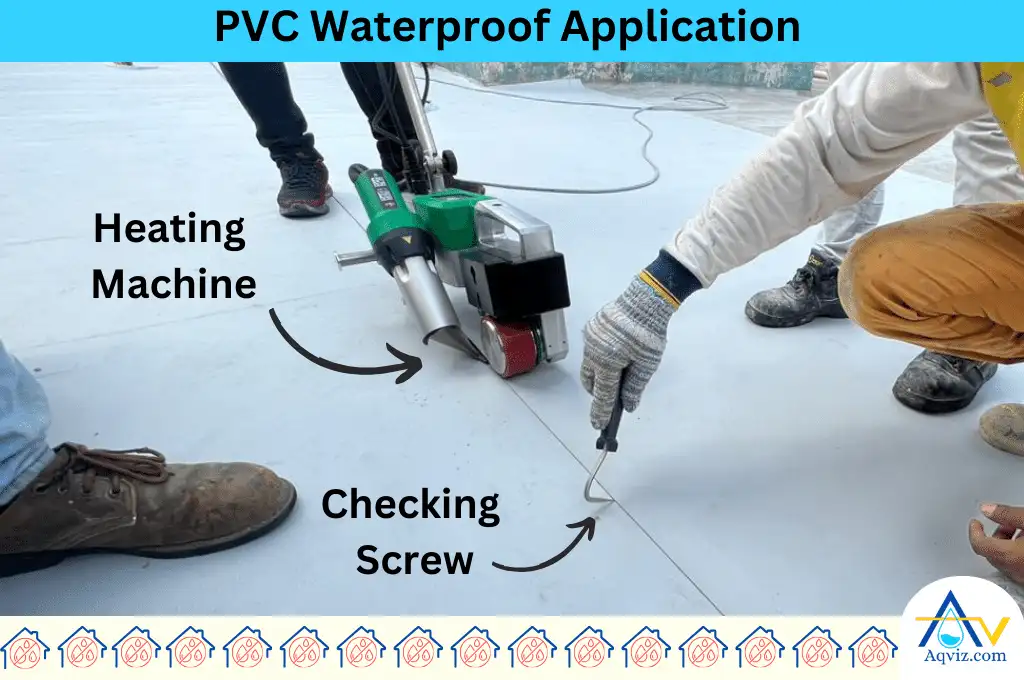
- Heat gun
- Measuring devices
6 Steps Guide to Install PVC Membrane
- Clean the PVC waterproofing installation surface: The first step is to clean the surface where you will install the PVC waterproofing. It should be free from dirt, dust, grease, and any other contaminants that may prevent the adhesive from sticking properly.
- Cut the PVC sheet Membrane: Measure the area you want to waterproof and cut the PVC membrane to fit. Use a utility knife to cut the membrane. Make sure to leave a bit of extra material on all sides to ensure complete overlap with other layers.
- Install the PVC Membrane on the surface: Start the heat gun and wait for it to reach the recommended temperature of 550 C°. Then heat both sheets as it melt and stick together. You should maintain a 10 cm overlap between them. You can use a roller to smooth out the membrane and ensure it sticks properly.
- Check the PVC sheet joint: You can use a flat screw along the edge to check whether there is any loose connection.
- Apply the Liquid PVC on the joint: After checking the edges, you can use liquid PVC on the edge to seal the joint properly.
- Let the PVC waterproofing membrane dry: After installing, let the layer dry and cure before further construction.
Important things of PVC membrane installation
- Environmental condition: Dry and less humid
- Airflow: Hot airflow
- Speed of work: Lay 2-3 meters per minute
- Temperature: 550 C° temperature
What are the Specifications of PVC Membranes?
The recommended specification of PVC membrane is based on ASTM D4434. According to that PVC sheet waterproofing is tested using various test methods. Below are the recommended specifications and test methods for PVC membranes.
| Property | ASTM test method | PVC type-2 Requirements |
| Overall thickness | ASTM D638 | 1.14 mm |
| Breaking strength | ASTM D751 | 245 N |
| Elongation at break (machine direction, cross machine direction) % | ASTM D751 | 250, 220 |
| Seam strength (% of tensile or braking strength) | ASTM D638 | 75 |
| Tear resistance | ASTM D1004 | 90 N |
| Tear strength | ASTM D751 | 45 N |
| Static puncture resistance | ASTM D 562 | Pass |
| Dynamic puncture resistance | ASTM D 5635 | Pass |
| Low-temperature bend | ASTM D2136 | Pass |
What are the PVC Waterproof Membrane Brands?
The most used PVC membrane brands are Sika and Carlisle PVC membrane. These brands have a variety of products that can be used for different purposes.
Sika PVC Membranes
Sika PVC membranes are available as different products such as
- Sika Sarnafil G 410-12EL FSA PVC Membrane
- Sika Sarnafil G 410-15EL FSA PVC Membrane
- Sika Sarnafil G 410-20EL FSA PVC Membrane
- Sika Sarnafil G 476-15 PVC Membrane
- Sika Sarnafil G 476-20 PVC Membrane
- SikaBit S-515 PVC Membrane
- SikaProof A-08 PVC Membrane
- SikaProof A-12 PVC Membrane
Carlisle PVC Waterproofing Membrane
Carlisle PVC waterproofing membranes are designed for use on roofs, terraces, and other outdoor structures. It offers excellent resistance to UV rays, extreme weather conditions, and punctures.
- Carlisle Sure-Flex PVC Membrane
- Carlisle Sure-White PVC Membrane
- Carlisle FleeceBACK PVC Membrane
- Carlisle Sure-Seal PVC Membrane
- Carlisle Sure-Weld PVC Membrane
How to Protect PVC Waterproofing Membrane?
PVC waterproofing membranes should be protected in order to minimize maintenance and repairs and improve effectiveness and durability. Here are the 10 ways to protect PVC waterproofing membranes.
- Regular inspection of the PVC waterproofing membrane.
- Immediate repairs of any damage to the PVC waterproofing membrane
- Avoid using sharp objects on the PVC membrane.
- Proper installation of the PVC waterproof membrane.
- Use of protective layers on the PVC membrane to protect it from chemicals and contaminants.
- Control the foot traffic on the PVC membrane.
- Follow the manufacturer’s instructions during PVC membrane installation.
- Use of compatible materials with the PVC membrane.
- Apply UV sealants or coatings on the PVC waterproof membrane to protect it from UV radiation.
How to Damage a PVC Waterproofing Membrane?
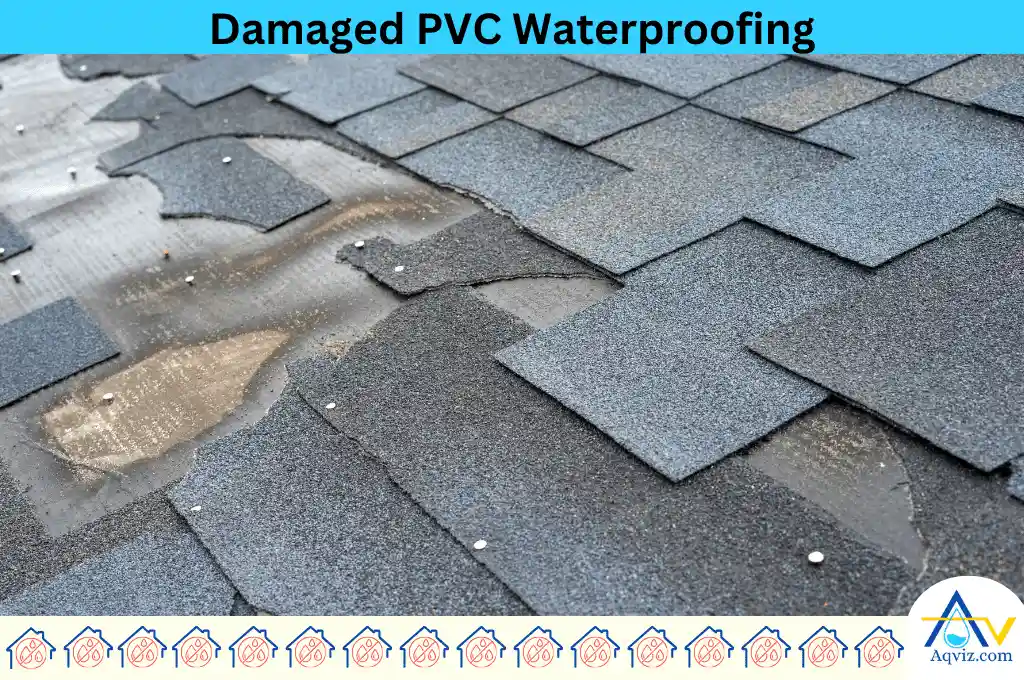
A PVC waterproofing can be damaged due to human and environmental effects. A damaged PVC waterproofing membrane can not be heat-resistant, UV-resistant, water-resistant, or bear-resistant. Hence, it can be damaged, detoriarete and brittle during its service life.
A PVC waterproofing membrane can be damaged due to these 10 reasons.
- Physical Punctures or Cuts on the PVC waterproofing membrane.
- Direct Sunlight Exposure to the PVC waterproofing membrane.
- High-temperature exposure to the PVC waterproofing membrane.
- Poor Installation of PVC membrane
- Chemical Exposure to the PVC membrane
- Incompatible Roofing Materials installed with the PVC waterproofing membrane.
- Ageing or Wear and Tear
- Incorrect Maintenance of the PVC waterproofing membrane.
- Mechanical Stress on the PVC waterproofing membrane.
- Harsh Weather Conditions on the PVC waterproofing membrane.
What are the Optional Waterproofing Membranes for PVC?
Optional waterproof membranes are used instead of PVC waterproofing systems in order to have an extra layer of protection against water leaking. You can use, EPDM Membrane , HDPE Membrane, TPO (Thermoplastic Olefin) Membrane, CPE (Chlorinated Polyethylene) Membrane, FPO (Flexible Polyolefin) Membrane, PIB (Polyisobutylene) Membrane, SBS (Styrene-Butadiene-Styrene) Membrane, APP (Atactic Polypropylene) Membrane and Hypalon (Chlorosulfonated Polyethylene) Membrane.