


Transferring property ownership can often feel like navigating a complex maze of legal documents and terminology. Among the various instruments used for real estate transactions, the quitclaim deed stands out for its unique characteristics and specific applications. Unlike other deeds that offer guarantees about a property’s title, a quitclaim deed simply transfers whatever interest the grantor possesses, if any, to the grantee, without making any promises about the validity or clarity of that title, explains Hometown Holdings. This distinction is crucial for anyone involved in property transfers, as it dictates the level of protection and risk assumed by the parties involved.
What is a Quitclaim Deed?
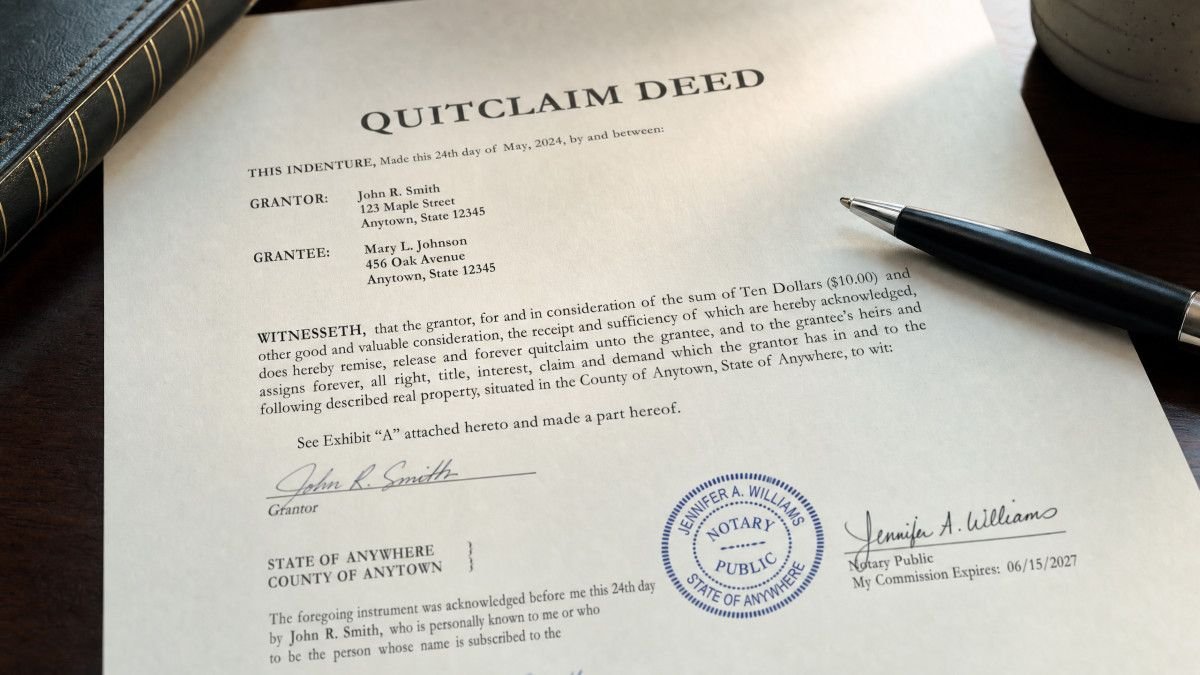
A quitclaim deed is a legal document that transfers any interest the grantor (current owner) has in a property to the grantee (new owner) without providing any warranties of title. This means the grantor does not claim to have clear title to the property, nor do they guarantee that the property is free of liens or claims. It is essentially the grantor giving up any rights they might have, rather than selling or guaranteeing the property. This type of deed is typically used in transactions where there is a pre-existing relationship and a high level of trust between the grantor and grantee.
Unlike a warranty deed, which promises that the grantor has clear title and guarantees to protect the grantee against future title claims, a quitclaim deed offers no such assurances. For example, if the grantor does not actually have legal title to the property, or if there are undisclosed liens on the property, the grantee will have no recourse against the grantor through the quitclaim deed. This makes the quitclaim deed one of the riskiest types of deeds in real estate transactions, as it shifts the entire risk of title to the grantee. Therefore, it is generally not recommended for use in transactions involving unfamiliar parties or high-value exchanges.
When is a Quitclaim Deed Used?
Quitclaim deeds are generally used when there is a pre-established trust relationship between the grantor and grantee, or when the legal ownership of the property is already clear and no additional guarantees are needed. The most common uses include transferring property between family members, such as parents transferring a home to a child, or spouses transferring joint property to one party after a divorce. It is also frequently used to correct minor errors in property records, or to transfer property into a trust for estate planning purposes. In these situations, because both parties have a good understanding of the title history and each other’s intentions, the extensive protections provided by a warranty deed are not necessary.
For instance, in a divorce settlement, one spouse may agree to transfer their interest in the marital home to the other. A quitclaim deed can accomplish this quickly and relatively simply, without the need for a comprehensive title search or the purchase of title insurance. Similarly, if there is a spelling error or omission in a deed, a quitclaim deed can be used to correct these technical mistakes, thereby clearing the chain of title. However, even in these seemingly straightforward scenarios, unexpected complications can arise. For example, if a divorce agreement does not explicitly address an existing mortgage tied to the property, the original borrower remains responsible for the debt even after the title is transferred via a quitclaim deed, which can lead to future financial distress. This is indeed a frustrating situation, as a legal document meant to simplify a process can inadvertently create new burdens.
Pros and Cons of Quitclaim Deeds
The primary advantages of a quitclaim deed lie in its simplicity and speed, making it an effective tool for transferring property interests in specific situations. Because it does not involve a title search or title insurance, the processing costs are typically lower, and it can be completed much faster than a warranty deed. However, this simplicity also comes with significant drawbacks, most notably the lack of title warranties for the grantee. This means the grantee assumes the full risk of any undisclosed issues related to the property’s title (such as liens, outstanding debts, or title defects), which can lead to future legal and financial disputes.
| Pros | Cons |
|---|---|
| Simple and Fast: The document preparation and execution process is generally simpler and faster than other types of deeds. | No Title Warranties: The grantor provides no guarantees regarding the validity or clarity of the property’s title. |
| Cost-Effective: Because no title search or title insurance is required, the associated fees are usually lower. | High Risk for Grantee: The grantee assumes the full risk of any undisclosed issues related to the property’s title (e.g., liens, outstanding debts). |
| Suitable for Specific Situations: Ideal for intra-family transfers, divorce settlements, or correcting title errors. | Not Suitable for Commercial Transactions: Due to the lack of protection, it is not recommended for use in commercial transactions involving unfamiliar parties or the exchange of money. |
| Avoids Probate: Can be used to transfer property into a trust, thereby avoiding the probate process. | Potential Legal Disputes: If there are issues with the title, the grantee may have to bear expensive legal fees to resolve them. |
According to the American Bar Association, quitclaim deeds “are typically used to transfer property between family members or into a trust, rather than in a traditional real estate sale.” [1] This underscores its role in specific, trust-driven transactions. For the grantee, the biggest uncertainty lies in their level of knowledge about the property’s title. If the grantor is unaware of the true state of the property’s title, or worse, intentionally conceals issues, the grantee may find themselves in an unexpected legal predicament, which would undoubtedly cause immense frustration.
How to Execute a Quitclaim Deed?
The process of executing a quitclaim deed typically involves filling out a standard form, which is available in most states from the county recorder’s office or online legal resources. This form requires the names of the grantor and grantee, a legal description of the property, and any interest the grantor wishes to transfer. Once the form is completed, the grantor must sign the document in the presence of a notary public to verify their identity and intent. Finally, for the transfer to become official and a matter of public record, the signed and notarized deed must be filed with the recorder’s office in the county where the property is located. While this process seems straightforward, failing to properly complete the form or file it in a timely manner can lead to future title disputes, making the entire process much more complicated than it initially appears.
Frequently Asked Questions
Q1: What is the main difference between a quitclaim deed and a warranty deed?
A quitclaim deed provides no title warranties, only transferring whatever interest the grantor may have. A warranty deed, on the other hand, guarantees that the grantor has clear title and promises to protect the grantee against title defects.
Q2: Can a quitclaim deed remove a mortgage?
No, a quitclaim deed cannot remove a mortgage. It only transfers the ownership interest in the property and does not affect any debts associated with the property. The original borrower remains responsible for the mortgage unless the lender approves a transfer of the debt.
Q3: Is a quitclaim deed always bad for the grantee?
Not necessarily. In certain situations, such as intra-family transfers or correcting title errors, a quitclaim deed is appropriate. However, due to the lack of title protection, it does carry a higher risk for the grantee, so it is not recommended for most commercial transactions.
Q4: Do I need a lawyer to prepare a quitclaim deed?
While many people choose to prepare a quitclaim deed themselves, consulting a lawyer is highly recommended. A lawyer can ensure the document is properly completed and advise you on the potential legal and tax implications specific to your situation, helping to avoid costly mistakes in the future.
Q5: What happens if the grantor doesn’t actually own the property?
If the grantor does not actually own the property, the quitclaim deed will transfer nothing. Because a quitclaim deed provides no title warranties, the grantee will have no recourse against the grantor and may have to bear the costs of resolving the title issues themselves.
Conclusion
The quitclaim deed plays a unique role in the realm of real estate law, offering a quick and relatively simple way to transfer property interests, but at the cost of the grantee lacking title warranties. While it is highly useful in specific situations such as intra-family transfers, divorce settlements, and correcting title errors, its inherent risks mean it should be used with caution when unfamiliar parties or high-value transactions are involved. Understanding its limitations and seeking legal advice is crucial to ensure the property transfer complies with all legal requirements and protects the interests of all parties involved. After all, when dealing with an asset as significant as real estate, clarity and protection should always be the primary considerations.
References:
[1] American Bar Association. (n.d.). Quitclaim Deeds. Retrieved from https://www.americanbar.org/