
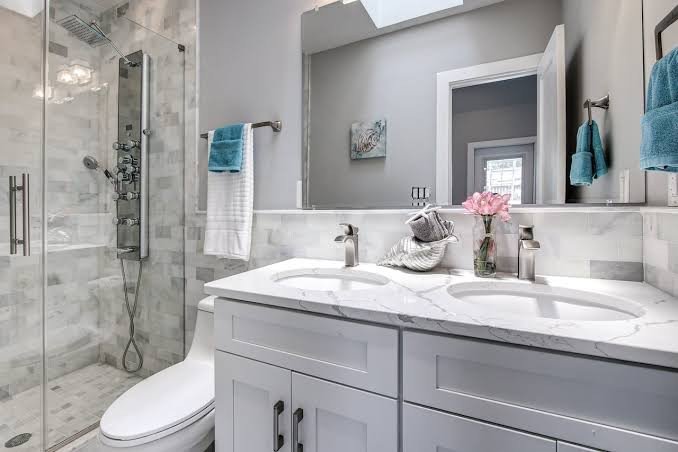

Bathroom vanity replacement costs between \$500 and \$5,000 installed in 2026, depending on the vanity type, the countertop material, and whether the replacement is a like-for-like swap or requires plumbing modifications. A stock vanity from a big-box store costs \$300 to \$1,500 for the vanity and \$200 to \$500 for installation — \$500 to \$2,000 total, shares Spectrum Property Management team.
The national average for a bathroom vanity replacement is around $1,500 — a mid-range stock vanity with a cultured marble or quartz top, installed by a plumber or handyman in a like-for-like swap. The vanity costs $600 to $1,000. The installation costs $300 to $500. The old vanity is removed. The new vanity is set in place, leveled, and screwed to the wall. The plumbing is reconnected. The job takes two to four hours. The bathroom is transformed. The vanity is the room’s focal point. The old vanity made the room feel dated. The new vanity makes the room feel current. The cost is $1,500. The transformation is immediate.
Vanity Replacement Costs by Type
Bathroom vanity replacement costs range from $500 for a small stock vanity to $6,000 for a custom double-sink unit, with the price driven by the vanity grade, the countertop, and the installation complexity. Here is how the six main types compare.
| Vanity Type | Vanity Cost | Installation Cost | Total Installed Cost |
| Stock (big-box, single sink, 24-36″) | $300 – $800 | $200 – $400 | $500 – $1,200 |
| Stock (big-box, double sink, 48-60″) | $600 – $1,500 | $300 – $500 | $900 – $2,000 |
| Semi-custom (single sink, 24-36″) | $800 – $1,500 | $300 – $500 | $1,100 – $2,000 |
| Semi-custom (double sink, 48-72″) | $1,200 – $3,000 | $500 – $800 | $1,700 – $3,800 |
| Custom (single or double, any size) | $2,000 – $5,000 | $500 – $1,000 | $2,500 – $6,000 |
| Floating vanity (wall-mounted, any size) | $500 – $3,000 | $300 – $1,500 | $800 – $4,500 |
What Drives the Vanity Replacement Cost
Cabinet construction: Particleboard boxes with melamine interiors are standard on stock vanities. Plywood boxes with wood veneer interiors are standard on semi-custom and custom vanities. The plywood upgrade costs $100 to $300 more per vanity and is worth it for a bathroom vanity that sits in a humid environment. The bathroom vanity is exposed to more moisture than a kitchen cabinet — steam from the shower, splashes from the sink, condensation on cold mornings. The particleboard vanity that gets wet will swell and crumble. The plywood vanity will survive. The $200 upgrade is the insurance against the inevitable bathroom moisture.
Countertop material: Cultured marble, a blend of crushed stone and resin, is the standard top on stock vanities. It costs $100 to $300 for the top alone or is included in the vanity price. Quartz costs $300 to $800 for a vanity top, $60 to $120 per square foot. Granite costs $250 to $600. Marble costs $400 to $1,000. The countertop upgrade is the most visible upgrade. The quartz top on a stock vanity elevates the entire piece. The vanity looks more expensive than it is. The quartz is the surface you touch every day. The cultured marble is adequate. The quartz is a pleasure. The pleasure costs $300 more. The pleasure is felt every time you set down a toothbrush or a hair dryer. The pleasure is worth the premium.
The National Association of Home Builders (NAHB) identifies bathroom updates as one of the highest-return cosmetic home improvements. A new vanity is the single most impactful change in a bathroom, more than a new toilet, more than new fixtures, more than a new mirror. The vanity is the furniture of the bathroom. The furniture sets the tone. The tone is what the buyer or the guest notices first. The vanity is the first thing they see. The vanity replacement is the highest-return bathroom upgrade per dollar spent.
Installation Factors That Change the Cost
Like-for-like swap: The new vanity is the same width and the same configuration, single sink, centered drain, as the old vanity. The plumbing connections are in the same location. The installation is straightforward: remove the old vanity, set the new one in place, reconnect the plumbing. The labor costs $200 to $500. The job takes two to three hours. This is the most common scenario and the least expensive.
Plumbing modifications: The new vanity is a different width, a different depth, or a different sink configuration. The drain must be relocated. The supply lines must be extended or shortened. The plumbing modifications add $200 to $500 to the labor cost. A double-sink vanity replacing a single-sink vanity requires adding a second drain line and a second set of supply lines, $500 to $1,000 in plumbing work. The plumbing modifications are the most common source of cost overruns in a vanity replacement. The homeowner buys the vanity based on the width of the wall. The plumber arrives and discovers that the drain is in the wrong place. The drain must be moved. The move costs $300. The $300 was not in the budget. The $300 is the cost of not checking the drain location before ordering the vanity.
Floating vanity installation: A floating vanity requires blocking inside the wall to support its weight. If the wall is open, during a remodel, the blocking can be installed before the drywall goes up. The blocking costs $100 to $200 in materials and labor. If the wall is finished, the drywall must be cut open, the blocking installed, and the drywall patched and painted. The additional cost is $500 to $1,500. The floating vanity was chosen for its modern aesthetic. The modern aesthetic requires the wall to be opened. The open wall is the hidden cost of the floating vanity. The cost is real. The aesthetic is the return. The return is the exposed floor under the vanity and the visual lightness of a cabinet that does not touch the ground. The return is visible every time you enter the bathroom. The cost is paid once. The return is daily.
Frequently Asked Questions
How much does a bathroom vanity cost installed?
A bathroom vanity costs $500 to $6,000 installed. A stock vanity costs $500 to $2,000. A semi-custom vanity costs $1,100 to $3,800. A custom vanity costs $2,500 to $6,000. The national average is around $1,500 for a mid-range stock vanity with installation.
Can I install a bathroom vanity myself?
A like-for-like swap, the same width, same drain location, is a moderately DIY-friendly project. The vanity must be leveled. The plumbing must be reconnected without leaks. The vanity must be screwed to the wall studs. A DIYer with basic plumbing and carpentry skills can install a stock vanity in two to four hours. A floating vanity or a vanity that requires plumbing modifications should be installed by a professional.
How long does vanity replacement take?
A standard like-for-like swap takes two to four hours. A vanity that requires plumbing modifications takes four to eight hours. A floating vanity that requires wall blocking in a finished bathroom takes one to two days including drywall patching. The plumbing disconnection and reconnection account for roughly half the time. The vanity placement and leveling account for the other half.
What is the best material for a bathroom vanity?
Plywood with a wood veneer or painted finish is the best material for a bathroom vanity. It resists moisture better than particleboard and holds screws more securely. A solid wood vanity is also excellent but more expensive. Avoid particleboard vanities in bathrooms, the humidity and the inevitable splashes will eventually cause the particleboard to swell. The plywood upgrade costs $100 to $300.
Should I replace the faucet when I replace the vanity?
Yes. The old faucet on the new vanity looks like an old faucet on new furniture. The faucet replacement costs $50 to $500 for the faucet plus $100 to $200 for installation if done at the same time as the vanity. The incremental labor is minimal, the plumber is already connecting the supply lines. The faucet is the jewelry of the vanity. The old jewelry on the new vanity is a missed opportunity. The new jewelry completes the transformation.
What countertop material is best for a bathroom vanity?
Quartz is the best countertop for a bathroom vanity. It is non-porous, stain-resistant, and requires no sealing. It will not stain from toothpaste, makeup, hair products, or cleaning chemicals. Cultured marble is the budget option, adequate but prone to scratching and staining. Granite requires annual sealing. Marble is beautiful but will stain and etch from bathroom products. Quartz is the practical choice for a bathroom.
The Vanity That Transforms the Bathroom
A 30-inch stock vanity with a quartz top, a new faucet, and professional installation costs $1,200 to $2,000. The old vanity is removed. The new vanity is installed. The plumbing is reconnected. The bathroom is transformed. The cost is $1,500. The transformation is the most impactful change you can make in a bathroom for less than the cost of a tile shower. The vanity is the furniture of the bathroom. The furniture sets the tone. The tone was dated. The tone is now current. The vanity did that. The vanity cost $1,500. The vanity is the best $1,500 you can spend on a bathroom. The toilet costs less and does less. The mirror costs less and does less. The vanity is the investment. The investment is visible every time you enter the room. The investment is felt every time you use the sink. The investment is the first thing a buyer notices. The investment recovers 60% to 70% of its cost at resale. The remaining 30% to 40% is the cost of enjoying your bathroom for the years you live in the house. The enjoyment is worth the 30%. The 70% comes back when you sell. The 30% was the price of daily satisfaction. The price is reasonable. The satisfaction is real. Ever walked past a bathroom and caught a glimpse of yourself in the mirror — not looking at your reflection, but looking at the room behind you, and thinking “that looks good”? The vanity was the reason. The vanity caught your eye. The vanity anchored the room. The old vanity never did that. The old vanity was something you used. The new vanity is something you notice. The $1,500 was the cost of a piece of furniture that you use every day and notice every time you pass the open door. The old vanity was invisible. The new vanity is present. The presence is the return on the investment. The investment was $1,500. The presence is daily. The satisfaction is the feeling of walking past the bathroom and thinking “that looks good.” The thought is free. The $1,500 made the thought possible.