
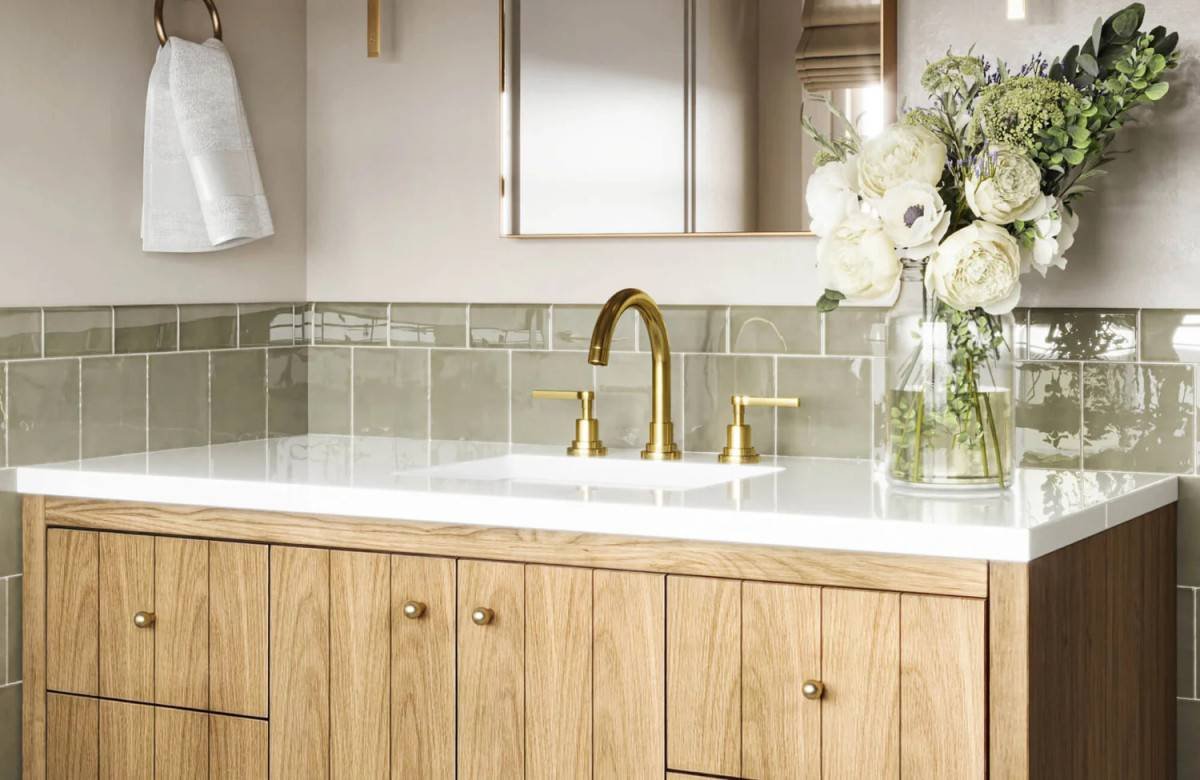

A bathroom vanity top takes more chemical abuse than a kitchen countertop, notes Indiana Property Management team. Toothpaste, mouthwash, nail polish remover, hair dye, acne medication, and perfume all land on the same 10 to 15 square feet of surface every day. A material that holds up beautifully in a kitchen — butcher block, for example — will stain and warp within a year in a bathroom. The selection criteria for bathroom vanity tops are different from kitchen countertops. Water resistance matters more. Stain resistance from cosmetics and toiletries matters more. Heat resistance matters less — nobody puts a hot pan on a bathroom counter. The seven materials below are ranked by the combination of durability, maintenance requirements, and cost per square foot installed.
The standard bathroom vanity is 24 to 72 inches wide and 21 to 22 inches deep, observe Jackson Property Management professionals. At 24 inches, the total countertop area is roughly 4 square feet. At 72 inches, it is roughly 11 square feet. The cost difference between a $10-per-square-foot laminate top and a $100-per-square-foot quartz top on a 48-inch double vanity is roughly $640 in materials. The laminate will look acceptable for 8 to 12 years and then need replacement when the surface delaminates at the sink edge. The quartz will look new for 25-plus years. The material choice is a decision about how often you want to replace the countertop.
Quartz — The Best All-Around Choice
Quartz is engineered stone — roughly 90% ground natural quartz mixed with 10% resin binders and pigments. The result is a non-porous surface that never needs sealing, resists staining from every bathroom product on the market, and is hard enough that a dropped hair dryer will not chip the edge. Quartz costs $50 to $100 per square foot installed. A standard 48-inch double vanity in quartz costs $400 to $900 for the countertop alone, plus the sink cutout and edge profile fabrication.
Quartz is the default recommendation for bathroom vanity tops because it eliminates the maintenance variable entirely. No sealing. No special cleaners. No worry about leaving a wet washcloth on the surface overnight. The color is consistent through the slab, no natural stone variation lottery, and the available patterns include convincing marble and concrete lookalikes that read as natural stone from standing height. The limitation of quartz is heat resistance, the resin binder can discolor or melt at temperatures above 300 degrees Fahrenheit. This is a problem in kitchens where hot pans land directly on the counter. It is not a problem in bathrooms where the hottest item on the counter is a curling iron that should be on a heat-resistant mat regardless of countertop material.
Granite, Natural Stone With Character
Granite is natural stone, each slab is unique, with veining, color variation, and mineral inclusions that no other slab on earth shares. Granite costs $40 to $100 per square foot installed, roughly comparable to quartz at the mid-range. It is harder than quartz, Mohs hardness 6 to 7 versus quartz’s 7, and more heat-resistant. The difference is porosity. Granite is naturally porous and must be sealed every 1 to 3 years to prevent water and oil absorption. An unsealed granite vanity top will absorb water, toothpaste, and cosmetic oils, developing dark spots around the sink and faucet that cannot be removed.
Granite is the right choice when natural stone uniqueness is the priority and the homeowner is willing to perform the annual sealing. A properly sealed granite vanity top performs indistinguishably from quartz in a bathroom. A neglected one stains within months. The sealing test: pour a few drops of water on the surface. If the water beads, the seal is intact. If the water flattens and darkens the stone within 5 minutes, reseal immediately. Granite is the wrong choice for a bathroom used by teenagers who will leave wet toiletries on the counter for hours. It is the right choice for a master bathroom where the counter stays dry between uses.
Solid Surface, Seamless, Repairable, and Mid-Range
Solid surface, Corian is the brand name, is an acrylic-based material that can be molded into any shape, including integrated sinks with no seam between the bowl and the countertop. The seamless sink-countertop junction is the most hygienic surface in a bathroom because there is no crevice for mold, toothpaste residue, or soap scum to accumulate. Solid surface costs $35 to $70 per square foot installed. A 48-inch vanity in solid surface costs $300 to $600.
The unique advantage of solid surface is repairability. A scratch or small chip can be sanded out and buffed to match the surrounding finish because the color runs through the entire material thickness. Quartz and granite cannot be repaired this way, a chip in quartz is permanent. Solid surface is less hard than stone, it will scratch from abrasive cleaners and can be burned by a curling iron left face-down. The scratches are sandable, but the burning is permanent. A heat-resistant mat for hot tools solves the burn risk. Solid surface is the right choice for a custom bathroom where the seamless integrated sink is the priority and the budget is mid-range. It is the wrong choice for a bathroom where abrasive cleaners are the only cleaning method.
Marble, Stunning and High-Maintenance
Marble is the most beautiful bathroom vanity top material and the most demanding to maintain. It costs $60 to $150 per square foot installed. The veining and luminous depth are unmatched by any engineered material. The porosity and chemical sensitivity are unmatched by any other countertop material. Marble etches, the surface dulls and loses its polish, on contact with anything acidic: toothpaste, mouthwash, facial cleansers, hair products, perfume. The etching is not a stain. It is a chemical reaction that dissolves the surface of the stone. It cannot be cleaned off. It must be polished out by a stone restoration professional.
Marble is the right choice for a powder room, a half-bath used only by guests for hand washing, where water exposure is minimal and no toiletries are stored on the counter. It is the wrong choice for a primary bathroom, a kids’ bathroom, or any bathroom where cosmetics and toiletries are used daily. A marble vanity top in a primary bathroom will show etch marks within the first month of use. Some homeowners accept the patina as part of the material’s character. Most do not. If you would be bothered by etch marks on a surface you paid $1,500 for, choose quartz with a marble-look pattern instead. The quartz will look identical from standing height and will never etch.
Cultured Marble, The Budget Stone Look
Cultured marble is a mixture of crushed marble dust and resin, cast in a mold with a gel coat finish. It costs $15 to $40 per square foot. A 48-inch cultured marble vanity top with integrated sinks costs $120 to $350. The gel coat is glossy and waterproof when new. It dulls within 5 to 8 years. Abrasive cleaners scratch the gel coat permanently. Acetone, nail polish remover, dissolves the gel coat on contact. A single spill of nail polish remover on a cultured marble top leaves a permanent dull spot that cannot be repaired.
Cultured marble is the right choice for a rental bathroom, a budget flip, or a secondary bathroom where the vanity top will be replaced again within 10 years. It is the wrong choice for a primary bathroom or a bathroom where the countertop is expected to last 20 years. The cost saving over quartz on a double vanity is roughly $300 to $500. The cultured marble will need replacement in 10 years. The quartz will not need replacement in 25. The math favors quartz for any bathroom where the homeowner plans to stay more than 10 years.
According to ENERGY STAR, pairing a bathroom vanity upgrade with WaterSense-labeled faucets can reduce the bathroom’s water consumption by 20% or more, a complementary upgrade worth considering during the vanity replacement since the faucet and the countertop are installed simultaneously.
Laminate, The Cheapest Option That Still Looks Intentional
Laminate countertops cost $10 to $25 per square foot. A 48-inch vanity top in laminate costs $80 to $200. Modern laminate prints convincingly mimic stone, wood, and concrete. The surface is waterproof and cleans with standard household cleaners. The limitation is the edge and the seam. Laminate is a thin layer of printed plastic bonded to a particleboard substrate. The edge is a visible brown line where the laminate wraps over the substrate. The seam at the sink, laminate countertops typically use a drop-in sink that covers the cut edge, is a water entry point. If the caulk around the sink fails, water penetrates the particleboard and swells it, delaminating the laminate from the substrate. A laminate vanity top with a properly caulked drop-in sink lasts 10 to 15 years. The same top with a failed caulk joint delaminates within months of the first leak.
Laminate is the right choice when the budget is the absolute constraint and the alternative is leaving the existing damaged countertop in place. It is a functional, intentional-looking surface that will last a decade with basic maintenance. It is not a 25-year surface. Accept that limitation and the $80 to $200 price tag makes sense.
Butcher Block and Wood, Beautiful in Photos, Problematic in Bathrooms
Wood countertops, butcher block, teak, walnut, are increasingly popular in bathroom design photography. They look warm and organic. They also absorb water, warp from humidity, and stain from every cosmetic and toiletry product in the bathroom. A wood vanity top must be sealed with multiple coats of marine-grade polyurethane or epoxy, not food-grade mineral oil, which is suitable for kitchen use where the wood is expected to patina. In a bathroom, the seal must be waterproof and continuous. Any break in the seal, a scratch from a dropped metal object, a worn spot from daily use, allows water into the wood, and the wood swells and cracks the surrounding seal.
Wood is the right choice for a powder room where the vanity sees light use and the aesthetic is the priority over durability. It is the wrong choice for any bathroom where the counter will be wet daily. The maintenance burden of a wood vanity top in a primary bathroom is higher than marble’s, and the failure mode, warping and cracking, is more destructive than marble’s etching.
| Material | Cost/sq ft | Sealing | Stain Resistance | Lifespan | Best For |
| Quartz | $50–$100 | Never | Excellent | 25+ years | Best all-around |
| Granite | $40–$100 | Every 1–3 yr | Good (sealed) | 25+ years | Natural stone lover |
| Solid Surface | $35–$70 | Never | Very Good | 15–25 years | Seamless look |
| Marble | $60–$150 | Every 6–12 mo | Poor (etches) | 25+ years | Powder room only |
| Cultured Marble | $15–$40 | Never | Moderate | 8–15 years | Rental, budget flip |
| Laminate | $10–$25 | Never | Good | 10–15 years | Tight budget |
| Butcher Block/Wood | $20–$50 | Every 6–12 mo | Poor | 10–15 years | Powder room, aesthetic |
Frequently Asked Questions
Quartz vs. granite for a bathroom vanity, which is better?
Quartz is better for bathrooms. The difference is porosity. Granite must be sealed every 1 to 3 years and will stain if the seal is neglected. Quartz is non-porous and never needs sealing. In a bathroom where the countertop is exposed to water, toothpaste, and cosmetics daily, the zero-maintenance surface is the better choice. The heat resistance advantage of granite, it can handle a hot pan directly from the stove, is irrelevant in a bathroom. The only reason to choose granite over quartz for a bathroom vanity is a preference for natural stone’s unique variation over quartz’s engineered consistency.
Can I use marble in a primary bathroom?
Yes, but you will see etch marks within the first month. Marble etches on contact with anything acidic, toothpaste, mouthwash, facial toner, hair products. The etching cannot be cleaned off. It must be polished out by a stone professional at $200 to $500 per visit, or accepted as patina. If the presence of dull spots on a surface you paid $1,500 for would bother you, do not use marble in a primary bathroom. Choose a marble-look quartz instead. It looks identical from 3 feet away and will never etch.