
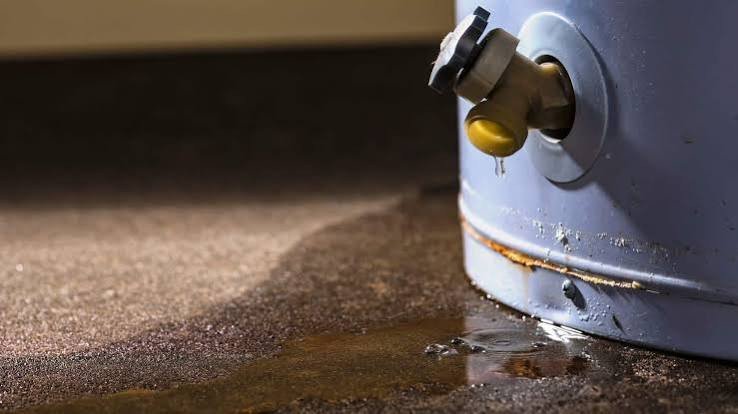

This guide covers the five key signs your water heater is failing — from rusty water to a leaking tank. The most definitive sign your water heater is failing is water pooling around the base of the tank. A leaking tank cannot be repaired. It must be replaced, warns Nampa property management.
Water heaters fail in predictable ways. The tank rusts. The burner assembly wears out. The heating elements burn out. The thermostat fails. The anode rod — the sacrificial metal rod that protects the tank from corrosion — is consumed. The signs of failure are detectable before the tank leaks. Catching the signs early means replacing the water heater on your schedule, during business hours, at standard rates. Missing the signs means replacing the water heater when it fails — on a weekend, at night, at emergency rates. Here are the signs, in the order they typically appear.
Sign 1: Rusty or Discolored Water
Rusty, brown, or reddish water from the hot side only — the cold water runs clear, indicates corrosion inside the water heater tank. The glass lining that protects the steel tank has cracked or worn through. The steel is rusting. The rust is suspended in the hot water. The cold water is clear because it comes directly from the supply line and does not sit in the tank. The hot water is rusty because it has been sitting in a rusting tank. The distinction is diagnostic: rusty water from both hot and cold indicates corroding pipes in the house, a plumbing problem, not a water heater problem. Rusty water from the hot side only indicates a failing water heater tank. The tank is rusting from the inside out. The rust in the water is the evidence. The tank replacement is the solution.
Rusty water that appears only when the hot water is first turned on, and clears after running for a few seconds, indicates sediment buildup at the bottom of the tank. The sediment absorbs rust particles from the tank walls and releases them when the water is disturbed. Flushing the tank, draining several gallons from the drain valve at the bottom, may temporarily clear the sediment. If the rusty water persists after flushing, the tank is corroded. The flushing removes the sediment. It does not repair the corroded tank.
Sign 2: Rumbling, Popping, or Banging Noises
A water heater that rumbles, pops, or bangs during the heating cycle has sediment buildup at the bottom of the tank. The sediment, calcium carbonate, magnesium hydroxide, and other minerals that precipitate out of hard water, settles at the bottom of the tank. The gas burner or electric heating element heats the water. The water heats the sediment. The sediment traps water underneath it. The trapped water boils and expands explosively, creating the rumbling and popping sounds. The noise is the sound of water boiling under a layer of sediment. The sediment acts as an insulator between the burner and the water. The burner runs longer to heat the water through the insulating layer. The tank overheats at the bottom. The steel fatigues from the repeated thermal stress.
Sediment buildup is the most common cause of premature water heater failure. The tank that rumbles today is a tank that will leak in one to three years if the sediment is not removed. Flushing the tank annually, draining 5 to 10 gallons from the drain valve, removes the sediment before it builds up to a damaging thickness. A tank that has been rumbling for years may not survive a flush. The sediment may be plugging a pinhole leak that has already started. The flush removes the plug. The leak reveals itself. A tank that has never been flushed and is rumbling is a tank that should be replaced, not flushed. The flush will accelerate the failure. The replacement is inevitable. The flush determines whether the replacement happens today or in six months.
The U.S. Department of Energy recommends flushing a tank water heater annually to remove sediment and maintain efficiency. A tank with a heavy sediment layer uses 20% to 30% more energy to heat the same amount of water because the sediment insulates the water from the burner. The energy waste is the cost of the sediment. The tank damage is the consequence. The annual flush is the prevention.
Sign 3: Inconsistent Water Temperature
Water that fluctuates between hot and cold during a shower, without anyone else using water elsewhere in the house, indicates a failing thermostat, a failing heating element, or a failing dip tube. The thermostat controls the temperature. If the thermostat is failing, the burner or element cycles on and off unpredictably. The water temperature fluctuates. The thermostat replacement costs $150 to $300 for the part and the labor. The thermostat is a replaceable component. The tank may still be sound.
An electric water heater that produces lukewarm water, not cold, but not hot, may have a failed lower heating element. Electric water heaters have two elements: an upper and a lower. The lower element does most of the heating. If the lower element fails, the upper element heats only the top portion of the tank. The water at the top is hot. The water below is lukewarm. The shower starts hot and quickly turns lukewarm as the hot water at the top is depleted and the lukewarm water below is drawn up. Replacing a heating element costs $200 to $400. The element is a replaceable component. The tank may still be sound.
A gas water heater that produces lukewarm water may have a failed thermocouple, the safety device that senses the pilot flame and allows gas to flow to the burner. The thermocouple replacement costs $100 to $200. The thermocouple is a replaceable component. The temperature fluctuation could be a component failure or could be a tank failure. The age of the water heater is the deciding factor. A component failure on a 5-year-old water heater is worth repairing. The same component failure on a 12-year-old water heater is a sign that the water heater is reaching the end of its life. The repair buys time. The replacement resets the clock.
Sign 4: The Water Heater Is More Than 10 Years Old
A tank water heater that is 10 to 15 years old is at the end of its expected service life. The tank may still produce hot water. The anode rod, the sacrificial metal rod inside the tank that protects the steel from corrosion, has been consumed. The tank is no longer protected. The corrosion has begun. The glass lining has microscopic cracks from years of thermal expansion and contraction. The steel is exposed to water. The steel is rusting. The rust has not yet penetrated the tank. It will. The only question is when.
A water heater older than 10 years that is showing any of the signs above, rusty water, rumbling, inconsistent temperature, should be replaced proactively rather than waiting for failure. The proactive replacement costs $900 to $2,500 and happens on a weekday, during business hours, at standard rates. The emergency replacement costs the same amount for the water heater plus an emergency service premium of 50% to 100%, $1,800 to $3,500, and happens on a weekend, at night, when the tank has flooded the basement or the garage. The proactive replacement is a planned expense. The emergency replacement is the same expense plus a premium for the timing. The timing is the only variable the homeowner controls. The failure is not a question of if. It is a question of when. The when is determined by whether the homeowner replaces the water heater before it fails or after.
Sign 5: Water or Moisture Around the Base
Water pooling around the base of the water heater is a tank leak. The water is coming from inside the tank. Turn off the power or gas. Turn off the cold water supply. Drain the tank. Call for replacement. A tank leak is not repairable. The tank has rusted through. The hole will grow. The water will continue to leak. The leak will become a flood if the tank is not drained and replaced.
Moisture or condensation around the base may not be a tank leak. Condensation on the outside of the tank, particularly on a humid day when the tank is filled with cold water during the initial fill, is normal. The condensation will dry. A tank leak will not. Wipe the area dry. Place a paper towel at the base of the tank. If the paper towel is wet an hour later with no one using hot water, the tank is leaking. The water is coming from inside. The tank needs replacement. If the paper towel stays dry, the moisture was condensation. The tank is sound. The humidity is the problem, not the water heater.
Frequently Asked Questions
How do I know if my water heater is failing or just needs a repair?
A water heater that is less than 8 years old with a failed component, thermostat, heating element, thermocouple, is worth repairing. A water heater that is more than 10 years old with any failure, or any water heater with a leaking tank, should be replaced. The tank leak is the definitive sign. The age plus symptoms is the decision framework.
Can a water heater explode?
Yes. A water heater with a failed temperature and pressure relief valve, the T&P valve on the top or side of the tank, can overheat and over-pressurize. The T&P valve is a safety device that opens if the temperature exceeds 210 degrees or the pressure exceeds 150 psi. Test the T&P valve annually by lifting the lever briefly. Water should flow out of the discharge pipe. If it does not, the valve has failed and must be replaced. The T&P valve is the last line of defense against a tank explosion. The test is free. The explosion is not.
How long does a water heater last?
A tank water heater lasts 10 to 15 years. A tankless water heater lasts 20 years or more. The lifespan depends on the water quality, hard water reduces lifespan, and the maintenance, annual flushing extends lifespan. A water heater that is never flushed will fail at the early end of the range. A water heater that is flushed annually will reach the late end.
How much does a new water heater cost installed?
A standard electric tank water heater costs $900 to $1,800 installed. A gas tank water heater costs $1,200 to $2,500 installed. A tankless water heater costs $2,500 to $4,500 installed. The cost depends on the type, the size, the fuel source, and whether installation modifications are needed.
Should I replace my water heater before it fails?
Yes, if it is more than 10 years old and showing any signs of failure, rusty water, rumbling, inconsistent temperature. The proactive replacement costs $900 to $2,500 and happens on your schedule. The emergency replacement costs 50% to 100% more and happens on the water heater’s schedule. The water heater’s schedule is unpredictable and inconvenient. Yours is not.
What is the anode rod and why does it matter?
The anode rod is a sacrificial metal rod, typically magnesium or aluminum, suspended inside the tank. It corrodes instead of the steel tank, protecting the tank from rust. The anode rod lasts 5 to 8 years. A consumed anode rod leaves the tank unprotected. Replacing the anode rod costs $50 to $150 and can double the life of the tank. Most homeowners never replace the anode rod. The tank fails when the rod is consumed. The rod is the cheapest component in the water heater and the most important for longevity.
The Water Heater That Is Running Out of Time
Rusty hot water. Rumbling during the heating cycle. Inconsistent temperature. Age beyond 10 years. Water around the base. Each of these is the water heater communicating. The language is rust, sound, temperature, and leaks. The message is the same: the tank is failing. Replace it before it fails completely.
A proactive replacement costs $900 to $2,500. An emergency replacement costs $1,800 to $3,500. The difference is the emergency premium, 50% to 100%, for the plumber to come out on a weekend or at night. The difference is also the water damage from the leaking tank, $500 to $3,000 for flooring, drywall, and cleanup. The proactive replacement avoids both the emergency premium and the water damage. The water heater that is 12 years old and rumbling is a water heater that will fail within one to two years. The replacement is inevitable. The timing is a choice. Choose a Tuesday morning in March, not a Saturday night in January. The plumber charges less on Tuesday. The basement is dry. The choice is yours. The water heater does not get a vote. Ever stepped into the shower on a Monday morning, turned the handle to hot, and felt lukewarm water that never got warmer no matter how long you waited? The water heater was not failing that morning. It had been failing for months. The rumbling, the rusty water, the inconsistent temperature — the signs were all there. The Monday morning shower was just the moment you finally noticed. The water heater had been telling you for weeks. You were not listening because the water was still hot enough and the basement was still dry. The water heater that is telling you it is failing today is the water heater that will flood the basement tomorrow. Listen today. Replace it this week. The Monday morning shower that goes cold is the reminder you did not schedule.
