
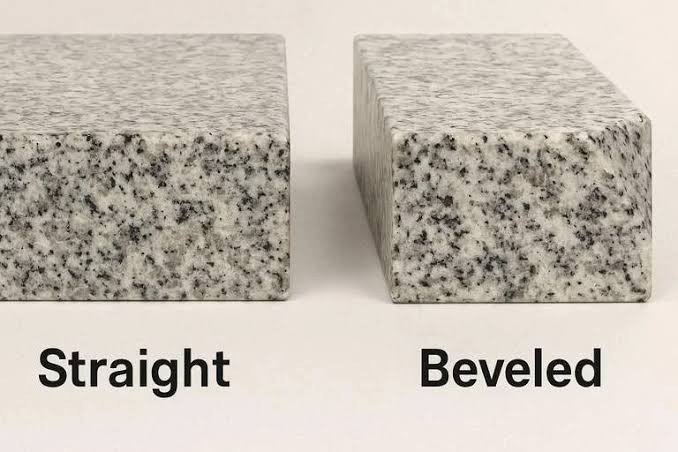

According to mylocations.com, the countertop edge is the one detail in a kitchen that almost nobody thinks about until their fabricator asks them to pick one from a sample display. It is also the detail that determines whether a kitchen reads as custom or off-the-shelf, traditional or modern, family-friendly or designed for a household where nobody drops things. The choice costs nothing on standard profiles and $15 to $40 per linear foot on premium ones. For a kitchen with 25 linear feet of countertop edge, the premium is $375 to $1,000. On a $15,000 countertop job, that is 2.5% to 6.5% of the budget. It is the cheapest visible upgrade in a kitchen remodel and the one most homeowners skip because they do not know the options exist.
Edge profiles are not arbitrary shapes. Each one solves a different combination of aesthetic, safety, and maintenance priorities. A sharp eased edge looks modern and clean but shows chips more visibly than a rounded bullnose. A decorative ogee elevates a traditional kitchen but collects dust and crumbs in its grooves that a straight edge wipes clean in one pass. The guide below covers the eight standard profiles every fabricator offers, how each one performs on the three things that matter — appearance, safety, and cleanability — and which one belongs in which kitchen.
“First pic is my new kitchen — which countertop edge style would you choose? The fabricator gave me a choice between eased, bevel, and ogee and I’ve been staring at samples for two days.”
— r/CounterTops, October 2025 (11 upvotes, 38 comments), source
This paralysis is universal. The edge profile decision arrives at the end of a remodel when decision fatigue is at its peak and the options all look similar in a 3-inch sample. The rule that cuts through the confusion is simple: match the edge profile to the kitchen’s dominant design language. Modern and minimalist kitchens want eased or mitered edges. Traditional and transitional kitchens want bullnose, ogee, or dupont. Rustic or farmhouse kitchens want chiseled or waterfall. The edge profile is the punctuation mark on the sentence that is your kitchen design. It should match the grammar.
Standard Profiles — No Added Cost, Still a Choice
Standard edge profiles are included in the base fabrication cost. The fabricator cuts the profile and polishes the edge as part of the countertop price per square foot. Premium profiles add $15 to $40 per linear foot for the additional cutting, shaping, and polishing passes. Knowing which profiles are standard and which are upgrades prevents the surprise of a $600 line item on the final invoice that the quote called “edge profile — TBD.”
Eased Edge. A square edge with the sharp 90-degree corner softened just enough that it does not cut skin. The top and bottom edges are rounded by roughly 1/16 to 1/8 inch. The side remains flat and vertical. The eased edge is the default modern profile. It reads as clean and minimal. The flat side shows the full thickness of the stone, which makes it the right choice when the countertop material is the visual priority. The soft corner minimizes chipping on impact but does not eliminate it, a cast iron pan dropped on an eased quartz edge can still chip a small flake out of the corner. On natural stone, the eased edge is the most common standard profile and requires the least fabrication labor.
Full Bullnose. A fully rounded edge that forms a half-circle from top to bottom. There are no corners, no flat side, no sharp transitions. The full bullnose is the safest edge for households with children because there is nothing to catch a forehead or a hip on. It also hides small chips better than any other profile because there are no crisp edges for damage to telegraph against. The trade-off is thickness perception. A full bullnose on a 3-centimeter slab looks thinner than the same slab with an eased edge because the curve reduces the visible vertical surface. In traditional bathrooms and kitchens where softness is the goal, this is a feature. In a modern kitchen where the slab thickness is part of the visual statement, it is a compromise.
Half Bullnose. The top edge is rounded into a curve and the bottom edge remains square. The half bullnose is the compromise between the clean look of an eased edge and the safety of a full bullnose. It shows more of the stone’s thickness than a full bullnose but eliminates the top corner where most impacts and chips occur. Half bullnose is the default edge on many prefabricated countertop slabs and the most common standard profile in mid-range kitchen remodels.
| Profile | Cost | Safety | Cleanability | Best Style Match |
| Eased | Standard | Moderate | Excellent | Modern, minimalist |
| Full Bullnose | Standard | Excellent | Excellent | Traditional, family |
| Half Bullnose | Standard | Good | Excellent | Transitional |
| Beveled | Standard/Premium | Moderate | Good | Contemporary |
| Ogee | Premium | Moderate | Moderate | Traditional, formal |
| Dupont | Premium | Moderate | Moderate | Traditional, luxury |
| Mitered | Premium | Moderate | Good | Modern, thick-look |
| Chiseled | Premium | Low | Poor | Rustic, farmhouse |
Premium Profiles, When the Edge Becomes the Feature
Beveled Edge. A 45-degree angle cut into the top corner of the slab, typically 1/4 to 1/2 inch deep. The bevel catches light differently than the horizontal surface, creating a defined line that frames the countertop. Beveled edges work best on thicker slabs, 3 centimeters or more, where the bevel has enough vertical space to read as intentional rather than a mistake. On a thin 2-centimeter slab, the bevel is too subtle to register. The bevel is standard on some stone types and a premium upgrade on others. Ask the fabricator before assuming it is included.
Ogee Edge. An S-shaped curve, concave at the top, convex at the bottom, that reads as formal and decorative. The ogee is the edge profile of traditional luxury kitchens. It pairs with raised-panel cabinet doors, ornate crown molding, and classic hardware. It looks out of place in a flat-panel modern kitchen the same way an ornate picture frame would look on a minimalist painting. The ogee’s groove collects dust and cooking residue that an eased edge wipes clean in one pass. In a kitchen where the countertop gets heavy daily use, the ogee is high-maintenance. In a show kitchen where appearance is the priority, it is irreplaceable.
Dupont Edge. An ogee with a small step or shelf at the bottom that creates a drip groove to prevent liquid from running down the cabinet face. The dupont is the most decorative standard profile and the most expensive at $30 to $40 per linear foot. The step catches liquid that spills over the edge and directs it downward rather than letting it run across the cabinet doors. Whether this matters in practice depends on how often liquid spills over the countertop edge in your kitchen. For most households, the answer is rarely enough that a standard ogee without the step would be fine.
Mitered Edge. Two pieces of stone joined at a 45-degree angle to create the appearance of a thicker slab. A 3-centimeter countertop with a mitered edge looks like a 6-centimeter slab. The miter is the cleanest way to achieve the thick-countertop look without the cost and weight of a full-thickness slab. The joint is nearly invisible when fabricated correctly. A visible glue line at the miter is the most common failure and the hardest to fix, the only repair is replacing the edge piece. Choose a fabricator who can show you close-up photos of their previous miter work before committing.
Chiseled Edge. A rough, irregular, naturally fractured edge that mimics the appearance of stone in its raw quarried state. The chiseled edge is specific to granite and some quartzites. It cannot be fabricated on quartz or marble. The edge is intentionally uneven and rough to the touch, which makes cleaning it difficult, crumbs and dust settle into the irregular surface and require a brush to remove. The chiseled edge works in rustic, farmhouse, and Old World kitchens. It is actively wrong in modern, contemporary, or minimalist kitchens. The fabricator may charge a premium for the specialized tooling, or the chiseled edge may be standard depending on the stone yard.
According to ENERGY STAR, pairing stone countertops with energy-efficient under-cabinet LED lighting can reduce kitchen lighting energy use by up to 80%, which also makes the edge profile more visible at night, a detail worth considering when choosing between subtle eased edges and dramatic ogees that cast visible shadows.
How to Choose, 4 Questions That Narrow It Down
What is the dominant design style of your kitchen? Modern and minimalist → eased or mitered. Traditional and formal → ogee or dupont. Transitional → half bullnose or beveled. Rustic → chiseled or eased depending on the stone.
Who uses the kitchen? Household with young children → full bullnose or half bullnose. No sharp corners at head height. Adults only, no kids, no pets → eased or beveled. The safety argument disappears and the aesthetic argument takes over.
How do you clean? Wipe-and-go cleaners who want the countertop clean in one pass → eased, bullnose, or half bullnose. All three have no grooves or ledges that trap debris. Detail-cleaners who do not mind an extra pass with a brush → ogee, dupont, or beveled. The grooves look great and take 15 extra seconds per cleaning session.
What stone are you using? Quartz supports all edge profiles. Granite supports all profiles but chiseled edges work best on granite. Marble is too soft for a sharp eased edge, the corner will chip within months. A half bullnose or full bullnose on marble protects the edge from the inevitable dropped object. Quartzite supports all profiles but the fabrication labor is higher than quartz due to hardness. Porcelain slab countertops, a newer category, are too thin for beveled or ogee edges and look best with eased or mitered profiles.
Frequently Asked Questions
What is the most popular countertop edge style?
The eased edge is the most popular countertop edge profile by a wide margin. It is standard on most fabrication jobs, costs nothing extra, works with every stone type, and suits the modern and transitional kitchens that dominate current design. The half bullnose is the second most common, especially in bathrooms and in kitchens where safety is a factor. Decorative profiles like ogee and dupont have declined in popularity as kitchen design has shifted from formal traditional to casual modern over the past 15 years, but they remain standard in high-end traditional builds.
How much do premium edge profiles cost?
Premium edge profiles add $15 to $40 per linear foot to the fabrication cost. For a standard kitchen with 25 linear feet of exposed countertop edge, the premium is $375 to $1,000 total. Ogee and dupont typically fall at the higher end of the range. Mitered edges vary more because the cost depends on the slab thickness, a mitered edge on a 3-centimeter slab costs less than on a 2-centimeter slab because the latter requires more stone to achieve the thick look. Beveled edges are sometimes standard and sometimes premium depending on the stone type and fabricator. Always confirm edge pricing in writing before signing the fabrication contract.
Which edge profile is best for quartz countertops?
Quartz supports every edge profile equally well because it is engineered for consistent density and hardness. The best edge profile for quartz is the one that matches the kitchen design style. An eased edge maximizes the clean modern look that quartz is known for. A mitered edge creates the thick-slab appearance that makes quartz read as more expensive than it is. A bullnose softens the look for bathrooms and family kitchens. The only edge to avoid on quartz is chiseled, quartz is an engineered product with a uniform structure and does not fracture naturally the way granite does. A chiseled edge on quartz looks manufactured, not quarried.
Are some edge profiles safer for marble countertops?
Yes. Marble is a softer stone, Mohs hardness 3 to 4 versus 7 for quartzite and granite, and the sharp corner of an eased edge on marble will chip from the first dropped coffee mug. A half bullnose or full bullnose on marble eliminates the sharp corner and distributes impact force across the curve, which reduces chipping. The ogee and dupont edges on marble are structurally fine but the decorative grooves are harder to clean on a stone that is also vulnerable to etching from acidic spills. If you choose marble, pair it with a rounded edge profile. The stone itself is high-maintenance enough without adding a fragile edge.
Can I change the edge profile on an existing countertop?
Yes, if the countertop is natural stone or quartz, the existing edge is standard (eased or bullnose), and the new profile removes material rather than adding it. A fabricator can re-cut an eased edge into a beveled or ogee profile on-site for $20 to $40 per linear foot plus a service call fee. An existing premium profile cannot be downgraded to a simpler one because the material that was removed to create the decorative profile cannot be restored. Changing from a bullnose to an eased edge requires removing enough material to flatten the curve, which leaves the countertop visibly thinner at the edge. Countertop edge re-profiling is feasible for upgrades, not downgrades. Laminate countertops cannot be re-profiled at all, the edge is integral to the manufacturing process.