
Balcony Drain Systems: Before Installation Guide

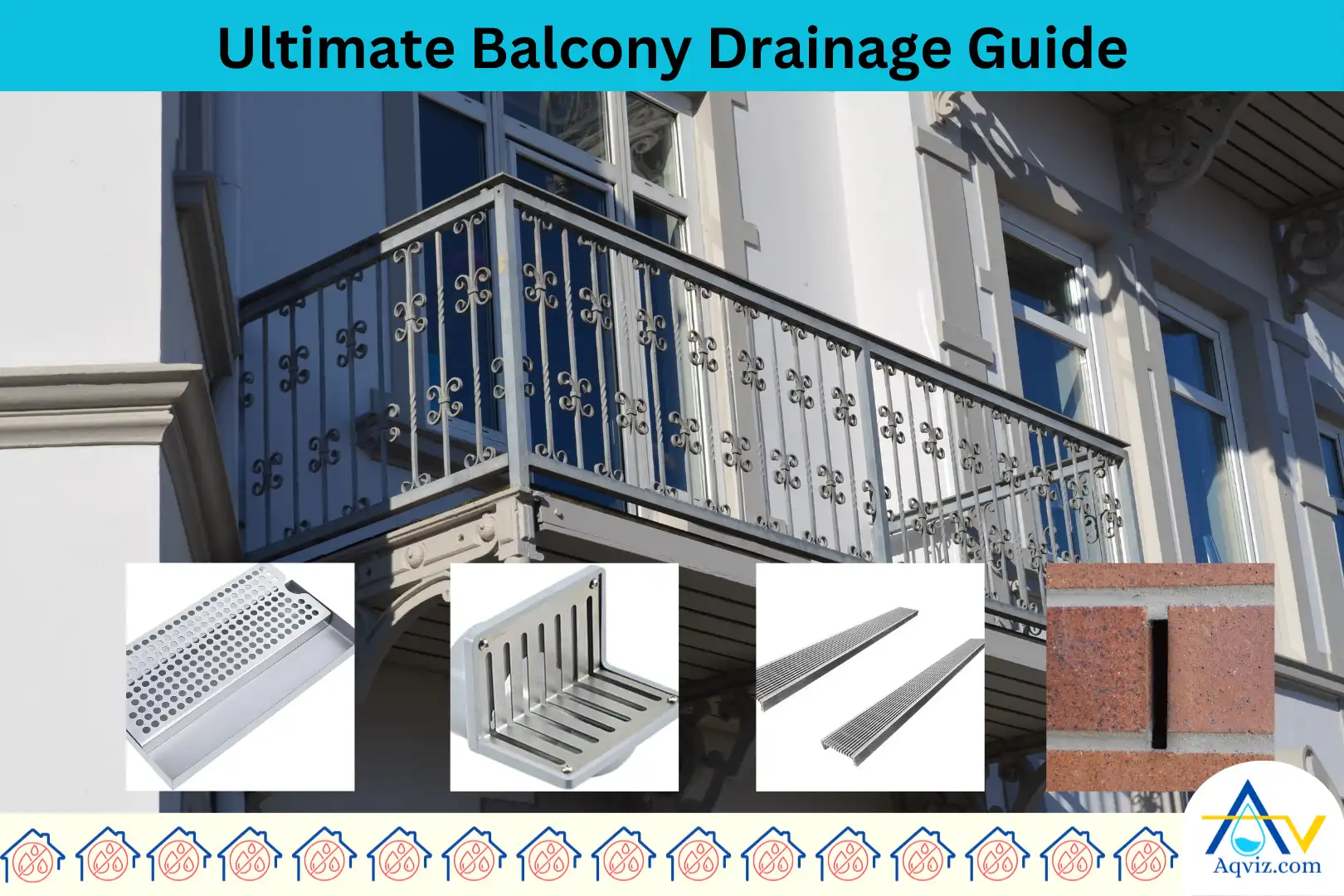
A balcony drain system is a built-in water disposal assembly designed to collect, channel, and discharge rainwater and wash water from a balcony surface to prevent water accumulation and structural damage. A balcony drain system consists of a drain outlet, grating cover, drain body, waterproofing flange, slope screed, downpipe connection, and debris trap. Balcony drain systems are mainly of 4 types, such as scupper drain, floor drain, drainage trays, and weep holes.
You should place a balcony drain during the structural and waterproofing stages. The recommended balcony drainage slope is 1/4 inch per foot (2%). This ensures efficient water flow without making the surface too steep. When you place a balcony drainage system, you should place it at the lowest points of the slope, the drain should be positioned near the edge or the corners, drian should have 2% slope, and floor drains should be placed at the lowest point near the door.
If you do not place the balcony drain properly, you can see water pooling in the balcony, clogging the drain, slope issues, and balcony system leaks over time. So Aqviz, we highly recommend that you to place the balcony drain properly and maintain it properly to direct the water efficiently.
What is a Balcony Drain System?
A balcony drain system is a built-in water disposal assembly designed to collect, channel, and discharge rainwater and wash water from a balcony surface to prevent water accumulation and structural damage. A balcony drain system consists of a drain outlet, grating cover, drain body, waterproofing flange, slope screed, downpipe connection, and debris trap.
The main task of a balcony drain system is to remove surface water immediately if rainfall or wash water reaches the balcony floor, preventing ponding, seepage, and slab deterioration. In our waterproofing projects at Aqviz, we see that a properly designed drain system protects the balcony slab, waterproofing membrane, façade walls, and the interior spaces below.
What are the 4 Types of Balcony Drains?
Balcony drainage systems vary based on the design, slope, and water management needs. At Aqviz, we’ve worked with different setups to prevent water accumulation and protect structures from damage.
These are the most common 4 types of balcony drain systems.
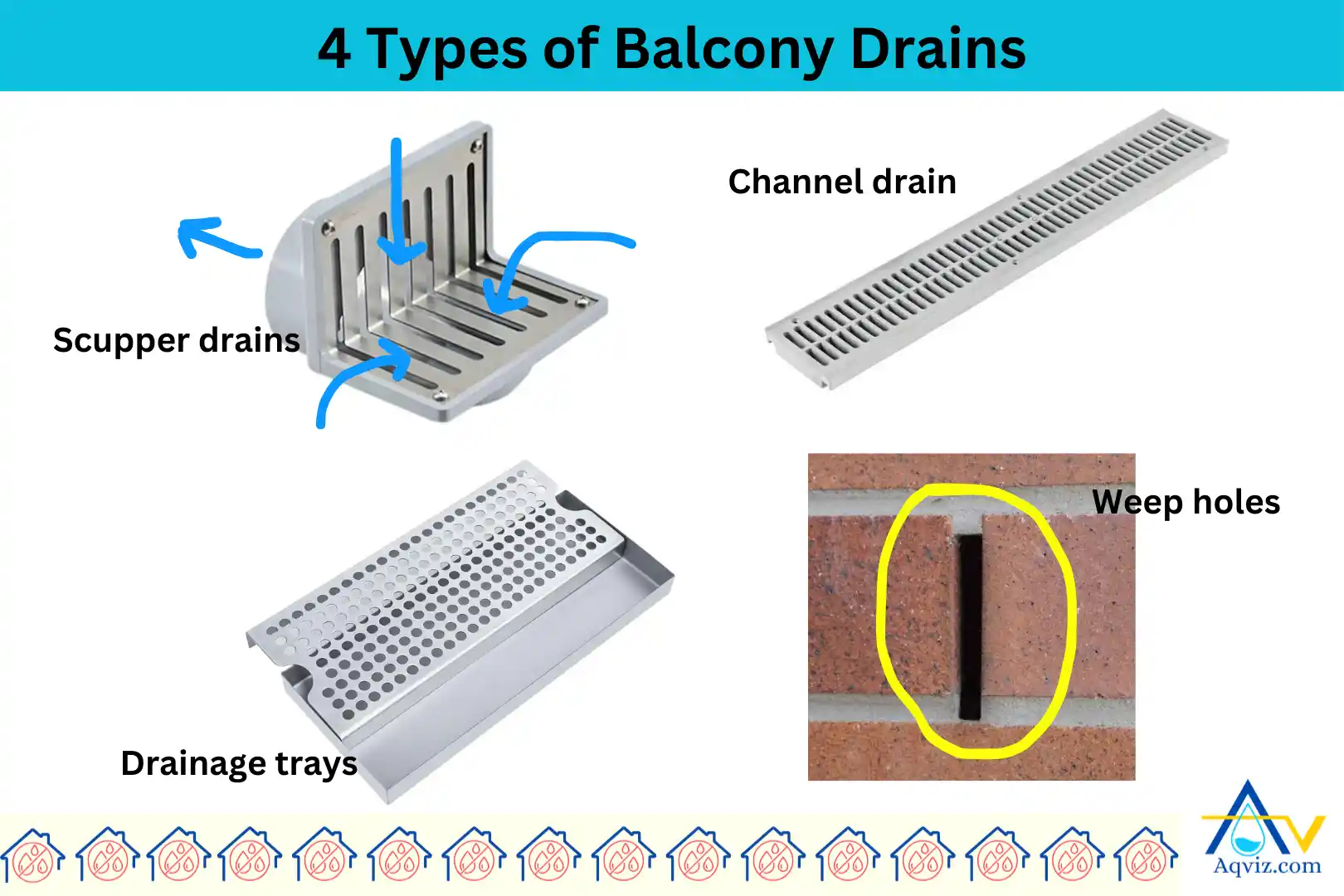
- Scupper drains: Scupper drains are openings or outlets on the balcony’s edge that allow water to flow out. These are common in concrete balconies.
- Floor drain/channel drain: Floor drains are built-in drains at the lowest point of the balcony. It directs the water to the plumbing system. These are often found in high-rise buildings.
- Drainage trays: These are considered as a hidden drainage system. These are installed beneath balcony flooring to collect water and channel it to an outlet. These are common in multi-unit residential buildings.
- Weep holes: Weep holes are small openings in walls or parapets that allow trapped water to drain away. These are essential for preventing moisture buildup inside walls.
How Does a Balcony Drainage System Work?
These are the 5 main steps you should know how a balcony drainage works in real installations we execute at Aqviz.
- Water reaches the surface: First, rainwater or wash water lands on the balcony floor during rainfall or cleaning activities.
- Slope directs the flow: Second, the sloped screed, typically 1:60-1:80, pushes water toward the lowest point without allowing stagnation.
- Drain inlet collects water: Third, the floor or side drain captures flowing water through the grating while blocking debris.
- Water passes through the drain body: Fourth, the drain body channels water into connected pipes while protecting the waterproofing flange from backflow.
- Water discharges safely: Finally, the connected downpipe releases water into stormwater lines or external drainage, keeping the slab and walls dry.
If slope accuracy drops below 1:100, we often observe ponding within 48-72 hours. Prolonged ponding leads to tile debonding, grout erosion, and membrane stress. Correct slope and drain positioning are what make the entire balcony drainage system function reliably for 20+ years.
When You Should Place a Balcony Drain?
You should place a balcony drain during the structural and balcony waterproofing stages, not after finishing works. From our on-site experience at Aqviz, incorrect timing is the #1 reason balcony leaks appear within 6-18 months.
Correct construction stages to place a balcony drain:
- Structural slab casting stage:
Place the drain sleeve or embedded drain body while casting the RCC slab so the outlet sits flush with concrete and aligns with the fall direction. - Plumbing rough-in stage:
Connect the drain body to the horizontal pipe or vertical downpipe before screed application to verify flow, alignment, and leak-free joints. - Slope screed stage:
Form the cementitious screed at 1:60-1:80 toward the drain so the drain becomes the true lowest point, preventing ponding. - Waterproofing stage:
Integrate the drain flange with the membrane (liquid, cementitious, or sheet) to create a continuous watertight seal around the outlet. - Finishing stage (tiles or coating):
Adjust the drain grating height to finish level so water enters the drain immediately without edge damming.
What Is a Balcony Drain Pipe?
A balcony drain pipe is a 4-inch precast pipe, which is a factory-made, reinforced concrete or PVC pipe designed for balcony and patio drainage. It provides a durable and long-lasting solution for managing water runoff. It can direct large volumes of water discharge while considering small sizes.
These are used in commercial and large residential buildings where balconies have heavy rainfall exposure. It prevents clogging due to its wide diameter, allowing efficient drainage. 4-inch pipe is compatible with scupper drains, floor drains, and downspout systems for seamless water flow.
We typically install these pipes with protective grates or filters to prevent debris from blocking the system.
What is a Balcony Drainage Tray?
A balcony drainage tray is a hidden water collection system placed beneath decking or tiles to catch and redirect water to a drainage outlet.
These are the 4 main purposes of the balcony drainage tray.
- Prevents water from pooling on the balcony surface.
- Protects balconies in multi-unit buildings where direct drainage isn’t feasible.
- Channels water towards scupper drains or a connected pipe system.
- Reduces water stains and seepage on lower levels by collecting runoff efficiently.
These trays are commonly used with floating decks, tiled surfaces, and modular balcony designs, allowing for better drainage without visible pipes.
What Is the Recommended Balcony Drainage Slope?
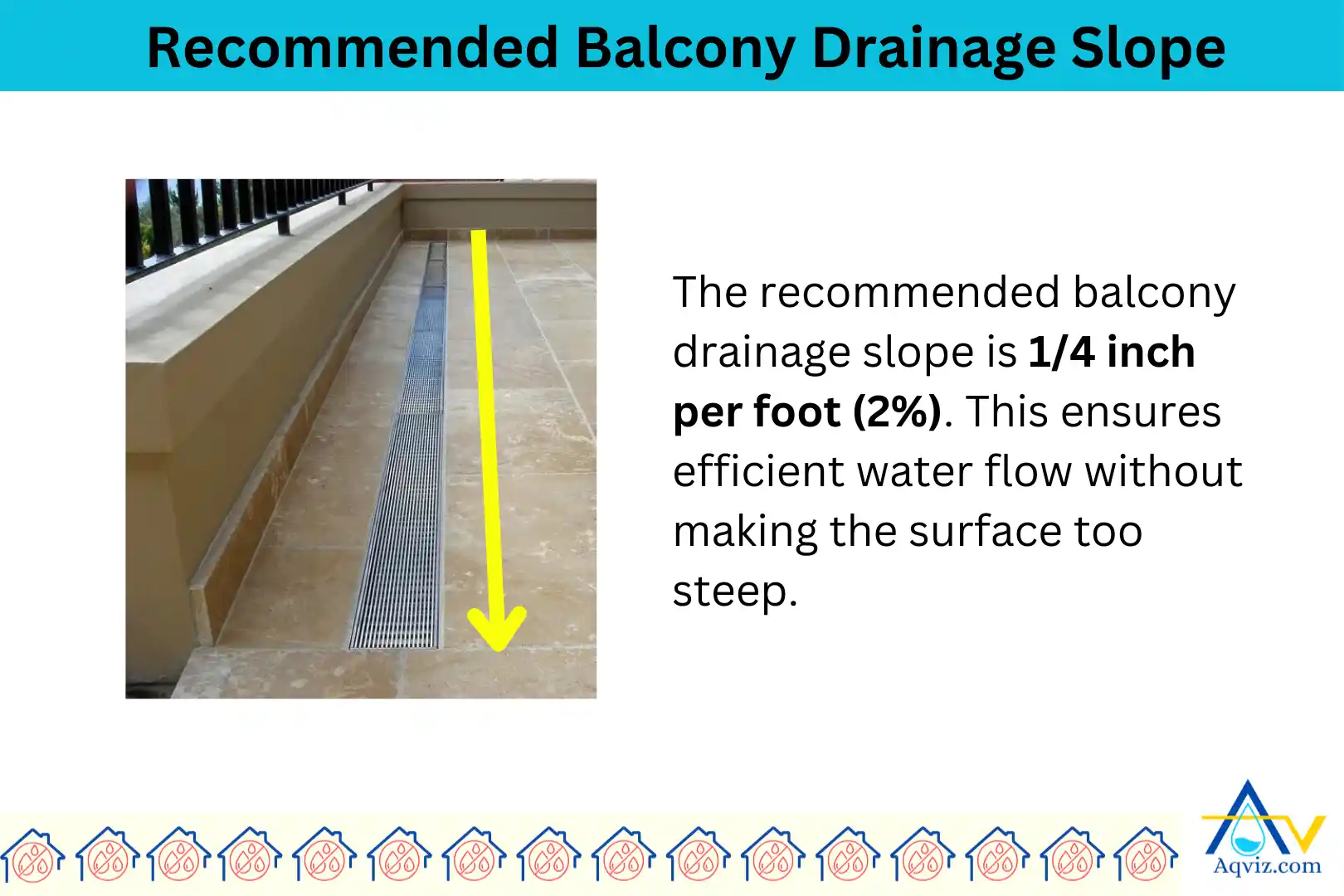
The recommended balcony drainage slope is 1/4 inch per foot (2%). This ensures efficient water flow without making the surface too steep.
- When the balcony drainage slope is more than 2%, it is too steep. It tends to speed up water drainage but may create an uneven walking surface. Water may flow too quickly, bypassing drains and causing runoff issues.
- When the balcony drainage slope is less than 2%, it is too flat. It tends to pool the water, leading to seepage, mold growth, and surface damage. This increases the risk of leaks, especially in tiled or membrane-sealed balconies.
For best results, Aqviz experts always check slope accuracy with a level before finalizing the flooring.
What Are the Building Regulations for Balcony Drainage?
Balcony drainage regulation can vary by state. However, these are the most common regulations for balcony drainage.
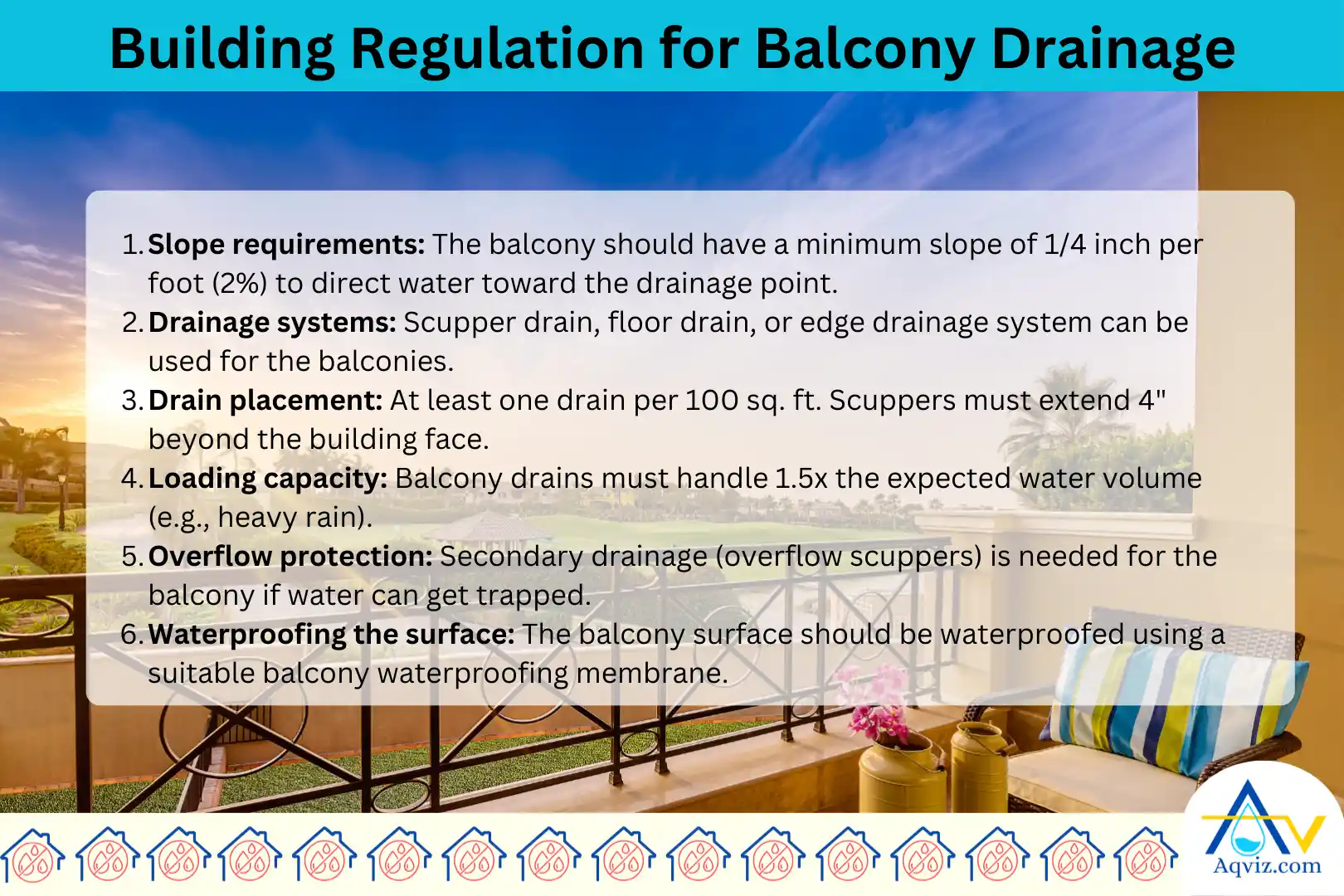
- Slope requirements: The balcony should have a minimum slope of 1/4 inch per foot (2%) to direct water toward the drainage point.
- Drainage systems: Scupper drain, floor drain, or edge drainage system can be used for the balconies.
- Drain placement: At least one drain per 100 sq. ft. Scuppers must extend 4″ beyond the building face.
- Loading capacity: balcony drains must handle 1.5x the expected water volume (e.g., heavy rain).
- Overflow protection: Secondary drainage (overflow scuppers) is needed for the balcony if water can get trapped.
- Waterproofing the surface: The balcony surface should be waterproofed using a suitable balcony waterproofing membrane.
We always recommend consulting a local building authority before planning or modifying balcony drainage.
What Should You Consider When Placing a Balcony Drain?
You should place the balcony drain system below
- Balcony drains should be placed at the lowest points of the slope.
- The drain should be positioned near the edge or the corners
- Drian should have 2% slope (1/4″ per foot) toward the drain.
- Floor drains should be placed at the lowest point near the door to prevent water from entering the interior.
We always recommend proper grading and waterproofing to ensure the water flows toward the drainage system without pooling.
What Are the Most Common Balcony Drain Problems?
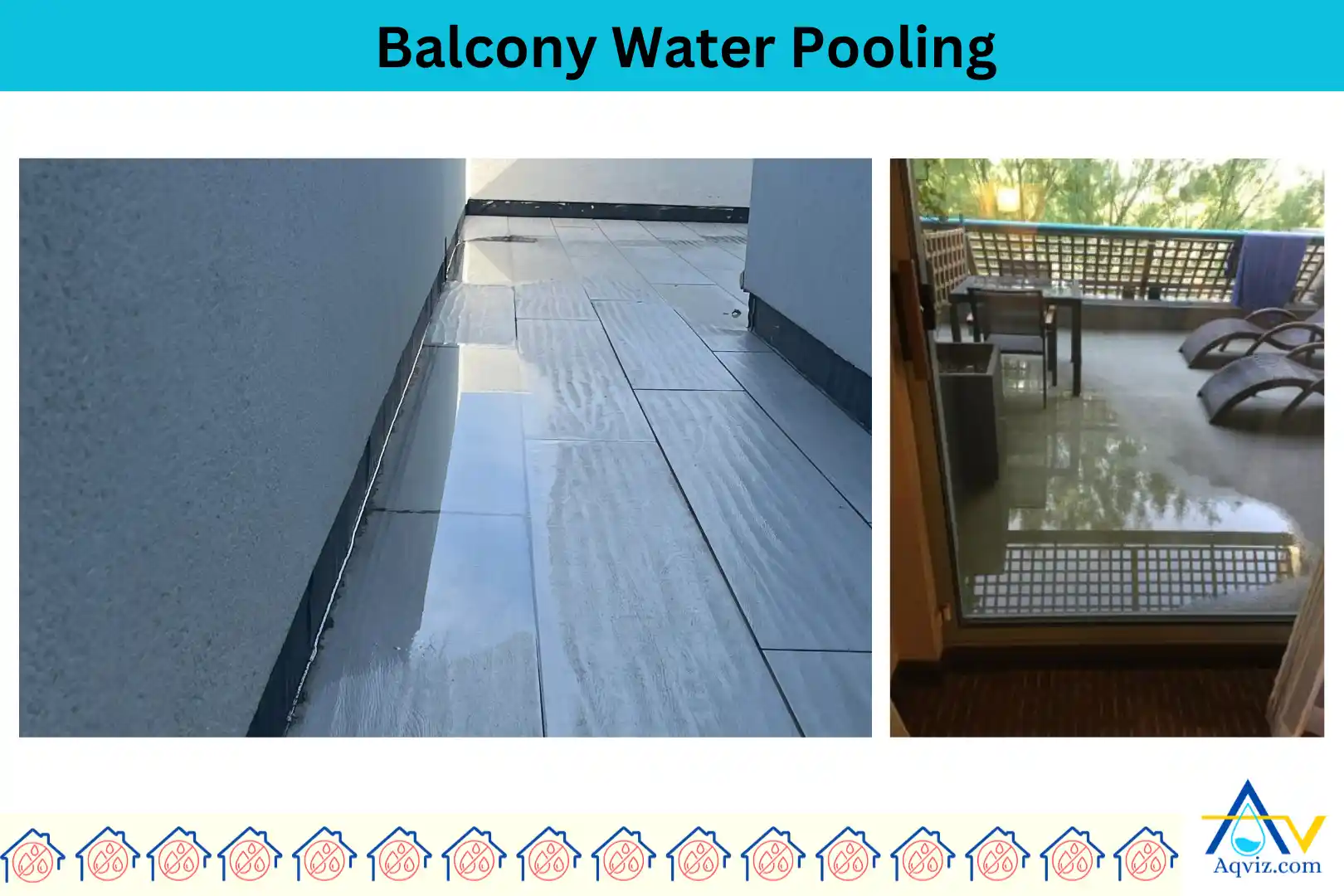
Balcony drainage problems can lead to serious structural and safety issues if not addressed. At Aqviz, we’ve seen firsthand how minor drainage issues can escalate into costly repairs. Here are four common balcony drainage problems and their negative impacts:
- Water standing on the balcony: Water standing on the balcony floor causes surface deterioration, stains, and potential leaks. If left unchecked, standing water can lead to mold growth and freeze-thaw damage in colder climates.
- Balcony drain clogging: Clogged balcony drains blockage from debris, leaves, or dirt and prevent water from draining, leading to overflow and seepage into walls and ceilings below.
- Balcony slope issues: Incorrectly sloped balcony traps water, causing long-term moisture damage, mold, and material deterioration.
- Balcony drainage system leak: Cracked or misaligned balcony drainage pipes allow water to seep into structural elements, weakening the foundation and causing water stains on walls.
How to Maintain a Balcony Drain?
To maintain a balcony drain properly, you should follow these 7 practical tips. These tips are based on what we consistently follow on-site at Aqviz.
- Clean the drain opening regularly: Remove leaves, dust, tile chips, and debris at least once every 30-45 days to prevent surface water backup.
- Flush the drain with water: Pour 10-15 liters (2.5-4 gal) of clean water into the drain to confirm smooth discharge and identify partial blockages early.
- Inspect the grating condition: Check for cracked, loose, or corroded grates because damaged grates restrict flow and allow debris into the pipe.
- Check waterproofing edges: Inspect the membrane termination around the drain flange for peeling, cracks, or gaps, especially after heavy rain.
- Avoid mortar and paint entry: Block the drain opening during retiling, painting, or repair works so cement slurry and coatings do not clog the pipe.
- Verify slope performance: Observe water movement during rainfall; if water stands longer than 5-10 minutes, recheck slope toward the drain.
- Clean the debris trap if installed: Remove and wash the debris basket every 2-3 months to prevent internal pipe choking.