
Crawl Space Humidity: Ideal Levels, Problems and Solutions

Crawl space humidity is the level of water vapor suspended in the air within the crawl space of a building. Crawl space humidity level varied with the impact of the water source. The ideal crawl space humidity is suitable for a dry and damage-free crawl space, while higher humidity in the crawl space can increase mold and mildew growth, wood rotting, floor warping, metal corrosion, insulation failures, insect and pest infestation, foundation cracking, paint peeling, and decrease the property value over time.
The ideal crawl space humidity ranges between 30% to 50% relative humidity (RH) throughout the year. When the crawlspace humidity increases or decreases from the ideal range, it may cause severe water damage to the structure and function of the home. You can monitor crawl space humidity by visibility and using accurate tools and equipment. If the humidity is above the 60% RH is called the higher humdity and it cause to increase in mold and mildew growth, wood rotting, floor warping, metal corrosion, insulation failures, insect and pest infestation, foundation cracking, paint peeling, and decreases the property value over time.
Crawl space humidity can increase due to a lack of vapor barrier, poor ventilation, ground water intrusion, plumbing leaks, unsealed crawl space vents, duct leakage, and higher outdoor humidity. To control the higher humidity in the crawl space, you should install a vapor barrier, use a dehumidifier, seal the crawl space vents, improve the exterior drainage system, and add a ventilation fan in the crawl space. So Aqviz, we highly recommendthat you install a waterproofing membrane in the crawlspace. So please reach out to us for any problem.
What Is Crawl Space Humidity?
Crawl space humidity is the level of water vapor suspended in the air within the crawl space of a building. Crawl space humidity level varied with the impact of the water source. Lower and higher crawl space humidity levels cause many problems. Hence crawl space humidity level should be maintained at an ideal level.
When a crawl space has a higher humidity level, these negative impacts can be observed.
- Increasing mold and mildew growth in the crawl space
- Increasing wood rotting and floor warping in the crawl space
- Increase metal corrosion in the crawl space
- Fail the insulation layers in the crawl space
- Decrease the property value of the home
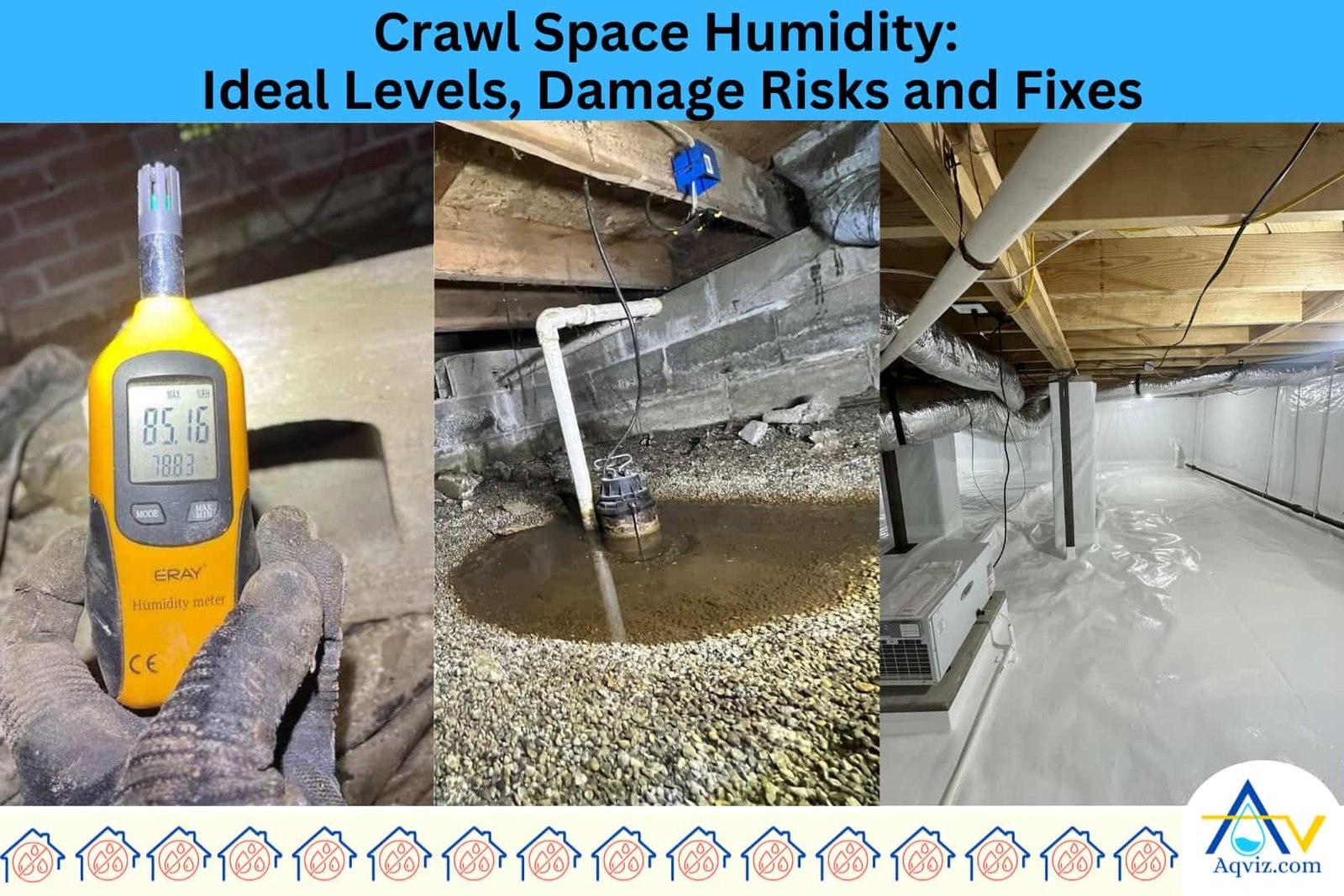
What is the Ideal Crawl Space Humidity?
The ideal crawl space humidity ranges between 30% to 50% relative humidity (RH) throughout the year. This humidity range maintains structural materials, prevents microbial growth, and protects indoor air quality. When RH consistently stays below 60%, biological activity such as mold, fungi, and dust mites becomes inactive.
Once humidity rises beyond this threshold, the crawl space becomes a microclimate that supports decay and infestation. Using a humidity sensor for crawl space Wi-Fi helps ensure that you stay within this optimal range by providing real-time updates and alerts.
Read More About: What to Know About Humidity: Levels, Impacts, and Controlling
How to Monitor Humidity in a Crawl Space?
You can monitor crawl space humidity by visibility and using accurate tools and equipment.
To monitor crawl space humidity by visibility, you should check condensation on ductwork or floor joists, musty odors, peeling insulation, and wood warping. These all indicate trapped moisture in the crawl space. As well as mold spots, efflorescence on foundation walls, or insect activity are the other signs of humidity in the crawl space.
To monitor crawl space humidity accurately, you must detect and measure the relative humidity (RH) level consistently using accurate tools. The most reliable method is installing a humidity monitor or humidity sensor designed for crawl spaces and basements. Devices like a Wi-Fi-enabled remote humidity sensor allow you to observe real-time data remotely, track fluctuations, and receive alerts if humidity exceeds safe levels in the crawl space.
When choosing a monitor, make sure it offers a durable casing, extended battery life, and compatibility with smart home systems.
Aqviz we highly recommend that you inspect your crawl space properly to identify the humidity problems in the crawl space.
What is the Higher Humidity in the Crawl Space?
Higher humidity in the crawl space occurs when relative humidity (RH) levels rise above 60%, and it becomes critical when RH exceeds 70%. At these levels, moisture begins to saturate structural materials, reduce air quality, and support biological growth. Higher crawl space humidity often results from inadequate ventilation, water intrusion, plumbing leaks, or a lack of a vapor barrier.
What are the Problems of Higher Humidity In the Crawl Space?
High crawl space humidity leads to widespread and progressive damage to both the structure and the indoor environment. This is a list of the most common humidity-related damages in the crawl space.
- Wood rotting and structural weakening in the crawl space
- Mold and mildew growth in the crawl space
- Crawl space insulation deterioration
- Crawl space metal corrosion
- Insect and pest infestation
- Paint peeling and coating failure
- Foundation cracking and settling
Read More About: 8 Water Damage in the House: Reasons, Impacts, and Preventions
What are the 7 Reasons for Higher Humidity in the Crawl Space?
Higher humidity in a crawl space usually results from a combination of environmental exposure, construction flaws, and lack of moisture control. Below are the 7 most common causes for elevated crawl space humidity.
- Lack of vapor barrier: The absence of a ground-level vapor barrier allows moisture from the soil to evaporate directly into the crawl space air. This is a primary cause for the constant rise in humidity levels and soil saturation.
- Poor ventilation: Insufficient air movement traps moist air inside the crawl space. This is a reason for excess humidity buildup, especially during warm, humid seasons when outside air brings more moisture indoors.
- Groundwater intrusion: Rising groundwater or poor drainage systems increase crawl space moisture levels. Water seeps throughthe foundation walls or the slab, elevating relative humidity consistently.
- Plumbing leaks: Leaking pipes or joints beneath the floor release water directly into the crawl space. This localized water source rapidly increases the surrounding humidity and creates condensation.
- Unsealed crawl space vents: Open or damaged vents let outside humid air enter the crawl space. This is a reason for interior humidity to exceed recommended levels, especially in coastal or high-humidity regions.
- Duct leakage or condensation: Leaky or uninsulated HVAC ducts running through the crawl space can introduce warm, moist air. This promotes condensation and causes crawl space humidity to increase steadily.
How to Control the Crawl Space Humidity?
To control the crawl space humidity, you should install a vapor barrier, use a dehumidifier, seal the crawl space vents, improve the exterior drainage system, and add a ventilation fan in the crawl space.
- Install a vapor barrier: A heavy-duty polyethylene vapor barrier across the crawl space floor helps prevent ground moisture from evaporating into the air. This method reduces the crawl space moisture level significantly and is essential for homes built over damp soil.
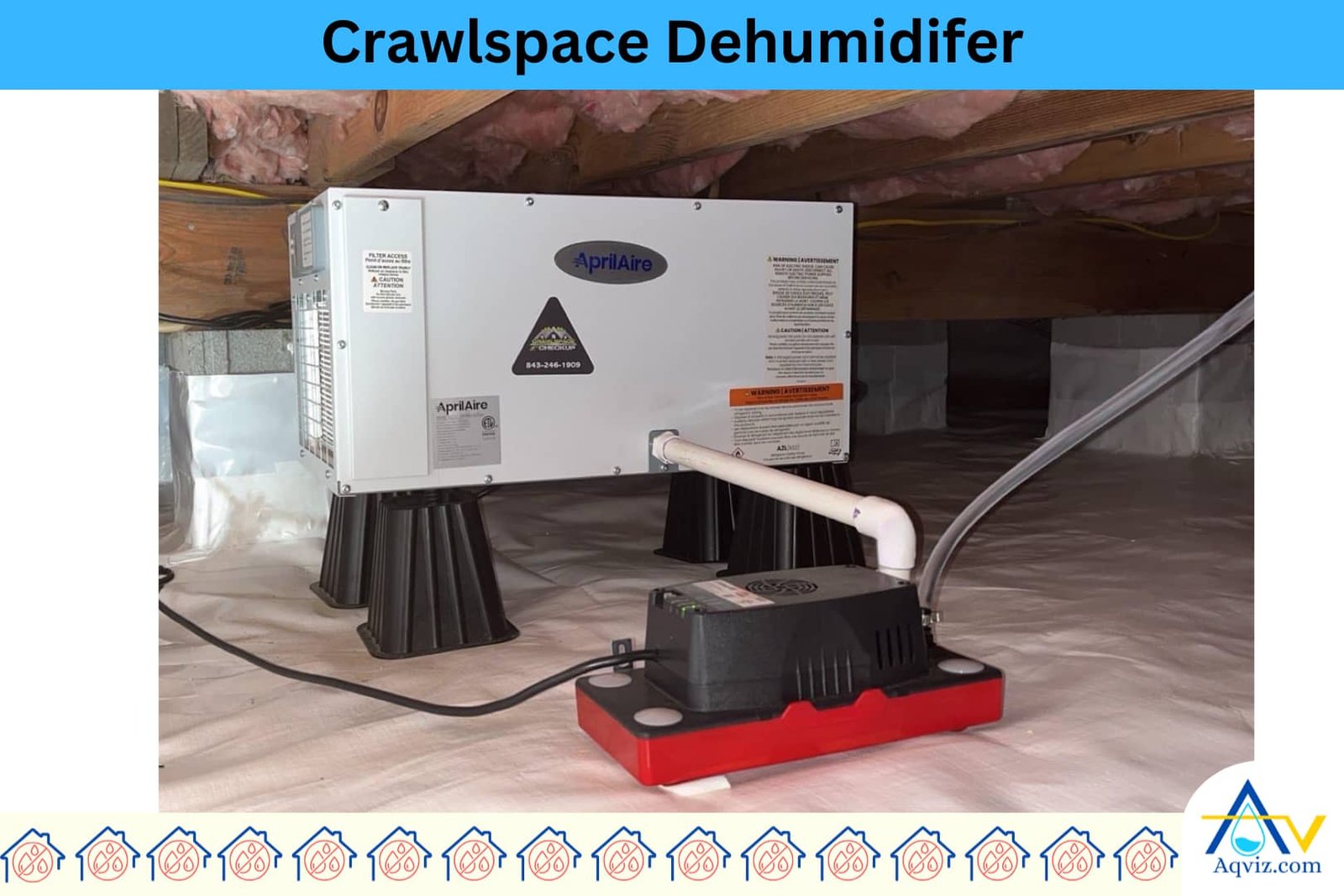
- Use a crawl space dehumidifier: A dehumidifier specifically designed for crawl spaces helps regulate humidity year-round. It actively removes excess moisture from the air and helps maintain stable RH even in humid climates or during rainy seasons.
- Seal crawl space vents: Sealing or conditioning the vents prevents outdoor humid air from entering and condensing on cooler surfaces inside the crawl space. This method helps control air exchange and stabilize internal humidity levels.
- Improve exterior drainage: Properly sloped grading, extended downspouts, and French drains prevent water from pooling near the foundation. This setup reduces the risk of water infiltration, which directly increases crawl space humidity.
- Add a ventilation fan: Mechanical ventilation fans help circulate air and exhaust humid air out of the crawl space. This method prevents stagnant moisture from building up and helps control condensation, especially in a vented crawl space.
Why Does an Encapsulated Crawl Space Still Have Humidity?
There are several reasons why an encapsulated crawl space still has humidity.
One major cause is residual moisture trapped during encapsulation. If the crawl space was not properly dried before installation, that moisture remains sealed inside.
Another issue could be plumbing leaks or condensation on ductwork, which introduce new water sources after sealing. Improper sealing around vents, foundation walls, or sump pump systems also allows vapor intrusion.
Lastly, if the dehumidifier is undersized, damaged, or missing, it fails to regulate moisture effectively, allowing humidity levels to exceed the safe range. Even in encapsulated systems, consistent monitoring and maintenance are essential to keep crawl space humidity under control.
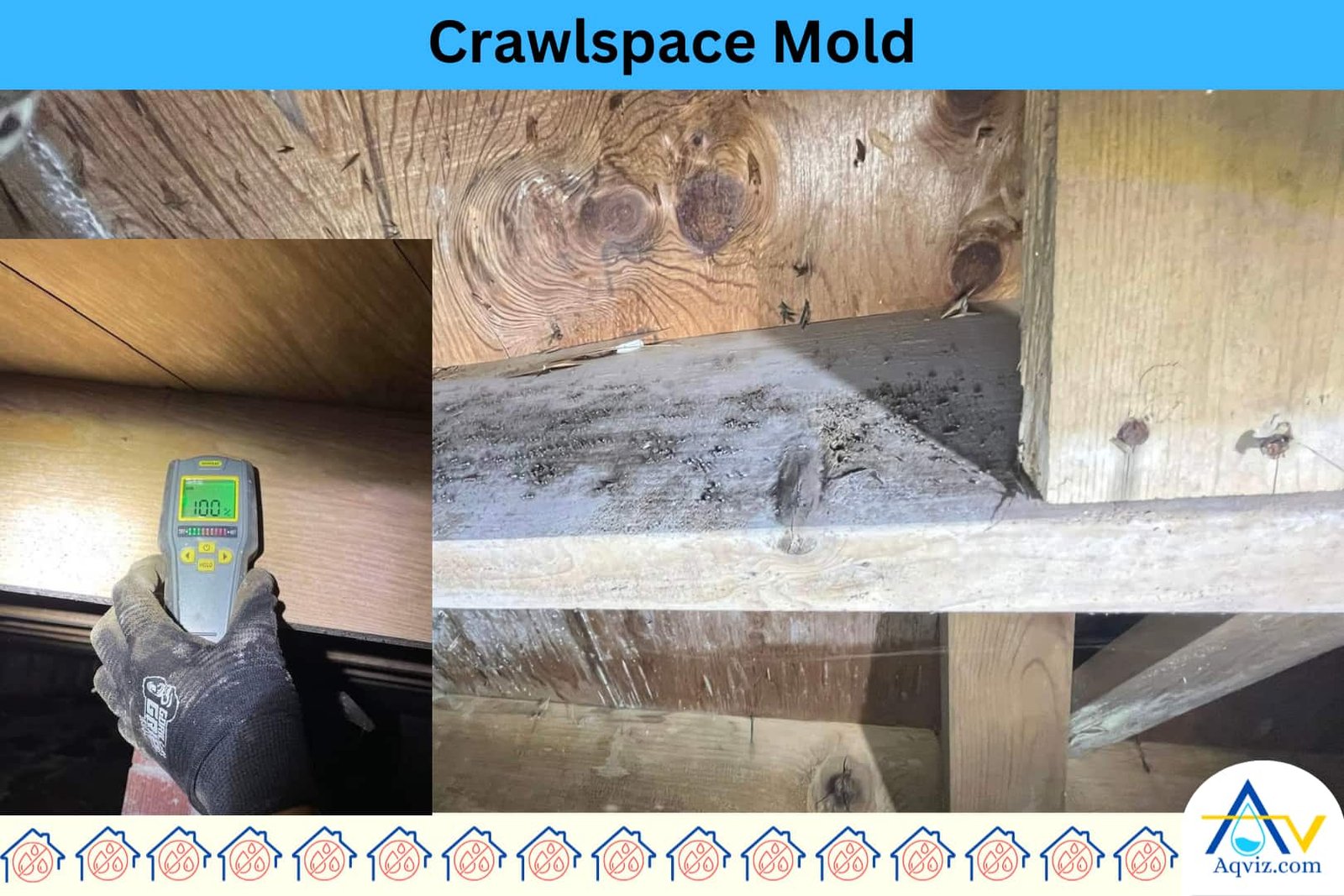
What Is Crawl space Mold?
Crawl space mold is a type of fungal growth that develops in the dark, damp, and poorly ventilated environment beneath a building’s first floor. Mold spores thrive when crawl space humidity levels exceed 60%, especially when combined with organic materials like wood, insulation, or dust. The presence of moisture, whether from groundwater seepage, condensation, or plumbing leaks, activates dormant spores and triggers mold colonization.
Does Crawl Space Waterproofing Decrease the Humidity?
Yes, crawl space waterproofing decreases humidity by eliminating the sources of water intrusion and moisture buildup. When you waterproof a crawl space, you apply a combination of systems that block, redirect, and remove water before it can raise the humidity level.
These systems include vapor barriers, sump pumps, drainage mats, wall sealants, and foundation waterproofing membranes. By preventing water from entering or accumulating under the structure, the overall moisture content in the air drops, helping to maintain the recommended 30% to 50% relative humidity (RH) range.