

Understanding and addressing drainage issues around a home’s exterior is paramount for maintaining its structural integrity and preventing costly water damage, notes Schambs Property Management. Effective water management diverts rainwater and melting snow away from the foundation, safeguarding against basement flooding, soil erosion, and compromised structural stability. Neglecting these issues can lead to significant long-term problems, including mold growth, pest infestations, and even foundational shifts that jeopardize the entire property.
This article provides a comprehensive guide to detecting common drainage problems, offering practical insights into identifying the subtle and overt signs of water mismanagement. It delves into various aspects of exterior drainage, from evaluating landscape grading to inspecting gutter systems and understanding the impact of impervious surfaces. By equipping homeowners with the knowledge to proactively identify and mitigate these concerns, the aim is to foster a more resilient and protected living environment.
Identifying Poor Grading and Landscape Issues
Poor grading is a primary cause of drainage problems, characterized by land that slopes towards the home’s foundation, directing water inward rather than away.
The slope of the ground immediately surrounding a home is critical for effective drainage. Ideally, the landscape should gently decline away from the foundation at a minimum gradient of six inches over the first ten feet. This ensures that rainwater and snowmelt naturally flow away from the structure, preventing accumulation that can saturate the soil adjacent to the foundation. An insufficient slope, or worse, a negative slope where the ground pitches towards the house, creates a direct pathway for water to seep into basements or crawl spaces, leading to dampness, mold, and potential structural damage.
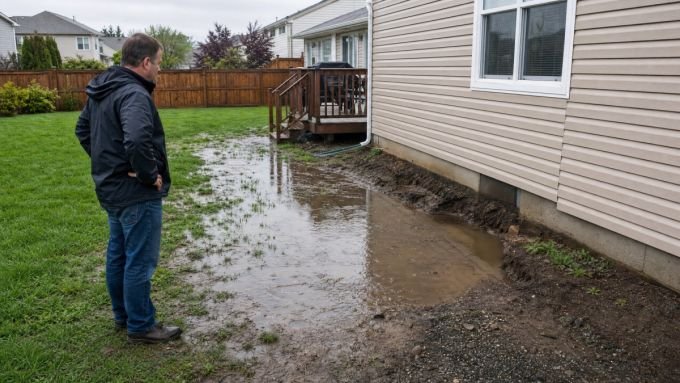
Beyond the immediate grading, other landscape features can exacerbate drainage issues. Compacted soil, often a result of heavy foot traffic or construction activities, reduces water absorption and increases runoff. Similarly, impermeable surfaces like concrete patios or driveways that are improperly sloped can channel significant volumes of water directly towards the home. Observing areas where water consistently pools after rainfall, or where soil erosion is evident, provides clear indicators of underlying grading and landscape deficiencies that require attention.
Assessing Gutter and Downspout Performance
Properly functioning gutters and downspouts are essential for collecting roof runoff and channeling it safely away from the home’s foundation.
Gutters and downspouts serve as the first line of defense against roof water runoff impacting the home’s perimeter. Their primary function is to collect precipitation from the roof and direct it through downspouts to a safe discharge point, typically several feet away from the foundation. When these systems are compromised, water can cascade directly down the side of the house, saturating the soil below and potentially entering the basement or crawl space. Common issues include blockages from leaves and debris, which cause water to overflow, and improper pitch, leading to standing water within the gutters themselves.
Regular inspection and maintenance are crucial for optimal gutter performance. Homeowners should routinely clear gutters of obstructions, especially during autumn and after severe weather events. Additionally, ensuring that downspout extensions are properly installed and direct water at least five to ten feet away from the foundation is vital. The absence of splash blocks or underground drainage systems can result in concentrated water flow that erodes soil and creates localized saturation, further contributing to drainage problems. The National Association of Home Builders (NAHB) recommends that downspouts discharge water at least 6 feet away from the foundation [1].
Recognizing Foundation and Basement Indicators
Signs of drainage issues often manifest in the foundation and basement, indicating water intrusion and potential structural compromise.
The foundation of a home is particularly vulnerable to persistent moisture. Visible cracks in the foundation walls, both interior and exterior, can be a direct consequence of hydrostatic pressure exerted by saturated soil. This pressure can force water through even small fissures, leading to dampness, efflorescence (white, powdery mineral deposits), and eventually more significant structural damage. Water stains on basement walls or floors, a musty odor, and the presence of mold or mildew are unequivocal indicators of water intrusion, often originating from exterior drainage deficiencies. These issues not only compromise indoor air quality but can also weaken structural components over time.
Beyond visible cracks, subtle changes in the home’s structure can also point to drainage problems. Sticking doors and windows, uneven floors, or gaps between walls and ceilings might suggest differential settlement of the foundation, a condition often exacerbated by inconsistent soil moisture levels. The presence of standing water in window wells or crawl spaces after rainfall is another clear red flag. Addressing these internal indicators requires a thorough investigation of external drainage systems, as interior repairs alone will not resolve the root cause of the water problem. According to the Federal Emergency Management Agency (FEMA), proper drainage is a key factor in preventing basement flooding [2].
Detecting Issues with Driveways, Patios, and Walkways
Impervious surfaces like driveways, patios, and walkways can contribute to drainage problems if not properly sloped or designed to manage runoff.
Hardscaped areas around a home, while aesthetically pleasing and functional, can significantly alter natural drainage patterns. Concrete or paved surfaces prevent water from percolating into the ground, increasing the volume and velocity of surface runoff. If these surfaces are not correctly graded to direct water away from the home, they can become conduits for water to flow directly towards the foundation. Visible signs of this include water pooling against the house after rain, or erosion of soil at the edges of these hardscaped areas where water is concentrated. Cracks in driveways or patios can also allow water to penetrate beneath the surface, leading to sub-surface saturation and potential damage to the underlying soil and foundation.
Proper installation of these features requires careful consideration of drainage. This includes ensuring a slight slope away from the house, incorporating permeable materials where possible, and installing channel drains or catch basins to collect and divert runoff. For instance, the International Residential Code (IRC) specifies requirements for grading around foundations to ensure positive drainage [3]. Without these measures, even a well-maintained home can suffer from water intrusion due to poorly managed hardscapes. Observing how water behaves on these surfaces during a rain event can provide valuable clues about their contribution to overall drainage issues.
Understanding the Role of Landscaping and Vegetation
While vegetation can help absorb water, certain landscaping choices and plant placements can inadvertently worsen drainage problems around a home.
Landscaping plays a dual role in exterior drainage. On one hand, well-placed vegetation, especially deep-rooted plants and trees, can absorb significant amounts of rainwater, reducing surface runoff and soil saturation. On the other hand, improper landscaping can exacerbate drainage issues. For example, planting large shrubs or trees too close to the foundation can lead to root systems interfering with underground drainage pipes or even causing damage to the foundation itself. Furthermore, dense ground cover or raised garden beds that slope towards the house can trap moisture against the foundation walls, creating a perpetually damp environment conducive to mold and rot.
Consideration should be given to the type of plants used and their placement. Native plants that are well-adapted to local rainfall patterns can be particularly effective in managing stormwater. Creating rain gardens or bioswales in areas prone to pooling can also help absorb and filter runoff. It is important to ensure that any landscaping features, such as retaining walls or decorative borders, do not inadvertently create barriers that prevent water from flowing away from the house. Regular maintenance, including pruning and ensuring proper spacing, helps maintain a healthy landscape that supports effective drainage rather than hindering it.
Comparative Analysis of Common Drainage Issues
| Drainage Issue | Common Causes | Potential Solutions |
|---|---|---|
| Poor Grading | Insufficient slope away from foundation, settled soil | Regrading, adding soil to create positive slope |
| Clogged Gutters/Downspouts | Leaves, debris, improper installation | Regular cleaning, installing gutter guards, extending downspouts |
| Foundation Cracks/Seepage | Hydrostatic pressure, expansive soils, poor waterproofing | Exterior waterproofing, French drains, crack repair |
| Improper Hardscape Slope | Patios/driveways sloping towards house | Resloping hardscapes, installing channel drains |
| Saturated Landscape | Overwatering, poor soil absorption, dense vegetation | Improving soil drainage, strategic planting, rain gardens |
Frequently Asked Questions
What are the early signs of poor exterior drainage?
Early signs include standing water near the foundation, eroded landscaping, water stains in the basement or crawl space, and mildew or mold growth on exterior walls. These indicators often become apparent after heavy rainfall or snowmelt, signaling that water is not being effectively diverted away from the home’s critical structural components.
How can I check my property’s grading?
To check your property’s grading, observe the slope of the ground around your home. Ideally, the ground should slope away from the foundation at a rate of at least six inches for the first ten feet. You can use a string line level and stakes to accurately measure the grade. A reverse slope or flat areas indicate a need for regrading to ensure proper water runoff.
What role do gutters and downspouts play in drainage?
Gutters and downspouts are crucial for collecting rainwater from the roof and directing it away from the foundation. They prevent water from cascading down the side of the house, which can saturate the soil and lead to foundation issues. Properly maintained and extended downspouts are vital for effective water management.
When should I consider professional help for drainage problems?
Professional assistance is advisable for persistent standing water, significant foundation cracks, recurring basement flooding, or when complex solutions like French drains, extensive regrading, or exterior waterproofing are needed. Experts can accurately diagnose the root cause and implement effective, long-lasting solutions.
Effectively detecting and addressing drainage issues around a home’s exterior is a critical aspect of property maintenance. By understanding the various indicators, from subtle landscape changes to more overt signs of water intrusion in the basement, homeowners can take proactive steps to protect their investment. Regular inspections, timely maintenance of gutters and downspouts, and thoughtful landscaping choices are all integral to a robust drainage strategy. When in doubt, consulting with drainage professionals can provide tailored solutions, ensuring the long-term health and stability of the home.
References
- [1] National Association of Home Builders. (n.d.). *Residential Construction Performance Guidelines*.
- [2] Federal Emergency Management Agency. (2008). *Protecting Your Home and Property From Flood Damage*. FEMA 347.
- [3] International Code Council. (2021). *International Residential Code (IRC)*.
