
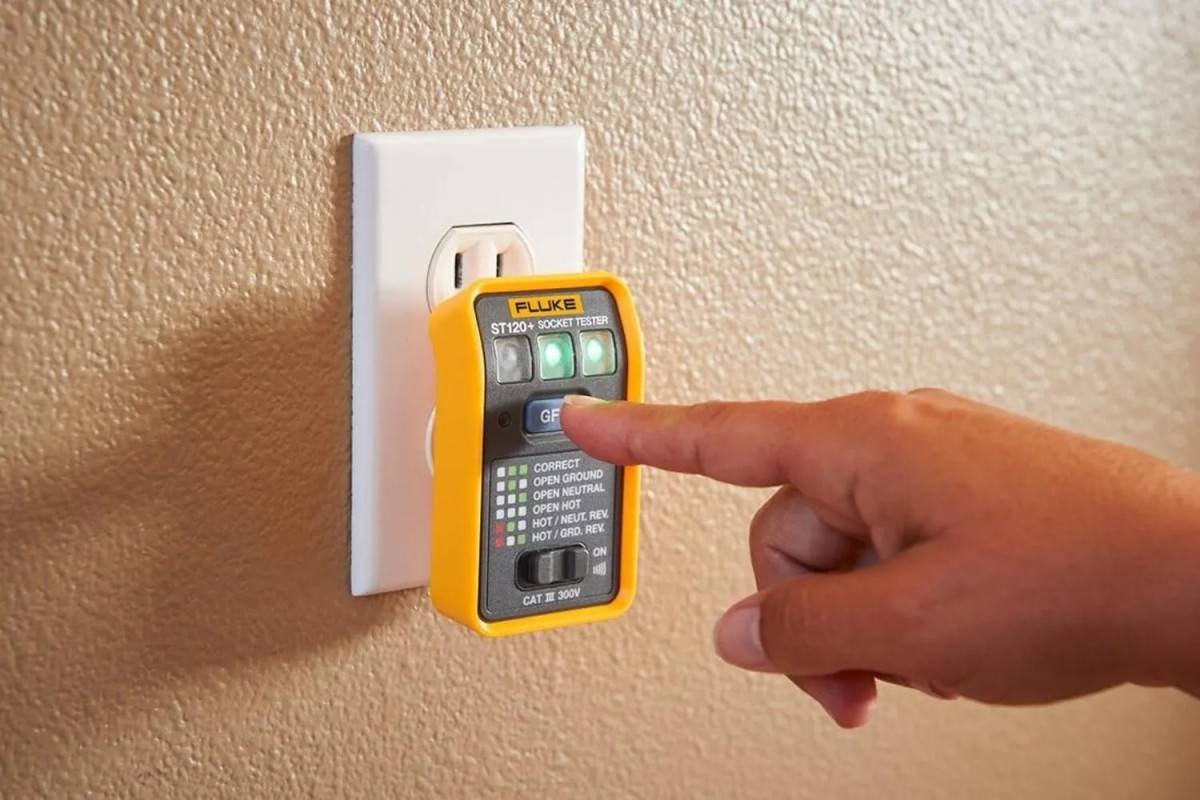

This guide covers why your GFCI outlet keeps tripping and how to fix it — from faulty appliances to wiring faults. A GFCI outlet that keeps tripping is doing its job — it is detecting a ground fault somewhere in the circuit and shutting off power to prevent electrocution. The frustration is real. The outlet is not broken. The outlet is working, explains Reisterstown property management.
A GFCI that will not reset — the RESET button pops out immediately when pressed — is detecting a continuous ground fault. The fault is present right now. The GFCI will not reset because the fault is still there. A GFCI that trips intermittently, it works for hours or days, then trips, is detecting an intermittent ground fault. The fault comes and goes. The appliance is plugged in, the cord is moved, moisture enters the outlet, and the GFCI trips. The intermittent fault is harder to diagnose because it is not present at the moment you are troubleshooting. The continuous fault is easier, unplug everything, reset the GFCI, and plug things back in one at a time until it trips. The last thing plugged in is the problem. Here are the most common causes, in order of likelihood.
Causes of a GFCI Tripping Repeatedly
A GFCI trips for one of six reasons, ranging from a simple faulty appliance to a complex wiring fault. Here are the causes, how to diagnose each one, and what the fix costs.
| Cause | Diagnosis | Fix | Cost |
| Faulty appliance plugged into the circuit | Unplug everything; GFCI resets and holds. Plug in one at a time until it trips. | Replace or repair the faulty appliance | $0 – $500 |
| Moisture in an outdoor or bathroom outlet | GFCI trips after rain or during humid weather; holds when dry | Replace with weather-resistant GFCI + in-use cover | $120 – $250 per outlet |
| Damaged appliance cord or extension cord | GFCI trips when a specific cord is moved or flexed | Replace the damaged cord | $10 – $50 |
| Downstream wiring fault (line/load reversed) | GFCI trips immediately when any load is applied | Correct the wiring; may require electrician | $120 – $300 |
| GFCI outlet itself is failing | GFCI trips with nothing plugged in and no downstream load | Replace the GFCI outlet | $120 – $250 |
| Circuit overload sharing neutral with another circuit | GFCI trips when a heavy load on a different circuit turns on | Electrician must separate the shared neutral | $300 – $800 |
Step-by-Step Troubleshooting
Step 1: Unplug everything from the GFCI and all downstream outlets. A GFCI protects every standard outlet connected to its load terminals. Unplug every appliance, every charger, every cord from every outlet on the circuit, not just the GFCI itself. Press the RESET button. If the GFCI resets and holds with nothing plugged in, the problem is an appliance or a cord. Go to Step 2. If the GFCI will not reset even with nothing plugged in, the problem is the wiring or the GFCI itself. Go to Step 4.
Step 2: Plug in and test appliances one at a time. Plug in one appliance. Wait a few minutes. If the GFCI holds, plug in the next. Continue until the GFCI trips. The last appliance plugged in is the problem. Common culprits: refrigerators and freezers in garages, the defrost cycle can cause a ground fault, washing machines, water and electricity in close proximity, outdoor power tools, damaged cords, moisture, and anything with a heating element, hair dryers, space heaters, toasters. The appliance may work perfectly on a non-GFCI outlet. It is still leaking current to ground. The non-GFCI outlet does not detect the leak. The GFCI does. The GFCI is right. The appliance is wrong.
Step 3: Check outdoor outlets for moisture. An outdoor GFCI or an outdoor outlet protected by an indoor GFCI is the most common source of intermittent tripping. Water enters the outlet through a worn cover, a cracked gasket, or an improperly sealed opening. The moisture creates a conductive path from the hot terminal to the ground. The GFCI trips. The outlet dries out. The GFCI resets. The cycle repeats with every rain or heavy dew. The fix is to replace the outlet with a weather-resistant GFCI and install an in-use cover, a cover that remains weatherproof while a cord is plugged in. The in-use cover costs $10 to $20. The outlet replacement costs $120 to $250. The tripping stops. The moisture was the cause. The outlet was the victim.
Step 4: If the GFCI will not reset with nothing plugged in, the wiring or the GFCI itself is at fault. Turn off the circuit breaker. Remove the GFCI from the electrical box. Disconnect the load wires, the wires that feed the downstream outlets. Cap them with wire nuts. Leave the line wires connected, the wires that bring power to the GFCI. Turn the breaker back on. Press RESET. If the GFCI resets and holds with only the line wires connected, the problem is in the downstream wiring, a loose connection, a damaged cable, or a wiring fault in one of the downstream outlets. If the GFCI still will not reset with the load wires disconnected, the GFCI itself is failing and must be replaced. The replacement costs $120 to $250. The GFCI is a mechanical device. It wears out. A GFCI that is 10 to 15 years old may fail to reset because the internal mechanism has reached the end of its service life. The TEST button may still work. The RESET button may not. The outlet has failed. Replace it.
The U.S. Consumer Product Safety Commission (CPSC) recommends testing GFCI outlets monthly by pressing the TEST button and confirming the RESET button pops out. A GFCI that does not trip when TEST is pressed has failed and must be replaced. The TEST button verifies the internal circuitry. A GFCI that passes the test but trips repeatedly is working correctly, the trips are detecting real ground faults. A GFCI that fails the test is not working. Replace it immediately. The outlet that looks like a GFCI but does not trip when tested is a standard outlet with a TEST button that does nothing. It is providing no ground-fault protection. The test is the proof. Press the button. The button tells the truth.
When to Call an Electrician
If the troubleshooting steps above do not identify and resolve the problem, call an electrician. A GFCI that trips with nothing plugged in and no load wires connected, after the GFCI itself has been replaced, indicates a wiring fault inside the wall. The fault may be a nail through a cable, a loose connection in a junction box, or insulation that has degraded and is allowing current to leak to ground. The fault is not visible. The fault is inside the wall. An electrician can locate the fault with specialized test equipment and repair it. The cost is $200 to $800 depending on the accessibility of the fault. The cost of not repairing it is a GFCI that will not reset and a circuit that is not protected. The circuit without GFCI protection is a shock hazard. The shock hazard is invisible. The GFCI that will not reset is the visible evidence of the invisible hazard. The evidence is telling you to call the electrician. Call the electrician.
Frequently Asked Questions
Why does my GFCI outlet keep tripping for no reason?
It is not tripping for no reason. A GFCI trips when it detects a ground fault, current leaking to ground. The most common causes are a faulty appliance, moisture in an outdoor outlet, a damaged cord, or a wiring fault. Unplug everything, reset the GFCI, and plug appliances back in one at a time. The appliance that causes the trip is the reason.
Can a bad appliance cause a GFCI to trip?
Yes. Refrigerators, freezers, washing machines, and anything with a heating element, hair dryers, space heaters, toasters, are common culprits. The appliance may work perfectly on a non-GFCI outlet. It is still leaking current to ground. The GFCI detects the leak. The non-GFCI outlet does not. The GFCI is right. Replace or repair the appliance.
Why does my GFCI trip when it rains or during humid weather?
Moisture is entering an outdoor outlet or an outdoor outlet box that is protected by the GFCI. The water creates a conductive path from the hot terminal to ground. The GFCI trips. Replace the outlet with a weather-resistant GFCI and install an in-use cover that remains weatherproof while a cord is plugged in.
How do I know if the GFCI outlet itself is bad?
Press the TEST button. If the RESET button does not pop out, or if the GFCI will not reset even with nothing plugged in and the load wires disconnected, the GFCI has failed. A GFCI that is 10 to 15 years old may fail due to age. Replace it. The replacement costs $120 to $250 installed.
Can I replace a GFCI outlet with a regular outlet to stop the tripping?
No. Replacing a GFCI with a standard outlet removes the ground-fault protection that the electrical code requires in bathrooms, kitchens, laundry rooms, garages, outdoors, and basements. The standard outlet will not trip. The ground fault will still be present. The person who touches the faulty appliance will become the path to ground. The GFCI was protecting that person. The standard outlet is not.
Do I need an electrician for a tripping GFCI?
Not if the troubleshooting steps identify the problem, a faulty appliance, a moisture issue, or a failed GFCI. Call an electrician if the GFCI trips with nothing plugged in and no load wires connected, indicating a wiring fault inside the wall. The electrician costs $200 to $800. The unfixed wiring fault costs the GFCI protection on that circuit. The protection costs less than the alternative.
The GFCI That Is Doing Its Job
The GFCI is not the problem. The ground fault is the problem. The GFCI is the solution. The GFCI trips because it detected current leaking where it should not be leaking. The trip is the protection working. The trip is not the inconvenience. The trip is the safety device functioning exactly as designed. The frustration is understandable. The frustration should be directed at the faulty appliance, the wet outdoor outlet, or the damaged cord that caused the trip, not at the GFCI that prevented the shock.
Unplug everything. Reset the GFCI. Plug things back in one at a time. Find the appliance that causes the trip. Replace it. If no appliance causes the trip, check the outdoor outlets for moisture. If the outdoor outlets are dry and the GFCI still trips, replace the GFCI itself. If the new GFCI still trips, call an electrician. The wiring inside the wall has a fault. The fault is the problem. The GFCI found it. The GFCI did its job. Now do yours. Ever pressed RESET on a GFCI for the third time in an hour, watched it hold for five seconds, and then heard that sharp click as it tripped again? The click is the GFCI speaking. The click is not the problem. The click is the solution. The click means the GFCI detected current going somewhere it should not go. The click means the GFCI just prevented a shock. The click is frustrating. The alternative is silent. The alternative is a shock that does not click, does not warn, and does not reset. The click is the sound of the GFCI working. The silence after you fix the ground fault is the sound of the GFCI waiting. The GFCI is always waiting. It waits for the next ground fault. It will trip again if it finds one. The click is the reminder that the protection is active. The silence is the proof that the fault is gone.