
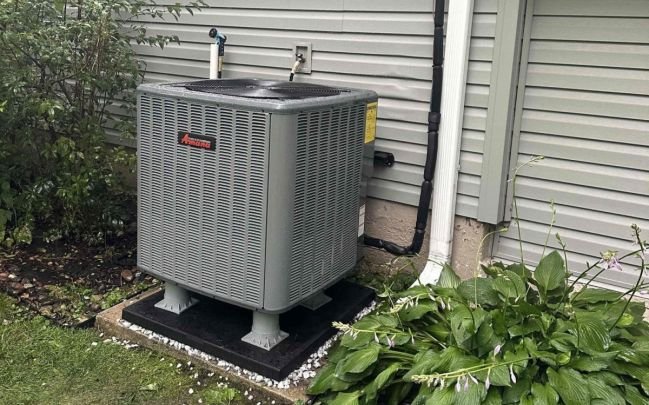

Your old furnace and air conditioning unit are both reaching the end of their useful life, and you are considering replacing them with a single heat pump that handles both heating and cooling for the home. A heat pump costs more upfront than a furnace, but the energy savings could make it a better investment over time. You need to know how much a heat pump costs to install and whether the long-term savings justify the higher upfront cost.
A heat pump is a mechanical device that transfers heat energy from one location to another using refrigeration technology and electricity. It provides both home heating and cooling functions from a single energy-efficient system. The total heat pump cost to install ranges from $3,500 to $12,000 for most residential home heating systems, depending on the type of system, the size required, and the efficiency rating chosen. Geothermal heat pumps cost $10,000 to $25,000 installed.
Heat pump cost to install depends on the system type and efficiency. Here is a breakdown for ductless mini-splits, central air source, and geothermal systems.
Average Heat Pump Installation Cost by Type
The type of heat pump is the biggest factor in the installation cost. Each type has different equipment costs, efficiency levels, and installation requirements. The table below shows the typical installed costs for each heat pump type.
| Heat pump type | Equipment cost | Installed cost | SEER rating
|
| Ductless mini-split (single zone) | $1,000u2013$3,000 | $3,500u2013$7,000 | 16u201330 |
| Ductless mini-split (multi-zone) | $3,000u2013$6,000 | $5,000u2013$10,000 | 16u201330 |
| Central air source heat pump | $2,000u2013$5,000 | $5,000u2013$12,000 | 14u201322 |
| Geothermal heat pump | $6,000u2013$12,000 | $10,000u2013$25,000 | 30u201350 |
Ductless Mini-Split Heat Pump Cost
Ductless mini-split heat pumps are the most popular type of system for homes without existing ductwork and for adding both heating and cooling to specific individual rooms in the home. A single-zone ductless system with one outdoor unit and one wall-mounted indoor unit costs $3,500 to $7,000 installed. A multi-zone ductless system with one outdoor unit and two to four indoor wall units costs $5,000 to $10,000 installed.
Mini-split heat pumps are highly efficient, with SEER ratings of 16 to 30 and HSPF ratings of 8 to 12. The high efficiency translates to lower operating costs — a mini-split heat pump can reduce heating costs by 30 to 50 percent compared to electric resistance heating and by 10 to 30 percent compared to a standard furnace in moderate climates.
Installation of a mini-split involves mounting the indoor unit on a wall or ceiling, connecting it to the outdoor unit with refrigerant lines, and running electrical wiring. The installation takes four to eight hours per zone. Professional installation is required because the refrigerant line connections and electrical work must be done correctly for the system to operate efficiently.
The number of indoor units affects the cost significantly. Each additional indoor unit adds $1,500 to $3,000 to the total installation cost. However, each zone can be controlled independently, which saves energy by heating and cooling only the rooms that are occupied.
Central Air Source Heat Pump Cost
A central air source heat pump connects to the existing ductwork system in the home and replaces both the old furnace and the central air conditioner in the home. The installed cost ranges from $5,000 to $12,000 depending on the size and efficiency rating. This type of air source heat pump is the most common choice for whole-home heating and cooling in moderate climates.
The SEER rating determines the cooling efficiency, and the HSPF rating determines the heating efficiency. A 16 SEER / 9 HSPF heat pump costs $5,000 to $8,000 installed. An 18 to 20 SEER / 10+ HSPF unit costs $7,000 to $10,000 installed. A 22+ SEER unit with variable-speed compressor costs $9,000 to $12,000 installed.
Central heat pumps work best in moderate climates where winter temperatures rarely drop below freezing. In colder climates, a heat pump may need a backup heating source — typically electric resistance heating — for the coldest days. Heat pumps with cold-climate technology can operate efficiently down to -5 degrees Fahrenheit, but their efficiency decreases as the temperature drops.
The installation process for a central heat pump is similar to a central AC installation. The old equipment is removed, the new outdoor unit is installed on a concrete pad, the indoor air handler is connected to the ductwork, and the refrigerant lines and electrical wiring are connected. The installation takes one to two days for a crew of two.
Geothermal Heat Pump Cost
Geothermal heat pump systems are the most efficient type available but also the most expensive type to install. The installed cost ranges from $10,000 to $25,000 depending on the loop type and the home size. Geothermal systems use the constant temperature of the earth to provide heating and cooling with extraordinary efficiency — SEER ratings of 30 to 50.
The higher cost of a geothermal system comes from the ground loop installation process. Horizontal loops — trenches dug four to six feet deep — cost less than vertical loops but require more land. Vertical loops — boreholes drilled 100 to 400 feet deep — are used on smaller lots but cost more to drill for the installation. The ground loop installation alone typically costs $5,000 to $15,000.
Geothermal heat pumps have the lowest operating cost of any heating and cooling system. The energy savings typically pay for the higher installation cost within 5 to 10 years. A federal tax credit of 30 percent of the total installation project cost is available for geothermal heat pump systems, which significantly reduces the net cost. State and local incentives may also be available.
The expected lifespan of a geothermal system is 20 to 25 years for the indoor heat pump unit and 50 or more years for the ground loop itself. This lifespan is significantly longer than air source heat pumps and standard furnaces, which normally last about 15 to 20 years for heating. The long lifespan and low operating cost make geothermal a good investment for homeowners who plan to stay in their home for 10 years or more.
An HVAC contractor with 20 years of experience explained: “The biggest mistake homeowners make with heat pumps is choosing the wrong type for their climate. A standard air source heat pump works great in mild climates but struggles in cold winters.”
Installation Labor and Additional Costs
Professional installation labor typically adds $1,000 to $3,000 to the total heat pump cost to install, depending on the system type and the complexity of the installation. Labor for a ductless mini-split is $1,000 to $2,000. Labor for a central heat pump is $1,500 to $3,000. Labor for geothermal is $3,000 to $8,000, including the ground loop installation.
Additional project costs that may affect the total price include electrical work at $500 to $2,000 if the existing electrical panel in the home needs an upgrade, ductwork modifications at $300 to $1,000 for central systems, and permit fees at $100 to $400 in total cost. Some contractors include these costs in the installation quote. Others charge them separately.
The federal tax credit for heat pumps covers 30 percent of the total installation cost for systems that meet the Energy Star Most Efficient criteria. The credit applies to both air source and geothermal heat pumps installed through 2032. State and local incentives may also be available. These incentives can reduce the net installation cost by 30 to 50 percent.
Heat Pump vs Furnace Cost Comparison
The decision between a heat pump and a furnace depends on the climate, the cost of electricity and gas in your area, and your long-term plans. A heat pump costs more to install but less to operate in many climates.
Installation cost: A heat pump costs $5,000 to $12,000 installed versus $2,500 to $6,000 for a gas furnace. The heat pump is $2,500 to $6,000 more expensive upfront. However, the heat pump eliminates the need for a separate AC system, which would cost $3,500 to $7,500 to install.
Operating cost: In moderate climates, a heat pump costs 20 to 40 percent less to operate than a gas furnace because of the high efficiency. In cold climates, the operating cost advantage decreases, and a furnace may be more economical. The fuel cost comparison depends on the local prices for electricity and natural gas.
Lifespan: A heat pump lasts 15 to 20 years, similar to a furnace. The heat pump replaces both the furnace and the AC unit, so the total equipment cost over 20 years is lower for a heat pump than for a separate furnace and AC system.
Frequently Asked Questions
How much does it cost to install a heat pump?
Heat pump installation costs $3,500 to $12,000. Ductless costs $3,500 to $10,000. Central costs $5,000 to $12,000. Geothermal costs $10,000 to $25,000 installed.
Which is cheaper, ductless or central heat pump?
Ductless is cheaper for single rooms or homes without ducts. Central is more cost-effective for whole-home replacement with existing ductwork.
Do heat pumps work in cold climates?
Standard heat pumps lose efficiency below freezing. Cold-climate heat pumps work down to -5 degrees. Very cold climates may need backup heat.
Is there a tax credit for heat pump installation?
The federal tax credit covers 30 percent of installation. State incentives may also be available for qualifying heat pump systems.
Is a heat pump cheaper than a furnace?
A heat pump costs more to install. It saves money in moderate climates and replaces both furnace and AC systems.
How long does a heat pump last?
A heat pump lasts 15 to 20 years with proper maintenance. Geothermal systems last 20 to 25 years for the indoor unit and 50 years for the ground loop. Regular annual maintenance extends the lifespan and maintains efficiency.
What size heat pump do I need for my home?
A professional load calculation determines the correct size. A 2-ton unit covers 800 to 1,200 square feet. A 3-ton unit covers 1,200 to 1,800 square feet. A 4-ton unit covers 1,800 to 2,400 square feet. Correct sizing is critical for efficiency and comfort.
Is a heat pump more expensive than a central AC unit?
A heat pump costs $500 to $1,000 more than central AC. But it provides both heating and cooling, eliminating the need for a separate furnace. The combined cost is lower than buying separate AC and furnace.