
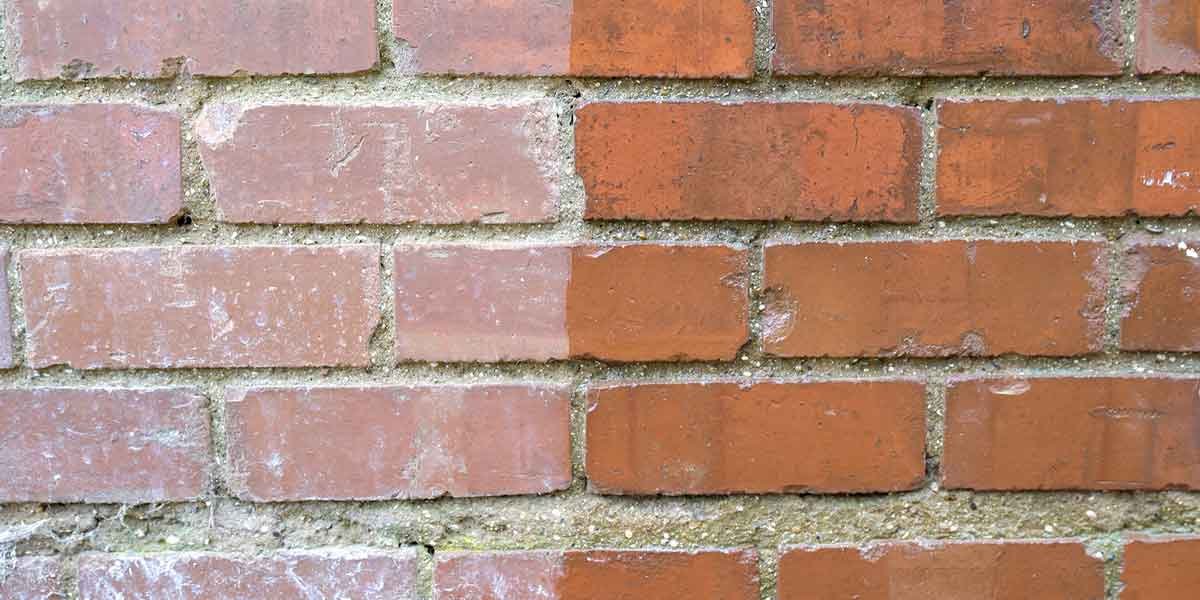

Brush the salt off, then find the water feeding it. Anyone asking how do I get rid of efflorescence is looking at a symptom, because the white powder is salt that traveled to the face in solution and stayed there when the water evaporated. Clean the deposit and leave the water path open, and it comes back with the next wet spell.
Three things have to line up before that powder appears. The masonry has to hold soluble salts, water has to dissolve them and carry them outward, and the face has to be exposed enough for that water to evaporate. Break any one of the three and the deposit stops forming.
The salts usually come from somewhere other than the surface being cleaned. Mortar, grout, concrete masonry, cast-in-place concrete, and soil in contact with the masonry are the common donors, and the Brick Industry Association’s Technical Note 23A works through the whole chain from salt source to cleanup. That note also explains why the deposit so often gets blamed on the wrong material.
Which Kind of Efflorescence You Have Decides the Fix
Age is the first thing to establish. Deposits that show up on masonry less than a year old are what the Brick Industry Association calls new building bloom, and the usual source is construction water plus the cement in the mortar. Bloom on an older assembly points to water that is arriving now.
New building bloom arrives as a fairly even film across the face, not as one isolated patch. It shows up in the months after construction while the assembly is still drying out, and wind and rain eventually carry it off. The association’s guidance is to let the masonry dry and give natural weathering time before reaching for chemicals.
The second kind is the one that earns the word problem. When the deposit appears a year or more after the building was finished, water is getting in and staying in, and the heaviest cases land in winter and during cold snaps. That pattern is a maintenance problem in the flashings, drainage, copings, and sills.
Older write-ups split the same phenomenon differently.
Primary efflorescence comes from manufacturing water, and secondary efflorescence is driven by an outside moisture source. Only the second kind sends you hunting for a leak.
Efflorescence by itself does not weaken the masonry; the moisture path that produces it is what causes damage over time.
Read the Deposit Before You Clean It
Most efflorescence is a water-soluble salt, and plain water with a stiff brush will lift it. The stubborn kind is calcium carbonate, which forms when calcium hydroxide released by cement reacts with carbon dioxide at the face. Calcium carbonate does not dissolve in water, which is why scrubbing alone stops working on it.
The powder arrives in a recognizable order. It shows first along the mortar joints and under a window sill, chalky and dry, then spreads across the face after a wet weekend. A month later the panel looks dusted with flour, and a brush takes off the top layer while leaving a faint shadow where the salt sat longest.
So which salt is it? Knowing that narrows the search to a specific material, the one whose salts are actually feeding the bloom. The Brick Industry Association publishes the likely pairings, and they run further than most homeowners expect.
| Efflorescing salt | Most probable source |
|---|---|
| Calcium sulfate (CaSO4·2H2O) | Brick |
| Sodium sulfate (Na2SO4·10H2O) | Cement and brick reactions |
| Potassium sulfate (K2SO4) | Cement and brick reactions |
| Calcium carbonate (CaCO3) | Mortar or concrete backing |
| Sodium carbonate (Na2CO3) | Mortar |
| Potassium carbonate (K2CO3) | Mortar |
| Potassium chloride (KCl) | Acid cleaning |
| Sodium chloride (NaCl) | Seawater |
| Vanadyl sulfate (VOSO4) | Brick |
| Manganese oxide (Mn3O4) | Brick |
| Iron oxide (Fe2O3 or Fe(OH)3) | Iron in contact, or brick with a black core |
| Calcium hydroxide (Ca(OH)2) | Cement |
Two of those entries are worth a second look. Potassium chloride appears after an acid wash, so a fresh bloom that shows up right after cleaning is often residue the cleaner left behind. Calcium hydroxide is the parent of the carbonate crusts, which is why a heavy calcium carbonate deposit usually means cement was nearby.
Where the powder sits narrows the search further. A band along the top of a wall, or chalky streaks running down from a coping, means water is finding a way in at the top. Powder at the base of a foundation, or creeping up a slab from the ground, points at groundwater and drainage.
Brick gets tested for this tendency, and the test still does not predict much. ASTM C67 rates a unit as effloresced or not effloresced after a seven-day soak in distilled water, and the Brick Industry Association points out that the drying step runs at 220 °F (104 °C), hot enough to turn gypsum into a far more soluble salt than it ever becomes in place. A unit that passes can still bloom in a wall, and one that fails may never show a deposit.
A quick test sorts the easy cases from the hard ones. Scrape a little powder onto a clean plate, add a few drops of distilled water, and wait. Salt that disappears is water-soluble and will answer to brushing, while powder that sits unchanged is likely calcium carbonate and needs an acid-based product.
How Do I Get Rid of Efflorescence Without Damaging the Surface?
Start dry, then add water only where brushing fails, and keep the rinse as light as the job allows. Every extra gallon soaks into the masonry and can carry a fresh batch of salt back to the face, and the least-water rule matters more than the brand of cleaner.
Dry brushing and the least water that works
Dry brushing, light water blasting, and light sandblasting all handle water-soluble deposits, and a rotary scrubber speeds up wide areas. Follow with a clean-water rinse and then stop.
There is no benefit in a second pass with the hose, only a fresh supply of moisture for the next bloom. A curing or sealing compound already on the masonry has to come off before anything else works. Deposits sitting under a film do not answer to brushing or cleaners, and the film also blocks the rinse from carrying salt away from the face.
Acid only after water fails
Insoluble deposits need a weak acid or a product sold as an efflorescence remover. On integrally colored concrete, hold the acid solution to 1 or 2 percent, since stronger mixes etch the face and shift both its color and its texture. On brick, the specialty cleaners made for masonry are the safer first attempt. Dampen the masonry with clean water before the acid goes on. Dry concrete pulls the acid deep into the slab, where it keeps reacting long after the job looks finished. Work the whole face in one pass, because acid leaves a visible edge wherever it stopped.
Neutralizing comes next. Baking soda in water, roughly one pound to five gallons, poured on until the fizzing stops, kills the acid reaction. Then rinse several times and test the pH; a reading of 7 or higher clears the face for a sealer, and anything below it means another round of neutralizer.
I keep a spray bottle of baking soda water next to the hose for these jobs, and it has never once felt like overkill. Runoff carries acid and salt onto adjacent paving and into plant beds, so collect it with a wet vacuum or soak it up with an inert material and dispose of it under local rules.
What vinegar, CLR, and a pressure washer actually do
Household white vinegar is a weak acetic acid, and it will soften a thin carbonate film. Its concentration varies bottle to bottle, it attacks mortar joints, and it does nothing about the moisture still feeding the deposit. CLR-style cleaners are formulated for calcium and lime scale and will lift light surface powder, though neither product reaches salt that has crystallized below the face.
A pressure washer deserves its own warning. Forced water travels through joints and cracks further than rain ever does, and it can blow mortar out of a joint, opening the exact path you are trying to close.
Coatings and Sealers Can Trap the Salts Instead
A water repellent applied over masonry that still has a wet path behind it can turn a surface stain into a structural one. Salts stop at the inner margin of the film, usually an eighth to a quarter inch below the face, and crystallize where a brush cannot reach them.
That trapped deposit has a name. Cryptoflorescence, also called subflorescence, is salt that crystallizes inside the masonry instead of on it. The crystals grow against the walls of the pores and build enough pressure to spall the surface, which is what leaves flakes of brick or render lying under a facade that looked fine last spring.
The Brick Industry Association states the limit plainly: coatings are not recommended as the sole treatment for an efflorescence problem. Fix the water entry, let the assembly dry, remove the salt, and only then decide whether a breathable water repellent earns a place on the masonry.
Timing the sealer is its own decision. Manufacturers of paving products tell customers to keep pavers clear of efflorescence before sealing and to wait two to three months, or as long as a year, for the bloom to finish working out of the surface.
Basement walls make the sequencing harder, because the outside face is usually out of reach. Waterproofing basement walls from the inside covers which coatings and drainage details hold up when the water is being managed from the interior side.
FAQ
Will efflorescence eventually go away?
New building bloom on masonry under a year old usually fades within months as the assembly dries, helped along by wind and rain. Deposits that keep returning on an older structure will not disappear on their own, because the water delivering the salts is still arriving.
Will vinegar dissolve efflorescence?
White vinegar can soften a thin carbonate film sitting on the face. It is too weak to strip a heavy crust, and it attacks mortar joints while leaving the moisture source untouched, so the deposit rebuilds.
Does CLR get rid of efflorescence?
CLR targets calcium and lime scale, and light surface powder is close enough to scale for the product to lift it. Salt that has crystallized below the face is out of reach, and the deposit returns while water keeps moving through the masonry.
What is the best efflorescence remover?
Water and a stiff brush settle the majority of cases, since most efflorescing salts dissolve. A calcium carbonate crust needs a weak acid or a cleaner labeled for efflorescence removal, followed by neutralizing and a pH check before any sealer goes on.
How do I get rid of efflorescence for good?
Close the water path first, clean the salt second, and seal last. A deposit that survives one cleaning cycle after the source is dry is usually calcium carbonate, which needs an acid-based cleaner and a real neutralizer, not another pass with the brush.