
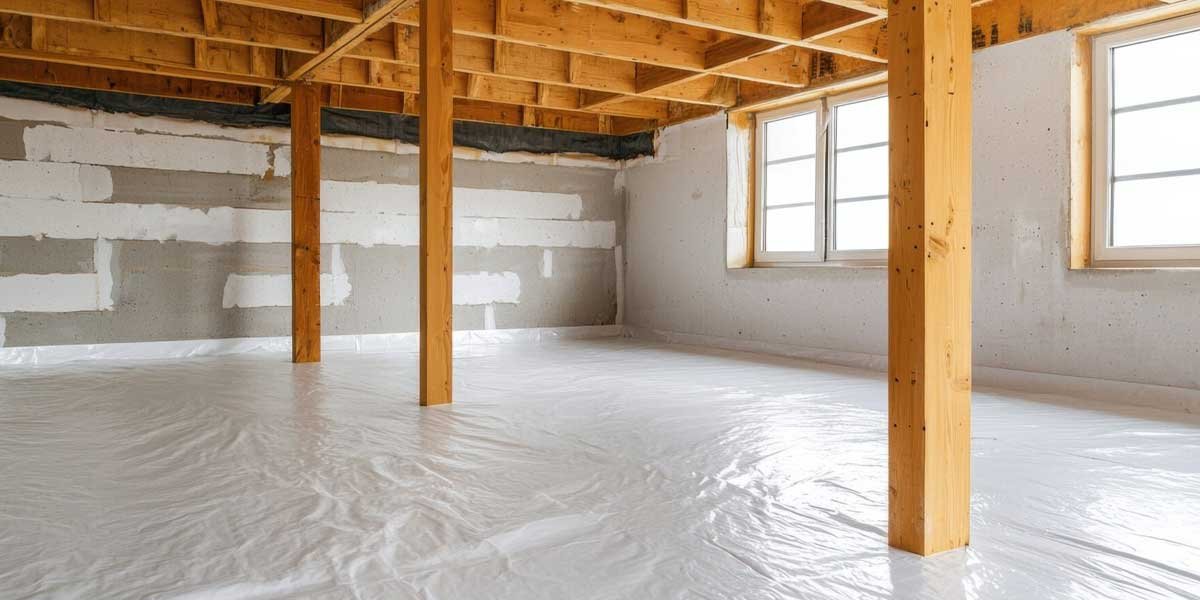

Waterproofing basement walls from inside works when water is seeping through the wall itself. It fails, every time, when the water is rising up through the floor.
You find it on the first cold morning after a long rain: a damp band along the base of the wall, a chalky white bloom under the paint, a rug that smells faintly of soil. The room was dry all summer.
Sound familiar?
Sealing that wall from the inside runs from a few hundred dollars to a few thousand. Pick the wrong method and you can pay twice, and still watch water cross the floor.
Can You Waterproof Basement Walls from Inside?
Yes, for most wall seepage. Interior waterproofing manages the water at the inside face of the wall, which handles cracks, damp concrete, and a wall that weeps after rain. What it cannot do is stop water pushing up through the slab.
Interior work is usually the practical choice because it costs a fraction of exterior work and keeps the job indoors. You are not digging up the yard or moving a downspout around a backhoe.
The exception is water that arrives from below. When the ground under the slab is saturated, the water is under pressure and it will find the floor long before any coating on the wall matters.
Why Sealer Alone Usually Fails
A coat of waterproof paint stops vapor and light dampness, then blisters off within a season or two once real pressure builds behind it. The water does not vanish. It waits.
Two forces move water through a basement wall: hydrostatic pressure from saturated soil, and capillary action through the pores of the concrete. Paint sits on the surface. Neither force cares.
Hydrostatic pressure is the sideways and upward push of waterlogged soil against a foundation, and it builds after days of rain the ground cannot drain away. Capillary action is how water climbs the same fine pores, the way a paper towel wicks a spill.
A crack the width of a credit card can pass gallons of water a day under a modest head of pressure. Sealer over that crack is a plug, not a fix.
Interior Methods That Actually Hold
The right method depends on what the wall is doing. A damp, unbroken wall takes a crystalline or cementitious coating. A single active crack takes injection. A chronically wet wall takes interior drain tile and a sump pump.
| Method | Best for | How it works | Typical cost | DIY? |
|---|---|---|---|---|
| Waterproof paint / sealer | Damp, unbroken wall | Surface barrier against vapor | $1 to $6 per sq ft | Yes |
| Crystalline / cementitious coating | Damp porous concrete | Crystals grow into the pores and block capillary action | $2 to $5 per sq ft | Yes |
| Hydraulic cement | A running crack or hole | Sets in minutes under active flow | $10 to $40 per patch | Yes (temporary) |
| Epoxy / urethane injection | One active crack | Fills and seals the crack from inside | $250 to $800 per crack | No |
| Dimple (drainage) membrane | Seepage behind a finished wall | Channels water down behind the wall | $1 to $3 per sq ft | No |
| Interior drain tile + sump pump | Chronic seepage, wall-floor seam | Captures water and pumps it out | $2,000 to $7,000 | No |
For a wall that stays damp but never weeps, a crystalline coating does what paint cannot. It reacts with moisture deep inside the concrete and grows crystals that block the pores, which is where capillary movement starts.
For a single active crack, urethane injection is the durable pick. The resin foams when it meets water and seals the full depth of the crack instead of just the face of it.
Where the whole wall weeps or the seam at the floor stays wet, no coating holds for long. The water has to be caught and carried away, and that is the job of interior drain tile and a sump pump.
For the wider picture of how interior and exterior systems are built, the basement waterproofing reference lays out the full range of methods.
Whichever method you choose, the stakes are the same. The U.S. Environmental Protection Agency’s mold and moisture guidance notes that mold needs a wet surface to grow, so a damp wall can feed mold behind drywall and under carpet long before anyone sees a stain.
A Step-by-Step Interior Waterproofing Process
A sound interior job follows the same order every time: find the entry point, dry the wall, repair the crack, coat the surface, and control the humidity. Skipping the diagnosis is how money lands on the wrong method.
- Watch the wall through a full rain cycle. Note where it wets and when, because a wet floor points somewhere different from a wet wall.
- Dry the surface. Injection resins and coatings will not bond to a wall that is still running.
- Open and clean any crack. Dirt and loose concrete defeat both hydraulic cement and injection.
- Plug a running crack with hydraulic cement first. It sets in about three minutes, faster than you can mix the next batch, so work in small patches.
- Finish with urethane or epoxy injection for a permanent seal on that crack.
- Coat a damp, unbroken wall with a crystalline or cementitious product, following the coverage rate on the label.
- Where seepage is chronic, install interior drain tile and a sump pump, then a dimple membrane against the wall.
- Keep humidity in check year-round with a dehumidifier and ventilation.
No step matters more than the first one. Most failed interior jobs trace back to a wall that was sealed when the water was really coming up through the floor.
Interior vs. Exterior Waterproofing
Interior waterproofing manages water that is already inside the foundation and costs a fraction of exterior work. Exterior waterproofing stops the water before it reaches the wall, but it means excavating around the house.
| Aspect | Interior waterproofing | Exterior waterproofing |
|---|---|---|
| Where the work happens | Inside the basement | Excavated around the foundation |
| Typical cost | $2,000 to $8,000 | $8,000 to $25,000 |
| Disruption | Low, stays indoors | High, with digging and landscaping |
| What it stops | Wall seepage and damp | Water before it touches the wall |
| Best for | Finished basements, wall leaks | A failed footing drain or a wet, bowed wall |
Interior work is the usual choice when the goal is a dry, usable room without tearing up the yard. Water is crossing the wall, and it can be managed indoors.
Exterior waterproofing earns the dig when the trouble sits outside the wall. A crushed footing drain or a foundation that leaks the moment the soil saturates is a problem interior drainage cannot reach.
What Waterproofing Basement Walls from Inside Costs
Interior wall waterproofing runs from about $10 for a patch of hydraulic cement to $2,000-$8,000 for a full drain-tile and sump system. The ranges below reflect typical U.S. homes, and access and local labor move the numbers.
| Repair | Typical range | Notes |
|---|---|---|
| Waterproof paint or sealer | $1 to $6 per sq ft | Blisters under pressure |
| Crystalline / cementitious coating | $2 to $5 per sq ft | For damp, unbroken walls |
| Hydraulic cement | $10 to $40 per patch | A plug, not a repair |
| Crack injection (per crack) | $250 to $800 | One active crack |
| Dimple membrane | $1 to $3 per sq ft | For a weeping finished wall |
| Interior drain tile + sump | $2,000 to $7,000 | The standard chronic-seepage fix |
| Sump pump + battery backup | $500 to $2,000 | Backup adds $300 to $700 |
| Dehumidifier | $200 to $400 | For humid air, not bulk water |
| Downspout extensions | $10 to $50 each | The cheapest first step |
A $12 downspout extension can solve what looks like a wall leak, and no coating on the market fixes a rising water table. Spending on the wrong line here is the most common error in the whole job.
Keeping Water Away Before It Reaches the Wall
The cheapest waterproofing is drainage that never lets water reach the wall. Gutters, downspouts, and a yard that slopes away from the house remove the pressure that drives seepage before it starts.
- Clean gutters and downspouts before the spring and fall rains.
- Move downspout outlets six feet or more from the foundation.
- Keep the grade sloping away from the wall, never toward it.
- Seal small cracks early, before water widens them.
- Run a dehumidifier in humid months and air the basement out when the outside air is dry.
By week three of a wet spring, a basement that has never leaked can start to. The wall rarely changes. The water around it does.
Frequently Asked Questions
Can you waterproof basement walls from inside?
Yes, for wall seepage and dampness, interior waterproofing works and costs far less than digging outside. It manages water at the inside face of the wall instead of stopping it before it arrives.
Is waterproofing basement walls from inside as good as exterior?
It depends on the source. Interior work is a durable fix for a leaky wall, but a failed footing drain or a rising water table usually needs exterior or drainage work to solve it.
What is the best way to waterproof basement walls from inside?
Match the method to the wall. A damp wall takes a crystalline coating, a single crack takes injection, and a chronically wet wall takes interior drain tile and a sump pump.
How much does waterproofing basement walls from inside cost?
Most interior jobs run from about $250 for crack injection to $2,000-$8,000 for a drain-tile and sump system. Paint and sealers cost $1 to $6 per square foot.
Can I do interior basement waterproofing myself?
You can handle paint, sealers, hydraulic cement, and downspout work without a contractor. Injection, drain tile, and sump systems are best left to a pro who can warranty the result.
Why does waterproof paint peel off a wet wall?
Waterproof paint blocks vapor, not hydrostatic pressure. Once pressure builds behind it, the coating blisters and peels, and the water finds a new path within a season or two.
When should I call a professional?
Call one when water rises through the floor, when the wall is bowed or shows wide horizontal cracks, or when a sump pit overflows in a storm. Each points past what sealant can fix.
When Inside Work Isn’t Enough
Most basement wall seepage is a drainage problem wearing a foundation costume, and it rarely needs the whole house dug up to fix. The water, more often than not, is taking the nearest path instead of the right one.
Call a waterproofing contractor when water rises through the floor, when a sump pit overflows in a storm, or when you find wide horizontal cracks or a wall that is bowing inward. That is the point where the job leaves the inside and moves to the foundation.
Water always takes the easiest path. Your job is to make that path lead away from the house.