
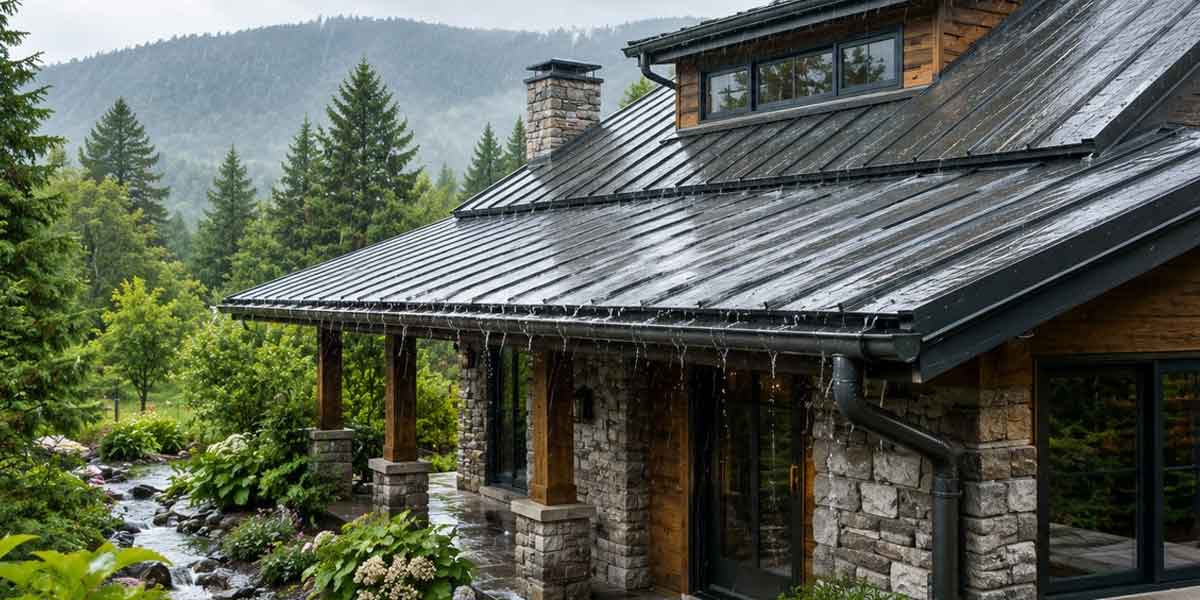

Rainy weather makes roofing decisions more important because water repeatedly tests every seam, edge, and transition on a home. Homeowners comparing materials should look beyond appearance and consider how the roof will shed water, protect vulnerable joints, and fit the building’s slope and structure.
For many properties in wet regions, speaking with a qualified metal roofing company can help clarify whether a smooth, long-lasting panel system is suitable for the home. Metal is only one option, however, and the strongest choice depends on the complete roofing assembly.
Why Rain Changes the Roofing Decision
Repeated rain can keep roofing surfaces damp, especially where leaves, moss, or debris slow drying. Water may enter through damaged shingles, open seams, deteriorated sealant, poorly installed flashing, or clogged gutters. Heavy storms often expose weaknesses that were already present, while wind-driven rain can reach beneath laps and around wall intersections that receive little moisture during a light, vertical rainfall.
Start With the Whole Roofing System
A roof covering is not a stand-alone product. It works with the roof deck, underlayment, flashing, fasteners, vents, valleys, eaves, gutters, and downspouts. The deck supports the assembly, underlayment provides a secondary layer of moisture protection, and flashing directs water away from joints around chimneys, skylights, roof penetrations, and adjoining walls. One weak detail can undermine an otherwise durable material.
Roof Slope and Water Flow
Slope affects how quickly water drains and which products can be installed safely. Steeper roofs generally move water off the surface faster, while low-slope roofs need systems designed for slower drainage and greater exposure to standing water. Valleys deserve special attention because they collect runoff from multiple roof planes. Their lining, flashing, and debris management should be part of every roofing proposal.
Comparing Common Roofing Materials
Metal Roofing
Metal roofing has a smooth surface that encourages runoff, and many systems offer a long service life when properly designed and maintained. Panel profile, corrosion-resistant coating, fastener placement, seam design, flashing, and installer experience all matter. Homeowners should also consider the higher initial cost, the possibility of dents from falling branches, and the sound of heavy rain, which can be moderated by solid decking, underlayment, and insulation.
Asphalt Shingles
Asphalt shingles remain a common residential choice because they offer broad style options, accessible repair methods, and a lower initial cost than many premium systems. In wet settings, missing or cracked shingles, debris accumulation, moss growth, and poor attic moisture control can shorten their useful life. Prompt repairs and clean drainage paths are especially important.
Composite, Tile, and Slate
Composite roofing can imitate wood or slate while reducing some maintenance demands associated with natural materials. Tile and slate can provide long service potential and distinctive appearance, but their weight may require structural review. Individual pieces can crack or shift, and repair access can be more involved. For any of these materials, homeowners should review product testing, warranty conditions, and local installer experience.
Research, Runoff, and Long-Term Value
When comparing expected durability, costs, and maintenance responsibilities, homeowners can use information that helps them compare materials, expected upkeep, and hiring considerations before narrowing their options. The best material is not automatically the most expensive one. It should match the climate, roof shape, appearance goals, maintenance plan, and budget.
Roofing also affects more than the interior of the home. Studies of roof runoff can carry material-related compounds show why homeowners collecting rainwater or managing site drainage should consider the roof material, its age, surrounding exposure, and the intended use of the collected water.
Details That Help Prevent Rain Damage
Flashing and Underlayment
Flashing protects transitions where roofing meets a vertical surface or opening. Rust, lifted edges, gaps, cracked sealant, and loose pieces deserve professional evaluation. Beneath the visible roof surface, properly lapped and fastened underlayment offers a secondary barrier against moisture that gets past the outer covering.
Ventilation and Drainage
Balanced attic intake and exhaust ventilation can help manage moisture and heat within the roof assembly. It does not correct leaks, but it can support the life of the materials when paired with a sound roof. Gutters and downspouts should remain clear so water does not back up at the roof edge, soak fascia boards, or discharge too close to the foundation.
How to Compare Long-Term Value
- Estimate the expected service life and maintenance needs of each material.
- Compare removal, installation, repair, and possible structural reinforcement costs.
- Review the roof’s slope, valleys, penetrations, and drainage requirements.
- Read both manufacturer and workmanship warranties, including exclusions.
- Consider the full ownership period rather than only the first estimate.
Questions to Ask Before Hiring a Roofing Contractor
- Which roofing systems are appropriate for this roof slope and local weather?
- How will valleys, chimneys, skylights, wall joints, and roof edges be protected?
- What underlayment, ventilation, and drainage plan will be used?
- How will the home be protected if rain arrives during the project?
- Who handles permits, inspections, cleanup, and warranty service?
- Can the contractor provide recent references for similar roof systems?
Simple Roof Care Between Professional Inspections
From the ground, watch for missing, curling, cracked, or loose roofing materials. Keep gutters and downspouts free of leaves, trim branches that scrape the roof, and look in the attic or on ceilings for stains, damp insulation, or musty odors. Avoid walking on the roof unless it is necessary and safe. After major wind, hail, or falling-tree damage, arrange a professional inspection.
Common Homeowner Questions
Is the Most Expensive Material Always Best?
No. The right choice balances water management, roof slope, structural capacity, aesthetics, upkeep, and budget.
Can a New Roof Stop Every Leak?
A new roof can still develop problems if flashing, ventilation, drainage, or installation details are neglected.
Does Metal Make Sense in a Wet Climate?
It can, particularly when panel seams, fasteners, corrosion protection, flashing, and installation methods are suited to the roof and local conditions.
Final Decision Checklist
- Identify the area’s rain, wind, tree, and drainage risks.
- Inspect the roof structure and attic before selecting a material.
- Compare at least three complete proposals, not just material prices.
- Confirm flashing, underlayment, ventilation, drainage, and warranty details in writing.
- Choose an installer with experience in the specific roofing system selected.
Rainy weather makes roof planning more detailed, but it also provides a practical framework for choosing well. A durable roof is a complete system that sheds water, protects joints, supports healthy moisture control, and receives consistent care over time.