
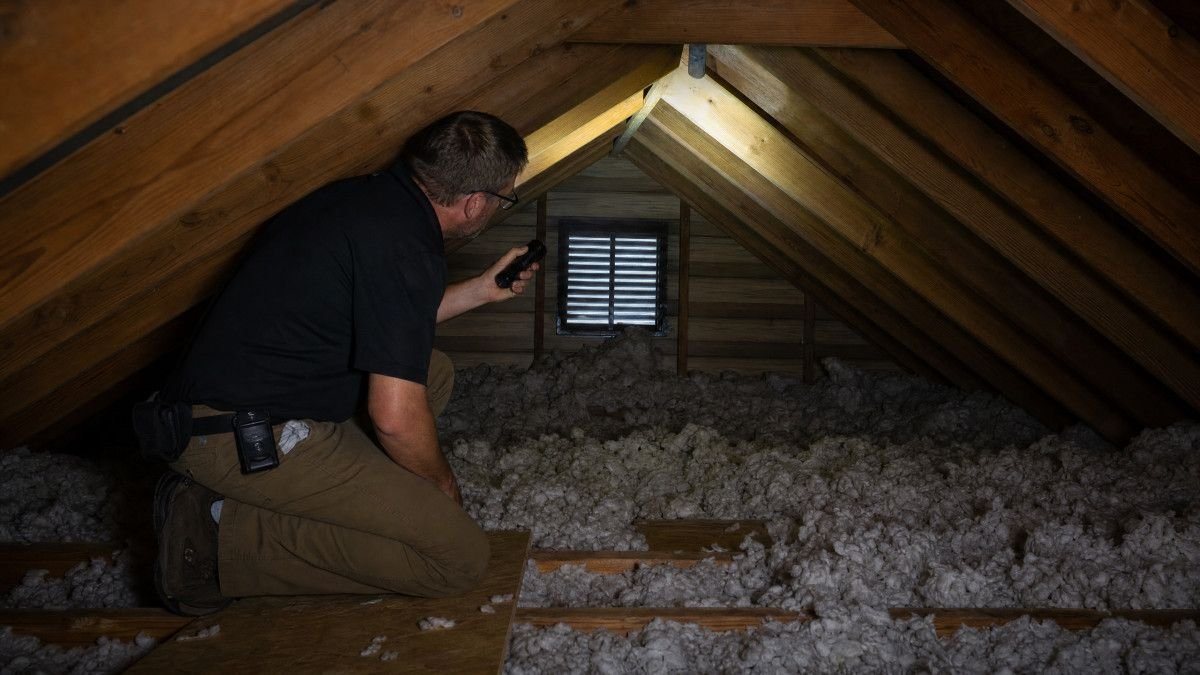

Why is Attic Ventilation Important?
Proper attic ventilation is crucial for maintaining a healthy and energy-efficient home by regulating temperature and moisture levels, preventing structural damage, and extending the lifespan of your roof, explains Rentfy Property Management team.
Attic ventilation plays a pivotal role in a home’s overall health and efficiency. Without adequate airflow, an attic can become a hotbed for issues ranging from excessive heat buildup in summer to moisture accumulation in winter. These problems not only compromise the comfort of living spaces but also lead to significant structural damage over time. Understanding the fundamental principles behind effective attic ventilation is the first step toward safeguarding your home against these preventable hazards.
The primary function of an attic ventilation system is to create a continuous flow of air, drawing in cooler, drier air from outside and expelling warmer, moister air from within the attic space. This constant exchange helps to equalize the temperature between the attic and the outdoors, reducing the strain on HVAC systems and lowering energy consumption. Furthermore, it prevents the condensation of moisture, which can lead to mold growth, wood rot, and compromised insulation effectiveness. A well-ventilated attic acts as a protective buffer, shielding the entire house from extreme weather conditions and contributing to its long-term durability.
Beyond temperature regulation, proper ventilation also contributes to the longevity of roofing materials. Excessive heat trapped in an attic can cause shingles to curl, crack, and degrade prematurely, necessitating costly repairs or early replacement. The U.S. Department of Energy emphasizes that adequate attic ventilation can significantly extend the life of a roof, potentially saving homeowners thousands of dollars over the years. This protective aspect underscores the economic benefits of maintaining a well-ventilated attic, making it a critical consideration for any homeowner. [1]
What are the Signs of Poor Attic Ventilation?
Signs of poor attic ventilation include excessive heat in upper rooms, higher energy bills, ice dams on the roof, moisture or mold growth in the attic, and premature aging of roofing materials.
Identifying the symptoms of inadequate attic ventilation early can save homeowners from costly repairs and significant discomfort. One of the most immediate indicators is an unusually warm or stuffy upper floor during hot weather, as heat radiating from the attic penetrates the living spaces below. This forces air conditioning systems to work harder, resulting in noticeably higher utility bills. According to the Environmental Protection Agency (EPA), poor attic ventilation can increase cooling costs by up to 15-20% during peak summer months. This substantial increase highlights the direct financial impact of an inefficient attic system. [2]
In colder climates, the formation of ice dams along the roof eaves is a tell-tale sign. Ice dams occur when heat escaping from the attic melts snow on the roof, which then refreezes at the colder edges, creating a barrier that can force water under shingles and into the home. This can lead to significant water damage to ceilings, walls, and insulation. Beyond temperature and energy concerns, visible evidence of moisture or mold growth within the attic space itself is a critical warning. This can manifest as stained wood, a musty odor, or actual fungal colonies on rafters and insulation. Such conditions not only pose health risks but also indicate a severe lack of airflow necessary to dry out the attic.
Additionally, the premature deterioration of roofing materials, such as cracked or curling shingles, can often be traced back to prolonged exposure to excessive heat trapped in an unventilated attic. The Asphalt Roofing Manufacturers Association (ARMA) notes that attic temperatures can reach up to 150°F (65°C) in poorly ventilated spaces, drastically accelerating the degradation of asphalt shingles. Recognizing these signs promptly allows for timely intervention and mitigation of potential damage, preserving both the structural integrity and aesthetic appeal of the home. [3]
How to Inspect Your Attic Ventilation System?
To inspect your attic ventilation system, begin by safely accessing the attic and visually checking for clear, unobstructed soffit vents, functional ridge or gable vents, and proper insulation placement that doesn’t block airflow.
A thorough inspection of your attic ventilation system requires a systematic approach, prioritizing safety and attention to detail. Before entering the attic, ensure adequate lighting and wear appropriate safety gear, including a mask, gloves, and sturdy footwear. Start by examining the soffit vents, located under the eaves of your roof. These are the intake vents, designed to draw in fresh air. Confirm they are not blocked by insulation, debris, or paint. Any obstructions will severely restrict airflow, rendering the entire system ineffective. The goal is to see a clear path for air to enter the attic space freely, ideally with a minimum of 1 inch (2.5 cm) clearance between insulation and the roof sheathing at the eaves. [1]
Next, turn your attention to the exhaust vents, typically located at the highest point of the roof, such as ridge vents, or on the gable ends. Ridge vents, which run along the peak of the roof, should be continuous and free of damage or blockages. Gable vents, found on the vertical walls at the ends of the attic, should also be clear and properly screened to prevent pest entry. It’s also crucial to ensure that insulation is not packed too tightly against the roof deck or blocking the exhaust vents. The interaction between intake and exhaust vents creates the necessary convection current for effective ventilation, so both components must be in optimal working order. The International Residential Code (IRC) recommends a minimum net free ventilating area of 1 square foot for every 300 square feet of attic floor space, provided that at least 50% of the ventilation is located in the upper portion of the attic and at least 50% in the lower portion. [4]
During the inspection, also look for signs of moisture, such as water stains on the wood framing or insulation, and any evidence of mold or mildew growth. These indicators suggest that despite the presence of vents, the system may not be functioning optimally, or there might be other sources of moisture intrusion. Checking for proper sealing of all penetrations from the living space into the attic, such as around plumbing pipes, electrical wires, and light fixtures, is also essential. These small gaps can allow significant amounts of warm, moist air to enter the attic, contributing to condensation issues. A comprehensive visual check combined with an understanding of ventilation principles will help identify potential problems. [2]
| Feature | Natural Ventilation (e.g., Ridge/Soffit Vents) | Mechanical Ventilation (e.g., Powered Fans) |
|---|---|---|
| Initial Cost | Lower | Higher |
| Operating Cost | None (passive system) | Ongoing electricity costs (unless solar) |
| Effectiveness | Reliable and consistent, relies on natural airflow | High airflow capacity, effective in extreme heat |
| Energy Use | None | Requires electricity, can increase energy bills |
| Maintenance | Low (periodic inspection for blockages) | Higher (motor, thermostat, and fan blade checks) |
What are the Different Types of Attic Ventilation?
Common types of attic ventilation include natural systems like soffit and ridge vents, and mechanical systems such as powered attic fans and solar-powered vents, each designed to facilitate air exchange.
Attic ventilation systems can be broadly categorized into natural and mechanical types, each offering distinct advantages depending on climate, roof design, and homeowner preferences. Natural ventilation relies on the principles of convection and wind pressure to move air. The most prevalent natural system combines soffit vents (intake) with ridge vents (exhaust). Soffit vents allow cooler air to enter the attic at its lowest point, while ridge vents, located at the roof’s peak, allow warmer, lighter air to escape. This continuous flow helps maintain a balanced attic temperature and prevents moisture buildup without requiring electricity. Gable vents, positioned on the vertical walls of the attic, can also serve as exhaust or intake, often working in conjunction with other vent types. The effectiveness of natural ventilation is often enhanced by a balanced system, where the net free area of intake vents closely matches that of exhaust vents. [1]
Mechanical ventilation systems, on the other hand, utilize powered fans to actively draw air out of the attic, creating a negative pressure that pulls in fresh air through intake vents. Powered attic fans, typically installed on the roof or gable wall, are equipped with thermostats that activate them when the attic temperature reaches a certain threshold, often around 100-110°F (38-43°C). These fans can move a significant volume of air, typically ranging from 750 to 1,600 cubic feet per minute (CFM), making them highly effective in hot climates. Solar-powered attic fans offer an energy-efficient alternative, operating solely on solar energy, making them environmentally friendly and cost-effective to run, though their performance can vary with sunlight availability. [3]
Another mechanical option includes whole-house fans, which are distinct from attic fans. While attic fans primarily ventilate the attic space, whole-house fans are designed to draw air from the living spaces through the attic and out through attic vents, providing a cooling effect for the entire home. However, it is crucial to ensure adequate attic exhaust capacity when using whole-house fans to prevent pressure imbalances. The choice between natural and mechanical systems often depends on a careful assessment of the home’s specific needs, local building codes, and energy efficiency goals. For instance, in regions with mild climates, natural ventilation might suffice, whereas in areas with extreme heat, mechanical assistance could be more beneficial. [5]
How to Improve Existing Attic Ventilation?
To improve existing attic ventilation, ensure all intake and exhaust vents are clear of obstructions, consider adding more vents if airflow is insufficient, and properly seal air leaks from the living space into the attic.
Improving an existing attic ventilation system often involves a combination of maintenance, strategic additions, and air sealing efforts. The first and most straightforward step is to ensure that all current vents, both intake (soffit) and exhaust (ridge, gable, or roof vents), are completely free from any blockages. This includes removing insulation that might be covering soffit vents, clearing debris like leaves or bird nests, and ensuring that paint hasn’t sealed vent openings. Even minor obstructions can significantly impede airflow and reduce the system’s effectiveness. Regular inspection and cleaning of these vents are essential for optimal performance, ideally performed annually as part of routine home maintenance. [1]
If, after clearing obstructions, signs of poor ventilation persist, it may be necessary to augment the existing system. This could involve installing additional soffit vents to increase intake, or adding more exhaust vents to enhance the expulsion of hot, moist air. For instance, if a home only has gable vents, adding a continuous ridge vent can dramatically improve airflow by creating a more efficient path for air movement. The National Renewable Energy Laboratory (NREL) suggests that a balanced system, with roughly equal amounts of intake and exhaust ventilation, is most effective. This balance ensures a continuous flow of air, preventing stagnant pockets and maximizing heat and moisture removal. [6]
Furthermore, addressing air leaks from the living space into the attic is critical. Sealing gaps around light fixtures, plumbing stacks, and attic hatches prevents conditioned air from escaping into the attic, which not only reduces energy waste but also minimizes the amount of moisture entering the attic, thereby lessening the burden on the ventilation system. Using caulk for smaller gaps and expanding foam for larger openings can effectively seal these pathways. These combined efforts contribute to a more balanced and effective attic environment, leading to improved indoor air quality, reduced energy consumption, and extended structural longevity. [2]
Frequently Asked Questions
How much ventilation does my attic need?
The general building code recommendation, such as the International Residential Code (IRC), suggests a minimum of 1 square foot of net free ventilating area (NFVA) for every 300 square feet of attic floor space. This should be balanced with at least 50% of the ventilation area for intake (low on the roof or in soffits) and 50% for exhaust (high on the roof or in gables).
Can I have too much attic ventilation?
While having more ventilation than the minimum requirement is generally not a problem, having an imbalanced system can be. For example, having significantly more exhaust ventilation than intake can cause negative pressure in the attic, which may pull conditioned air from your living spaces. The key is to have a balanced system where intake and exhaust ventilation areas are roughly equal.
Do I need attic ventilation in a mild climate?
Yes, attic ventilation is necessary even in mild climates. Moisture is generated year-round from daily activities like showering, cooking, and laundry. This moisture can rise into the attic, and without proper ventilation, it can condense and lead to mold, mildew, and wood rot. Ventilation ensures this moisture is safely exhausted, regardless of the outside temperature.
Should I cover my attic vents in the winter?
No, you should never cover your attic vents, even in winter. Attic ventilation is a year-round system designed to handle both heat in the summer and moisture in the winter. Covering vents in winter traps warm, moist air rising from the living space. This moisture can condense on the cold surfaces of the attic, leading to frost, and when it thaws, it can cause water damage to insulation and ceilings.
Proper attic ventilation is an often-overlooked yet critical component of a healthy and energy-efficient home. By understanding its importance, recognizing the signs of inadequate airflow, and knowing how to inspect and improve your system, homeowners can protect their investment, enhance indoor comfort, and significantly reduce energy costs. Regular maintenance and strategic upgrades to your attic ventilation system are key to ensuring its long-term effectiveness and the overall well-being of your home.
References
- [1] Attic Ventilation – Energy.gov
- [2] Attic Ventilation and Your Home – EPA
- [3] Asphalt Roofing Manufacturers Association (ARMA)
- [4] International Residential Code (IRC) – Chapter 8
- [5] Whole-House Fans – Energy.gov
- [6] Improving Attic Ventilation – NREL
