
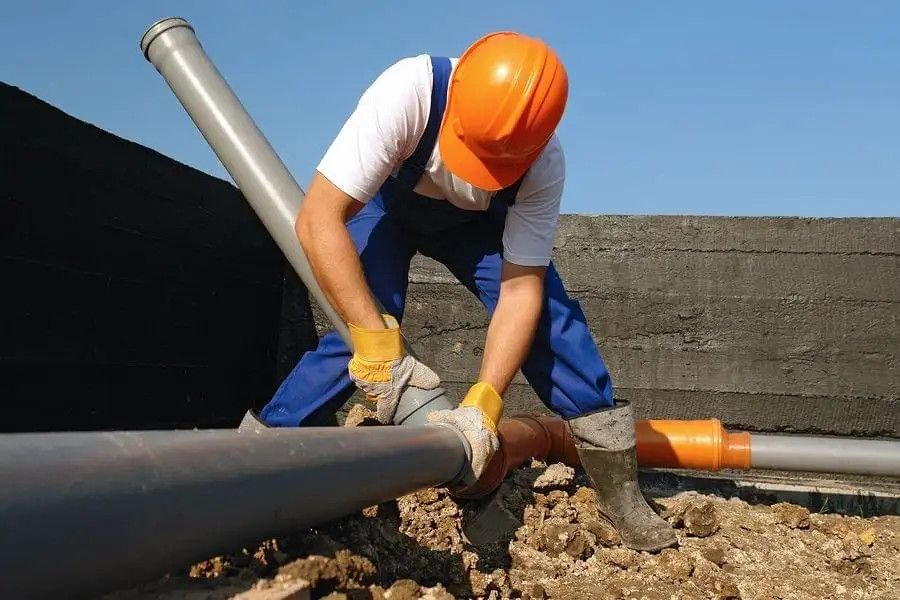

A pipe repair contractor who knows what they are doing can fix a leaking water line, a broken sewer lateral, or a corroded drain stack with minimal damage to your walls, floors, and yard — often without excavation at all. A contractor who does not know what they are doing will dig up your driveway, replace the wrong section of pipe, and leave you with a five-figure bill and a patch of dead grass that takes two years to recover. The difference between the two is not visible in a Google search result or a Yelp rating, reports KRS Holdings Harrisonburg solutions. It is visible in the answers to seven specific questions that any qualified pipe repair contractor should answer without hesitation.
Pipe repair is a specialty within plumbing. A plumber who clears drains and installs water heaters may have no experience diagnosing and repairing buried or inaccessible pipe. The tools are different — pipe cameras, trenchless lining equipment, pipe bursting machinery. The permitting is different — sewer laterals require separate permits from interior plumbing, and the property line determines who pays for which section. The insurance implications are different — a failed pipe repair that floods a finished basement is a different category of claim than a dripping faucet. Choosing a contractor for pipe repair means choosing someone who does pipe repair as their primary work, not someone who does it when the drain cleaning calls are slow.
“Opinions on job please? Paid $4,200 for a sewer line repair. They dug up the yard, replaced a section, and now three months later the same backup is happening. Their answer was ‘must be a different section.’ I’m not convinced.”
— r/Plumbing, July 2026 (31 upvotes, 42 comments), source
This is the classic signature of a contractor who replaced a pipe without diagnosing the full system. A sewer line does not clog in isolated sections — the pipe is one continuous run from the house to the municipal main. A blockage at the halfway point is almost always caused by a condition that affects the entire pipe: root intrusion from a tree 20 feet away, a belly in the pipe that traps solids, or age-related deterioration of the pipe material itself. Replacing the section where the clog formed without inspecting the full length of the pipe is like replacing one spark plug when the engine has a cracked block. The symptom was treated. The condition was not. The second backup is not a different section. It is the same condition expressing itself further up the line.
Question 1: Do You Perform a Camera Inspection Before Quoting the Repair?
The correct answer is yes, a pipe camera inspection is mandatory before any repair quote is issued. A contractor who quotes a sewer or water line repair without first running a camera through the pipe is guessing. The camera identifies the exact location, depth, and nature of the problem, a root mass at 42 feet, a separated joint at 28 feet, a full collapse at 55 feet. Without a camera, the contractor does not know whether the repair requires 3 feet of excavation or 30 feet of pipe bursting. A quote given without a camera inspection is a quote for an unknown scope of work, and the final bill will not match the quote.
The camera inspection should be included in the service call fee or quoted as a separate diagnostic charge, typically $150 to $400. The contractor should provide you with a copy of the camera footage, either a USB drive or a link to a video file, and mark the problem location on the ground with spray paint or flags. If the contractor is unwilling to share the footage or mark the location, they may be marking a location that is convenient for their equipment access rather than the actual problem location. The camera does not lie. A contractor who will not show you the footage has something to hide.
Question 2: Are You Licensed, Insured, and Bonded for Pipe Repair?
The correct answer is yes, with the license number provided and verifiable online through your state’s licensing board. A plumbing contractor license is not the same as a general contractor license. Pipe repair, especially sewer lateral repair, may require a specific plumbing classification, a utility contractor license, or both depending on whether the work is on private property or in the public right-of-way. Verify the license is active, not expired, and carries the correct classification for the specific work being quoted.
Insurance requirements are equally specific. The contractor must carry general liability insurance, typically $1 million minimum, and workers’ compensation insurance for every worker who will be on your property. Ask for a certificate of insurance with your name listed as the certificate holder. This confirms the policy is active and you are notified if it is canceled. If the contractor is uninsured or underinsured and a worker is injured on your property, your homeowner’s insurance pays the claim. A bonded contractor carries a surety bond that protects you if the contractor fails to complete the work or violates the terms of the contract. Bonding is especially important for larger jobs, $5,000 and above, where the contractor’s financial failure mid-project leaves you with an open trench and no recourse without a bond.
According to EPA building standards, contractors performing work on underground utility connections must comply with all applicable state and local codes, including 811 utility locating requirements before any excavation, a step that a licensed contractor performs as standard practice and an unlicensed one often skips, risking a gas line strike that can be fatal.
Question 3: Do You Offer Trenchless Repair Options, and When Are They Appropriate?
The correct answer is yes, with a clear explanation of when trenchless methods work and when they do not. A contractor who only offers traditional excavation, dig a trench, replace the pipe, backfill, is either not equipped for trenchless work or prefers the higher revenue of a full excavation job. A contractor who only offers trenchless, pipe lining or pipe bursting, may be steering you toward a method that is not appropriate for your specific pipe condition in order to upsell a premium service.
Trenchless pipe repair methods include cured-in-place pipe (CIPP) lining, which inserts a resin-saturated liner into the existing pipe and cures it to form a new pipe inside the old one, and pipe bursting, which pulls a new pipe through the old one while fracturing the old pipe outward. CIPP lining works when the existing pipe is still round and intact enough to support the liner during curing. It does not work on fully collapsed pipe, severely offset joints, or pipe with heavy scale that reduces the interior diameter below the minimum for the liner. Pipe bursting works on collapsed or severely damaged pipe but requires access pits at both ends and cannot be used where the pipe runs under a foundation wall or other immovable obstruction.
A contractor who can explain when trenchless is appropriate and when excavation is necessary, and who offers both, has the diagnostic skill to evaluate your specific situation rather than applying the method they happen to own the equipment for. The cost difference between trenchless and excavation varies by job, but trenchless methods typically save 30% to 50% in total cost when the alternative requires tearing out and replacing a driveway, sidewalk, or landscaped area.
Question 4: Who Pulls the Permits, and What Permits Are Required?
The correct answer is the contractor pulls all required permits in their name, and the permit fees are included in the quote. A contractor who suggests skipping permits to save time or money is asking you to accept legal and financial liability for unpermitted work. Unpermitted pipe repair discovered during a home sale can block the transaction or require the work to be exposed for inspection retroactively. The permit protects you. The contractor pulling the permit in their name means their license is attached to the work, and the inspection that follows confirms the work meets code.
Pipe repair typically requires a plumbing permit for work inside the building footprint and a separate right-of-way permit for work in the street or utility easement. The contractor should know which permits are required for your specific job and your specific municipality. A contractor who says “we will figure out permits later” has never done a permitted job in your city. Walk away.
Question 5: What Exactly Does the Estimate Cover, and What Does It Exclude?
The correct answer is a written estimate that itemizes every line item: the diagnostic camera work, the pipe repair method and materials, the length of pipe to be repaired or replaced, the permit fees, the restoration of landscaping, concrete, or asphalt disturbed by the work, and the cleanup and disposal of debris. The estimate must also state what is not included, typically, the restoration of interior finishes if the pipe is inside a finished wall, which is usually the homeowner’s responsibility to repair after the plumbing work is complete.
The estimate should specify the payment schedule. A standard schedule for a $3,000 to $8,000 residential pipe repair is 10% to 20% at contract signing, with the balance due upon completion and passing inspection. A contractor who demands 50% or more upfront may be using your deposit to pay for materials on another job, a sign of undercapitalization that puts your project at risk if the contractor’s cash flow dries up. A contractor who demands full payment upfront should be rejected immediately. No reputable contractor operates that way.
Question 6: What Is Your Workmanship Warranty, and What Does It Cover?
The correct answer is a written warranty of at least 1 year on workmanship, separate from the manufacturer’s warranty on materials. The manufacturer’s warranty covers defects in the pipe or lining material, typically 10 to 50 years depending on the product. The workmanship warranty covers installation errors, a joint that leaks because it was not properly connected, a liner that failed because it was not properly cured. These are the failures that happen in the first year and are the contractor’s responsibility to fix at no charge.
The warranty should specify what happens if the repair fails, does the contractor return at no charge, including labor and materials, or only materials? Does the warranty cover consequential damage, if the repair fails and floods the basement, does the contractor’s insurance cover the water damage? The answer to the second question is usually no, most plumbing warranties exclude consequential damage. Your homeowner’s insurance covers the water damage. The contractor’s warranty covers fixing the pipe. Know the boundary between the two before the pipe leaks.
Question 7: Can You Provide References for Pipe Repair Jobs Similar to Mine?
The correct answer is yes, with contact information for at least three previous customers who had pipe repair work of a similar type and scope performed within the last 12 months. Call the references. Ask how the project went, whether the final cost matched the estimate, whether the contractor cleaned up after the work, and whether any problems developed after completion that required a callback. The contractor selected the references and presumably selected happy customers. If even a hand-picked reference is lukewarm about the experience, the contractor’s average customer is probably unhappy.
| # | Question | Right Answer | Red Flag |
| 1 | Camera inspection before quote? | Yes, with footage provided | Quote given without camera |
| 2 | Licensed, insured, bonded? | Yes, license # verifiable online | “I don’t carry that” |
| 3 | Trenchless options available? | Yes, with clear when/why | Only one method offered |
| 4 | Who pulls permits? | Contractor, included in quote | “Skip permits to save time” |
| 5 | Itemized written estimate? | Yes, with exclusions listed | Verbal quote or one-line price |
| 6 | Workmanship warranty? | 1+ year, in writing | “Trust me, it’ll hold” |
| 7 | References for similar jobs? | 3+ recent contacts provided | “Customer privacy” excuse |
Frequently Asked Questions
How much does professional pipe repair cost?
A simple interior pipe repair, a leaking section of exposed drain pipe in a basement or crawlspace, costs $300 to $800. A sewer lateral repair using trenchless CIPP lining costs $3,000 to $8,000 for a standard residential run of 50 to 100 feet. A full sewer or water line excavation and replacement costs $5,000 to $15,000 depending on depth, length, soil conditions, and surface restoration. The cost range is wide because the scope of work is determined by what the camera inspection reveals. A 5-foot section of collapsed pipe under a lawn costs $2,000 to $4,000. A 30-foot collapsed section under a concrete driveway costs $8,000 to $15,000. The camera tells you which situation you are in.
How many quotes should I get for pipe repair?
Three quotes from licensed contractors, all based on the same camera inspection footage. Share the footage and the marked problem location with each contractor and ask for a quote to repair the identified problem. The quotes should be within 15% to 25% of each other for the same scope. A quote that is 50% lower than the others is either excluding scope, permits, restoration, disposal, or comes from an unlicensed contractor with no insurance overhead. A quote that is 50% higher is either padded or includes scope the others do not, ask for a line-item comparison to understand the difference before rejecting it.