
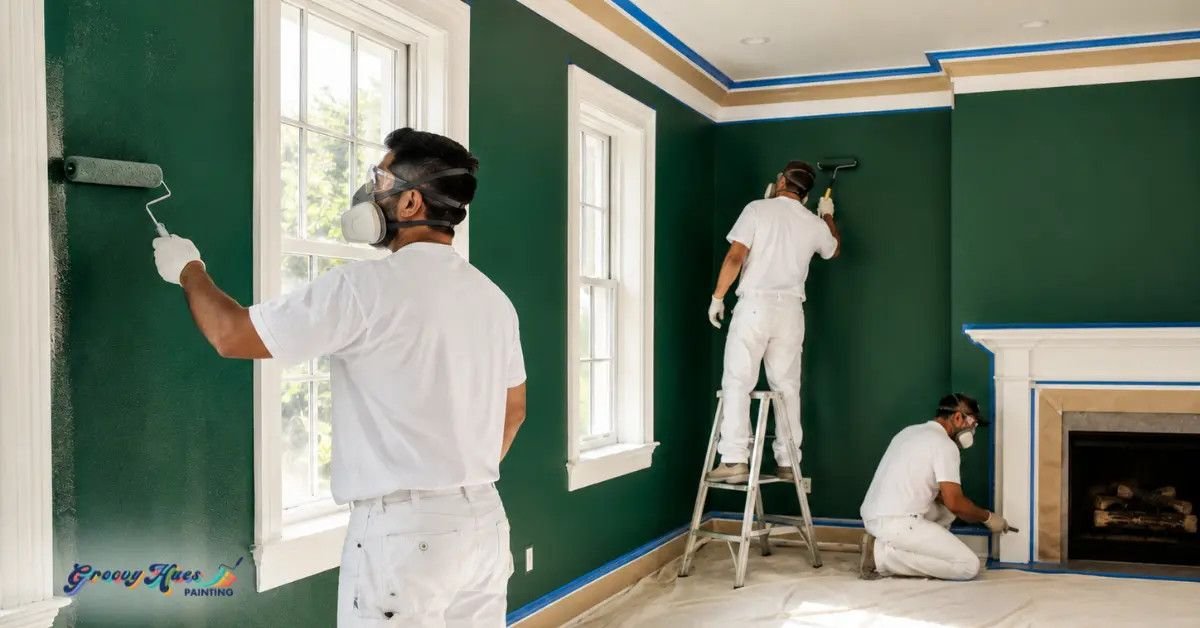

Fresh paint smells because the solvents and binders in the paint are evaporating. This process is called off-gassing. It continues for days after the paint is dry to the touch. The smell is not dangerous at the levels found in a painted room, assuming the room is ventilated, but it is unpleasant. The goal is to remove the volatile organic compounds from the air as fast as possible, not to mask them with another scent, reports Dawson Property Management, a trusted property management in Cornelius, NC.
The smell from latex paint fades significantly in 24 to 48 hours with good ventilation. Oil-based paint takes 3 to 7 days. Zero-VOC paint has little to no odor and may not require any of the methods below. Here is what works, ranked by effectiveness.
Ventilation: The Only Method That Actually Removes the Smell
Open every window in the room. The point is not just to let fresh air in. It is to create a cross-breeze that pulls the contaminated air out and replaces it with clean air. Open windows on opposite sides of the room or opposite sides of the house. Set a box fan in one window blowing outward to pull air from the room and exhaust it outside. Set a second fan in another window blowing inward to bring fresh air in. The two fans create a pressure gradient that exchanges the room’s air with outside air continuously. This is the single most effective method for removing paint smell. Every other method is a supplement to ventilation, not a replacement.
Run the ventilation continuously for at least 24 hours after painting. If the weather allows, leave the windows open and the fans running overnight. Cool temperatures slow off-gassing. If it is cold outside, ventilate aggressively for several hours during the warmest part of the day, then close the windows and use the methods below for overnight odor control.
Activated Charcoal: The Best Absorbent
Activated charcoal absorbs volatile organic compounds from the air. It is the same material used in gas masks and industrial air filtration. Place bowls of activated charcoal around the room. The charcoal must be activated, not regular barbecue charcoal. Activated charcoal is sold at pet stores in the aquarium section, at hardware stores in the air filtration section, and online. A one-pound bag costs $8 to $15.
Pour the charcoal into shallow bowls or baking dishes to maximize the surface area exposed to the air. Place several bowls around the room. Replace the charcoal every 24 hours for the first two to three days. Activated charcoal becomes saturated and stops absorbing. The spent charcoal can be refreshed by placing it in direct sunlight for several hours, which drives off the absorbed compounds. This works for two or three cycles before the charcoal is exhausted.
Baking Soda: Cheap and Available
Baking soda absorbs odors from the air by neutralizing acidic compounds. Sprinkle baking soda on the carpet or the floor, let it sit for several hours or overnight, and vacuum it up. The baking soda absorbs odors from the air as well as from the carpet fibers. For hard floors, place open boxes or bowls of baking soda around the room. One standard box per 100 square feet is a rough guideline. Baking soda is less effective per pound than activated charcoal but costs a fraction as much and is available at any grocery store.
White Vinegar: Odor Neutralizer
White vinegar neutralizes alkaline compounds in paint odors. Fill shallow bowls with white vinegar and place them around the room. Do not boil the vinegar on the stove, which fills the house with vinegar smell and does not speed up the neutralization of paint odors. The vinegar evaporates slowly at room temperature and the acetic acid in the vapor reacts with the alkaline paint compounds. The room will smell faintly of vinegar for a few hours. The vinegar smell dissipates quickly once the bowls are removed.
Replace the vinegar daily for the first two to three days. The vinegar loses effectiveness as the acetic acid evaporates. Spent vinegar can be poured down the drain.
Buckets of Water: Limited Effectiveness
Painters sometimes place buckets of water in a freshly painted room, believing the water absorbs the paint smell. Water does absorb some water-soluble VOCs from latex paint. It does not absorb the solvent-based VOCs from oil-based paint. The absorption rate is slow because the surface area of a bucket of water is small relative to the volume of air in the room. Buckets of water are better than nothing and cost nothing, but they are the least effective method on this list.
Air Purifier With Carbon Filter
A portable air purifier with an activated carbon filter removes VOCs from the air actively, circulating the room’s air through the filter. The carbon filter must be specifically designed for VOC and odor removal. A HEPA-only filter captures particles, not gases. A HEPA filter does nothing for paint smell. A carbon filter or a combination HEPA-and-carbon filter is required. Run the air purifier on its highest setting continuously for 24 to 48 hours. The room improves faster with an air purifier than with passive methods alone.
Temperature and Humidity
Heat accelerates off-gassing. A room at 75 degrees off-gasses faster than a room at 65 degrees. If you want the paint to cure faster and the smell to dissipate sooner, keep the room warm during the first 24 to 48 hours after painting. After the initial curing period, ventilation is more important than heat. Low humidity also speeds off-gassing. Run a dehumidifier in the room if the humidity is high. Dry air accepts more VOCs from the paint than humid air.
What Does Not Work
Onions cut in half and placed around the room absorb some odors but replace them with onion smell. The cure is worse than the disease. Coffee grounds mask the paint smell with coffee smell. They do not remove VOCs from the air. The room smells like coffee and paint. Scented candles and air fresheners mask the paint smell. They add VOCs of their own. Burning a candle in a room full of paint fumes is not safe and adds combustion byproducts to the air you are trying to clean. Do not burn candles in a freshly painted room.
Frequently Asked Questions
How long until I can sleep in a freshly painted room?
With latex paint and good ventilation, 24 hours is sufficient for most people. The paint is dry to the touch within hours, but the smell lingers. If the room still smells strongly of paint after 24 hours of ventilation, wait another day. For oil-based paint, wait at least 3 days. For infants, pregnant women, and people with respiratory conditions, wait 2 to 3 days for latex paint and at least a week for oil-based paint, regardless of how the room smells. The absence of odor does not mean the absence of all VOCs. It means the VOC concentration has dropped below the human nose’s detection threshold, which is a reasonable proxy for safety.
Does paint smell linger longer on carpet?
Yes. Carpet fibers absorb VOCs from the air and release them slowly over time. The carpet acts as a reservoir. Sprinkle baking soda on the carpet, let it sit overnight, and vacuum thoroughly. Repeat if the smell persists. Steam cleaning the carpet after the paint has fully cured, at least a week later, removes residual VOCs from the carpet fibers.
Will low-VOC or zero-VOC paint eliminate the smell?
Low-VOC paint has a noticeably milder odor than standard latex paint and the smell dissipates faster, typically within a few hours to a day. Zero-VOC paint has little to no detectable odor when applied and may not require any of the ventilation and absorption methods described above. The premium for low-VOC or zero-VOC paint is $5 to $15 per gallon. For a room where you need to sleep the same night, or for a nursery or a bedroom, the premium is worth it. For a rarely used room or a garage, standard paint with ventilation is sufficient.