
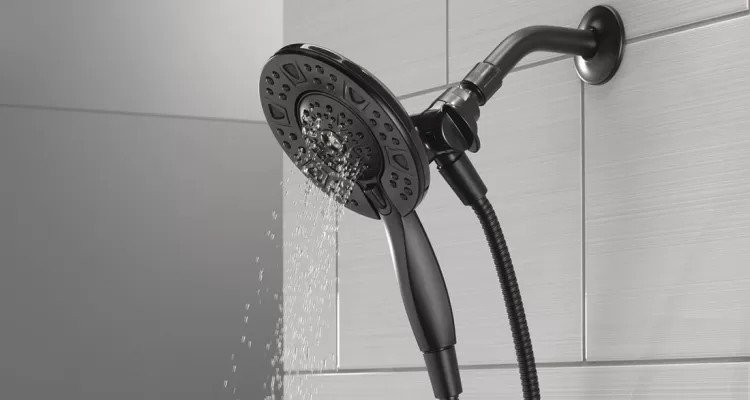

Water dripping from the showerhead when the handle is off means the cartridge inside the valve is not sealing completely. On a Delta shower faucet, the fix is a cartridge replacement and a spring and seat kit. The parts cost $35 to $60. The labor takes 30 to 45 minutes. The process is nearly identical to fixing a Delta tub faucet, with one key difference: there is no tub spout diverter to worry about, and the shutoff valves may be behind an access panel rather than under a sink, explains Clockwork Property Management, a trusted property management Rancho Cucamonga.
If your Delta shower faucet has a single handle that rotates for temperature and tilts for volume, this guide covers your repair. If you have a two-handle or three-handle shower faucet with separate hot and cold controls, that is an older valve type covered at the end.
First: Confirm the Leak Is From the Valve, Not the Showerhead
Water dripping from the showerhead after the handle is turned off is a valve problem. The cartridge inside the wall is not sealing, and water is passing through to the showerhead. This is the repair covered in this guide.
Water dripping from the showerhead only while the shower is running and stopping when the water is off is a showerhead problem. The showerhead itself has a small rubber washer or O-ring where it connects to the shower arm. Unscrew the showerhead, replace the washer, wrap the shower arm threads with Teflon tape, and reinstall the showerhead. This is a 10-minute, $2 fix that does not involve the valve inside the wall.
Water leaking from the handle itself or from behind the trim plate while the water is running is an O-ring or cartridge seal problem. The cartridge O-rings that seal against the valve body have failed. The cartridge replacement covered below fixes this.
Water leaking from the wall behind the trim plate when the water is off is a plumbing leak inside the wall, not a cartridge problem. The connection between the water supply pipes and the valve body has failed. This is not a DIY cartridge replacement. Turn off the water immediately and call a plumber. Water leaking inside a wall cavity does not show itself until the ceiling below collapses.
Step One: Turn Off the Water
A Delta shower faucet does not have shutoff valves directly underneath it like a sink faucet. Look for the water shutoff in one of three places. An access panel on the wall behind the shower valve, typically in a closet on the other side of the shower wall. This is the most common location in newer homes. Individual shutoff valves on the hot and cold water lines inside the access panel. Turn both clockwise to stop the water.
Or a main water shutoff for the entire house. If there is no access panel, the main shutoff is the only option. It is in the basement, crawl space, garage, or at the water meter. Turn it clockwise until it stops. Open a faucet at the lowest point in the house to drain the pipes after shutting off the main.
After shutting off the water, open the shower handle to release any pressure. Cover the shower drain with a rag or a drain cover. The next steps involve small screws, springs, and plastic pieces that will fall directly into the drain if you do not block it.
Step Two: Remove the Handle and Trim Plate
Delta shower handles attach in one of three ways. A set screw on the underside of the lever handle, near the base, requiring an Allen wrench, typically 1/8 inch or 3/32 inch. Loosen the set screw. Do not remove it completely. Slide the handle off. A cap on the front face of the handle that conceals a Phillips screw. Pry off the cap with a small flathead screwdriver. Remove the screw and pull the handle off. A knob handle on older models that unscrews by gripping the base of the knob or has a set screw at the base.
Remove the trim plate, also called the escutcheon. It is held by two screws through the plate into the valve body, or by friction clips that snap onto the valve body. Remove the screws or pull the plate straight off. If the plate is caulked to the shower wall, cut the caulk with a utility knife first. Behind the trim plate is the valve body with the cartridge in the center.
Step Three: Replace the Cartridge, Springs, and Seats
Remove the retainer clip. It is a U-shaped brass or plastic clip that slides into the top of the valve body, holding the cartridge in place. Grip it with needle-nose pliers and pull straight up. Keep a finger over the clip as you pull. It is small and will launch across the shower if you lose your grip.
Pull the old cartridge straight out. Grip the cartridge stem with pliers. Pull steadily. Do not twist or rock the cartridge side to side, which can damage the valve body. If the cartridge is stuck, white vinegar poured into the valve body and left to soak for 30 minutes dissolves the mineral deposits locking it in place. If it is still stuck, Delta sells a cartridge removal tool for $15 to $20 that threads onto the cartridge stem and pulls it out with mechanical advantage.
When the cartridge comes out, water trapped in the pipes will drain from the valve body. A few cups is normal. If water continues flowing, the shutoff valves are not fully closed. Stop and verify.
Inside the valve body, behind where the cartridge sat, are two small rubber seats with metal springs behind them. These are the components that fail most often. Remove both with needle-nose pliers. They sit in recesses on the left and right sides, hot side and cold side. Note the orientation. The narrow end of the spring goes into the rubber seat. The wide end faces the back of the valve body.
Install the new springs and seats from a Delta RP4993 kit. Press each assembly into its recess, wide end of the spring first, until it is fully seated. Both sides should feel identical when pressed. If one side feels softer or sits higher than the other, the spring is not positioned correctly.
Coat the O-rings on the new Delta cartridge, part number RP19804 for most models or RP46074 for MultiChoice valves, with a thin layer of plumber’s silicone grease. Slide the cartridge into the valve body with the hot side on the left, matching the orientation of the old cartridge. The cartridge should slide in with firm, smooth pressure. Reinstall the retainer clip. It should click or snap into place.
Step Four: Reassemble and Test Before Closing the Wall
Turn the water back on slowly. Open the shutoff valves or the main valve gradually to prevent a pressure surge that can damage the new cartridge. Look at the valve body with the trim plate still off. Check for water leaking from around the cartridge. If water seeps from the valve body, the cartridge is not fully seated, the retainer clip is not locked, or the O-rings are pinched.
Operate the handle. Turn it through the full temperature range. Check that water stops completely in the off position. Let the water run for two to three minutes to flush out any debris that entered the pipes during the repair. Debris in the pipes is normal and will be ejected from the showerhead. If the showerhead flow seems reduced, unscrew the showerhead and clean the screen inside the swivel joint, which may have trapped debris.
After confirming no leaks at the valve body, reinstall the trim plate and handle. Tighten the handle set screw until snug. Overtightening strips the threads.
If You Have a Two-Handle or Three-Handle Delta Shower Faucet
Older Delta shower faucets have separate hot and cold handles. The repair is simpler and cheaper than the single-handle cartridge. Turn off the water. Pry the decorative cap off the front of the handle. Remove the handle screw and pull the handle off. Unscrew the trim sleeve to expose the valve stem. The stem is a brass assembly that unscrews from the valve body with an adjustable wrench. On the bottom of the stem is a rubber washer held by a screw. Replace the washer. Inspect the brass seat inside the valve body. If it feels rough, pitted, or grooved, remove it with a seat wrench and replace it. Reassemble in reverse order. A washer and seat for both handles costs $5 to $10 total and takes 20 minutes per handle.
Frequently Asked Questions
Will Delta send me a free replacement cartridge?
Yes. Delta faucets carry a lifetime warranty on the cartridge and internal components. Call Delta customer service with your faucet model number, typically stamped on the trim plate or on the original manual. Delta ships a free replacement in one to two weeks. If you need the repair completed today, buy the cartridge for $30 to $50 at a home center and keep the free replacement as a spare.
I replaced the cartridge and the shower still drips. What now?
The springs and seats behind the cartridge are the most likely culprit. They are small, easy to overlook, and are the components that actually fail in most cases. If you replaced the cartridge but not the springs and seats, reopen the valve and install the RP4993 kit. The second most common cause is installing the springs backward. The narrow end goes into the rubber seat. The wide end faces the back of the valve body. A backward spring does not press the seat firmly against the cartridge, and water leaks past.
The cartridge is completely stuck and will not come out.
Soak the valve body with white vinegar for 30 minutes. Vinegar dissolves the mineral deposits locking the cartridge. After soaking, grip the cartridge stem with channel locks and pull straight out. If it still does not move, buy or rent a Delta cartridge removal tool. Home Depot and Lowe’s carry them for $15 to $25. The tool threads onto the cartridge stem and pulls it free with a screw mechanism. As a last resort, drill out the center of the old cartridge with a hole saw slightly smaller than the cartridge diameter, then collapse the remaining plastic shell inward and remove the pieces. This destroys the cartridge but works when nothing else does. Do not drill unless you have exhausted the other methods. A drill bit that slips damages the valve body, and a damaged valve body means replacing the entire valve inside the wall.