
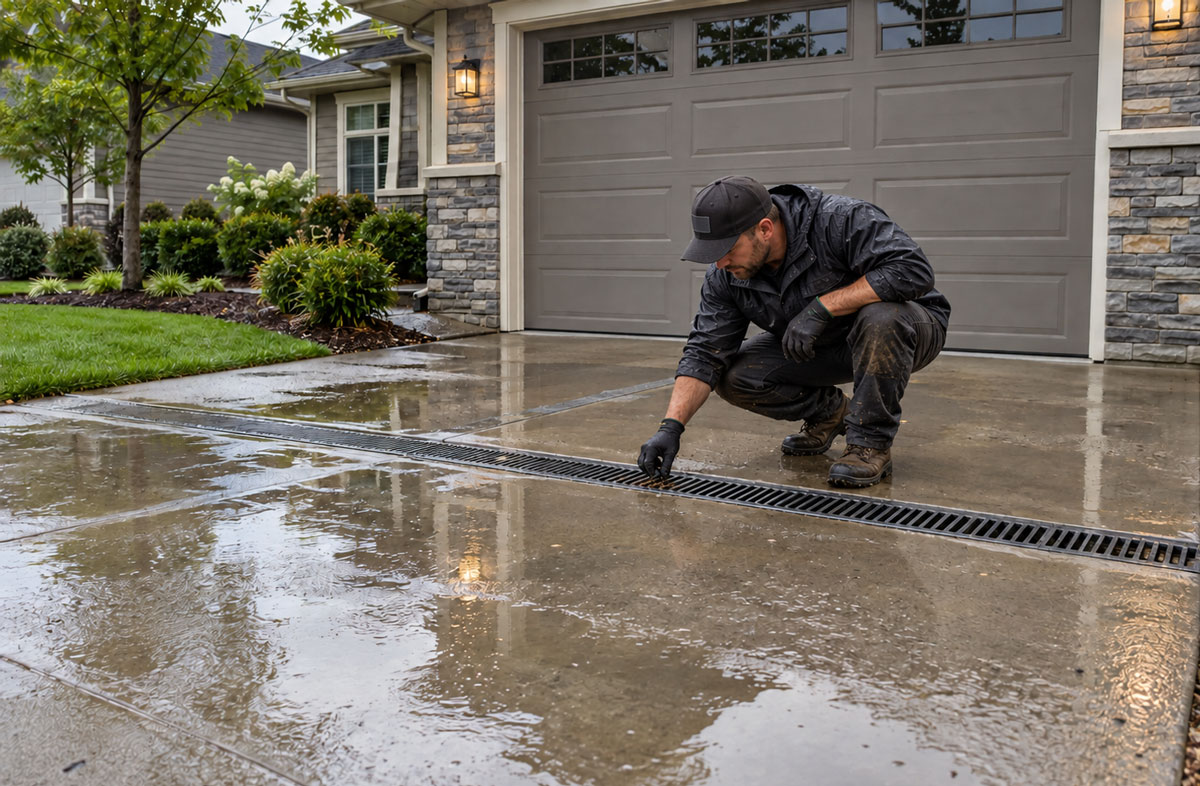

Australia is experiencing a notable shift in weather patterns, making exterior property drainage more important than ever. The Commonwealth Scientific and Industrial Research Organisation (CSIRO) reports a steady upward trend in the intensity of short-duration heavy rainfall events across the country. Following extreme weather cycles, the Bureau of Meteorology (BoM) has repeatedly warned of severe thunderstorms in eastern Australia that carry a high risk of sudden localised flooding.
For homeowners, this means managing boundary water runoff is an urgent priority. When choosing an electric gate system, it is incredibly easy to focus purely on aesthetics, motor speed, and access controls while completely overlooking how the hardware will interact with driveway surface water. If heavy rainfall is left unmanaged, standing water can severely damage expensive mechanisms and compromise your property boundary.
The Impact of Poor Drainage on Gate Hardware
When standing water is allowed to pool around a driveway entrance, it brings a host of physical threats to automation hardware. Floodwater easily washes grit, loose soil, and small stones directly into the tracks of ground-mounted gates. Because they rely on clear floor tracks to operate smoothly, Slide Gate Openers are particularly vulnerable to this kind of debris buildup. As the heavy gate rolls back and forth over this debris, it crushes the grit into the metal. This creates pits and deep scratches that significantly increase operating friction, putting immense and potentially catastrophic pressure on the drive motor.
Prolonged exposure to pooling water also accelerates rust and oxidation. Even heavily galvanised and stainless steel tracks will degrade when constantly submerged in puddles. The track mounting points are particularly vulnerable, and the internal roller bearings can quickly rust and fail. Furthermore, above-ground gate motors typically feature lower ventilation and moisture-release holes. While most surface-mounted motors carry an IP44 to IP54 weather resistance rating to protect against standard rain and splashing, they are not designed to be watertight. If internal electronics are submerged in a flooded driveway, the entire motor will likely short out.
Why Concrete Grading is Your First Line of Defence
The foundation of effective water management lies in the shape and slope of your concrete driveway. Proper concrete grading ensures that rainwater flows away from your gate hardware and foundation rather than pooling at the base. Even minor oversights in slope calculation during a driveway pour can lead to major structural and mechanical issues.
According to the driveway design guidelines established by the City of Los Angeles Bureau of Engineering, an upward slope from the curb to the property line typically requires a gradient between 1% and 6% to ensure surface water is directed safely toward the street. Adhering to these types of strict structural benchmarks prevents water from accumulating near sensitive entrance foundations without impairing vehicle clearance.
Precise grading is especially critical for automated systems that rely on ground tracks. While traditional swing gates operate above the ground and are somewhat forgiving of minor surface puddles, track-based automation is highly sensitive to ground conditions. For example, installing modern sliding gates requires a perfectly level and stable track to operate efficiently. If surface water continuously pools around the base of these sliding systems, it can seep into the sub-base and cause the ground beneath the concrete to shift. A track that shifts by just a few millimetres due to water-damaged foundation settling will cause the entire gate mechanism to bind.
Essential Drainage Solutions and Hardware Upgrades
To properly protect your driveway entrance from flash flooding and standing water, a combination of smart drainage installation and weather-resistant hardware upgrades is required. The Intergovernmental Panel on Climate Change (IPCC) warns that extreme rainfall will continue to elevate flood risks in built-up urban catchments, making these residential upgrades highly practical.
When designing or retrofitting your driveway entrance, consider implementing the following protective measures:
- Install sturdy trench drains: To prevent structural failure under heavy vehicle weight, trench drains spanning a driveway entrance must typically be set into a minimum 4-inch concrete bed and haunch. This ensures the drainage channel does not crack or warp as cars pass over it daily.
- Ensure adequate channel fall: Channel drain installations require a minimum 1% fall (which equates to a drop of roughly one-eighth of an inch per foot) toward a discharge point. This slope is necessary to effectively move surface water away from the gate track.
- Utilise articulated drainage for curves: If your driveway entrance curves, rigid linear channels will not suffice. Articulated channel drainage systems are specifically manufactured to bend and manage water flow around curved boundaries, ensuring no corner is left vulnerable to pooling.
- Upgrade optical sensors: Gate automation professionals increasingly recommend installing fog-resistant photocell sensors with sealed, IP-rated connectors. This prevents moisture-induced false triggers in high-humidity or coastal climates where heavy rain is frequent.
Protecting your automated driveway gate from water damage requires proactive planning and a solid understanding of basic drainage principles. By ensuring your concrete apron is graded correctly, installing robust trench drains, and selecting hardware designed to withstand local weather conditions, you can significantly extend the lifespan of your entrance system. Standing water might seem like a minor landscaping annoyance, but keeping it away from your gate track and motor is the ultimate key to reliable property security.