


Finding out your landlord is selling the property you rent is one of the most anxiety-inducing moments in renting. Most tenants assume they have almost no power in this situation. Most of them are wrong, and understanding the process alongside Lakewood Ranch property management resources can make the next steps feel less uncertain.
The rules around landlord selling property tenant rights are stronger than most renters realize, and they’re built directly into federal and state law. Whether you have six months left on a fixed-term lease or rent month-to-month, you have legally enforceable protections that the new owner cannot simply ignore.
Your Lease Is Your Biggest Protection When a Landlord Sells Property
When a landlord sells a rental property, the existing lease transfers to the new owner automatically. The new buyer does not have the right to cancel a valid fixed-term lease simply because they now own the building.
This principle, sometimes called “lease runs with the land,” is recognized across all 50 states. It means the new owner steps into exactly the same legal position as the previous landlord, bound by every term you already agreed to.
There are two main lease types, and the protection each offers differs significantly:
| Lease Type | Protection When Property Sells | Key Risk to Watch For |
|---|---|---|
| Fixed-term lease (6 or 12 months) | New owner must honor the full remaining term | “Lease termination due to sale” clause |
| Month-to-month lease | Entitled to proper notice before vacating (30–90 days, by state) | Shorter notice periods in some states |
The one exception that can unravel a fixed-term lease is a “lease termination due to sale” clause. Some landlords insert this language into rental agreements, and if you signed a contract containing it, the new owner may be allowed to end your lease early upon sale.
The good news: even if this clause exists, the landlord must still give you the legally required notice period for your state. They cannot simply tell you the property sold and expect you out in a week.
If you’re signing a new lease and see this clause, you have every right to ask for it to be removed before signing. Many landlords will agree, especially if you’re otherwise a desirable tenant.
Notice Requirements: How Much Time You’re Owed Before You Have to Move
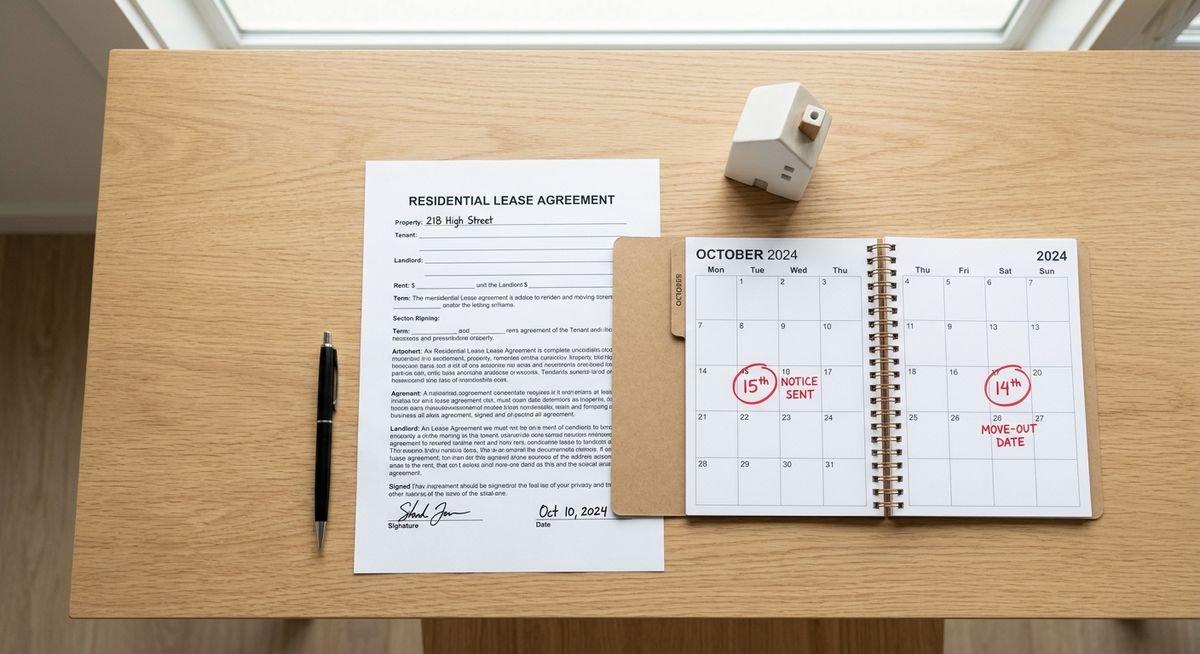
Month-to-month tenants are entitled to advance written notice before any required move-out, and the required notice period depends entirely on where you live. Thirty days, sixty days, and ninety days are the three most common thresholds in the United States.
State law sets the floor for notice, but some cities go further. Atlanta, for instance, requires at least 60 days’ notice for month-to-month tenants when a landlord is selling. Portland, Oregon, has relocation assistance requirements in many sale-related displacement cases.
Below is a general overview of notice requirements in major states, as informed by state landlord-tenant statutes:
| State | Month-to-Month Notice (Landlord to Tenant) | Notes |
|---|---|---|
| California | 60 days (if tenant has lived there 1+ year) | 30 days if under 1 year |
| New York | 30–90 days (based on tenancy length) | Rent-stabilized tenants have added protections |
| Texas | 30 days | No state-mandated relocation assistance |
| Georgia | 60 days | O.C.G.A. § 44-7-7 |
| Florida | 30 days | Written notice required |
| Illinois | 30 days (Chicago: 60 days) | Chicago has stronger local protections |
| Washington | 20 days | Among the shorter state standards |
| Oregon | 30–90 days | Portland requires relocation assistance in many cases |
Notice must be delivered in writing. Verbal announcements from a landlord do not start the legal clock.
When notice is given in writing and the required period passes, you are obligated to vacate. But until that moment, your right to remain in the home is legally intact. Selling the property is not grounds for immediate eviction.
“Landlord selling flat under fixed term until September — how much can we realistically limit viewings in the UK?”
— r/TenantsInTheUK, 2026 (126 comments)
This is an active, genuine frustration. Tenants on fixed-term leases consistently discover they have far more control over showing schedules than they assumed, because quiet enjoyment protections apply even during the sale process.
Your Rights During Property Showings
When a landlord sells a rental property, tenants are entitled to 24 to 48 hours’ advance notice before any showing, inspection, appraisal, or repair visit. This notice requirement is not optional, and it applies even if the landlord is trying to sell quickly.
Showings must also take place at reasonable hours. A real estate agent cannot show up at 7 a.m. or 10 p.m., regardless of buyer interest. You have the right to be present in your home during showings, and you are not required to clean, stage, or otherwise prepare the unit for potential buyers.
What you cannot do: refuse all access indefinitely. Courts have consistently ruled that tenants cannot “unreasonably withhold” access. A blanket refusal to allow any showings, ever, crosses that line.
Practical rights during the sale process include:
- Written or verbal notice at least 24 hours in advance (48 hours in some states)
- The right to be present during showings and inspections
- Showings limited to reasonable hours (typically 8 a.m. to 8 p.m.)
- No obligation to vacate the premises during viewings
- Protection against harassing or excessive showings intended to pressure you to leave
If a landlord or buyer’s agent schedules showings with no notice, enters without permission, or uses the showing process as a tool to make your life difficult, that’s a violation of your right to quiet enjoyment — one of the most fundamental tenant rights recognized in U.S. landlord-tenant law. You can document the violations and raise them in housing court or with a tenant advocacy organization.
“GA — Landlord selling our house, constant showings, barely any notice… what are our rights?”
— r/Renters, April 2026 (45 comments)
This post gathered dozens of responses from tenants in similar situations. The consensus from experienced renters: document every violation in writing, send a certified letter to the landlord citing your state’s notice requirement, and contact your local housing authority if it continues. This aligns with USA.gov’s official tenant rights guidance, which confirms that quiet enjoyment protections remain active throughout a sale process.
What Happens to Your Security Deposit When the Property Is Sold
Your security deposit does not disappear when a landlord sells. The deposit must either transfer to the new owner or be returned to you at closing, and the new owner becomes fully responsible for returning it at the end of your tenancy under the same conditions as your original landlord.
This transfer requirement exists in every state that has security deposit statutes, including all major states. Georgia law (O.C.G.A. § 44-7-34), for example, explicitly requires the seller to either transfer deposits to the buyer or return them directly to tenants before the sale closes.
Practically speaking, the process works like this:
- The selling landlord notifies you of the new owner’s name, address, and where future rent should be sent.
- The security deposit transfers to the new owner and is documented in the real estate closing paperwork.
- When your tenancy ends, the new owner returns the deposit minus any legitimate deductions, under the same timeline as any other landlord.
If a landlord tries to claim the security deposit has been “lost” or “will be handled later” during a sale, that’s a red flag. Get everything in writing. Request written confirmation of the deposit amount, where it is being held, and that it will transfer to the new owner.
Some landlords may offer “cash for keys” during the sale process. This is a voluntary buyout, where the landlord (or new buyer) offers you a sum of money to vacate before your lease expires. You are under no legal obligation to accept. You can negotiate for a higher amount, additional moving expenses, or a longer transition period. The one thing a landlord cannot do: threaten eviction or withhold required repairs to pressure you into accepting a cash-for-keys offer.
Federal Protections, Rent Control, and the Right of First Refusal
Federal law provides a backstop for tenants when a property is sold through foreclosure. The Protecting Tenants at Foreclosure Act (PTFA), permanently reinstated in 2018, requires purchasers of foreclosed properties to honor existing fixed-term leases and give month-to-month tenants at least 90 days’ notice before eviction. This federal floor applies in every state, regardless of state law.
Rent-controlled and rent-stabilized tenants carry the strongest protections of all. In cities with rent control, including New York City, San Francisco, Los Angeles, and parts of New Jersey, Maryland, and Minnesota, a sale does not give the new owner the right to reset rent to market rate or evict you simply because ownership has changed.
In New York City, for instance, a new owner of a rent-stabilized building is generally bound by the same rules as the previous owner. Eviction of a rent-stabilized tenant requires specific legal grounds, and “the building sold” is not one of them.
A right that is rarely explained to tenants: the right of first refusal. In some states and municipalities, tenants have the legal right to purchase the property they’re renting before the landlord can sell it to a third party. This right must typically be contractually established in the lease or granted by local ordinance. Washington D.C., Baltimore, and several other cities have tenant opportunity-to-purchase laws that give residents a formal window to match any third-party offer.
If you live in a jurisdiction with these protections and your landlord is about to sell, they may be legally required to give you written notice of the sale and a window to make an offer before accepting one from anyone else. Missing this notice does not automatically complete the sale in these jurisdictions, tenants who weren’t notified have, in some cases, successfully challenged completed transactions.
Frequently Asked Questions
Can a Landlord Selling Property Force Tenants to Move Immediately?
No. Under landlord selling property tenant rights law, a landlord cannot use a pending sale as grounds for eviction. If you have a fixed-term lease, you have the right to remain until it expires. Month-to-month tenants are owed proper written notice, and the required period (30–90 days depending on state) must fully elapse before any eviction proceeding can begin.
Does the New Owner Have to Honor My Existing Lease?
Yes, in almost all cases. A core principle of landlord selling property tenant rights is that the existing lease transfers automatically to the new owner, who is bound by its terms until it expires. The only exception is if your lease contains a “lease termination due to sale” clause, in which case proper notice is still required before you must vacate.
What notice is my landlord required to give before showing the property?
Most states require 24 to 48 hours of advance notice before a landlord, real estate agent, or potential buyer can enter your unit for a showing, inspection, or appraisal. Showings must take place at reasonable hours. Entering without notice is a violation of your right to quiet enjoyment and may entitle you to legal remedies including reduced rent or lease termination in some states.
What happens to my security deposit when the property is sold?
Your security deposit must transfer to the new owner at closing, or be returned directly to you. The new owner assumes full responsibility for returning it at the end of your tenancy, under the same conditions as any landlord. Request written confirmation of the deposit transfer as part of the sale notification from your landlord.
Do I have to accept a cash-for-keys offer from the new owner?
No. A cash-for-keys offer is entirely voluntary. You can accept, negotiate for better terms, or decline altogether. Your landlord or the new buyer cannot threaten eviction, withhold repairs, or otherwise pressure you into accepting. If you do choose to negotiate, factor in moving costs, storage fees, and the real difficulty of finding comparable housing in your market before accepting any figure.
What Can I Do If My Landlord Violates My Rights During the Sale?
Landlord selling property tenant rights violations follow a clear remediation path. Document every violation in writing with dates and details. Send a certified letter to your landlord citing the specific right that was violated and the applicable state statute. Contact your local housing authority, tenant advocacy group, or legal aid organization. In serious cases, repeated unauthorized entry, illegal eviction pressure, consult a tenant attorney. Many tenant-side attorneys work on contingency for clear violations of state landlord-tenant law.
Do I Have a Right of First Refusal When My Landlord Sells Property?
A right of first refusal gives tenants the legal opportunity to purchase the property they rent before the landlord sells it to anyone else. This right is not universal, it must either be written into your lease or granted by a local ordinance. Cities including Washington D.C., Baltimore, and several others have enacted tenant opportunity-to-purchase laws. Check your lease and your local housing authority’s website to determine if this right applies in your jurisdiction.