
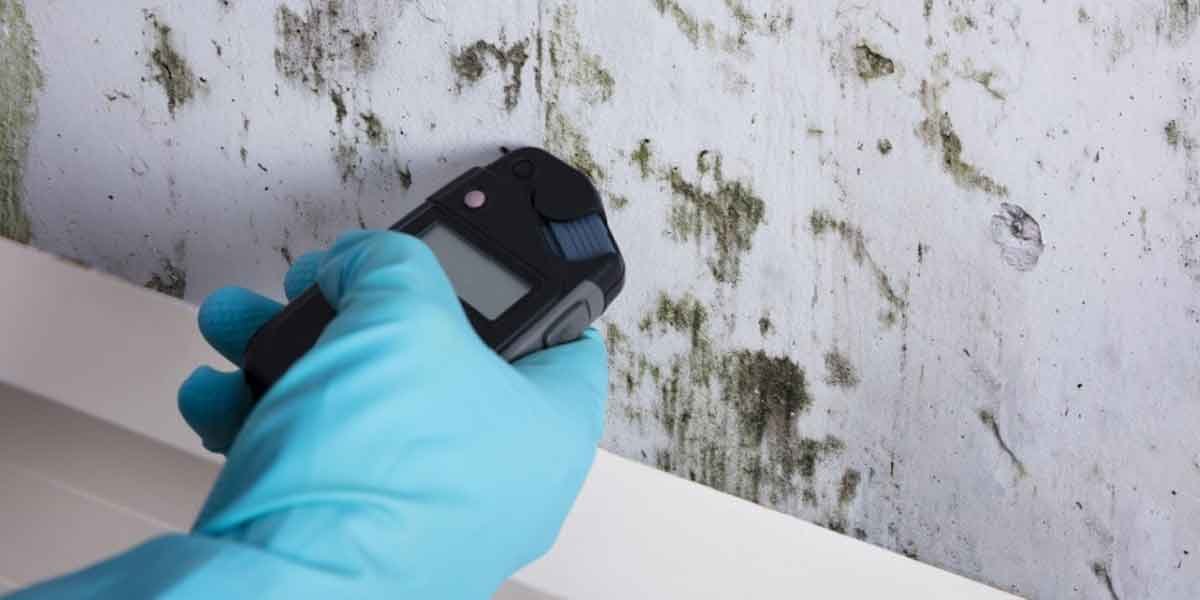

According to New Orleans Property Management, mold testing in home is a $300 to $1,050 purchase, and most buyers pick the wrong reason for it. A kit or an inspector’s air pump confirms what a musty smell already indicated.
Exactly two situations justify that fee. One is a home that smells moldy, or has a leak history, with nothing visible to clean up. The other is a repair that is finished and needs a record showing it worked.
Separating those two cases is most of the decision. The rest is choosing a method that answers your question, comparing the result against something real, and fixing the water.
What a Mold Test Can and Cannot Tell You
A mold test measures spores in the air or on a surface at one moment. It cannot tell you whether a home is safe, because no federal limit exists to compare a spore count against.
The EPA says this in its mold testing and sampling guidance. Standards and threshold limit values for airborne mold or mold spores have not been set, and there are no EPA regulations or standards for airborne mold contaminants. A laboratory can count spores and cannot measure compliance with a rule that does not exist.
Three uses hold up. Sampling can find growth you cannot see, identify what grew after a leak, and document that a cleanup worked. Phrases like “moderate spore levels” or “high Aspergillus counts” have no regulated cut-off to land on.
That guidance adds a condition kit instructions leave out. Sampling should be designed by someone with experience building mold sampling protocols, and lab analysis should follow methods from the American Industrial Hygiene Association or the American Conference of Governmental Industrial Hygienists.
That is a high bar for a petri dish ordered online.
When a Mold Test Earns Its Fee
Pay for sampling when the answer changes what you do next: an unexplained mold smell in a home with nothing visible to clean, or a clearance check after remediation. Skip it when growth is visible, when the leak has been found, or when no result would alter the repair.
The Two Cases That Justify Sampling
A musty odor with no visible source is the strongest reason to call a professional. Growth hides on the back of drywall and wallpaper, on the top side of ceiling tiles, under carpet and pad, and in wall cavities around leaking or condensing pipes.
The stain is on the ceiling tile over the shower. The tile gives slightly when you press it, and the bathroom still smells like a wet basement an hour after the fan has been on.
Verification is the second case, and it holds the most legal weight. Surface sampling after a remediation shows whether the work removed the growth, which is the use the EPA names for it. Sellers, landlords and insurers want that record, and a passing clearance report is what ends a disagreement.
The Cases Where Testing Adds Nothing
Visible growth is the clearest skip.
When visible mold growth is present, the EPA holds that sampling is unnecessary. A swab or an air cassette cannot tell a homeowner anything the damp, stained board has not already said.
Porous material makes the same argument.
Drywall, ceiling tile and carpet that have stayed wet get thrown out rather than cleaned, so a lab report does not change the work.
An active leak is the third case.
A positive air sample leaves the repair exactly where it was. Fix the leak.
How Home Mold Testing Actually Works
Four sampling types appear in mold testing in home reports: air samples, surface lifts, bulk cuts and settle plates. Each answers a different question, and none of them measures exposure or risk.
| Method | What it can answer | What it cannot |
|---|---|---|
| Air sample (spore trap or culture) | What is airborne in that room at that hour, and how the count compares with outdoor air | Where the growth is, or whether it is still active |
| Tape lift or swab | Whether a stain you can reach is fungal growth, and which genus | Anything about growth you cannot reach |
| Bulk sample | What is growing within drywall, insulation or carpet | How far the growth extends past the cut |
| Settle plate | That spores were in the room while the dish sat open | Where they came from, or whether they signal anything |
Air Sampling and the Outdoor Sample
An indoor spore count means nothing on its own. The EPA’s remediation guidance sets the comparison: indoor air samples after remediation should show types and concentrations similar to the local outdoor air.
That reference sample is what a report has to be read against. Without it, a four-digit spore count per cubic meter has no scale attached, and calling it high or low is guesswork in lab clothing.
Same number, different cause.
Two rooms can carry identical counts, one because a wall cavity is wet and the other because a window sits open above a pile of leaves.
Tape Lifts, Swabs and Bulk Cuts
These sample the material rather than the room.
A tape lift or swab from a visible stain confirms that the stain is fungal growth and can identify the genus, while saying nothing about the wall it came from.
A bulk sample takes a small piece of drywall, insulation or carpet and shows what is growing in it.
The cut is destructive, so it belongs at the end of an inspection, after a moisture meter or thermal camera has already flagged the area.
Settle Plates and DIY Kits
A settle plate is a dish of agar left open in a room for an hour.
Whatever lands on it grows, which is why the dish is almost always positive and rarely informative.
Consumer kits add two more problems: they grow only the fungi that suit the agar and temperature in the box, and they report a number with no outdoor comparison and no decision rule attached to it.
The EPA’s home guide rules out a clean baseline for any of this. Mold spores are naturally present indoors and out, and it is not possible to remove them all from a home.
What Mold Testing in Home Costs
Budget $300 to $1,050 for an inspection with a lab report, plus a second bill if you want a clearance test after remediation. Kit-based tests cost a fraction of that and answer a fraction of the question.
Angi’s 2026 cost survey puts a full evaluation and a detailed lab report inside that $300 to $1,050 band. Three variables move a quote: how many samples the inspector takes, how hard the suspect areas are to reach, and whether the lab runs culture, microscopy or a DNA panel.
Two EPA figures frame the low end.
The EPA’s guide prices a humidity meter at $10 to $50 at a hardware store, and an N-95 respirator at about $12 to $25. When the only open item is whether a basement is damp, a meter settles it this afternoon.
Choosing Who Tests Your Home
Hire an inspector who writes sampling protocols for a living, and ask for references from similar jobs.
The EPA puts the checking on the homeowner: its guidance says to confirm a contractor has experience cleaning up mold and to follow up on references.
The lab is the other half of the hire.
Analysis should follow AIHA or ACGIH methods, and a usable report names the laboratory, the method and the sampling conditions instead of listing a genus and the price of the next step.
Ask one thing on the phone. Does the company that samples also do the removal? A yes is common, and it tells you how to read a report that lands on a full rebuild.
Fix the Water, Not the Spore Count
Moisture control is what ends a mold problem. Dry wet materials within 24 to 48 hours, hold indoor humidity below 60 percent with a target of 30 to 50 percent, and treat a patch smaller than roughly 10 square feet as a cleaning job.
The EPA’s Brief Guide to Mold, Moisture and Your Home sets the order: clean up the mold, and fix the water problem.
Do the first without the second and the growth comes back.
- Dry water-damaged areas and items within 24 to 48 hours, the window in which mold growth is unlikely to take hold.
- Keep relative humidity below 60 percent, ideally 30 to 50 percent, per the EPA. The Insurance Information Institute uses 30 to 60 percent as its range.
- Handle a patch up to about 3 feet by 3 feet yourself. Larger areas, or any heavy water damage, call for professional remediation.
Relative humidity is the number worth tracking over time. The humidity threshold that supports growth in a basement is narrow enough that a meter beats a memory of how the room felt last week.
Removing growth and killing it are different jobs.
The EPA notes that dead mold can still cause allergic reactions in some people, and its guide does not recommend chlorine bleach as a routine step during cleanup. The CDC’s cleanup page takes a looser line, listing bleach or dish detergent as options and capping bleach at one cup per gallon of water, never mixed with ammonia. Two federal agencies describing the same job differently says something about how unsettled household mold practice is, and both agree the material has to come out and the space has to dry.
Hidden growth is the one case where paying for trained eyes beats paying for a plate. Removing wallpaper or opening a wet cavity can release a burst of spores into the room, and the EPA suggests an experienced professional once hidden growth is suspected.
When a Remediation Counts as Finished
The EPA’s finish criteria start with the water. A cleanup is not complete until the moisture problem is fixed, the growth is removed, and no visible mold or moldy odor remains.
A room that still smells damp has not met those criteria, and a retest before the repair is finished measures nothing useful.
Mold Testing Questions Before You Pay
How do you check a home for mold without hiring anyone?
Start with a flashlight and a humidity meter, then follow the readings. Check the backs of bathroom walls, the cabinet under the kitchen and bathroom sinks, window frames, and any surface that has stayed damp. A reading well above the surrounding rooms points to the source, and sampling adds information only when the source stays hidden.
What does mold testing in home cost?
An inspection with a lab report runs $300 to $1,050, and a clearance test after remediation is a separate charge. Sample count, access to the suspect areas and the lab method move the total.
Does homeowners insurance cover mold?
Standard policies exclude mold damage by default. The Insurance Information Institute classifies mold with rot and insect infestation as a maintenance issue, with one exception: growth that results directly from a covered event such as a burst pipe may be covered, and mold from a flood needs a separate flood policy.
What kills mold naturally?
Killing mold and taking it out are separate steps, and only the second one ends the problem. The EPA does not recommend chlorine bleach as a routine cleanup step, and it points out that dead mold can still trigger allergic reactions, so the growth has to be scrubbed off and the material dried. The CDC allows bleach or dish detergent at no more than one cup of bleach per gallon of water.
Can a mold test show whether mold is affecting your health?
No home sampling kit measures that. Air and surface samples describe the building, not your body, so a report cannot connect a spore count to a symptom. That question belongs to a physician.
Mold testing answers one question well: whether a specific spot, sampled a specific way at a specific hour, holds fungal growth. The rest of what you want to know about a damp home comes from a moisture meter, a flashlight, and a willingness to open the wall when the reading keeps pointing there.