
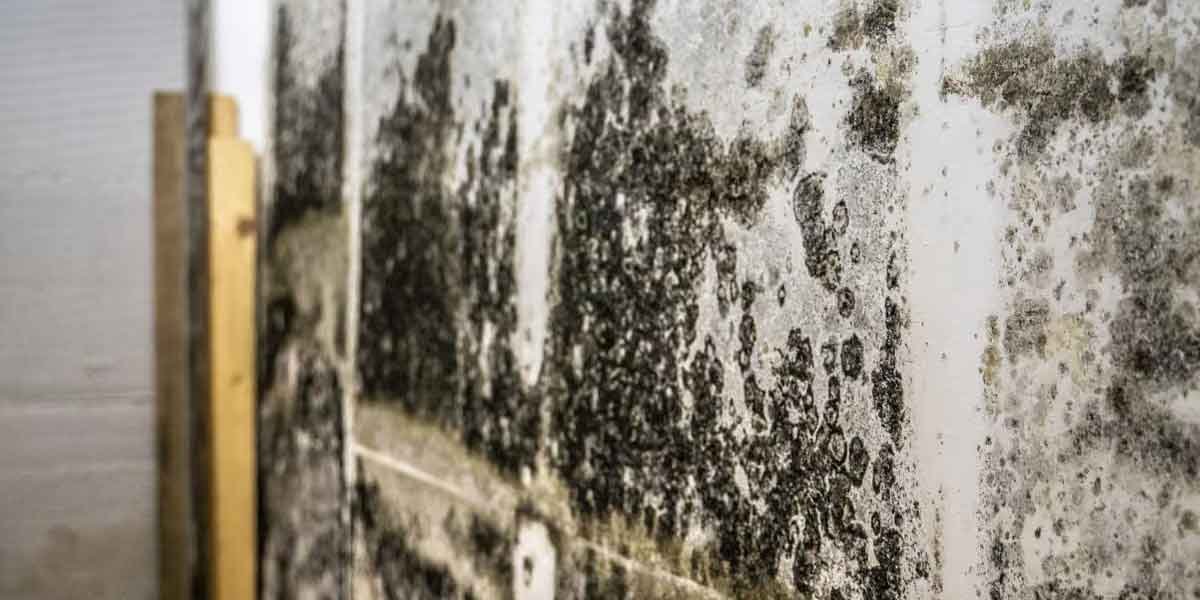

Mold grows where surface humidity reaches about 60 percent. That figure is the U.S. Environmental Protection Agency’s ceiling for indoor air, and it is why what humidity does mold grow in a basement depends on the wall surface rather than the room average. A basement can read normal on a meter while the block wall behind a shelf turns grey.
The EPA’s guide to mold and moisture puts indoor relative humidity below 60 percent, ideally between 30 and 50. The CDC caps a home at 50 percent and tells people to hold it there around the clock. Two agencies, two numbers, and neither one describes the air touching a basement wall on a humid July afternoon.
The Two Official Numbers, and Why They Diverge
The EPA keeps indoor relative humidity below 60 percent and calls 30 to 50 the band worth holding. The CDC caps a home at 50 percent, all day. Each number was set for a different job. Fifty leaves margin for showers, cooking, and everyone breathing in the same house; sixty is where the EPA files a building under moisture problems in its mold course.
Below 30 percent, the agency’s concern shifts from mold to dry eyes and scratchy throats.
The 60 percent ceiling has a physical basis. Warm air holds more water vapor than cool air, so relative humidity is a percentage of a moving target. Cool that air by ten degrees and the same water load reads as a higher percentage with no new moisture added. That is what happens to outdoor air the moment it enters a basement, and it is also what happens to air drifting across a chilled floor slab.
Mold Reads the Surface, Not the Room
Relative humidity describes air, and air changes temperature as it moves. The humidity mold responds to is the thin layer touching the material, and that layer can reach saturation while the room meter reads a comfortable 45.
The EPA’s moisture control guidance for buildings states the rule without hedging: “If the dew point is above the temperature of the surface, water vapor will condense onto that cold surface.” Dew point is the temperature air must be cooled to before it starts giving up water, and unlike relative humidity it stays put when the room warms or cools. The same document quantifies the gap between a dry surface and a wet one. At 90 percent relative humidity, a surface only has to run 3°F cooler than the air to condense. At 50 percent, it has to run roughly 20°F cooler.
At the CDC’s 50 percent target, most walls stay dry, because few surfaces in a house run twenty degrees below the room air. Lower the surface temperature and the difference required for condensation collapses fast. A foundation wall is the one large surface in a home that stays cold on purpose. Take the room down to 40 percent and that wall does not warm up with it, so the same surface keeps collecting water for as long as it sits at or below the dew point.
The EPA’s own worked example shows how quickly this turns: outdoor air at 85°F and 60 percent relative humidity has a dew point of 70°F, so it condenses on anything at 70°F or below. A basement wall running at 68°F in that air is wet on its face before any rain has reached the house.
What a Basement Adds to the Humidity Mold Needs
Below grade, a wall touches soil that holds a steady temperature all year, so its inner face stays colder than the air above it. The EPA notes that in low-rise buildings, damp basements and crawl spaces can add as much water vapor to the air in a day as every other indoor source combined.
The agency’s guidance also flags foundations directly: water may condense on foundation materials during warm weather because those materials are cooler than the outdoor air. One of its case photos shows mold on a painted concrete block wall separating a classroom from an ice rink, where the cold wall met humid air on the warm side and the paint film grew mold.
A basement runs a second disadvantage. Above grade, moisture that condenses on a window dries when the sun returns. A block wall below grade has soil on the other side at a steady temperature and no sun on its face, so once the surface is wet it stays wet until the air around it can pull the water back out.
The 24-to-48-Hour Clock
Humidity decides whether mold can start; time decides whether it does. The EPA’s instruction is to dry water-damaged areas and items within 24 to 48 hours, in most cases before mold gets going at all.
That clock is what turns a humidity reading into a changing target. Block, gypsum board, carpet, and framing lumber hold water far longer than air does, so a basement can drop to 40 percent on the meter while its walls and floor slab are still giving moisture back. The number on the gauge is a snapshot of the air, not a statement about the material.
Reading the Wall Against the Air
Two readings settle the question in a given room: the air’s dew point and the temperature of the surface you are worried about. The EPA puts a humidity meter at $10 to $50, and an infrared thermometer covers the other reading.
- Put a humidity meter in the open middle of the basement, a few feet off the floor, away from the dehumidifier’s exhaust and the furnace. Those two spots read low and make a wet basement look fine.
- Note the air temperature and relative humidity together. The meter may display dew point directly; if it does not, a psychrometric chart converts the pair in seconds.
- Point an infrared thermometer at the surfaces that stay cold: the lower course of a foundation wall, the floor slab near an outside corner, any staining behind stored boxes, the first few inches of a wall next to the floor.
- Compare the two numbers. A surface at or below the air’s dew point is condensing right now, and that surface will grow mold at almost any room humidity you can hold in a basement.
Step four is where most dehumidifier plans stall. If the wall’s face is colder than the dew point, pulling the room to 45 percent only means the wall keeps sweating at a lower reading. The order that works is water first, then warmth and airflow at the surface, then the air target. The band to hold in the air once surfaces stay dry is a separate number, worked through in the basement humidity level to prevent mold guide.
Frequently Asked Questions
What is a good basement humidity level in summer?
Thirty to fifty percent relative humidity is the working range in a basement during humid months. Go lower than 30 percent and you dry out framing and flooring without gaining any mold protection; the CDC’s 50 percent cap is the safer upper limit in summer, when outdoor dew points run high.
At what humidity level will mold grow in a house?
Mold growth starts when the humidity touching a surface stays near 60 percent or higher, which is why both federal ceilings sit at or below that line. In practice the surface, not the room average, decides: a 45 percent basement with a wall below the air’s dew point grows mold anyway.
What temperature does a basement need to prevent mold?
Temperature matters through dew point rather than through a mold minimum. A basement surface has to stay above the dew point of the air around it; at 50 percent relative humidity, that means the surface can run about 20°F below room air and still stay dry.
Should a basement dehumidifier run all the time?
A dehumidifier should run whenever the basement air sits above the target band, which in humid regions is most of the summer. It cannot fix a condensing wall, so check surface temperatures before deciding the machine is failing.
Measure the air, measure the cold surface, and the order of work follows. A basement held at 45 percent with a wall at or below its dew point still grows mold on schedule, and no dehumidifier setting changes that.
