
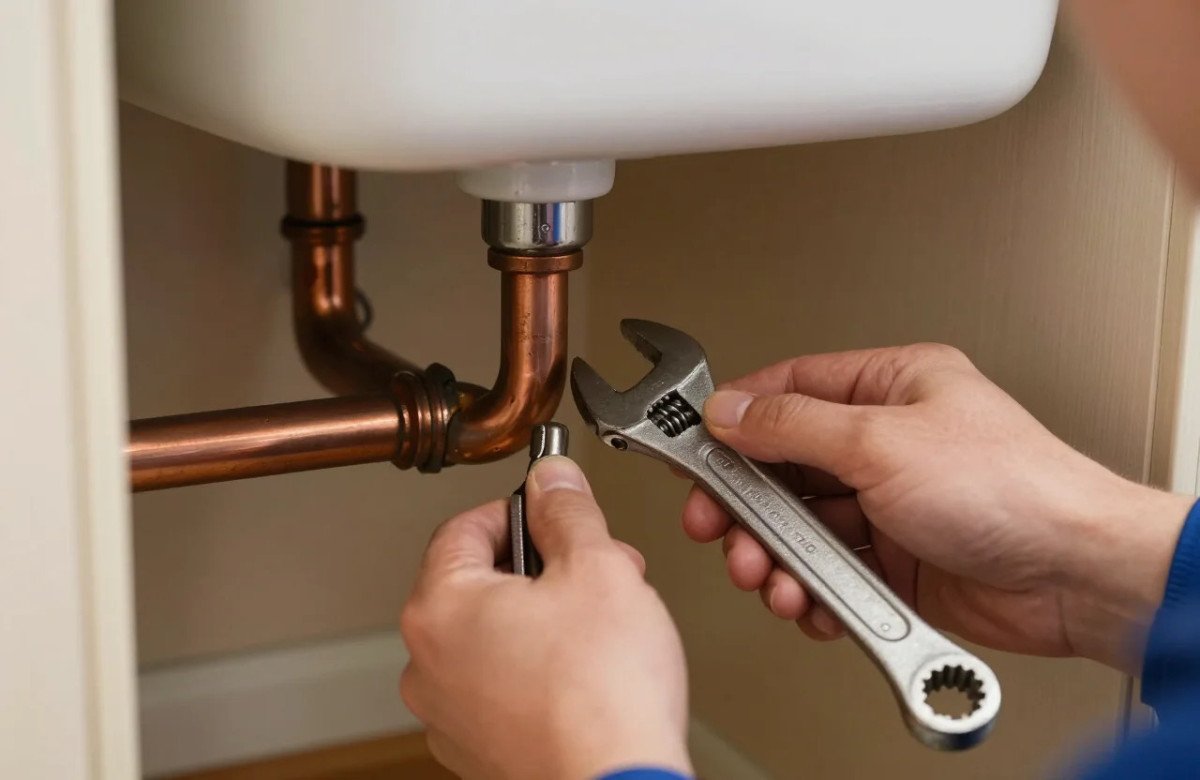

This pipe repair cost guide for homeowners covers what you will pay in 2026. A standard pipe repair — fixing a leaking section of accessible pipe — costs $200 to $800, explains MTD Property Management. A major pipe repair — repairing a burst pipe, replacing a section of inaccessible pipe behind a finished wall, or repiping an entire plumbing system — costs $1,000 to $15,000 depending on the scope, the pipe material, and the accessibility of the damaged section.
Pipe repair costs are driven by access. The pipe itself is cheap — $2 to $10 per linear foot for copper, PEX, or PVC. The labor to reach the pipe, cut out the damaged section, install the replacement, and restore the wall or ceiling is what you are paying for. A pipe leak in an unfinished basement costs $300 to fix. The same leak behind a tiled shower wall costs $2,000 because the tile must be removed, the repair made, and the tile replaced.
Pipe Repair Costs by Type
Pipe repair costs span from a $200 accessible joint fix to a $15,000 whole-house copper repipe, with the price driven by access, material, and scope. Here is how the nine most common repair types compare.
| Repair Type | Cost Range | What It Includes |
| Leaking joint or pinhole (accessible pipe) | $200 – $500 | Cut out damaged section, solder or crimp replacement, test |
| Leaking pipe behind finished wall | $500 – $2,000 | Access hole, repair, drywall patch (painting extra) |
| Burst pipe (emergency) | $500 – $4,000 | Shutoff, water extraction, pipe repair, drywall, possibly flooring |
| Frozen pipe thaw and repair | $300 – $1,500 | Thawing, repair if burst, insulation to prevent recurrence |
| Sectional pipe replacement (accessible run) | $500 – $2,000 | Replace 10-20 feet of deteriorated pipe |
| Repipe single fixture supply lines | $500 – $1,500 | New supply lines from nearest branch to fixture |
| Repipe entire house (PEX) | $4,000 – $10,000 | All supply lines, connections to fixtures, drywall repair extra |
| Repipe entire house (copper) | $8,000 – $15,000 | All supply lines, rigid copper, more labor-intensive |
| Sewer line spot repair (see sewer guide for detail) | $2,500 – $5,000 | Excavation or trenchless spot repair |
Pipe Materials, What Your Pipes Are Made Of Matters
The material your pipes are made of determines what they cost to repair, how long the repair will last, and whether the rest of the pipes are due for replacement. Different eras of construction used different materials, and each has a characteristic failure mode.
| Pipe Material | Common Era | Failure Mode | Repair Approach |
| Copper (Type L or M) | 1950–present | Pinhole leaks from corrosion, failed solder joints | Cut and solder replacement section |
| Galvanized steel | 1900–1960 | Internal rust and scale buildup, thread corrosion | Replace entire run; sectional repair is temporary |
| PEX (cross-linked polyethylene) | 1990–present | Fitting failures, rodent damage, UV degradation | Cut and crimp replacement; simple and fast |
| CPVC (chlorinated PVC) | 1980–2000 | Embrittlement with age, cracking at joints | Cut and solvent-weld replacement |
| Polybutylene (PB) | 1978–1995 | Degradation from chlorine in water, sudden burst | Full repipe recommended; no repair is reliable |
| Lead | Pre-1940 | Health hazard, lead in drinking water | Full replacement mandatory |
Galvanized steel pipes, common in homes built before 1960, rust from the inside out. The internal diameter narrows as rust and mineral scale build up on the pipe walls, reducing water pressure throughout the house. Repairing a single leaking section of galvanized pipe is a temporary fix. The threads on the remaining pipe are corroded, and tightening a new fitting onto old threads often fails within a year. The correct repair for galvanized pipe is a full repipe, typically to PEX, at a cost of $4,000 to $10,000 for a typical home.
Polybutylene pipes, gray plastic pipes installed in millions of homes between 1978 and 1995, are a known failure risk. The material degrades when exposed to chlorine and other oxidants in municipal water supplies, becoming brittle and eventually bursting without warning. Polybutylene cannot be reliably repaired. The only correct approach is a full repipe. If a home inspector or plumber identifies polybutylene piping, budget for a full repipe. The pipe will fail. The only question is when.
The Environmental Protection Agency (EPA) provides guidance on lead pipe replacement and drinking water safety. Homes built before 1940 may have lead supply lines. Homes built before 1986 may have lead solder in copper pipe joints. If your home has lead pipes or lead solder, the EPA recommends replacement or, at minimum, using a water filter certified for lead removal at the point of use for drinking and cooking water.
Access Costs, the Hidden Half of Pipe Repair
The pipe repair itself is straightforward plumbing. The access to reach the pipe is what drives the cost from hundreds to thousands. A pipe in an unfinished basement with exposed joists costs $200 to $500 to repair, the plumber can see the pipe, reach the pipe, and work on the pipe without cutting into anything. A pipe inside a finished wall or ceiling requires cutting an access hole, 12 by 12 inches, typically, through drywall or plaster. The plumber makes the hole, repairs the pipe, and leaves. The hole is yours to patch and paint. Drywall patching costs $200 to $500 if you hire a handyman. Painting the patch to match the existing wall or ceiling costs $100 to $300.
A pipe under a concrete slab, common in homes built on slab foundations in the South and Southwest, requires either tunneling under the slab to reach the pipe or cutting through the slab from above. A slab leak repair costs $1,000 to $4,000 for a single leak, and a full under-slab repipe, rerouting the plumbing through the attic or walls instead of under the slab, costs $4,000 to $10,000. The slab leak repair is cheaper today. The repipe is cheaper over the life of the house because the remaining under-slab pipes will eventually leak too, and each additional leak costs $1,000 to $4,000 to access and repair.
Whole-House Repiping, When to Stop Patching and Start Over
A whole-house repipe replaces every supply line in the home from the main shutoff valve to each fixture. It is the most disruptive plumbing project short of sewer line replacement and the most expensive per square foot. The cost depends primarily on the pipe material chosen and the accessibility of the plumbing runs.
PEX repiping costs $4,000 to $10,000 and is the modern standard. PEX is flexible, it can be fished through walls with fewer access holes than rigid copper, resistant to scale and corrosion, and faster to install than copper. The fittings are crimped rather than soldered, which eliminates the fire risk of a torch inside a wall. PEX is not UV-resistant, it cannot be used outdoors or in any location exposed to sunlight, and some municipalities still require copper for new construction. Check local code before choosing PEX.
Copper repiping costs $8,000 to $15,000 and is the premium option. Copper is more durable than PEX, naturally antimicrobial, and preferred by buyers in high-end homes. The installation is more labor-intensive because every joint must be soldered, and the rigid pipe requires more access holes to route through walls and joists. Copper also costs more for materials, $3 to $8 per linear foot for copper versus $1 to $3 for PEX. For a typical 2,000-square-foot home with two bathrooms, the material cost difference alone is $1,000 to $3,000.
The drywall repair after a repipe is a separate cost and a separate contractor. The plumber cuts access holes. The drywall contractor patches them. The painter paints them. Those costs add $2,000 to $5,000 to the total project and are rarely included in the plumber’s estimate. Ask before you sign.
Frequently Asked Questions
How much does pipe repair cost?
A standard accessible pipe repair costs $200 to $800. A pipe repair behind a finished wall costs $500 to $2,000. A burst pipe emergency repair costs $500 to $4,000 depending on water damage. A whole-house repipe costs $4,000 to $15,000 depending on the material and the size of the home.
How do I know if my pipes need repair or replacement?
Signs of pipe problems include: reduced water pressure throughout the house, not just at one fixture, which suggests pipe scale or corrosion; discolored water, brown, yellow, or rust-colored, which indicates pipe corrosion; visible corrosion or green oxidation on exposed copper pipes; and recurrent leaks in pipes of similar age and material. A single leak in otherwise sound pipe is a repair. Multiple leaks in the same material over a short period is a repipe.
What is the best pipe material for replacement?
PEX is the best material for most residential repiping. It costs half as much as copper installed, installs faster with fewer wall penetrations, resists scale and corrosion, and handles freeze-thaw cycles better than copper because it can expand without bursting. Copper is preferred in high-end homes and in jurisdictions where code requires it. The two materials can be connected, transitioning from copper to PEX at a junction point is standard practice.
Does homeowners insurance cover pipe repair?
Insurance covers the water damage caused by a sudden pipe burst, drywall, flooring, cabinetry, but typically does not cover the cost of repairing or replacing the pipe itself. The pipe repair is considered a maintenance expense. The water damage from the burst is the covered loss. Some policies cover pipe replacement if the damage was caused by a covered peril, a frozen pipe that burst during a cold snap, for example. Gradual leaks and corrosion are never covered.
Can I repair a leaking pipe myself?
A pinhole leak in an exposed copper pipe can be temporarily patched with a pipe repair clamp, $5 to $15 at a hardware store, until a plumber can make a permanent repair. A leaking joint requires soldering skill for copper or crimping tools for PEX and should be left to a professional unless you have plumbing experience. A temporary clamp stops the leak. It does not fix the pipe. Schedule the permanent repair. The clamp is buying time, not solving the problem.
How long do different pipe materials last?
Copper pipes last 50 to 70 years. PEX pipes last 40 to 50 years, the material has been in use since the 1990s, so the 50-year claim is based on accelerated testing. CPVC lasts 40 to 50 years but becomes brittle with age. Galvanized steel lasts 40 to 60 years but loses water pressure due to internal corrosion long before it leaks. Polybutylene lasts 20 to 30 years and fails without warning. Lead pipes last indefinitely, which is the problem.
What Your Pipes Are Telling You
A single pinhole leak in an exposed copper pipe is a $300 repair. Multiple leaks over a year in galvanized or polybutylene pipes is a $6,000 to $10,000 repipe. The difference between the two scenarios is not the cost of the plumber. It is what the pipe material and the leak pattern are telling you about the condition of the rest of the plumbing system.
Fix one leak. If a second leak appears in the same material within a year, stop patching. Start budgeting for a repipe. The pipes are talking. The only question is whether you are listening or waiting for the next one to burst at 3 a.m. on a Sunday. The plumber will come either way. The difference is the emergency premium and the water damage that happened between the burst and the shutoff valve. Ever stood in a flooded basement at 3 a.m. holding a bucket you know is not helping? That moment is what a $300 repair prevents and a $10,000 repipe avoids. The bucket is not the solution. The bucket is the evidence that the solution arrived too late.