Roof: What to Know Before Building It

A roof is the uppermost protective and structural assembly of a building that covers the interior spaces and transfers environmental and structural loads to the walls and foundation.
Before you build a roof We highly recommend that you should know these things, such as roof pitch, roof drains, rain diverters, roof flashing, roof parts, types, roofings, roof insulation, roofing materials, cost, possible waterproblems, waterproofing methods, and how to maintain a roof properly.
- Roof pitch: Roof pitch is the slope of the roof and varies with the type of roof.
- Roof drains: The roof drain system helps safely remove accumulated water from the roof.
- Roof rain diverter: Roof rain diverters prevent water from flowing to unwanted areas.
- Roof parts and components: A roof consists of 8 main components and 35 parts in total. You should know these parts for both construction and maintenance.
- Types of roof: Roofs vary in type depending on the house structure, purpose, and location. You should first decide which roof type is suitable for your building.
- Roof insulation: Roof insulation helps protect the roof from water and heat.
- Durability of the roof: You should understand the expected durability of the roof when it is constructed.
- Cost for the roof: Roof costs include materials, labor, estimates, inspections, and other checks.
- Water problems and damages on the roof: Water problems and damage are common in every roof structure. Homeowners should know how to prevent these issues and protect the roof properly.
- Roof waterproofing: Roof waterproofing protects the roof from water by installing a waterproofing membrane. You should understand the waterproofing process before choosing a method.
- Roof maintenance: Homeowners should know how to maintain the roof to prevent damage, protect it, and improve its durability.
What is a Roof?
A roof is the uppermost protective and structural assembly of a building that covers the interior spaces and transfers environmental and structural loads to the walls and foundation.
The main purpose of a roof is weather protection, structural stability, and thermal control, especially against rainfall of 25-100 mm (1-4 in), wind speeds of 90-160 km/h (56-100 mph), and temperature variations of −10 °C to 45 °C (14-113 °F).
A roof’s cost and lifespan depend mainly on roof size, roofing materials, pitch, and labor complexity.
For residential projects in the USA, roof installation costs typically range from USD 4-15 per sq ft (USD 43-161 per m²), meaning a 2,000 sq ft (186 m²) roof may cost USD 8,000-30,000 depending on asphalt shingles, metal panels, tiles, or membrane systems.
Roof lifespan varies by material. Examples: asphalt shingles last 15-30 years, metal roofing lasts 40-70 years, and tile or slate roofs last 50-100 years if installation quality, drainage design, and maintenance remain consistent.
From our construction practice, a properly designed roof with correct pitch, flashing, and waterproofing always outperforms a low-cost roof that ignores water behavior and long-term exposure.
What is a Roof Pitch?
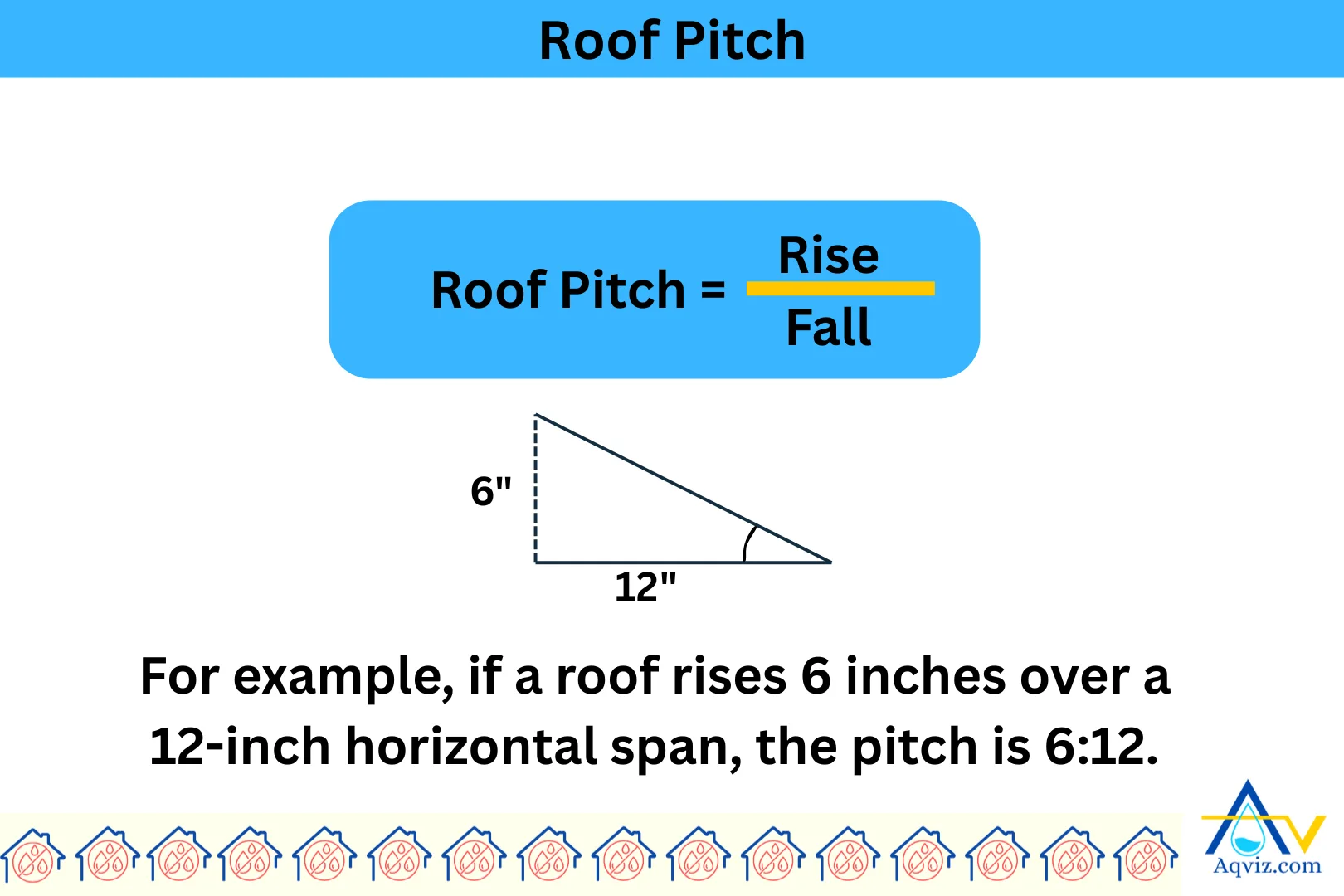
Roof pitch is the steepness or incline angle of a roof. The roof pitch defined as the ratio between the vertical rise and the horizontal span (run). Roof pitch express as “X inches of rise per 12 inches of run.” A high roof pitch typically measures 9:12 or more, while a low roof pitch measures 3:12 or less.
The roof pitch formula: Roof Pitch = Roof Rise ÷ Roof Run
These are the recommended roof pitches for the common 5 roof types.
- Flat roof: ¼:12 to ½:12 pitch (6-13 mm per 305 mm)
- Shed roof: 3:12 to 5:12
- Gable roof: 4:12 to 9:12
- Hip roof: 5:12 to 8:12
- Mansard roof: upper slope 3:12-6:12, lower slope 10:12-12:12 for drainage and aesthetics.
There are 4 main pros of a higher roof pitch.
- Higher-pitched roofs improve water drainage by reducing water contact time and hydrostatic pressure on roofing layers.
- Higher-pitched roofs reduce prolonged moisture exposure that causes premature aging and surface breakdown.
- Higher-pitched roofs encourage snow sliding before loads exceed 20-30 kg/m² (4-6 lb/ft²).
- Higher-pitched roofs allow reliable installation of shingles, tiles, and slate systems.
There are 4 main cons of a lower roof pitch.
- Low-pitched roofs allow water to remain on the surface, increasing seepage risk at seams and fasteners.
- Low-pitched roofs limit usable materials to membranes and specialty systems
- Low-pitched roofs promote debris buildup that obstructs drainage paths.
- Low-pitched roofs accelerate membrane fatigue and adhesive failure.
What is a Roof Drain?
A roof drain is a specially designed plumbing fixture installed on flat or low-slope roofs to collect and channel rainwater or melted snow away from the roof surface. Roof drains are typically positioned at the lowest points of the roof to allow gravity-fed drainage into connected piping systems.
Roof drains help to prevent ponding water and leaks on the roof, protect roof insulation, reduce structural load, enhance the lifespan, and minimize mold growth.
Roof drain requires a minimum slope of 1/4 inch per foot (approximately 2% or a 1 – 2 pitch) to ensure effective drainage and prevent water accumulation. The Roof drains are mainly of 5 types: primary, overflow, scupper, gutter, and siphonic roof drain.
What is a Rain Diverter?
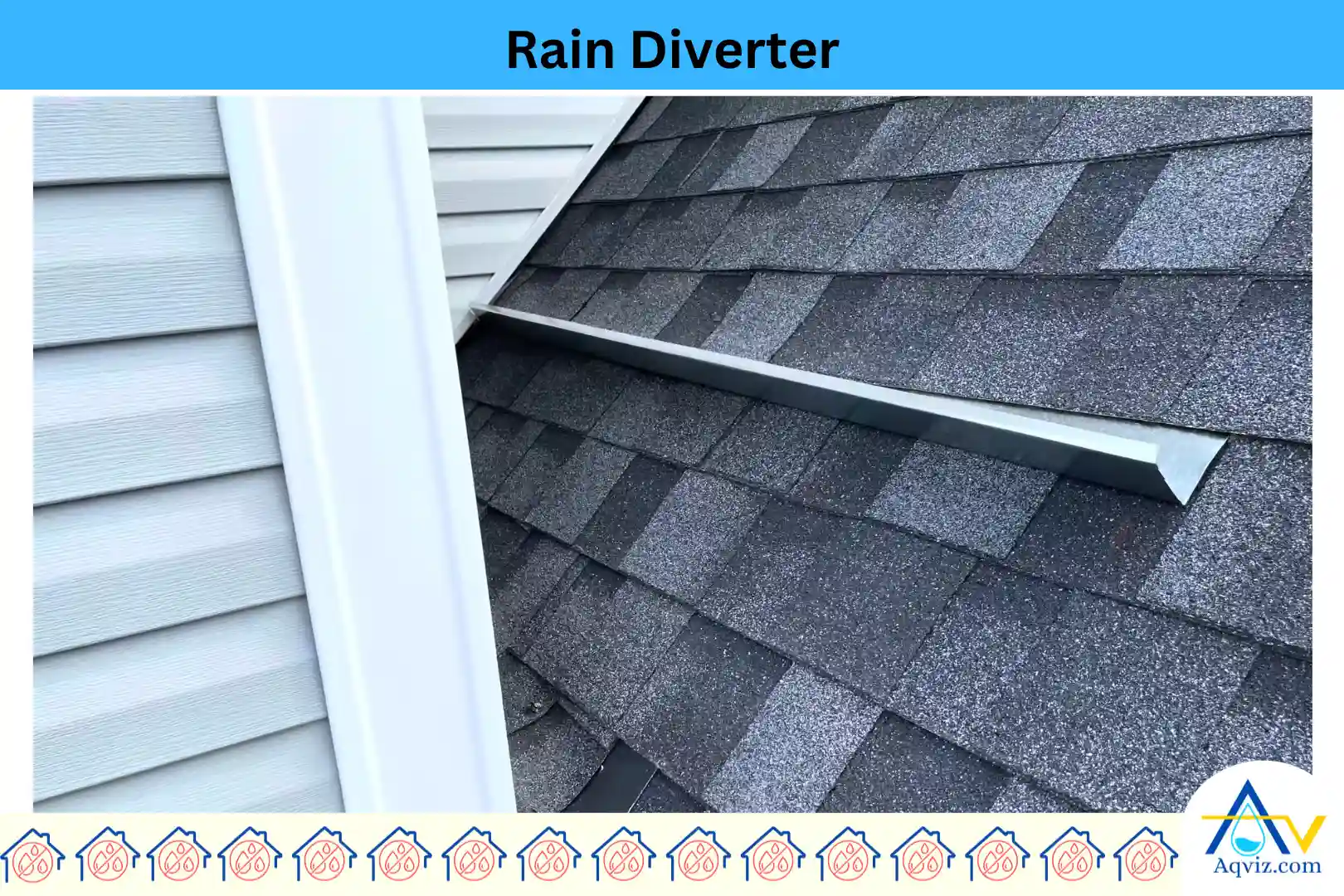
A rain diverter is a simple and highly effective roof flashing accessory made of galvanized steel, aluminum, or copper, used to redirect roof water runoff away from vulnerable or high-flow rate areas. Rain diverters are installed on the pitched roofs, and the main task of a rain diverter is to channel the water runoff path on the roof sideways into a gutter or safe drainage path.
Rain diverts help to prevent water intrusion, reducing splashback, protecting siding and trim, and minimizing soil erosion around the home’s foundation. It’s especially useful when gutters can’t be installed due to architectural limitations or aesthetic preferences.
When installing a rain diverter on the roof, its standard average length is between 36 inches (91 cm) to 48 inches (122 cm). The recommended lap length of the roof rain diverter is the minimum of 300mm (12in) for the low rainfall areas and 450-600 mm (18-24 in) for the higher rainfall areas. When installing it, it should be at least 6 inches beyond the protection area.
What is Roof Flashing?
Roof flashing is a thin, impervious construction material installed at roof joints, edges, and penetrations to seal gaps where water can enter the roofing system.
Roof flashing helps prevent leaks by controlling water movement at vulnerable points where roofing materials alone cannot seal effectively. Properly installed flashing directs rainwater away from seams and penetrations, reduces capillary action, and prevents wind-driven rain from entering the roof assembly during storms producing 50-100 mm (2-4 in) of rainfall.
When installing a roof flashing, you should choose higher water-resistant materials like aluminum, galvanized steel, copper, and stainless steel, with thicknesses ranging from 0.4-0.7 mm (0.016-0.028 in) depending on exposure and roof type.
What are the Parts of a Roof?
There are 35 roof parts related to the 8 main roof components, such as structural components, decking/sheathing, underlayment and moisture barrier, surface components, flashing and trim, ventilation component, edge and overhangs, and other elements.
These are the 35 roof parts.
- Rafters
- Trusses
- Joists
- Ridge Board
- Ridge Beam
- Collar Ties
- Ceiling Joists
- Lookouts
- Gable End Framing
- Roof Deck/Sheathing
- Ice and Water Shield
- Vapor Barrier
- Shingles
- Tiles
- Metal Panels
- Roofing Membrane
- Flashing
- Drip Edge
- Valley Flashing
- Vent Flashing
- Step Flashing
- Ridge Vent
- Soffit Vents
- Gable Vents
- Roof Vents
- Box Vents
- Powered Attic Vents
- Eaves
- Rakes
- Fascia
- Soffit
- Chimney
- Skylight
- Dormer
- Gutters
- Downspouts
What are the Types of Roofs?
Roofs are mainly of 9 types based on the structure and performance.
- Flat roof
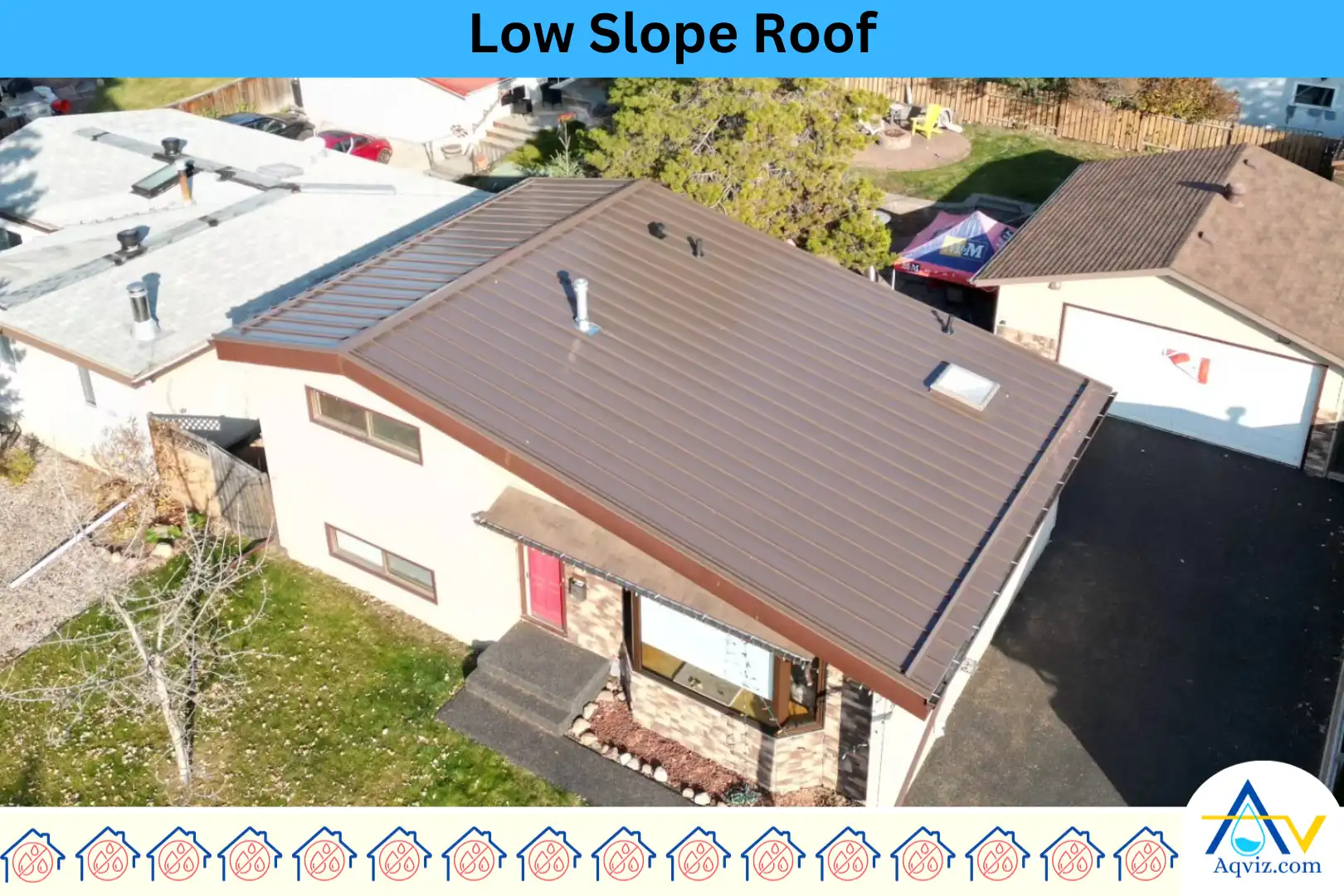
- Low-slope roof
- Butterfly roof
- Shed roof
- Mansard roof
- Gambrel roof
- Bonnet roof
- Hip roof
- Gable roof
Among these, flat roofs, butterfly roofs, and low-slope roofs require more frequent maintenance and repairs compared to steep-slope roof systems due to their lower pitch and slower run off the water on the surface. Hence, those roofs should be waterproofed properly for a better lifespan.
What is Roofing?
Roofing is considered as materials, structure, and systems installed on the top of a building to protect the interior from weather elements such as rain, sunlight, wind, snow, and temperature extremes.
Roofing helps by preventing water intrusion and reducing environmental stress on the building envelope. A properly installed roofing system sheds water quickly, protects the roof deck and insulation from saturation, and limits heat gain and UV degradation that cause premature material failure. Installing a high-quality roofing system consistently extends roof service life by 15-40 years, lowers maintenance costs, and reduces interior water damage by maintaining a stable, sealed surface under continuous weather exposure.
What are the Types of Roofing?
Roofing is mainly of 11 types based on the material.
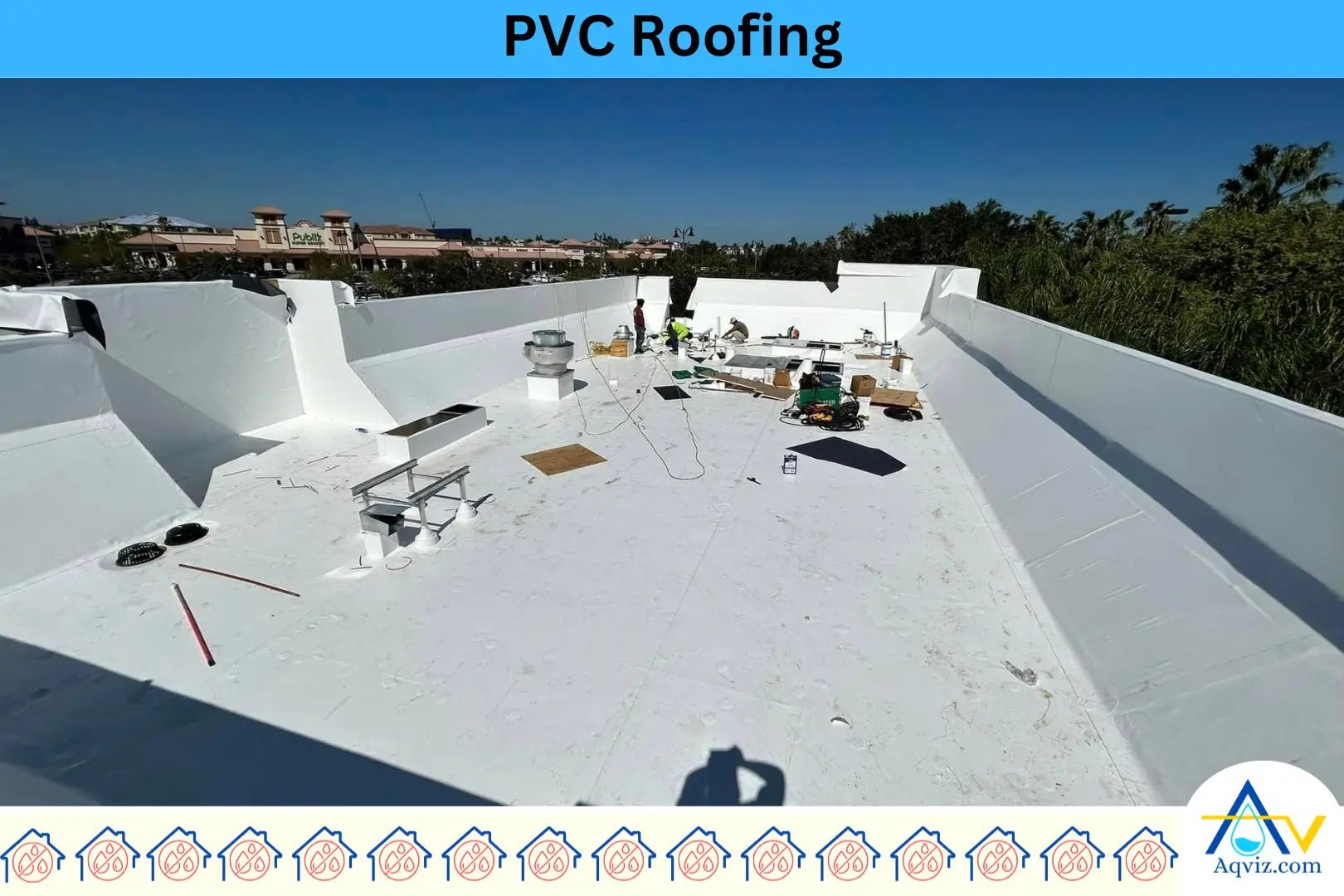
- PVC roofing
- TPO roofing
- EPDM rubber roofing
- Composite shingle roofing
- Standing seam metal roofing
- Corrugated metal roofing
- Stone-coated steel roofing
- Clay tile roofing
- Concrete tile roofing
- Slate tile roofing
- Synthetic slate roofing
What is Roof Insulation?
Roof insulation is a thermal control layer installed within or above the roof assembly to reduce heat transfer between the interior space and the external environment.
Roof insulation helps by improving energy efficiency and moisture control within the building envelope. Proper insulation limits heat loss in winter, reduces heat gain in summer, and minimizes condensation that can damage roof decks and framing.
To insulate a roof you have to use materials such as fiberglass batts, spray polyurethane foam, or rigid insulation boards that provide thermal resistance values typically ranging from R-30 to R-60, depending on climate zone and building code requirements.
How Long Can a Roof Last?
A roof can last 15-100 years depending on the material, climate, installation quality, and maintenance practices. For example, asphalt shingles typically last 15-30 years, metal roofs 40-70 years, clay or concrete tiles 50-100 years, and slate roofs 75-100 years.
To improve the durability of the roof, you should follow these 6 ways.
- Choose the right materials: Select roofing materials suitable for local climate and exposure, such as metal in snow-prone regions or clay tiles in hot climates.
- Ensure proper roof pitch: Install the recommended slope to promote efficient water drainage and reduce ponding.
- Install quality flashing and sealing: Protect roof penetrations, valleys, and edges to prevent leaks and water infiltration.
- Maintain gutters and drains: Keep water channels clear of debris to prevent overflow and water accumulation on the roof surface.
- Perform regular inspections: Check for loose shingles, membrane tears, and signs of wear at least twice a year and after storms.
- Apply protective coatings: Use roof sealants, reflective coatings, or waterproof membranes to reduce UV degradation, water absorption, and thermal stress.
How much Does it Cost for a Roof?
The average cost for a residential roof in the USA is USD 8,000-30,000 for a standard 2,000 sq ft (186 m²) roof. If you use high-end materials like slate or copper can push costs above USD 50,000, while basic asphalt shingles may stay near the lower range. The cost for the roof construction depends on the size, materials, labor, and regional factors.
When you construct a roof, you haveto spend money for the materials, labor, permits and inspection, features, and modification.
- Materials: 40-60% of total cost; asphalt shingles USD 4-6 per sq ft (43-65 USD/m²), metal panels USD 7-12 per sq ft (75-130 USD/m²), clay or concrete tiles USD 10-20 per sq ft (108-215 USD/m²).
- Labor: 30-40% of total cost; includes installation of decking, underlayment, shingles/tiles, flashing, and drainage systems.
- Permits and inspections: 2-5% of total cost; varies by city regulations.
- Roof structure modifications: 5-10% of total cost; needed if reinforcing trusses, adding pitch adjustments, or replacing decking.
- Additional features: 2-5% of total cost; includes skylights, gutters, ventilation systems, and snow guards.
What are the Water Problems and Damages on a Roof?
Water problems on a roof are issues caused by the accumulation, infiltration, or improper drainage of water that can compromise the roofing system, roof deck, insulation, and building interior.
We have seen there are 11 common water problems on the roof
- Ponding water on the roof
- Clogged gutters
- Improper slope on the roof
- Flashing failure
- Roof seam separation
- Cracked or damaged roofing materials
- Ice dams build up on the roof
- Leaking roof penetrations
- Roof surface erosion
- Condensation buildup under the roofing
- Overflow from rain diverters or scuppers
These roof problems cause water leaks in the roof structure. Prolonged water and moisture behaviour can damages roof seriously.
These are the common roof damages due to prolonged water and moisture exposure
- Mold and mildew growth on the roof/attic
- Roof deck rot
- Roof insulation saturation by the water
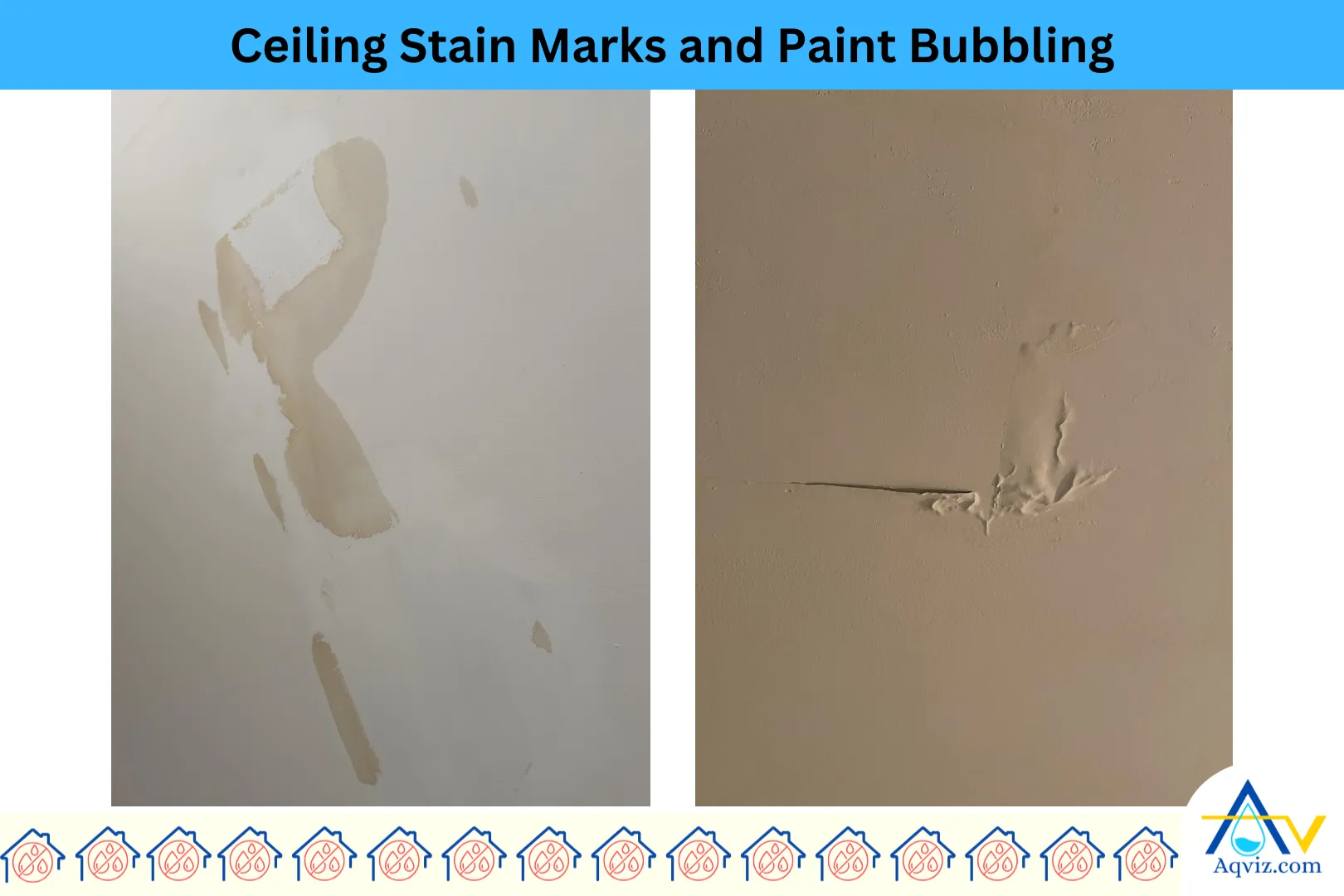
- Ceiling mold and ceiling stains
- Ceiling paint peeling/blistering
- Blistering of roofing materials
- Wall plaster deterioration
- Wood warping in the attic
- Corrosion of metal components in the home
- Tile or shingle loosening
- Flashing damage
- Structural framing weakening
- Roof membrane delamination
- Algae and moss growth on the roof structure
To prevent these water problems and damages, you should waterproof the roof.
What is Roof Waterproofing?
Roof waterproofing is defined as the application of a protective layer or membrane on the roof structure to prevent water infiltration from the roof. The main purpose of roof waterproofing is to provide a barrier against water and moisture. Therefore, the roof deck, roof tiles, roof valley, roof ridge cap, and roof flashing should be waterproof in order to extend the life of the roof structure.
Roof waterproofing helps seal all the spaces that can allow water to penetrate and directs the water properly away from the building structure.
To waterproof the roof, you can use both liquid and sheet membrane waterproofing, depending on the roof type, material, and purpose.
- Liquid waterproofing membranes for roofs: Polyurethane coatings, acrylic coatings, bituminous liquid membranes, and cementitious coatings are applied in liquid form and cure into seamless, joint-free waterproof layers.
- Sheet waterproofing membranes for roofs: Bituminous rolls (SBS), PVC membranes, EPDM rubber sheets, TPO sheets, and HDPE membranes are factory-manufactured sheets installed with overlaps to create a continuous waterproof barrier on the roof.
How to Maintain a Roof Properly?
To maintain a roof properly, you should follow these 7 step by step guide. Our experts highly recommend that you follow these recommendations to maintain your roof with minimal problems and damage.
Address leaks immediately: Repair any small leaks or cracks as soon as they appear. Early intervention prevents water from saturating insulation and causing structural or interior damage.
Inspect regularly: Check the roof at least twice a year and after heavy storms. This helps identify loose shingles, damaged flashing, and ponding water early, preventing long-term leaks.
Clean gutters and downspouts: Remove leaves, debris, and dirt from water channels. This ensures proper drainage and prevents water from backing up onto the roof or causing edge damage.
Remove debris from the roof surface: Clear branches, leaves, and dirt from the roof deck. This prevents water trapping, mold growth, and surface deterioration.
Check and repair flashing: Examine all roof penetrations, valleys, and edges for damaged or loose flashing. Proper flashing repair stops water intrusion at vulnerable points and protects the roof deck.
Trim overhanging trees: Cut branches that hang over the roof. This reduces debris accumulation, prevents physical damage from falling limbs, and limits moss and algae growth.
Apply protective coatings: Use sealants, waterproof membranes, or reflective coatings where needed. Coatings reduce water absorption, UV damage, and thermal stress on roofing materials.