

This guide covers the five key signs you need a roof leak — from ceiling stains to attic moisture. The most obvious sign you have a roof leak is a water stain on the ceiling or an upper wall — a yellow, brown, or copper-colored discoloration that appears or darkens after rain, explains Real Property Management Spring Valley. The stain is the exit wound. The leak is somewhere on the roof surface, possibly far from where the stain appears.
A roof leak that is not addressed within days or weeks becomes a cascade of damage: the water saturates the attic insulation, reducing its R-value. It soaks into the drywall, causing the paint to bubble and the gypsum to soften. It drips onto the flooring below, warping hardwood and delaminating laminate. It creates the conditions for mold inside the wall cavity and above the ceiling. The leak itself — the hole in the roof — is a $300 to $1,500 repair. The water damage the leak causes while it remains unfixed is a $2,000 to $8,000 remediation. The leak is cheap. The delay is expensive. Here are the signs, in the order they typically appear.
Sign 1: Water Stains on Ceilings or Walls
A water stain on a ceiling or an upper wall is the most common and most visible sign of a roof leak. The stain is typically yellow, brown, or copper-colored. It may be circular — a single drip point — or irregular, water spreading along a drywall seam or a joist. A stain that appears or darkens after rain is an active leak. The water is still entering the house. The stain will continue to grow. A stain that is old and unchanged after multiple rainstorms may be from a past leak that was repaired, or from a leak that only activates under specific conditions, wind from a certain direction, a freeze-thaw cycle, a heavy downpour. An old stain does not guarantee that the leak is gone. It guarantees that the leak was present at some point. Whether it is still present requires investigation.
A stain on an exterior wall, not the ceiling, may be a roof leak or may be a plumbing leak. Roof leaks typically appear on the ceiling or on the upper portion of walls, below the attic. Plumbing leaks typically appear lower on the wall, near the floor, and may be accompanied by the sound of running water. The location of the stain is the first clue. The behavior of the stain, does it darken after rain?, is the second. A stain that darkens after rain is a roof leak. A stain that is independent of the weather is probably plumbing. The distinction determines which contractor you call.
Sign 2: Moisture, Mold, or Daylight in the Attic
Go into the attic with a flashlight on a sunny afternoon. Look at the underside of the roof deck, the plywood or OSB that forms the roof surface. Water stains on the wood, darkened areas around nails, white mineral deposits where water evaporated, or visible mold growth are all signs of past or active roof leaks. The attic is the space between the roof surface and the ceiling. It is the first place water appears when it penetrates the roof. The attic tells you about a leak weeks or months before the ceiling below shows a stain.
Daylight visible through the roof boards is a direct path for water. If you can see light through a gap, crack, or hole in the roof deck, water can enter through the same opening. Pinholes around nail pops are repairable, the nail backed out slightly, and the hole around it is small. Gaps wide enough to fit a pencil tip indicate decking failure, the plywood is cracked, delaminated, or rotted. The decking must be replaced. The leak is not just through the shingles. It is through the structural layer of the roof.
The National Roofing Contractors Association (NRCA) recommends that homeowners inspect their attics at least twice per year, spring and fall, for signs of water intrusion. The attic inspection is the most effective early-warning system for roof leaks. The roof surface may look intact from the ground. The attic tells the truth. The stains on the decking, the moisture on the insulation, the daylight through the boards, these are the roof communicating. The language is visual. The message is water.
Sign 3: Musty Odors or Peeling Paint
A persistent musty smell in a room on the top floor, especially in a closet that backs up to an attic knee wall, is often the first sensory clue of a slow roof leak. The leak is small. The water is soaking into the insulation, the drywall, or the framing, but not enough to drip onto the ceiling. The moisture creates the conditions for mold and mildew. The smell is the mold and mildew off-gassing. The smell precedes the stain. The nose detects the leak before the eyes do.
Peeling, bubbling, or blistering paint on a ceiling or an upper wall indicates moisture behind the paint. The water is separating the paint from the drywall. The paint is the visible surface. The moisture is behind it. The blister is a pocket of water trapped between the paint and the gypsum. The paint is failing because the drywall behind it is wet. The drywall is wet because water is entering from above. The blister is the paint’s way of telling you that the roof is leaking. The blister is not a paint problem. It is a roof problem that the paint is reporting.
Sign 4: Damaged or Missing Shingles, Flashing, or Sealant
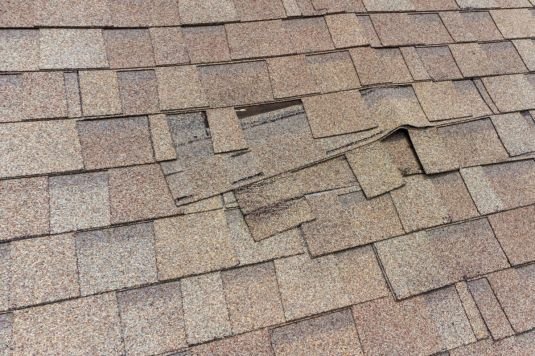
A roof leak often announces itself on the exterior before it announces itself on the interior. Shingles that are cracked, curling, or missing expose the underlayment to direct water contact. The underlayment is water-resistant, not waterproof. It will eventually leak if exposed to repeated wetting. Flashing, the metal strips around chimneys, skylights, vent pipes, and valleys, that is rusted, cracked, or pulling away from the roof surface creates a direct path for water. Sealant that is dried out, cracked, or missing around roof penetrations allows water to enter at the seam between the flashing and the shingle.
A visual inspection of the roof surface, from the ground with binoculars, from a ladder at the gutter line, or by walking the roof if safety permits, can identify these exterior signs before they become interior leaks. The damaged shingle, the cracked flashing, and the failed sealant are visible. The leak they will cause has not happened yet. The repair, replacing a few shingles, resealing a flashing joint, costs $200 to $600. The interior water damage the repair prevents costs $2,000 to $8,000. The exterior inspection is the cheapest leak prevention available. The interior stain is the evidence that the inspection did not happen.
Sign 5: Higher Energy Bills or Cold Drafts
Wet attic insulation loses its R-value. Fiberglass insulation that is saturated with water conducts heat roughly 20 to 40 times more effectively than dry insulation. The insulation is supposed to resist heat flow. The water makes it conduct heat flow. The heating system runs more to compensate for the heat loss through the wet insulation. The cooling system runs more to compensate for the heat gain. The energy bill rises. The increase is $30 to $80 per month during the heating or cooling season. The homeowner notices the bill. The homeowner does not connect the bill to the roof leak. The bill is a symptom. The leak is the cause. The insulation is the victim.
Cold drafts in a room on the top floor, air movement that should not be there, may indicate that wind is entering through a gap in the roof deck that was created by water damage. The decking has rotted. The gap lets wind through. The gap also lets water through. The draft is the wind. The water came first. The draft is the roof deck telling you that it is compromised. The decking feels cold air. The decking used to feel only the underside of the shingles. The shingles are gone. The decking is exposed. The wind is the evidence. The water is the problem.
Frequently Asked Questions
How do I find the source of a roof leak?
Start in the attic. Trace water stains on the underside of the roof deck upward to their highest point, that is usually near the entry point. If the attic is inaccessible, a roofer uses a garden hose to simulate rain on specific roof sections while someone watches inside. For persistent, hard-to-find leaks, infrared thermal imaging costs $300 to $800 and locates moisture trapped in the roof structure.
How much does it cost to repair a roof leak?
Most roof leak repairs cost $350 to $1,500 for the roofing work. The interior water damage, drywall, insulation, paint, adds $500 to $5,000. The total cost depends on where the water is entering, how long the leak has been running, and whether the repair is scheduled or an emergency call.
Can a small roof leak wait to be repaired?
A small leak that is not actively dripping, a minor stain that appears only after heavy rain, can be scheduled for repair within a few weeks. Any leak that is actively dripping, that darkens with every rain, or that has been present for more than a month should be repaired immediately. The water damage accumulates with every rain. The repair cost stays roughly the same. The interior damage cost multiplies.
Does homeowners insurance cover roof leak damage?
Insurance covers the water damage caused by a sudden, accidental roof leak, a tree branch through the shingles, wind that tears off a section. It does not cover leaks from gradual deterioration, lack of maintenance, or an aging roof. If the adjuster determines the leak was caused by a maintenance issue, the claim will be denied.
How do I temporarily stop a roof leak until a roofer arrives?
Tarp the leaking area. A heavy-duty tarp costs $12 to $30. Extend it past the damaged area by at least 3 feet on all sides. Secure it with 2x4s screwed through the tarp into the roof deck. Do not use bricks or loose boards. Place a bucket under the interior drip to catch water. The tarp stops the water entry. The bucket catches what is already inside. Both are temporary. The roofer is the permanent solution.
How do I know if a water stain is old or from a current leak?
Trace the stain with a pencil. If the stain extends past the pencil mark after the next rain, the leak is active. Check the attic above the stain with a moisture meter, $20 to $50 at a hardware store, or by touch. Wet insulation or damp wood indicates an active leak. Dry, stained wood with no moisture indicates a past leak that may or may not be repaired.
The Leak That Has Already Started
A water stain on the ceiling is the last sign a roof leak gives. The earlier signs, the damaged shingle on the south slope, the cracked sealant around the vent pipe, the daylight visible through a gap in the attic sheathing, were present for months before the stain appeared. The stain is the evidence that the earlier signs were missed. The stain is not the beginning of the problem. It is the end of the warning period.
Inspect the attic twice a year. Look at the roof surface after every major storm. Address damaged shingles and failed sealant when they are found. The $300 repair that fixes a lifted shingle today prevents the $3,000 leak repair and the $5,000 interior damage remediation that follow if the shingle is ignored. The shingle is the warning. The leak is the consequence. The stain is the receipt. The receipt is always larger than the warning suggested. Ever looked up at a water stain on the ceiling and tried to remember which storm caused it — the one last week, the one last month, or the one last year that you meant to have checked but never did? The stain does not remember either. The stain does not care which storm caused it. The stain cares that water is still entering the roof. The water does not care that you are busy. The water enters on its own schedule. The schedule is determined by the weather. The weather does not wait. The stain is the evidence that it did not wait. The repair is the acknowledgment that it should not have waited. The receipt is what it costs to catch up.