
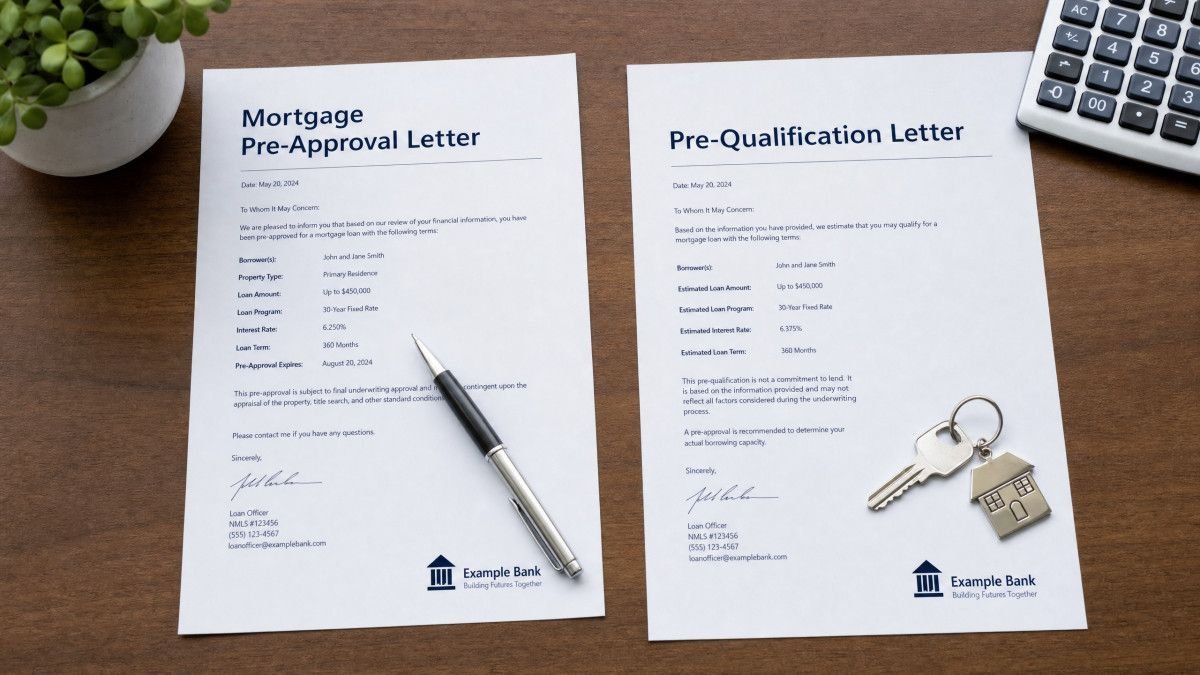

Mortgage pre-approval and pre-qualification are two distinct steps in the home buying process that serve different purposes, explains TrueDoor Property Management specialists. Pre-qualification is an informal estimate of a borrower’s potential loan amount based on self-reported financial information. In contrast, pre-approval is a formal evaluation involving verified financial documents and a hard credit check, resulting in a conditional commitment from a lender.
Knowing the difference between these two steps is essential for homebuyers because sellers and real estate agents view them very differently. While pre-qualification can provide a general idea of borrowing capacity for early budgeting, it does not carry significant weight when making an offer. Pre-approval letters are typically required by sellers to consider an offer seriously, as they demonstrate verified financial readiness.
Both pre-qualification and pre-approval can help buyers understand their financial situation better, but they impact the home buying journey in unique ways. Understanding when and how to use each can improve a buyer’s confidence, streamline the search for a new home, and enhance negotiation leverage. This clarity also helps in managing expectations about loan eligibility and the overall timeline for securing financing.
Definition and Purpose of Pre-Qualification and Pre-Approval
Pre-qualification is an initial step that gives a rough estimate of how much a borrower might qualify for based on information they provide about income, debts, and assets. It involves little to no verification, often relying on a soft credit inquiry or none at all. This makes pre-qualification a quick and simple way to get an idea of potential loan amounts early in the home buying journey.
Pre-approval, by contrast, is a more rigorous process where the lender verifies a borrower’s financial documents and runs a hard credit check. This results in a conditional commitment letter that specifies how much the lender is willing to loan and under what terms. The purpose of pre-approval is to demonstrate to sellers and agents that a buyer is financially qualified to proceed with a home purchase.
While pre-qualification can be useful for setting initial budgets and exploring options, pre-approval serves as a stronger indication of loan eligibility. Sellers typically view pre-approval as a necessary step before accepting an offer, as it reduces uncertainty about the buyer’s ability to secure financing.
In addition to signaling financial readiness, pre-approval can help buyers move faster in a competitive housing market. Having a pre-approval letter can make offers more attractive and credible, potentially giving buyers an edge over others who have not undergone this process. It also helps buyers refine their search by knowing their approved price range with greater certainty.
Process and Timelines for Pre-Qualification and Pre-Approval
The pre-qualification process is relatively quick, typically taking one to three days. It involves providing self-reported financial details such as income, assets, and debts, without submitting formal documentation. Credit checks, if performed, are usually soft inquiries that do not affect credit scores. Because it is informal, there is no lender commitment or guarantee of loan approval.
Pre-approval requires a more detailed submission of verified documents including pay stubs, W-2 forms, tax returns, bank statements, and employment verification. The lender performs a hard credit pull, which can temporarily impact credit scores. This process can take between three and ten business days to complete, depending on document availability and lender workload. The outcome is a conditional loan commitment letter stating the approved loan amount and terms.
Pre-approval letters generally remain valid for 60 to 90 days. If a buyer does not find a home within that timeframe, they may need to update documents and renew the pre-approval. This process reflects the lender’s more thorough evaluation compared to the informal nature of pre-qualification.
During the pre-qualification phase, buyers can quickly assess their potential borrowing power, helping them avoid spending time on homes outside their price range. In contrast, the pre-approval process requires more preparation and documentation but offers a clearer, more reliable estimate of loan amount and terms. Being aware of these timelines allows buyers to plan their house hunting activities more effectively and avoid delays when ready to make an offer.
Documentation and Credit Checks Required
Pre-qualification requires minimal documentation. Often, borrowers only need to provide basic financial information verbally or through an online form. This self-reported data includes estimated income, debts, and assets. Because lenders do not verify these details or obtain official documents, pre-qualification is considered an estimate rather than a firm offer.
Pre-approval demands comprehensive documentation verification. Borrowers must submit a government-issued ID, Social Security number, two years of W-2s and tax returns, most recent 30 days of pay stubs, two to three months of bank and investment account statements, and employment information. Rental history or additional financial details may also be required. The lender uses this information alongside a hard credit inquiry to assess creditworthiness rigorously.
The hard credit check involved in pre-approval evaluates credit scores and history, which can impact a borrower’s credit rating temporarily. This contrasts with the soft credit pull or lack of inquiry in pre-qualification, which leaves credit unaffected.
Providing accurate and complete documentation during pre-approval can speed up the process and reduce the chance of delays later during underwriting. It also helps lenders better assess risks, which can improve loan terms or increase the likelihood of approval. Borrowers should prepare these documents ahead of time to make the pre-approval process smoother and more efficient.

Comparison of Pre-Qualification and Pre-Approval
This table summarizes the key differences between mortgage pre-qualification and pre-approval to clarify their roles and requirements in the home buying process.
| Feature | Pre-Qualification | Pre-Approval |
|---|---|---|
| Purpose | Informal estimate of borrowing capacity | Formal loan approval commitment (conditional) |
| Documentation | Self-reported financial info only | Verified pay stubs, tax returns, bank statements, IDs |
| Credit Check | Soft pull or none | Hard pull |
| Timeframe | 1 to 3 days | 3 to 10 business days |
| Commitment | No lender commitment | Conditional commitment letter issued |
| Usefulness | Budgeting and early planning | Required for serious offers and negotiations |
| Validity | Varies; informal | Typically 60 to 90 days |
Conditional Approval and Final Underwriting
Pre-approval provides a conditional commitment based on verified financial information, but it is not the final step in the mortgage approval process. After the homebuyer’s offer is accepted, the loan application proceeds to underwriting, where the lender examines the specific property details. This includes property appraisal, title search, and additional risk assessments.
The underwriter reviews all financial documents once more and may request further information or clarification from the borrower. This stage determines final loan approval. Because pre-approval does not guarantee loan funding, the conditional nature means that issues found during underwriting or appraisal can affect loan terms or lead to denial.
During underwriting, the lender evaluates the property’s market value to ensure it aligns with the loan amount requested. If the appraisal comes in lower than expected, the buyer may need to renegotiate the price or increase their down payment. Additionally, the title search confirms there are no liens or legal issues affecting ownership transfer, which could impact loan approval.
Buyers should remain responsive to lender requests during underwriting to avoid delays. While pre-approval signals strong financial readiness, the underwriting process ultimately confirms that all conditions are met for loan funding. Being prepared for this stage and understanding its importance can help buyers navigate with confidence.
Frequently Asked Questions
What is the main difference between pre-qualification and pre-approval?
Pre-qualification is an informal estimate based on self-reported financial data without document verification or a hard credit check. Pre-approval involves verified documentation and a hard credit inquiry, resulting in a conditional loan commitment. Pre-approval carries more weight with sellers and is required to make serious offers.
How do hard and soft credit pulls differ in these processes?
Pre-qualification usually involves a soft credit pull or none at all, which does not affect credit scores. Pre-approval requires a hard credit pull that temporarily impacts credit scores because the lender performs a full credit review as part of the verification process.
How long is a pre-approval letter valid?
Pre-approval letters typically remain valid for 60 to 90 days. After this period, updated financial documents and a renewed credit check are usually required to extend or renew the pre-approval.
What documents are needed for mortgage pre-approval?
Commonly required documents include a government-issued ID, Social Security number, two years of W-2s and tax returns, recent pay stubs covering about 30 days, two to three months of bank and investment account statements, employment verification, and sometimes rental history or other financial information.
Is pre-approval a final loan approval?
No, pre-approval is conditional based on verified financial information. Final loan approval depends on underwriting review, property appraisal, and title search. The lender may request additional documentation during underwriting before issuing final approval.
Should I get pre-approved before starting my home search?
Getting pre-approved before searching for a home can save time and reduce uncertainty. It helps you know exactly how much you can afford, making your home search more focused. Pre-approval also strengthens your offers, showing sellers you are prepared to move forward with financing.
Conclusion
Mortgage pre-qualification and pre-approval serve different roles in the home buying process. Pre-qualification is a quick, informal estimate of potential loan amounts based on self-reported financial information and does not require documentation or a hard credit check. It is useful for early budgeting but lacks lender commitment and is generally not sufficient when making an offer on a property.
Pre-approval is a more comprehensive process that involves verified financial documents and a hard credit inquiry, producing a conditional loan commitment letter. This letter signals to sellers that the buyer has been vetted and is financially prepared to proceed. However, pre-approval is not final loan approval; it is contingent on underwriting and property evaluation. Understanding these distinctions helps buyers navigate mortgage steps with clarity and realistic expectations.