
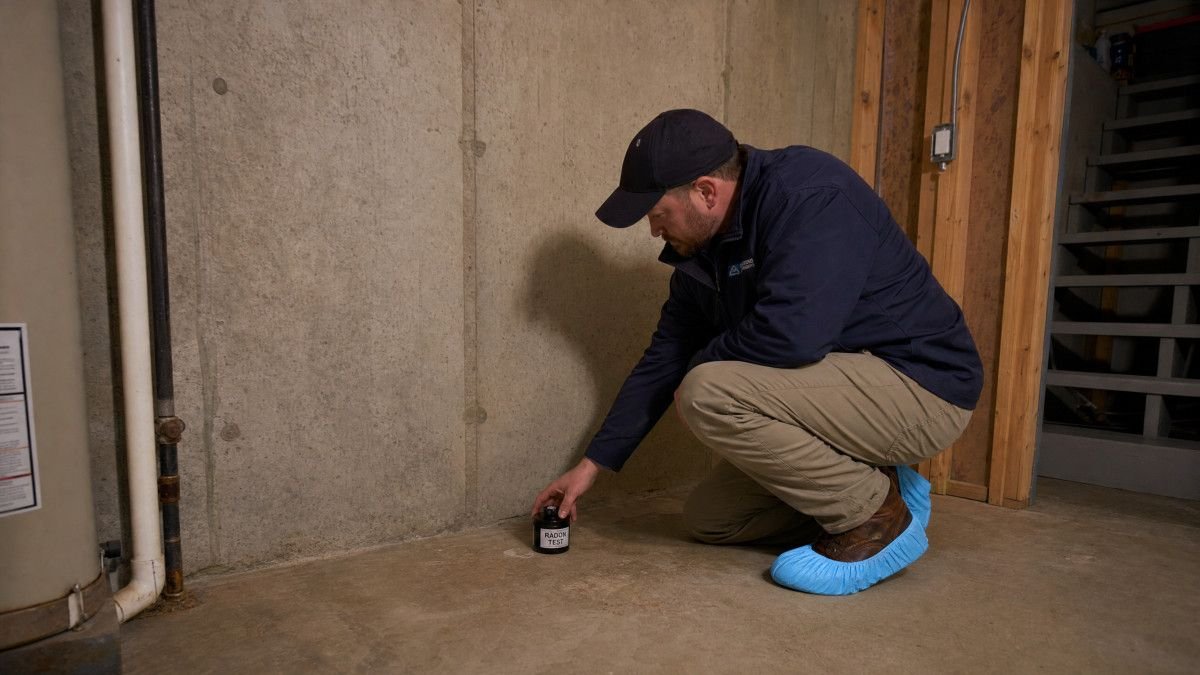

Radon is a naturally occurring radioactive gas that poses a significant health risk, primarily lung cancer, due to its colorless, odorless, and tasteless nature, making testing the only way to detect its presence in homes, warns RentWise Property Company Sterling.
Radon gas originates from the natural radioactive decay of uranium found in nearly all soils. This invisible and undetectable gas can seep into homes through cracks in foundations, walls, and other openings, accumulating to dangerous levels. The U.S. Environmental Protection Agency (EPA) estimates that radon is responsible for about 21,000 lung cancer deaths each year, making it the second leading cause of lung cancer after smoking [1].
The insidious nature of radon lies in its imperceptibility; homeowners cannot see, smell, or taste it. Consequently, without specific testing, individuals remain unaware of their exposure, which can persist for years. This prolonged exposure to elevated radon concentrations significantly increases the risk of developing lung cancer, underscoring the critical need for proactive detection measures in residential properties.
Understanding the pervasive threat of radon is the first step towards safeguarding indoor environments. Educational initiatives often highlight the geological prevalence of uranium and its decay products, emphasizing that any home, regardless of its age or construction, can be susceptible to radon infiltration. This universal susceptibility necessitates widespread awareness and consistent testing protocols to mitigate potential health hazards effectively..
The Silent Threat: What is Radon and Why is it Dangerous?
Radon is a radioactive gas formed from uranium decay in soil, dangerous because it is a leading cause of lung cancer, undetectable by human senses, and can accumulate to hazardous levels indoors.
Radon is a radioactive gas that forms naturally from the breakdown of uranium in rocks and soil. As uranium decays, it produces radium, which then decays into radon gas. This gas can migrate through the ground and enter buildings through various entry points, including cracks in foundations, floor-wall joints, and utility penetrations. Once inside, it can accumulate, especially in lower levels of a home, reaching concentrations that pose a serious health risk [2].
The primary danger of radon stems from its radioactivity. When inhaled, radon and its decay products, known as radon progeny, can damage the cells lining the lungs. This cellular damage can lead to the development of lung cancer over time. The risk is cumulative, meaning that the longer an individual is exposed to high levels of radon, and the higher those levels are, the greater their chance of developing lung cancer. Studies by organizations like the World Health Organization (WHO) consistently highlight radon as a significant environmental health hazard that demands attention [4].
The EPA has established an action level of 4 picocuries per liter (pCi/L) for radon in indoor air, recommending mitigation for homes with levels at or above this concentration. However, it is important to note that there is no known safe level of radon exposure; any exposure carries some degree of risk. This emphasizes the importance of keeping radon levels as low as reasonably achievable within residential settings to protect public health.
Common Entry Points and Accumulation in Homes
Radon enters homes primarily through openings in the foundation, such as cracks, floor-wall joints, and utility openings, driven by pressure differences that draw soil gases indoors.
Radon gas tends to accumulate in the lowest parts of a building, such as basements and crawl spaces. It enters through a variety of pathways that compromise the integrity of the building envelope. These include structural cracks in concrete slabs, gaps around service pipes, sump pump openings, and even through pores in concrete blocks. The pervasive nature of these entry points means that almost any home can be vulnerable to radon infiltration, regardless of its construction type or age.
The primary mechanism for radon entry is often a phenomenon known as the “stack effect.” This occurs when warmer indoor air rises and escapes through upper windows and vents, creating a slight vacuum in the lower parts of the house. This negative pressure differential actively draws soil gases, including radon, from the ground into the home. Factors such as weather conditions, ventilation systems, and household activities can influence the magnitude of this pressure difference and, consequently, the rate of radon entry.
Furthermore, radon can also be present in well water, particularly in areas with high uranium content in the bedrock. When this water is used for showering, washing dishes, or other household activities, radon gas can be released into the indoor air. While waterborne radon is generally a smaller contributor to overall indoor radon levels compared to soil gas, it can still be a significant source in certain regions and warrants consideration during comprehensive radon assessments.
Effective Methods for Radon Testing
Effective radon testing involves both short-term and long-term devices, with long-term tests providing a more accurate annual average of radon levels for informed mitigation decisions.
There are two main categories of radon testing devices: short-term and long-term. Short-term tests are designed to provide quick results, typically over a period of 2 to 90 days. Common short-term devices include charcoal canisters, alpha track detectors, electret ion chambers, and continuous radon monitors. These tests are useful for initial screening or when a rapid assessment is needed, such as during a real estate transaction. However, due to daily and seasonal fluctuations in radon levels, short-term tests may not always reflect the annual average accurately.
Long-term tests, on the other hand, are deployed for periods exceeding 90 days, often for several months up to a year. Alpha track detectors and electret ion chambers are also available in long-term versions. These tests provide a more representative average of a home’s radon concentration, making them ideal for determining the need for mitigation. The EPA recommends conducting a long-term test if a short-term test result is between 4 and 10 pCi/L, to confirm the need for mitigation with greater certainty [3].
Regardless of the type of test chosen, proper placement and adherence to manufacturer instructions are crucial for obtaining accurate results. Tests should be placed in the lowest lived-in area of the home, away from drafts, heat sources, and high humidity. It is also important to keep windows and doors closed as much as possible during short-term testing to ensure representative indoor radon levels. Professional radon testing services are also available, offering expertise in device placement, data interpretation, and mitigation recommendations.
Interpreting Results and Mitigation Strategies
Radon test results above the EPA’s action level of 4 pCi/L necessitate mitigation, with common strategies including sub-slab depressurization and sealing entry points to reduce indoor radon concentrations.
Once radon test results are obtained, interpreting them correctly is paramount. The EPA recommends taking action to reduce radon levels if the result is 4 pCi/L or higher. While this is the established action level, it is important to remember that there is no completely safe level of radon. Therefore, even if levels are below 4 pCi/L, homeowners may consider mitigation to further reduce their exposure, especially if levels are consistently between 2 and 4 pCi/L [4].
The most common and effective method for reducing high radon levels is a system called sub-slab depressurization, also known as active soil depressurization. This involves installing a vent pipe through the foundation floor and connecting it to a fan that draws radon gas from beneath the house and vents it safely outside, above the roofline. This creates a negative pressure field beneath the slab, preventing radon from entering the living space. Other mitigation techniques include sealing cracks and other openings in the foundation, and improving home ventilation.
Choosing the appropriate mitigation strategy often depends on the home’s construction, radon levels, and budget. It is highly recommended to consult with a qualified radon mitigation professional to design and install a system tailored to specific needs. These professionals are trained to assess the unique characteristics of a home and implement the most effective and durable solutions, ensuring long-term protection against radon exposure. Regular retesting after mitigation is also advised to confirm the system’s effectiveness.
Preventative Measures and Long-Term Protection
Preventative measures for radon include sealing foundation cracks and ensuring proper ventilation, while long-term protection involves regular testing and maintaining mitigation systems to sustain low radon levels.
Beyond immediate mitigation, several preventative measures can be incorporated during new construction or home renovations to minimize future radon infiltration. These include installing a gas-permeable layer beneath the foundation slab, such as a layer of gravel or a drainage mat, coupled with a vapor barrier. Passive radon systems, which incorporate a vent pipe without a fan, can also be installed during construction, providing a pathway for radon to escape naturally. These systems can be easily upgraded to active systems with the addition of a fan if future testing reveals elevated radon levels.
For existing homes, maintaining good indoor air quality through adequate ventilation can help reduce radon concentrations, although it is not a substitute for active mitigation if levels are high. Sealing visible cracks and openings in the foundation, while not a standalone solution, can complement mitigation efforts by reducing the pathways for radon entry. These efforts contribute to a holistic approach to managing indoor air quality and minimizing exposure to environmental hazards.
Long-term protection against radon requires ongoing vigilance. Even after a mitigation system is installed, it is crucial to retest for radon every two years, or after any significant structural changes to the home. This ensures that the system remains effective and that radon levels continue to be within acceptable limits. Homeowners should also regularly check their mitigation system’s fan to ensure it is operating correctly.
Frequently Asked Questions
Here are some common questions regarding radon and its testing.
What is radon and why is it dangerous?
Radon is a naturally occurring radioactive gas that is colorless, odorless, and tasteless. It originates from the radioactive decay of uranium in soil, rock, and water, and can seep into homes through cracks in foundations, walls, and other openings. Prolonged exposure to elevated levels of radon is the second leading cause of lung cancer after smoking, posing a significant health risk to occupants.
How does radon enter a home?
Radon typically enters homes from the soil beneath the foundation. It can infiltrate through various pathways, including cracks in concrete slabs, floor-wall joints, loose-fitting pipes, sump pump openings, and even through water supplies. The pressure difference between the indoor and outdoor air often draws radon gas into the lower levels of a building.
What are the common methods for radon testing?
Common radon testing methods include short-term and long-term tests. Short-term tests, such as charcoal canisters or alpha track detectors, provide quick results over a few days to a week. Long-term tests, typically lasting 90 days or more, offer a more accurate annual average of radon levels. Both types of tests are readily available for homeowners to deploy.
What should I do if my home has high radon levels?
If radon levels in a home are found to be elevated (typically above 4 picocuries per liter, or pCi/L, as recommended by the EPA), mitigation is necessary. Common mitigation techniques include sub-slab depressurization, which involves installing a vent pipe and fan to draw radon from beneath the house and vent it outside. Sealing cracks and openings in the foundation can also help reduce radon entry.
Are there specific regions more prone to high radon levels?
Yes, radon levels can vary significantly by geographic region, primarily due to differences in underlying geology and soil composition. Areas with higher concentrations of uranium in the bedrock are more likely to have elevated radon levels. Geological surveys and state health departments often provide maps or data indicating regions with higher radon potential. However, it is crucial to remember that high radon levels can be found in any home, regardless of its location, making testing universally important.
How often should I test my home for radon?
The EPA recommends testing your home for radon every two years, especially if you have a mitigation system in place, or if there have been significant renovations or changes to the home’s structure. If initial tests show low levels, retesting periodically ensures that conditions haven’t changed, as radon levels can fluctuate over time due to various environmental factors.
Comparative Analysis of Radon Testing Methods
| Testing Method | Duration | Accuracy | Cost (Approx.) | Pros | Cons |
|---|---|---|---|---|---|
| Short-Term (Charcoal Canister) | 2-7 days | Good for initial screening | $10-$30 | Quick results, inexpensive, DIY friendly | Less representative of annual average, susceptible to environmental changes |
| Short-Term (Alpha Track) | 3-90 days | Good for initial screening | $20-$50 | Less sensitive to humidity, DIY friendly | Requires laboratory analysis, results take longer than charcoal, still short-term |
| Long-Term (Alpha Track) | 90+ days | Highly accurate annual average | $30-$60 | Most accurate for mitigation decisions, accounts for seasonal variations | Results take a long time, requires consistent placement, not suitable for quick assessments |
| Continuous Radon Monitor | 48+ hours | Real-time data, good for diagnostics | $150-$1000 (rental/purchase) | Instantaneous readings, hourly data, tamper-resistant | More expensive, requires power source, professional calibration often needed |
In conclusion, understanding the importance of radon testing is not merely a recommendation but a critical component of home safety and public health. Given radon’s invisible and insidious nature, regular testing remains the only reliable method to detect its presence and assess potential risks. By taking proactive steps to test for radon and implement appropriate mitigation strategies when necessary, homeowners can significantly reduce their exposure to this hazardous gas, thereby safeguarding the long-term health and well-being of their families. The collective effort in raising awareness and promoting testing can lead to healthier indoor environments for communities worldwide.
References
[1] U.S. Environmental Protection Agency. (2024). Radon Health Risks. https://www.epa.gov/radon/health-risks-radon
[2] National Cancer Institute. (2023). Radon and Cancer. https://www.cancer.gov/about-cancer/causes-prevention/risk/radon
[3] U.S. Environmental Protection Agency. (2024). Radon Testing and Mitigation. https://www.epa.gov/radon/radon-testing-and-mitigation
[4] World Health Organization. (2009). WHO Handbook on Indoor Radon: A Public Health Perspective. https://www.who.int/publications/i/item/9789241547673