
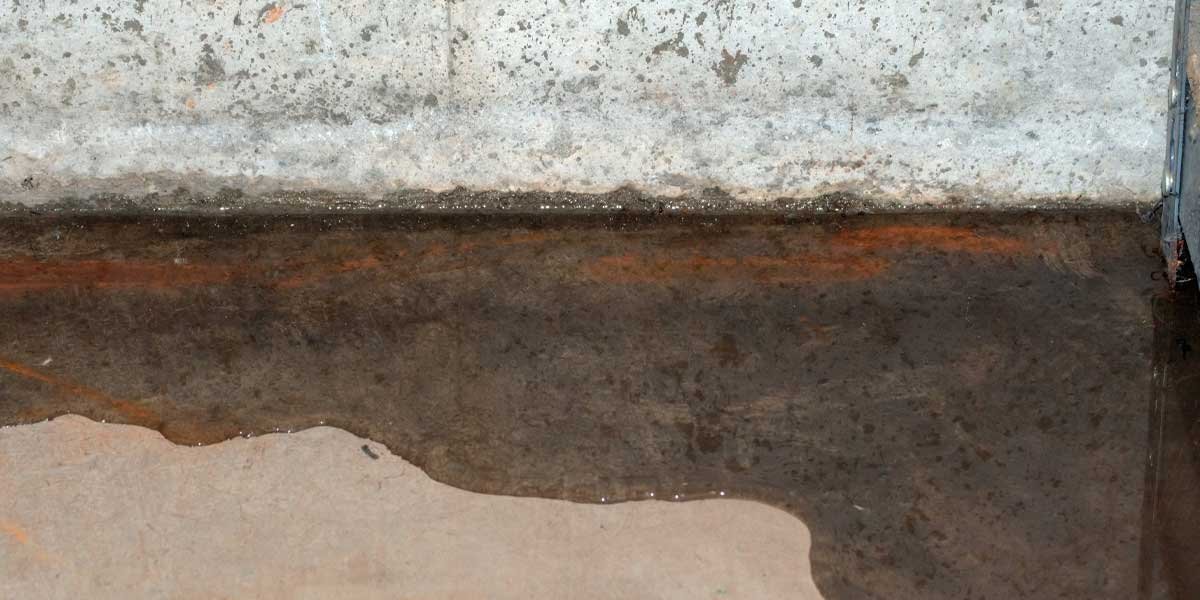

It happens on the same kind of night every time: the rain turns heavy around ten, and by eleven there is a dark stripe creeping along the base of the basement wall. Basement leaking water when it rains is rarely the wall giving out. It is the ground around it filling up. Sound familiar?
That difference decides the whole repair. A wall that leaks because it cracked gets patched. A wall that leaks because the soil behind it has turned into a full sponge needs the water sent somewhere else, and no amount of sealant changes that.
The order below is the one that saves money. Understand the pressure, find the entry point, price the fix, sort out who pays, and only then spend a weekend or a dollar.
Why Rain Is the Trigger, Not the Cause
Basement leaking water when it rains comes down to the soil around the foundation becoming saturated, the water table rising, and hydrostatic pressure pushing that water toward the house. The leak shows up only in storms because only then is there enough pressure to force water through concrete, mortar joints, and hairline cracks that stay dry the rest of the year.
Dry soil has room in it. Rain fills the gaps between soil particles until the ground can hold no more, and the water table, the upper surface of that saturated ground, climbs toward the footing.
Hydrostatic pressure refers to the force water exerts against a surface once it has nowhere else to go. It grows with depth and with the amount of water stacked up behind the wall, which is why a joint that weeps in a drizzle can pour in a downpour.
Roof runoff loads that system far faster than most people expect. The National Weather Service puts an inch of rain on a 1,000-square-foot roof at roughly 623 gallons, and every one of those gallons lands beside the foundation unless a gutter and a downspout carry it away first.
Look at the base of the wall the morning after a storm and you will often see the proof: a wet line at the cove joint, a faint smell of wet concrete, and a floor that feels cold and clammy underfoot. None of that is the wall failing. It is pressure finding the path of least resistance.
The wall is not the villain. A foundation that has held for forty years can start leaking on an ordinary Tuesday because the ground behind it finally filled up.
Find the Entry Point Before You Fix Anything
The repair depends entirely on where the water gets in, so the first job is to catch it in the act. Watch during the storm, note the exact spot, and match it to one of the five entry points below. Guessing at the entry point is the most expensive habit in basement repair, because the wrong fix never stays fixed.
Most rain leaks appear in one of five places. Where the water shows up tells you what to fix.
- The cove joint. This is the seam where the basement wall meets the floor. It is the most common entry point because it is a natural gap, and the wall and the slab are built separately.
- Wall cracks. Vertical, horizontal, and stair-step cracks behave differently. A stair-step crack in block or brick usually points to movement, while a straight shrinkage crack points to the concrete itself.
- Floor cracks, and the floor itself. Water welling up through intact slab, not just a crack, means the water table has reached your floor level. That is a pressure problem, not a sealing problem.
- Window wells and basement windows. A well fills faster than it drains, and a seal that has aged around the frame lets that water in.
- The floor drain. If water rises from a drain instead of seeping through a wall, you have a sewer or storm-line backup on your hands, and the fix is a different trade.
Before you spend a dollar, rule out the thing that only looks like a leak. Condensation forms when warm, humid air meets a cool basement surface, and on a July afternoon it can mimic seepage almost perfectly.
Run the foil test. Tape a square of aluminum foil to the damp wall, seal the edges, and leave it for 24 hours. Moisture on the outside face of the foil is condensation in the air. Moisture trapped behind the foil came through the wall, and that is a true leak.
Then time it. Water that appears within an hour of heavy rain is usually surface water running down the outside of the wall. Water that shows up hours later, or the next morning, is groundwater arriving under sustained pressure.
Slow Seepage vs. a Gushing Crack
These two look alike on a bad night and demand opposite fixes. Slow seepage along the cove joint is a pressure problem, and the answer is drainage: a system that collects the water and moves it away before it pushes through.
A single gushing crack is its own plumbing problem. The fix is to inject the crack with polyurethane or epoxy to seal it, then relieve the pressure behind the wall so water does not simply hunt for the next weak spot.
Sealing a seepage joint without relieving the pressure is the most common wasted repair in the business. The water does not stop. It relocates. Matching the symptom to the right repair matters more than the sealant on the shelf, and the right repair for each entry point is a different job for each one.
Mark the water line with chalk after the first storm and watch where it climbs over the next few days. Two inches by Thursday. A single dry line tells you more than a whole inspection report.
What Each Fix Actually Costs
Fixing basement leaking water when it rains runs from about fifteen dollars in materials to more than twenty thousand for full exterior work, and the price tracks how much water has to be managed, not how big the crack looks. The table below lists each fix, who does it, and the range you should expect to be quoted in 2026.
| Fix | DIY or pro | Typical 2026 range |
|---|---|---|
| Hydraulic cement or masonry patch on a small crack | DIY | $15 to $60 in materials |
| Downspout extensions and re-grading the yard | Mostly DIY | $50 to $2,000 |
| Epoxy or polyurethane crack injection | Pro | $250 to $800 per crack |
| Sealing a sump pit and installing a liner | Pro | $300 to $900 |
| Sump pump replacement, installed | Pro | $400 to $1,500 |
| Interior drain tile and a new sump system | Pro | $2,000 to $8,000 |
| Exterior waterproofing with excavation | Pro | $8,000 to $20,000+ |
The pattern is not random. The cheap fixes manage water above the floor. The expensive ones manage the soil around the foundation, and that is where the water actually comes from.
A homeowner’s instinct is to seal the crack they can see, because it is visible, cheap, and satisfying to cross off the list. It fails for a reason that has nothing to do with the patching job: the pressure that opened the crack is still there, and it will open another one.
Interior drainage is the middle road that most houses end up taking. It is far cheaper than digging out the foundation from the outside, and what an interior french drain costs buys a system that keeps working in the next storm instead of waiting for it.
Who Pays: Insurance vs. Your Wallet
A standard homeowners policy usually does not cover a basement leaking water when it rains, because surface water and groundwater fall under a flood exclusion. Sump-pump overflow and sewer backup sit behind a separate endorsement. Plan on paying for rain-driven seepage yourself unless you have added flood or water-backup coverage.
Per the National Flood Insurance Program, water that enters from the ground or the surface is treated as a flood, not as a plumbing accident, and standard policies exclude it. That is why a homeowner can have full coverage, a soaked basement, and a claim that gets denied the same week.
The Insurance Information Institute makes the split plain: backup of water or sewage through a sump, drain, or sewer is excluded unless a specific endorsement was bought, and that endorsement costs a fraction of what a wet basement costs to fix.
Read the denial fast and read it twice. The sentence that matters is almost always short, and it almost always contains the words surface water.
Storm-Sewer Backup: The One Case With a Cheap Guard
Water that rises out of a floor drain during a storm is not a foundation leak at all, and it is the one case where a small device does most of the work.
A backflow preventer is a one-way valve that lets waste leave the house but stops it from coming back in through the same pipe. It costs a few hundred dollars installed, and it is the cheapest way to keep a storm sewer from turning your floor drain into a fountain.
Pair it with a sump pump that has a battery backup, because the storm that floods the city sewer is the same storm that knocks out your power. A battery backup keeps the pump running through the outage that matters most.
Stop It Before the Next Storm
You cannot stop the rain, but you can decide where it goes, and most of that work is cheap and mechanical. Clear the gutters, move the downspouts at least six feet from the wall, and make sure the ground falls away from the house. Those three moves prevent more rain leaks than any sealer you can buy.
Work outside first, because surface water is the easiest source to remove. Check the gutters and run a hose through the downspouts before the season turns, and confirm the discharges run well clear of the foundation rather than dumping water against it.
- Clean the gutters and downspouts, then extend every discharge at least six feet from the wall.
- Re-grade the soil so it falls away from the house. The International Residential Code calls for six inches of fall within the first ten feet, and that slope is the goal to match.
- Keep irrigation heads and any planted beds from piling water against the foundation.
- Test the sump pump twice a year, and let it run long enough to trigger the float.
- Install a floor water alarm near the drain and the pit so the next leak announces itself.
A builder’s grader puts it in one line: soil should touch the house high and leave it low, so every drop runs the other way. It is the quietest drainage fix there is, and the one that lasts without moving parts.
Where a downspout cannot simply be extended, running it underground to a pop-up emitter keeps the water away and keeps the yard tidy, which is why downspouts that drain underground are worth the extra weekend.
What Happens If You Wait
A leak that runs only during storms looks harmless the other three hundred days of the year, and that is exactly why it gets ignored. The damage does not wait for a flood. Mold can start within 24 to 48 hours of a wetting, per EPA guidance, and each storm adds a fresh layer of moisture to work with.
Mold is the first arrival, but it is not the worst one. Rot takes hold in wood framing and support beams, appliances and water heaters rust from the bottom, and a musty smell settles into anything porous that stays damp.
A damp basement also loses value quietly. Finished space becomes space you avoid, and a buyer’s inspector will find the same water line you stopped noticing months ago.
By week two the smell has a name of its own: damp plaster, old cardboard, and something faintly like a wet basement. It is the smell of a problem that has moved from the wall into the air.
Frequently Asked Questions
Why does my basement only leak when it rains?
Rain saturates the soil around the foundation and raises the water table, which builds hydrostatic pressure against the walls and floor. In dry weather there is not enough pressure to force water through cracks and joints, so the same vulnerability stays silent until the next storm.
How do I find where the water is getting in?
Watch during the storm and note the exact spot. Water at the base of the wall points to the cove joint, cracks point to the walls or floor, and water rising from a drain points to a sewer backup. Use the foil test to separate a real leak from condensation.
How much does it cost to fix a basement leak?
It ranges from about $15 in materials for a small masonry patch to $8,000 or more for exterior excavation. Crack injection and interior drain tile fall in the middle, and the price tracks how much water has to be managed rather than the size of the visible crack.
Does insurance cover a basement that leaks when it rains?
Usually not. Standard homeowners policies treat surface water and groundwater as a flood and exclude it, and sump or sewer backup needs a separate endorsement. Without flood coverage or a backup rider, the repair is typically out of pocket.
Can I fix a basement leak myself?
Fixing basement leaking water when it rains splits into two jobs. You can handle the surface-water side yourself by clearing the gutters, extending the downspouts, and re-grading the soil. Pressure-driven leaks at the cove joint or through a slab call for interior drainage and a sump pump, which are pro jobs.
Where the Water Actually Goes
A basement that keeps taking on water is not failing. It is doing its best with a bad setup, and fixing basement leaking water when it rains is a question of routing, not luck. The water is there whether you seal the crack or not, and the only real decision is whether it ends up on your floor or in a pipe that carries it out.
That is the whole game. You do not beat the rain. You decide the path the water takes, and a planned path beats a lucky one every season.
The fix that lasts is the one that gives the water a route of its own, so the next heavy night it never has a reason to look for one through your wall.