
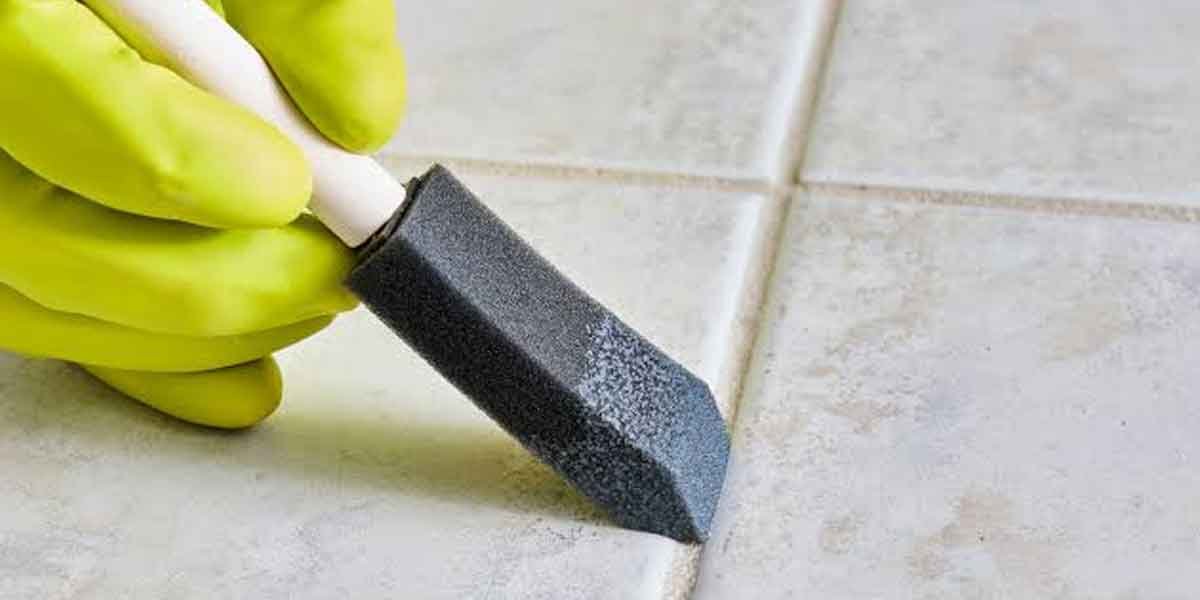

Grout sealer for shower tile is optional and still worth applying. No code demands it, and no grout maker will tell you the joint fails without it, which is why the two hours it takes are the cheapest work you will ever put into a tiled shower.
What it is not is a waterproofing layer. That distinction carries real money in the one room built to get soaked daily and drain on purpose, because the part deciding whether water stays in the assembly or finds your framing is buried under the tile.
The sealer slows what the joint absorbs: soap, minerals, shampoo dye, the iron in well water. That is a maintenance gain, a good one, and smaller than the promise on the bottle.
What Grout Sealer Actually Blocks in a Shower
It blocks absorption into the joint. It does not block the movement of water through the shower, and that gap between the two jobs explains most of the disappointment people report after sealing.
Cement grout is porous by definition, and its pores are wide enough to hold soil and water while being far too wide to stop liquid from passing. The industry standard behind the word “porous” sets a number. ANSI A118.6 covers standard cementitious grout, and Section 4.4 of that standard permits up to 18 percent water absorption in unsanded grout. Custom Building Products publishes 15 percent as the typical measured result for its White Dry Non-Sanded Grout on the product data sheet. The joint is not a sponge as a figure of speech. It is a sponge in test data.
Penetrating sealers work inside those pores. MAPEI, which formulates both the grout and the sealer, calls that type the most commonly used and the one that protects the joint without altering how it looks. The same technical team also draws the ceiling clearly: “sealing does not make grout stain or waterproof” (MAPEI Tech Talk).
Read that as the outer edge of the product. A sealer buys a slower stain and an easier scrub. Getting water out of the shower belongs to the membrane under the tile and to the order in which the layers shed, so a shower that still passes water after a fresh coat needs work in the assembly, not a second bottle. Our walk-in shower waterproofing checklist covers that layer order.
The joint material itself sets how much of this matters.
| Joint material | Standard it meets | Water absorption | Sealer worth applying? |
|---|---|---|---|
| Standard cementitious grout, sanded or unsanded | ANSI A118.6 | Up to 18 percent allowed in unsanded; 15 percent typical | Yes, in a shower |
| 100 percent solids epoxy grout | ANSI A118.3 | Negligible | No, the joint is nearly stain proof |
| Epoxy emulsion grout | ANSI A118.8 | Absorbs liquid and stain | Yes, it behaves like cement grout |
The third row catches people who bought “epoxy” expecting the properties of the second. The Tile Council of North America separates the two plainly: epoxy grout meeting ANSI A118.3 is “extremely hard, durable, and nearly stain proof,” while epoxy emulsion grout (ANSI A118.8) is “not stain proof” and will “generally absorb liquids and stains.” A label reading epoxy does not settle which one sits in your joints. The standard number does.
When Sealing Is the Wrong Move
Three situations leave sealer pointless or actively unhelpful: grout that has not cured, joints that are already cracked, hollow, or missing, and a joint material that cannot absorb anything in the first place.
Cement grout needs 48 to 72 hours before a sealer goes on, and longer in a steamy bathroom with little air movement. Seal that joint early and the water still trying to leave it gets trapped under the film, which is how pale haze and streaky color show up a few days after a job that looked perfect.
A cracked or crumbling joint is repair work before it is sealing work. Sealer over a break does nothing for the break and conceals it for a season, which is the worst outcome available: you lose the warning without gaining the fix.
Then there is the joint needing no help at all. A shower grouted with 100 percent solids epoxy takes a sealer in no useful way, and the same Tile Council page prices that grout at three to eight times a cementitious one. That price gap is why most showers in service still have cement joints, and why the question of sealing keeps coming back for them.
Penetrating or Film-Forming: Which One Belongs in a Shower
Penetrating, also sold as impregnating. These soak into the pore structure, leave the joint able to release moisture, and in an uncolored version leave the joint looking exactly as it looked.
Film-forming sealers sit on top of the joint and can add gloss or shift the color. In a shower they wear wherever the water and the brush land hardest, so they come up for reapplication sooner than most owners expect. When faded joints are the complaint and the grout is structurally sound, a colored penetrating sealer gives the cosmetic reset without a film to peel.
Solvent-based formulas penetrate deeper, water-based ones are easier to use in a closed bathroom, and both work when the label is followed. Treat the instruction sheet as the authority here. Reapplication timing and cure windows come from the specific product, not from a general habit.
The Order That Gets a Shower Joint Sealed Right
Clean, dry, seal, wipe, wait, test. The sequence is trivial. The two waits are where first attempts fall down.
- Scrub the joint with a pH-neutral cleaner and a stiff brush, then rinse. Leave bleach out of it; aggressive cleaners shorten the sealer’s life and can pull color out of the joint.
- Let the grout dry 24 to 48 hours with the fan running and the door open. Humid weather and a windowless bathroom both stretch that number.
- Work in short runs of a few feet, loading a narrow applicator or foam brush and pushing the sealer into the joint instead of dragging it over the tile faces.
- Let it absorb for the dwell time on the label, then wipe the residue off the tile with a dry cloth before it dries in place.
- Keep the shower dry for 24 hours so the sealer can cure.
- Test a joint with a few drops of water. Beads that stand up mean the job held; water that sinks in means a second coat or a longer wait.
My own first attempt failed in the most ordinary way. I grouted on a Saturday, felt the joints hard on Sunday morning, and sealed them before lunch. Hard is not dry. By the middle of that week two corner runs had gone pale and streaky, and the repair was a full scrub with a neutral cleaner, a weekend of drying, and a second start. The shortest wait a grout maker will sign off on is 48 hours for a reason.
How Often Does a Shower Joint Need Resealing?
There is no code or standard interval. Judge it from the water test, because a calendar cannot see how much soap and hard water your shower pushes into those joints each week.
The test takes ten seconds. Put a few drops on the joint and watch: beads resting on the grout mean the sealer is still doing its job, while water that darkens the joint has found the pores again. Reseal from that reading, not from the turn of the year.
You will run into “every one to three years” and “every two years, per the Tile Council” repeated widely, sometimes with the Council named as the source. The Council’s public FAQ index lists no sealing interval, and its grout guidance routes the schedule back to the grout and sealer manufacturers. The intervals circulating online are habits, useful as a reminder to test, useless as a deadline.
Two things shorten the working life of a penetrating sealer in a shower: hard water, and the cleaner you reach for. A pH-neutral product leaves the sealer alone. Bleach and aggressive acids break it down and can leave the joint discolored, which is the opposite of the result you paid for.
Tilers argue about whether the job is needed at all, and the split is worth reading because it shows where the myth lives. One answer on a tiling forum, from a trade discussion, puts the common case:
“You shouldn’t need to as most modern grouts are water and frost resistant and they a contain a subtstnace called microban which limits the growth of bacteria and mould. You should leave the grout for three to five days to make sure that it is absolutely set right through the joints and not just on the surface before using the shower.”
The second half of that answer is sound practice, and the first half is the part to argue with. Modern cement grout survives daily showering, which is not the same as keeping water out: it still carries a permitted absorption rate of up to 18 percent. “Water resistant” and “waterproof” describe two different joints, and the difference is the whole reason a sealer earns its place in a wet room.
Keep the order straight and the rest follows. The sealer buys the joint months of easy cleaning, and the layer under the tile is the one that has to hold.
Grout Sealer for Shower FAQ
What happens if you do not seal shower grout?
The joint absorbs soap, minerals, and dye, so it stains faster and resists cleaning. Nothing structural fails on its own, and the real damage starts when cracked or missing grout lets water reach the layers under the tile.
Is a grout sealer for shower tile worth it?
Yes, for a cement-based joint in a room that gets soaked daily. It cannot stop a leak, but it keeps the joint cleanable and postpones the regrouting a stained and worn joint eventually demands.
What are the disadvantages of sealing grout?
Sealer is a consumable that has to be reapplied, and applying it over grout that is still damp traps moisture and leaves haze. A film-forming product can also wear unevenly and change the look of the joint.
Why do builders not seal grout?
Because sealing is maintenance and not construction. A builder’s scope ends with a grouted, cured shower, and the trade treats sealing as an owner task with no inspection behind it, so it quietly falls out of the handover.