
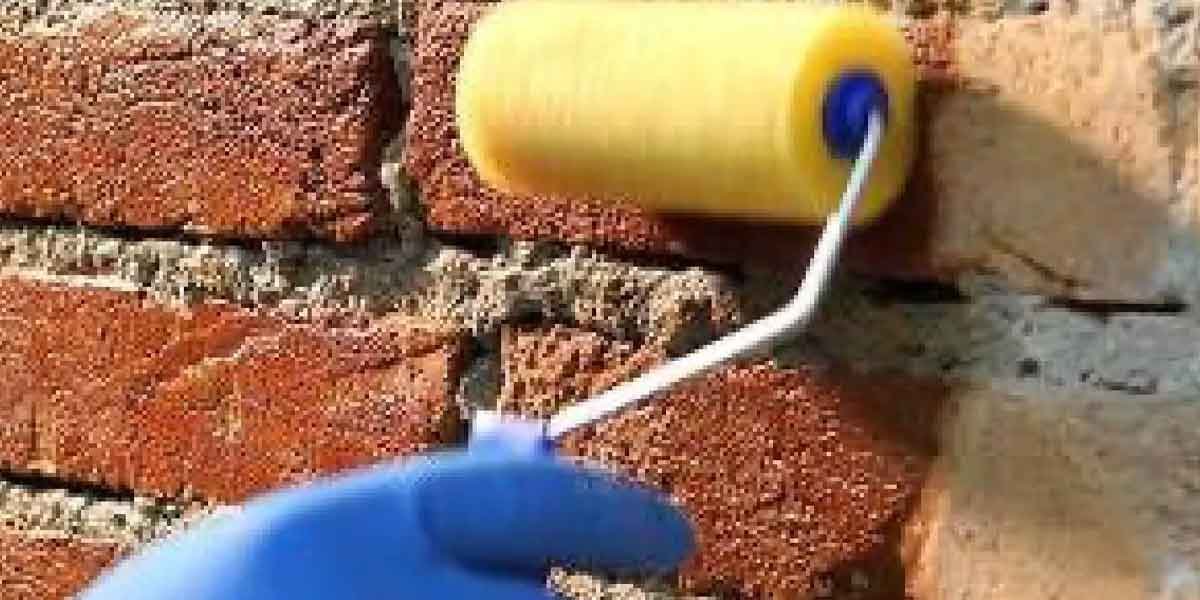

Pressure decides which masonry waterproof coating you need. A foundation wall holding back saturated soil is a different problem from a rain-soaked brick facade, and the products sold for the two are not interchangeable. Masonry waterproofing paint is one label over two mechanisms, and choosing across that line shows up later as blisters, peeling, or a white salt bloom that keeps coming back.
Labels rarely sort this out. Two buckets in the same aisle can carry almost the same name while one is a semi-impermeable film and the other is a breathable sealer that refuses paint on top. Masonry waterproofing paint only works when the type matches the side of the masonry that faces water.
Two Families of Coatings Sold Under One Name
Film-forming waterproofers seal the surface with a continuous layer; penetrating sealers line the pores and leave vapor paths open. That difference decides where each product is permitted to go, and the phrase masonry waterproofing paint covers both without distinguishing them.
DRYLOK Extreme Concrete & Masonry Waterproofer, a latex product from UGL, is built for walls that face water from outside. It is rated to hold back water up to 15 psi, carries a semi-impermeable rating below 1 perm, and is allowed on interior, exterior, above-grade, and below-grade concrete or block. Two coats are mandatory, and the warranty depends on them. UGL’s product page lists the full specification.
The same brand’s Siloxane 7 Brick & Masonry Penetrating Sealer works the other way. It is a single-coat clear treatment for exterior above-grade brick and masonry, covers about 210 square feet per gallon, and dries in 30 minutes. Paint and other coatings will not adhere over it, so the appearance you cover is the appearance you keep.
The two descriptions set the buying rule. Where water stands against the masonry and pushes inward, you need the film and the pressure rating behind it. Where rain needs to shed while brick keeps releasing vapor, you need the sealer.
The Pressure Rating Comes Before the Price
Hydrostatic pressure is the number that separates waterproofing grades, and it grows with how deep saturated soil sits against the masonry. UGL publishes a rating on each of its waterproofers, so the ladder is public.
10 psi and 15 psi
DRYLOK Original Latex Masonry Waterproofer is rated to stop water up to 10 psi and carries a 10-year limited warranty. DRYLOK Extreme, the higher tier from the same maker, is rated to 15 psi with a 15-year warranty and resists a Category 4 hurricane wind rating of 140 mph and up.
Those are pressure ratings rather than depth limits, and the conversion explains the spread between the tiers. One psi equals roughly 2.31 feet of water column, so 10 psi corresponds to about 23 feet of standing water and 15 psi to about 35 feet. A basement wall under eight feet of saturated soil asks a small fraction of the lower figure.
The higher tier exists for drainage failures during wet seasons.
What the warranty actually requires
Both tiers share the same application terms, and both are voided by skipping a step. UGL requires a minimum of two coats, then a careful inspection of the entire surface for pinholes, with extra coating on any that appear. The Extreme product dries in 45 minutes to the touch with a two-hour recoat window, which fits one long Saturday on a typical basement wall.
Coverage runs 75 to 100 square feet per gallon on both tiers. Air and surface temperatures must be 50°F or higher, and the masonry needs to be clean and free of grease, oil, and form-release compound. Extreme tolerates a slightly damp surface, and UGL still calls dry conditions best.
Below-grade and above-grade need opposite products
A block or concrete wall with a damp, weeping, or efflorescence-marked face has a primer made for exactly that condition: DRYLOK Wet Wall Bonding Primer, one coat at 100 to 200 square feet per gallon, dry in about an hour. Applied to a bare surface under the waterproofer, it keeps the warranty intact. Where a wall leaks continuously rather than seasonally, UGL’s instructions begin with drilling drainage holes at the base and waiting for the seepage to stop.
Turn to an exterior brick wall and the technical literature changes direction. The Brick Industry Association’s Technical Note 6, Painting Brick Masonry, states that coatings for exterior masonry should be porous, so the masonry can breathe and free moisture is not trapped behind the film. Trapped moisture feeds efflorescence and freeze-thaw spalling. A negative-side foundation wall and a sun-facing brick facade therefore want opposite coatings, even when both buckets read masonry.
For a cellar or basement interior where the goal is a dry room rather than a repainted facade, the product comparison for that surface is covered in this site’s guide to waterproof paint for cellar walls.
Coverage Math Before Bucket Size
Material cost follows coverage, and coverage follows porosity. UGL’s published figure of 75 to 100 square feet per gallon applies to both waterproofer tiers, and the two-coat minimum is part of the warranty terms.
Take an 8-foot-high basement wall 40 feet long: 320 square feet. At the published coverage that lands between 3 and 4 gallons, and old block or porous brick pushes the total toward the high end. At the $54.83 Walmart listed for a gallon of DRYLOK masonry waterproofer, the material line comes to roughly $165 to $220 for that wall. A 3-gallon pail of Zinsser WaterTite LX at Menards was $119.99, with the 5-gallon pail at $184.00, which works out near $37 to $40 per gallon.
Wall area is the easy part. What wrecks a budget is the second purchase, made after the first coat fails because the surface was wet, chalky, or never etched.
Where Masonry Waterproofing Paint Stops Working
A coating handles a damp or weeping surface. It does not close a path that carries water into the masonry, and three conditions sit on the wrong side of that line.
Mortar joints in brick foundations
U.S. Waterproofing, a Chicago-area contractor that has worked on brick foundations since 1957, describes the mortar joint as the most common source of seepage in a brick foundation. Its guidance notes that these joints cannot be injected with expanding polyurethane the way a crack in a poured concrete wall can. What holds is exterior excavation to the footing, a parge coat over the cleaned masonry, and a troweled asphalt-modified polyurethane membrane, plus drain tile where groundwater runs high. A coating on the inside face slows the symptom without closing the path.
Active seepage
UGL addresses this case in its primer instructions: where leakage is continual rather than seasonal, drill drainage holes at the base and wait for the flow to stop before coating. A film applied over an active weep is fighting pressure from behind.
Efflorescence
White salt bloom on masonry is evidence that moisture is still moving through it, and UGL states that it cannot warrant against efflorescence recurring. The Brick Industry Association treats the condition as a coating problem too, requiring its removal before any finish goes on. Coat over active efflorescence and the bloom returns under the new film.
I learned that on a 1920s brick wall. Two coats of a film-forming waterproofer went on in August over masonry that looked dry, and by the following spring the coating had lifted in sheets along the upper courses. Water had never stopped entering the bricks; sealing the inside face only took away its exit.
Prep That Decides How Long the Coating Lasts
Preparation affects the outcome more than brand choice does, and most of the checks cost an afternoon. The Brick Industry Association puts it bluntly: each coat is the foundation for later coats, and success or failure depends largely on preparation.
Technical Note 6 requires masonry to be dry before painting, sets acceptable moisture limits in its own table, and suggests an electrical moisture meter for a wall that feels dry but may not be. Existing unpainted masonry gets checked for efflorescence, mildew, mold, and moss, since each one signals moisture, and the note directs repairs to flashing and caulking plus tuckpointing of defective mortar joints before any coating goes on.
Temperature matters as much as dryness. UGL sets a 50°F floor for both air and surface. New clay masonry is not a candidate at all in the association’s view, which warns against acid washing new brick before painting because acid reactions cause coating failures.
One more check belongs in the plan before a scraper comes out. UGL’s product pages carry the EPA lead warning about scraping or sanding old paint, so a coating job on masonry with older paint starts with a test.
Buying masonry waterproofing paint pails before that test is how a weekend job becomes a repaint.
FAQ
What is the best paint for waterproofing masonry?
Match the product to the pressure behind the masonry. A below-grade block or concrete wall needs a film-forming coating rated for hydrostatic pressure, such as DRYLOK Extreme at 15 psi and under 1 perm, applied in two coats. An exterior brick facade needs a porous or penetrating finish, because a sealing film there traps moisture.
What is the best waterproofing paint for concrete?
A latex film-former rated for hydrostatic pressure does the work on concrete that faces water from outside: two coats, the same 75 to 100 square feet per gallon, 50°F minimum, and up to a 15-year warranty on the top tier. Smooth poured walls need etching first, and cracks get patched before any coating.
What is the best water repellent for masonry?
A penetrating siloxane sealer is the right category here. DRYLOK Siloxane 7 covers about 210 square feet per gallon, dries in 30 minutes, and leaves the masonry looking as it did. It is limited to exterior above-grade surfaces, and nothing bonds over it afterward.
Does Masonry Waterproofing Paint Waterproof?
Ordinary masonry paint does not waterproof, and it is not sold as a waterproofer. Masonry waterproofing paint is a separate formulation rated for water pressure, and both DRYLOK tiers need two coats to keep their warranty.
Buy the rating the site calls for, then spend the effort on the surface underneath. When water still finds a path after two coats, the remaining work is drainage, mortar joints, or a membrane on the outside of the masonry, and no extra coating substitutes for it.