

Have a leaky roof, missing shingles or a brown stain growing on your ceiling?
The logical follow-up question for any homeowner is… Easy. Patch it or tear it all out and start from scratch?
Do it wrong, and it ends up costing you. Repair an unsalvageable roof, and you can expect to shell out money on repairs every year. Replace a roof that only needs a minor repair and you just threw away thousands of unnecessary dollars.
Here’s the good news:
Picking the ideal solution can be simple. All you have to do is learn what to look for.
Let’s jump in!
Inside this guide:
- Roof Repair vs Roof Replacement: What’s The Difference?
- Signs You Need A New Roof
- When A Roof Repair Is Enough
- Roof Replacement Cost vs Repair Cost
- The 30% Rule For Making The Call
Roof Repair vs Roof Replacement: What’s The Difference?
A roof repair corrects a single issue in one spot. Picture some missing shingles, a torn pipe boot or a minor leak near the chimney.
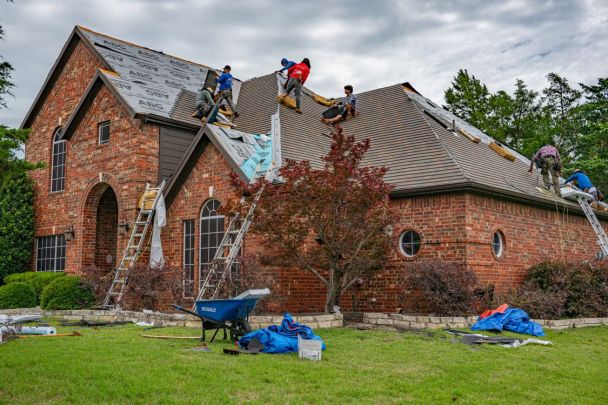
A roof replacement consists of removing all the old roofing materials down to the deck. The deck is inspected, then a new roof system is installed.
Simple, right?
The challenge is knowing what your roof really needs. A minor leak could be a minor issue. …or it could be the beginning sign of a roof that’s nearing the end of its life.
Which is why the best first step is to schedule a roof inspection. Letting a local team like GreenTek Roofing of Tampa Bay come out and assess your roof will let them look for signs you need a new roof and provide an honest roof replacement cost. You can then make your decision without any guesswork.
Signs You Need A New Roof
Some roofing issues are obvious. Some are disguised until disaster strikes.
Here are the big warning signs that point to a full replacement:
- Your roof is 20+ years old:The typical asphalt shingle roof lasts about 20 years. If your roof is around 20 years old, it is likely on its last legs.
- Shingles are curling or cracking:When shingles curl or crack, they’ve dried out. They can no longer adequately protect your home.
- Granules in the gutters:Those tiny grains are shielding your shingles from the sun. Once they wash away, your shingles will deteriorate quickly.
- The roof deck is sagging:Typically means water has ruined the wood below. BIG ONE.
- Light streaming in the attic:If water can come through the boards, so can light.
But here’s the thing most people miss…
Neither of these signs alone may necessarily signal that you need a new roof. However, two or three in combination? Yes.
If you have damage to an entire roof versus localized damage, think of roof patching as putting a Band-Aid on a broken leg. Sure, it will cover it up, but that is not the solution.
When A Roof Repair Is Enough
Now for the better news.
Many roof issues can be resolved through a simple repair. If your roof is still relatively young and the damage is localized, a repair will most likely be your best (and least expensive) option.
A repair is normally all you need when:
- A storm has blown off a handful of shingles
- The flashing around a chimney or vent has come loose
- There’s a small leak in one spot
- A pipe boot has cracked
These are simple repairs. A competent roofer can handle most in just a few hours.
Tip: Don’t put off small repairs. A small leak today can rot your decking, soak your insulation and cause mold inside your attic. That’s how an inexpensive repair turns into an expensive replacement.
Roof Replacement Cost vs Repair Cost
Let’s talk about money.
Roofing costs have increased significantly in the past few years. According to the 2026 Verisk U.S. Roof Report, the average roof replacement cost reached $17,631 in 2025. This is a 33% increase from the previous four years.
Repairs increased as well. According to the same report, roof repairs averaged $4,699. That’s 25% higher than the previous average.
So on paper… repairs look like the obvious winner.
But it’s not that simple.
A repair only saves you money if it holds up. If you’re having the roofer out 3 or 4 times a year, those fees will add up fast. Pretty soon you’ve spent half what a new roof would cost and you STILL have an old roof.
Then you have unexpected items. In a 2026 survey of 1,000 homeowners, roughly 26% of homeowners said concealed roof damage was one of the biggest contributors to their final costs. Moldy decking and water damage usually aren’t visible until you remove the old shingles.
Here’s what drives your roof replacement cost:
- Roof size and pitch
- The material you choose (asphalt, metal or tile)
- How many old layers need to be torn off
- Any rotten decking underneath
- Where you live
The 30% Rule for Making the Call
Still not sure which way to go?
Use this simple rule of thumb that lots of homeowners swear by…
If the repair costs more than 30% of a new roof, replace it.
Ok. Here we go. Get an estimate for repair. Get an estimate for complete replacement. Divide the first by the second.
If you fall below 30%, a repair is most likely warranted. Even more so, if your roof is under 15 years old.
Only if you finance over 30% of it (or if the roof is nearing the end of its life expectancy) would you want to use that money for a new roof. You won’t be continually pouring money into a roof that’s destined to fail.
It really is that easy.
Next, ask yourself these questions:
- How old is your roof?
- Is the damage in one spot or all over?
- Have you already paid for repairs in the last couple of years?
- Are you planning to stay in this home for 5+ years?
If your answers are “old”, “all over”, “yes,” and “yes”… DUH, you know what to do.
Making The Final Call
Roof repair vs. roof replacement doesn’t have to be a guessing game. Let’s recap in 3 points:
- Repair if your roof is still young and the damage is located in a small area.
- Replace when you spot several signs you need a new roof
- Do the maths with the 30% rule before spending a cent
- Get an inspection so hidden damage doesn’t catch you out
Today’s lowest bid may not be the lowest cost over the next 10 years. Choose the repair that will safeguard your home for years to come and you won’t have to ask this question again.