
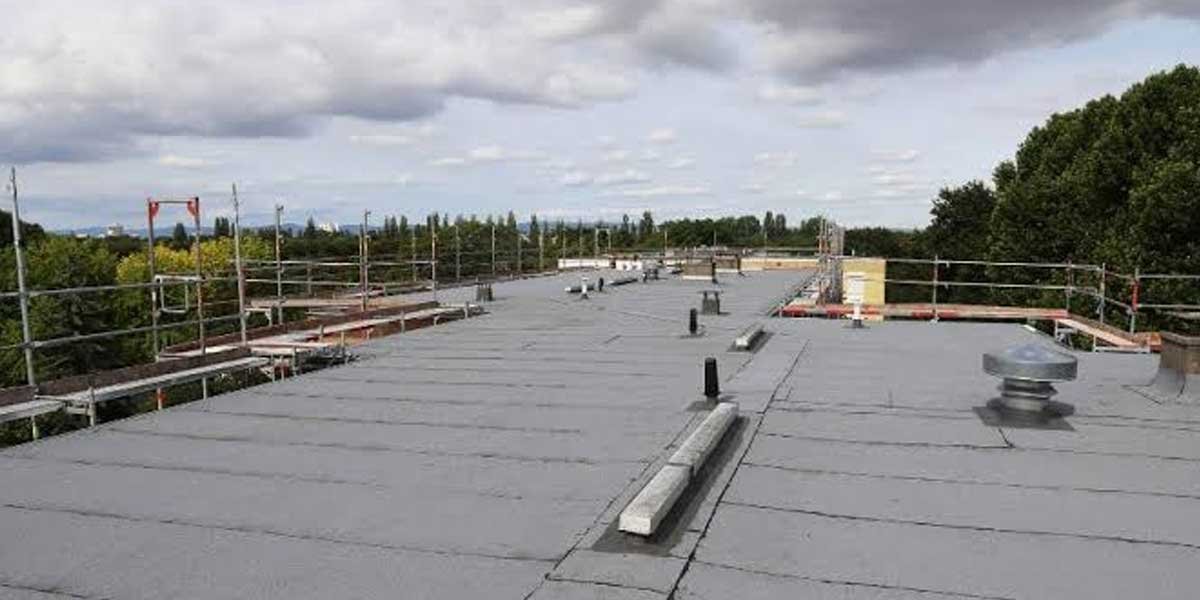

The signs you need flat roof repair or replacement center on water, since a flat roof drains by slope instead of shedding rain like a pitched one: water ponded on the surface, a punctured or torn membrane, blisters and bubbles, separated seams, and failed flashing around the roof vents are the top signs, and inside the home a water stain, a mold smell, or a sagging rooftop points the same way. Carlisle, a leading maker of flat-roof membrane systems, builds the membranes a flat roof depends on, and the roofing pros note that ponding water is one of the most common reasons a flat roof fails. A membrane roof’s life varies by the system, often about a decade and a half to three decades with good care, and a leak inside or water standing for days means it is past patching.
Check from the ground or a window, never by walking the membrane, and call a licensed pro at the first sign of ponding, a torn membrane, or water inside. Below is the severity table and when to act.
Signs you need flat roof, by severity
Sort the flat-roof signs by how fast they harm the building: water inside, ponding that lasts, or a torn membrane is urgent and a licensed roofer’s call, while a blister, a separated seam, or UV wear warrants a planned inspection, shares Rentwerx Property Management. The table lines up the symptom, the cause, the urgency, and the safe next step.
| Symptom | Likely cause | Urgency | Safe next step |
|---|---|---|---|
| Water stain or leak inside | Failed membrane or flashing | Urgent | Call a licensed roofer |
| Ponding water that lasts | Poor drainage, low spots | Urgent | Call a pro; don’t leave it |
| Punctured or torn membrane | Debris, foot traffic, equipment | Urgent | Call a licensed roofer |
| Blisters or bubbles on the surface | Moisture or air trapped under it | Plan soon | Inspect; call for a quote |
| Separated seams | Temperature expansion and contraction | Plan soon | Inspect; repair early |
| Failed flashing at vents or wall | Sun, age, broken seal | Plan soon | Inspect; repair early |
The table is the honest triage. A water stain or a leak inside, ponding water that stands on the roof, or a punctured or torn membrane is urgent because the barrier has already failed and the water is at the deck, so stop and call a licensed roofing professional. Blisters and bubbles, separated seams, and failed flashing around the vents and the edges read as wear near the end of the membrane’s life and warrant a planned inspection soon, since a small blister or a loose seam is a patch while a spread of them is a replacement. Check from the ground or a window and raise the alarm at the first sign the membrane is broken.
What a flat roof shows you up top
Look at the membrane from the ground or a window and watch the drains and the edges, because ponding water, a torn membrane, blisters, separated seams, and failed flashing are the signs the flat roof is worn. The membrane shows its age before a leak does.
The signs on the surface are read at a glance. Ponding water that stands for more than about 48 hours after a rain means the drainage is weak or a low spot has formed, and it slowly damages the membrane, while a puncture, a tear, or a crack in the membrane, often from debris, foot traffic, or a roof unit, is a direct opening for water. Blisters and bubbles appear where moisture or air is trapped beneath the membrane and can pop into entry points, and separated seams form where the sheets meet as temperature swings pull them apart. Around the vents, the HVAC units, and the roof edges, failed flashing lets water in at the joints, and long sun exposure dries and cracks the surface. Catch a small blister or a loose seam early and it is a repair; let them spread and the membrane is done.
What you notice inside
Watch the ceiling and the attic corners, because a water stain, a mold smell, peeling paint, or a sagging roof deck often means the flat roof above is letting water through, and so does a steady climb in the energy bill. The indoor signs are the earliest honest warning that a flat roof has failed.
The inside signs point to a break above. A water stain on the ceiling or the wall, a musty or mold smell in the upper rooms, or paint and plaster peeling near the roof line means moisture is moving through the membrane or the flashing, and a sagging or uneven roof deck signals structure beneath that may be weakened. A rising heating- or cooling bill can come from a roof that leaks air, not just water. These are the urgent ones, each warranting a licensed inspection rather than a wait, because the damage under a failing flat roof spreads quickly and drives the cost up with every rain.
Age, lifespan, and the 25% rule
Weigh the age and the spread of the damage against the signs you need roof leak checks, and treat the rule of thumb that repairs make sense up to about a quarter of the roof, past which a replacement wins, with a membrane’s life often about 15 to 30 years by the system. The roofing-pro 25-percent guideline says a roof with damage on more than a quarter of its area is better replaced than patched.
The repair-vs-replace call is broad. A flat roof with a few isolated blisters, a small tear, or one bad flashing is a candidate for a targeted repair, while a roof with ponding, a spread of blisters and separated seams, or a membrane into the later half of its life is a candidate for replacement, and the working rule of thumb is that when repairs reach about a quarter of the roof, a full replacement usually wins. The membrane’s life varies by the system, with a single-ply TPO or PVC and an EPDM often lasting a decade and a half to three decades, and built-up roofing a similar span, all depending on the climate and the upkeep. Match the age and the spread to the rule, and a licensed estimate settles the call.
Safe checks and when to call a licensed professional
Do the check from the ground and a window, never by walking on a worn membrane, and call a licensed roofer at the first sign of ponding, a tear, or water inside, because a flat membrane gives no footing and the roof is where a homeowner is most at risk. The pros treat a wet or blistered surface as no place to stand.
The safe posture matters. Check the drains, the edges, and the membrane from the ground or an upper window, and keep off the surface because a blistered, worn, or damp membrane can tear or crack underfoot and a single-ply roof offers no footing. Do not clear a roof drain or a high edge from the roof yourself. The moment you see ponding that stands, a punctured or torn membrane, or a water stain inside, or when the repair is in an area you cannot reach safely, stop and call a licensed roofing professional, whose equipment covers the height and the fall risk. Early detection and a licensed inspection keep the damage from reaching the deck, where the cost multiplies.
Frequently asked questions
What is the 25% rule for roofing? The 25-percent rule says that when a roof’s damage reaches about a quarter of its area, a full replacement usually beats continued repairs, since patching that much wears thin. A roof with only a few damaged spots is a candidate for repair.
What are the disadvantages of having a flat roof? The main disadvantages are the drainage, since a flat roof relies on slope and drains to move water, and it is prone to ponding and to a faster buildup of leaves and debris on the surface. It needs careful maintenance and a tighter waterproof seal.
Why don’t residential houses have flat roofs? Most houses use pitched roofs to shed rain and snow quickly and to allow an attic, while flat roofs suit commercial or modern designs and need good drainage and maintenance instead. The pitched form drains more simply and keeps water off more reliably.
How many years should a flat roof last? A flat membrane roof typically lasts about 15 to 30 years depending on the system, the climate, and the upkeep, with single-ply TPO or PVC, EPDM, and built-up roofing in that range. Good drainage and early repairs extend it.
Is a flat roof more likely to leak? A flat roof is more prone to leaks when its drainage fails or its membrane is punctured, because it holds water instead of shedding it quickly, but a well-drained, maintained flat roof seals well. The 48-hour ponding threshold is the line to watch.
Let the pond, the tears, and the age decide
Judge the signs you need flat roof by the water and the membrane first: ponding that stands, a punctured or torn membrane, or a water stain inside is urgent and a licensed roofer’s call, while a blister, a separated seam, or UV wear warrants a planned inspection. A flat roof drains by slope, not speed, so drainage and a sound membrane are everything, and the 25-percent spread and the system’s age settle repair vs replace. Check from the ground, never the roof, and call a licensed professional at the first sign the barrier is broken, and the flat roof rewards you with a dry building under foot.