
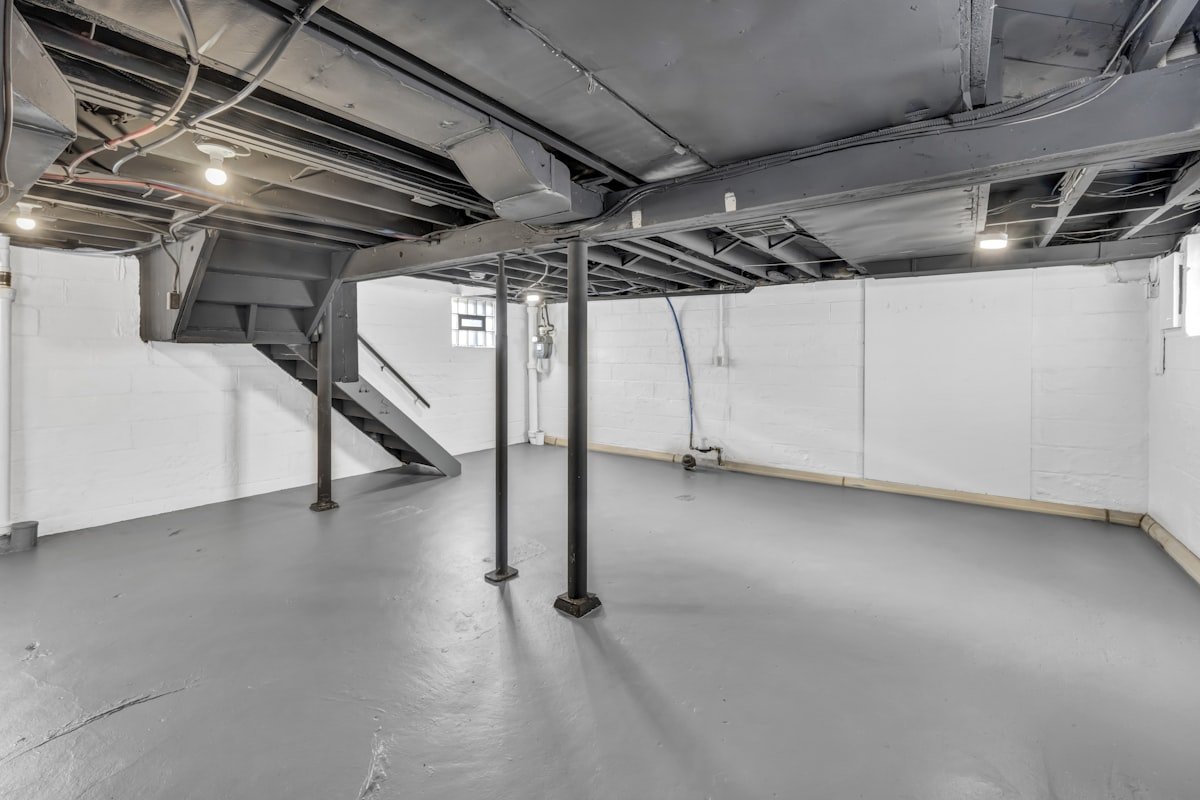

A sump pump battery backup costs $400 to $1,200. For a basement that floods during outages, that buys the only pump in the house still working when the storm that filled your sump pit also took down the power line feeding it.
Storms and outages travel together, which is the whole argument in one sentence. The primary pump fails at the moment demand peaks, and water damage claims are not rare events: the Insurance Information Institute counts water damage and freezing behind about 28 percent of homeowners insurance losses in 2022. Whether a backup earns its price at your house comes down to one question you can check tonight: how often does your pump cycle during heavy rain?
Is a Sump Pump Battery Backup Worth It?
A backup is worth the money for any basement where the pump cycles through every storm, where outages last hours, or where finished rooms and stored belongings sit below grade. Skip it when the pit stays dry for years at a stretch; put the budget toward grading and gutters first.
The decision is asymmetric. The system costs three figures. One flooded storage room with drywall, carpet, and a furnace in the water clears five figures before the dehumidifiers arrive. Insurance may pick up part of it, but sump failure and groundwater seepage sit in the fine print of many policies, and a claim raises premiums either way.
One warning from owners who went shopping after the fact: the week a regional storm knocks out power, every backup system within driving distance sells out at once.
Three Ways to Back Up a Sump Pump
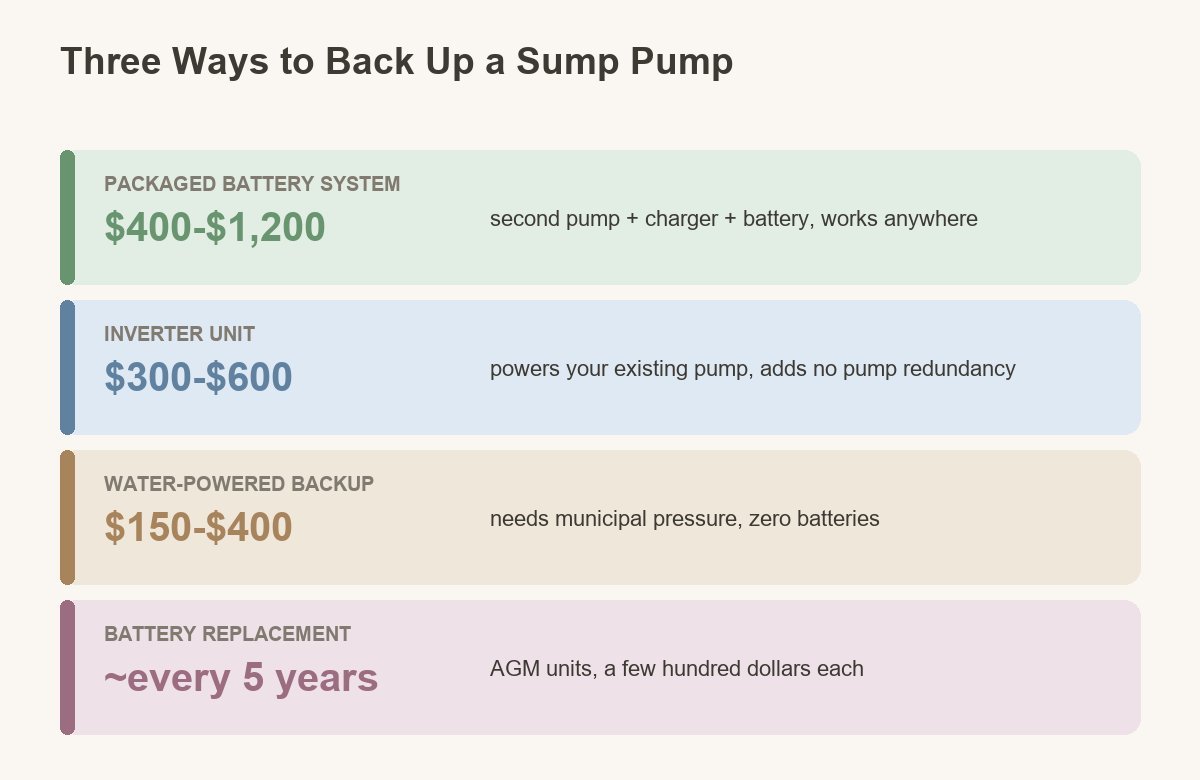
- Packaged battery system, $400 to $1,200. A second 12-volt DC pump mounted above your primary (see our tested sump pump picks), with its own float switch, charger, and battery box. Zoeller Aquanot 508, Basement Watchdog Big Dog, and Liberty 441 are the names that keep coming up across Consumer Reports testing and owner threads. This route adds pump redundancy: if the primary dies mechanically on a sunny day, the backup still saves you.
- Inverter unit, $300 to $600. A wall-mounted box like the Pump Sentry 822PS that feeds your existing AC pump from a battery when the outlet goes dead. Nothing new enters the pit, installation is plug-in simple, but you gain no protection against the pump itself failing, and an AC motor drains a battery far faster than a DC backup pump.
- Water-powered backup, $150 to $400 plus plumbing. A venturi pump like the Liberty SumpJet that uses municipal water pressure to eject sump water, no electricity at all. Unlimited runtime for as long as the city keeps pressure up. Off the table entirely for homes on well water, since the well pump dies with the same outage.
Homes on wells narrow to the first two routes. Homes on city water with long multi-day outage risk should look hard at water-powered, or pair it with a battery unit; several plumbers on the linked threads describe exactly that stack.
How Long Will a Battery Keep the Pump Going?
A 75-amp-hour AGM battery delivers roughly 4 hours of continuous motor-on time to a 12-volt backup pump, and since pumps cycle rather than pump nonstop, that typically stretches across one to two days of storm weather. Marketing claims of “5 to 7 days” assume a pit that barely fills.
You can estimate your own number with napkin math. Usable capacity on an AGM is about 60 percent of the label rating, so a 75Ah battery yields around 45Ah. A typical DC backup pump draws 10 to 12 amps while pumping, which works out to about 4 hours of actual pumping. If your pit fills enough to trigger a 30-second cycle every five minutes, that budget lasts around 40 hours; a cycle every minute burns through it before morning.
Two levers stretch the number: a second battery wired in parallel doubles motor-on time, and fixing exterior drainage shrinks how often the pump needs to fire at all. The inverter route needs far more battery for the same protection, because an AC pump pulls 700 watts or more while pumping, roughly five times the draw of its DC counterpart.
Why a Computer UPS Fails at This Job
The tempting shortcut is a $150 office UPS from the electronics store. It fails for a reason printed on the pump’s motor plate: induction motors surge to two or three times their rated draw at every start, and a UPS sized for a desktop shuts down or cooks itself on that spike. Owners keep rediscovering this the expensive way:
“honestly I tried the UPS route first because seemed cheaper but learned the hard way that most sump pumps draw way more power than regular UPS can handle. ended up burning through two different units before giving up and getting proper backup system. the dedicated ones are built for handling those power spikes when pump kicks in, regular UPS just can’t deal with it properly.”
– r/homeowners, February 2026 (5 upvotes)
The DIY version that does work, favored by the electrically confident: a deep-cycle marine battery, a smart charger, and a pure sine inverter rated for at least double the pump’s startup surge. Built well, it matches a packaged inverter unit for less money. Built casually, it under-sizes the inverter and fails the same way the UPS did, so buy the packaged unit if you would need to look up what a pure sine inverter is.
What It Costs Over Ten Years
The sticker price understates the commitment, because the battery is a consumable. An AGM battery lasts about 5 years and costs $200 to $300 to replace, a point owners raise more often than any spec-sheet number. A packaged system bought at $700 becomes roughly $1,100 to $1,300 across a decade with one battery swap, plus a dedicated outlet if your pit lacks one.
Against that, price one bad night: cutting out soaked drywall, replacing a water heater’s burner assembly, and a mold inspection, in a basement where about 28 percent of homeowner claims already come from water. Ten years of backup coverage costing less than one insurance deductible is the arithmetic that sells these systems, and it is not wrong.
Test days are part of the deal. Pull the primary pump’s plug during a rain, watch the backup take over, and put the date on the battery with a marker. A backup that has never been tested is a hope, not a system.
When to Skip the Backup
Some basements do not earn the spend. If your pit is dry through spring storms, the money belongs in the yard, not the pit; start with the fixes in our water seepage guide:
“If you’re pump regularly runs with heavy rain, especially for a prolonged period, I would get a backup. I had a battery backup pump, but haven’t replaced it after the battery died since the pump had run once in the last 9 years… after fixing grading and extending gutters”
– r/DIY, June 2026 (22 upvotes)
A standby generator also reshuffles the priority. If the house already switches to generator power in an outage, the backup pump’s job shrinks to covering the transfer lag and a generator failure, which argues for the cheapest inverter option or none at all. And whatever route you pick, keeping a spare primary pump on the shelf beats any backup for the most common failure of all: the pump that dies of old age at 2 a.m. during the storm, with every hardware store closed.
Sump Pump Battery Backup FAQ
Can I add a battery backup to my existing sump pump?
Yes, two ways: an inverter unit like the Pump Sentry feeds your existing pump from a battery, or a packaged DC backup pump mounts in the same pit above your primary. The inverter route keeps your plumbing untouched; the packaged route adds a second pump as insurance.
Which battery backup systems come up most in testing?
Zoeller Aquanot 508, Basement Watchdog Big Dog, and Liberty 441 recur across Consumer Reports results and owner recommendation threads. Match the backup pump’s flow rate to your primary’s; a backup that moves half the water buys half the safety.
How often does the backup battery need replacing?
Plan on a new AGM battery about every 5 years at $200 to $300, sooner if the backup cycles often or the battery bakes next to a furnace. Most control boxes chirp when charge capacity degrades; the marker-date on the case is the more reliable reminder.
Does a water-powered backup work on well water?
No. Water-powered backups need municipal water pressure, and a well pump loses power in the same outage that stopped the sump pump. Well-water homes choose between battery systems, an inverter unit, or a generator.