
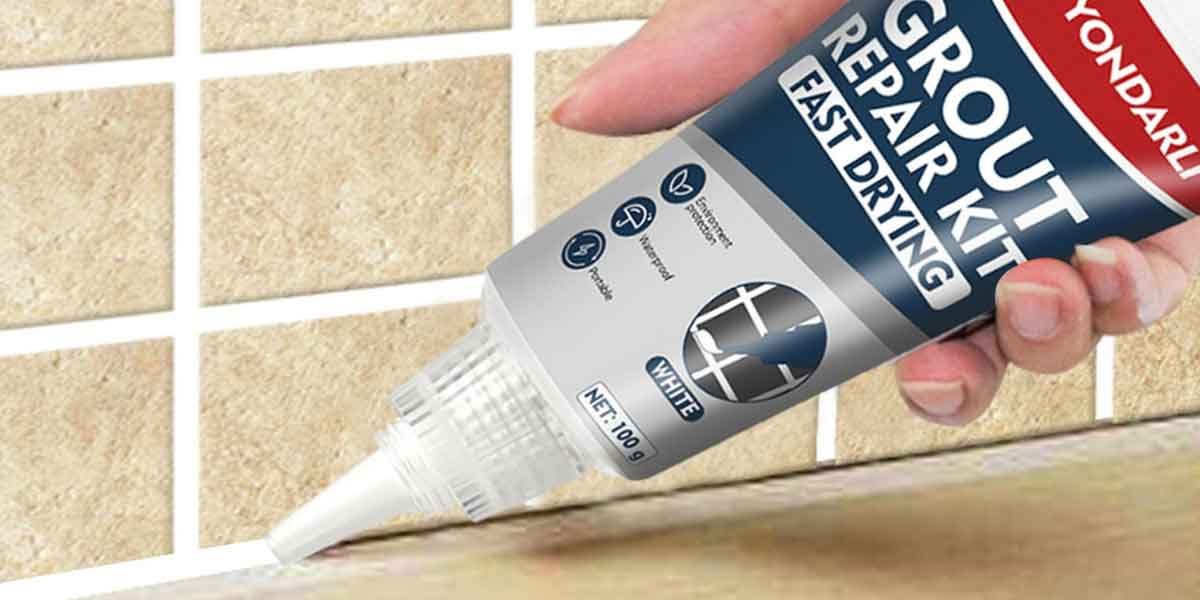

No shower grout sealer is a waterproofing layer. The waterproof grout sealer for shower tile slows what a joint absorbs and keeps soap and iron from staining the cement; the barrier that keeps water out of the structure goes under the tile, and nothing brushed over a joint can take its place.
That distinction separates two problems people treat as one. Blotchy, dark joints six months after a remodel are maintenance. A brown ring on the kitchen ceiling under a second-floor shower is construction, and the fix is nowhere near the grout.
Mixing them up is the expensive part.
Is There a Waterproof Grout Sealer?
No. Sealers sold for grout joints resist stains and slow water absorption; they are not waterproofing products, and their makers say so. MAPEI’s technical services supervisor Denise Troiano wrote in a 2018 Tech Talk post that sealing does not make grout stain or waterproof.
Two families of product sit on that shelf. Penetrating sealers soak into the cement paste and leave the joint looking the way it did before; topical sealers dry into a film that can haze, peel, or hold water against the joint. In a shower the penetrating type is the one that fits.
Brand language blurs the line further. Thompson’s WaterSeal and similar water-repellent brands share shelf space with grout sealers, and the data sheets behind them list stain resistance, not waterproofing. Concrete and masonry do have a real waterproofing sealer category, and the borrowed word comes from there. Acrylic and silane sealers made for driveways and basement walls reduce how much water those surfaces draw in, and their labels say waterproofing because that is the problem they solve. A joint a few millimeters wide is a different object with a different job.
What a Sealer Changes in a Wet Joint
Cementitious grout is porous, and the standards assume it. Custom Building Products’ data sheet for its unsanded wall grout reports a typical water absorption of 15%, against an ANSI A118.6 Section 4.4 limit of 18%.
A joint that can take on that much water does not turn into a barrier because a clear liquid sat on it for ten minutes. What a sealer buys is time and cleanliness: slower water entry, less dirt sticking, and a joint that wipes clean instead of going grey.
Sealers also wear out, from scrubbing, from hard-water minerals, and from the alkaline cleaners people pour onto grout. The warning signs are familiar: water stops beading, the color flattens, and stains return faster than they did the month after sealing. None of that changes the shape of the joint. A 1/8 in (3 mm) gap between two tiles still carries water toward the drain, and the sealer coats the sides of that gap, not the opening.
Grout Type Sets the Water Limit, Not the Sealer
The material between the tiles carries more weight than anything applied on top of it. TCNA separates the categories by standard: epoxy grout meeting ANSI A118.3 is “extremely hard, durable, and nearly stain proof,” while epoxy emulsion grout under ANSI A118.8 is “not stain proof” and “generally will absorb liquids and stains.” A bottle that says waterproof over a cement joint does not change which of those two you own.
Epoxy is not a free upgrade. TCNA puts it at three to eight times the cost of cementitious grout, harder to shape and slope, slower to cure, and prone to slumping in the joint hours after tiling. It is also the one grout category the industry calls nearly stain proof, because the standard for a bonded waterproofing membrane is a separate document entirely.
The decision rule for a shower is short. Choose the grout type you can install cleanly and keep clean, then treat epoxy as a durability upgrade rather than a waterproofing one. A badly shaped epoxy joint that holds water is a worse result than a cement joint on a pan that drains properly.
The Waterproof Layer Sits Under the Grout
Waterproofing in a tiled shower is a membrane, installed under the tile. TCNA’s handbook methods B421 and B422 call for a waterproof membrane over the solid backing, and the council’s own FAQ states the coverage plainly: the membrane must cover the solid backing under the entire area to be tiled.
That membrane is specified under ANSI A118.10, and it is the surface water is meant to reach. Grout absorbs part of what the shower throws at it, the mortar bed moves the rest along, and the pan liner and its slope send it to the drain. A sealer does not interrupt that traffic. It slows what the outermost layer takes in, and it keeps iron, shampoo dye, and soap film from settling into the cement.
So when water appears outside the stall, the order to check is this: the drain connection and its clamping ring, the pan-to-wall seams, the curb, the door threshold, the pan slope, and the joint surface last. Resealing a shower that leaks to the room below treats the symptom that moves least.
I learned that order the slow way. One winter I sealed every joint in a rental shower twice while a stain on the kitchen ceiling kept spreading, and water was passing the drain seal the whole time.
How Do You Waterproof a Shower Joint That Keeps Weeping?
You work with the parts you can actually replace: keep the joint clean, seal it for stain control, re-grout where it has cracked or fallen out, and repair the drain or membrane when water is escaping the stall.
- Clean with a pH-neutral product. CBP’s grout instructions call for a pH-neutral, water-based penetrating sealer and name Aqua Mix Sealer’s Choice Gold and TileLab Surface Guard; strong acid cleaners eat the cement that binds the joint.
- Let new grout cure before sealing. MAPEI’s own how-to puts that wait at 48 hours, followed by a ten-minute soak and a wipe of the excess.
- Replace cracked or missing grout instead of stacking sealer on top of it. Sealer applied over a crack leaves the gap underneath it.
- Use a flexible sealant where a joint changes plane, not grout. Corners and the pan seam move as a house settles, and cement does not.
Water that reaches another room, a swelling baseboard, or a musty smell that returns after cleaning is past the point where sealing helps.
Those symptoms point to the drain, the membrane, or the pan slope, and the repair means opening up the shower rather than coating it.
The question comes up often enough in homeowner forums that the answer has a settled shape. A tile contractor who has worked in California since 1987 wrote this on Houzz:
“I can honestly say that there is no such thing ( to this date ) as sealer offering waterproofing, let alone water resistance to grout. Simply read the front/rear labels on grout sealers and you will see for yourself.”
His advice matches what the data sheets say: seal for cleanliness, expect to reapply about once a year, and read the back label before trusting the front. Sealing earns an afternoon every year or two. It does not earn a weekend spent chasing a leak that starts three layers down.
Waterproof Grout Sealer for Shower FAQ
Is there a waterproof grout sealer for shower tile?
No waterproof grout sealer for shower tile carries a waterproofing rating. Manufacturers position these products for stain resistance and slower water absorption, and waterproofing is handled by a membrane installed under the tile and the grout.
Can water seep through grout in a shower?
Yes, and the layers under the tile are built for it. Grout absorbs water and passes it along toward the drain, so seepage is normal; water arriving where it should not be means the drainage path or the membrane has failed.
Should you seal the grout in a shower?
Sealing shower grout is optional maintenance, not construction. MAPEI’s technical team states that no industry standard requires it and that it is recommended anyway in wet areas, because sealed joints clean up faster and resist staining longer.
What is the best grout sealer to use in a shower?
A pH-neutral penetrating sealer is the sensible default. CBP’s grout instructions name Aqua Mix Sealer’s Choice Gold, and MAPEI sells Penetrating Plus for the same work. Apply it to fully cured grout and test with water drops afterward; topical films wear quickly where water runs daily.
How do you waterproof grout in a shower?
Grout is not what gets waterproofed, the whole shower is. Waterproofing means the membrane under the tile, the drain connection, and the pan slope. Sealing only slows absorption into the cement, which is why a leaking shower rarely stops leaking after a reseal.