
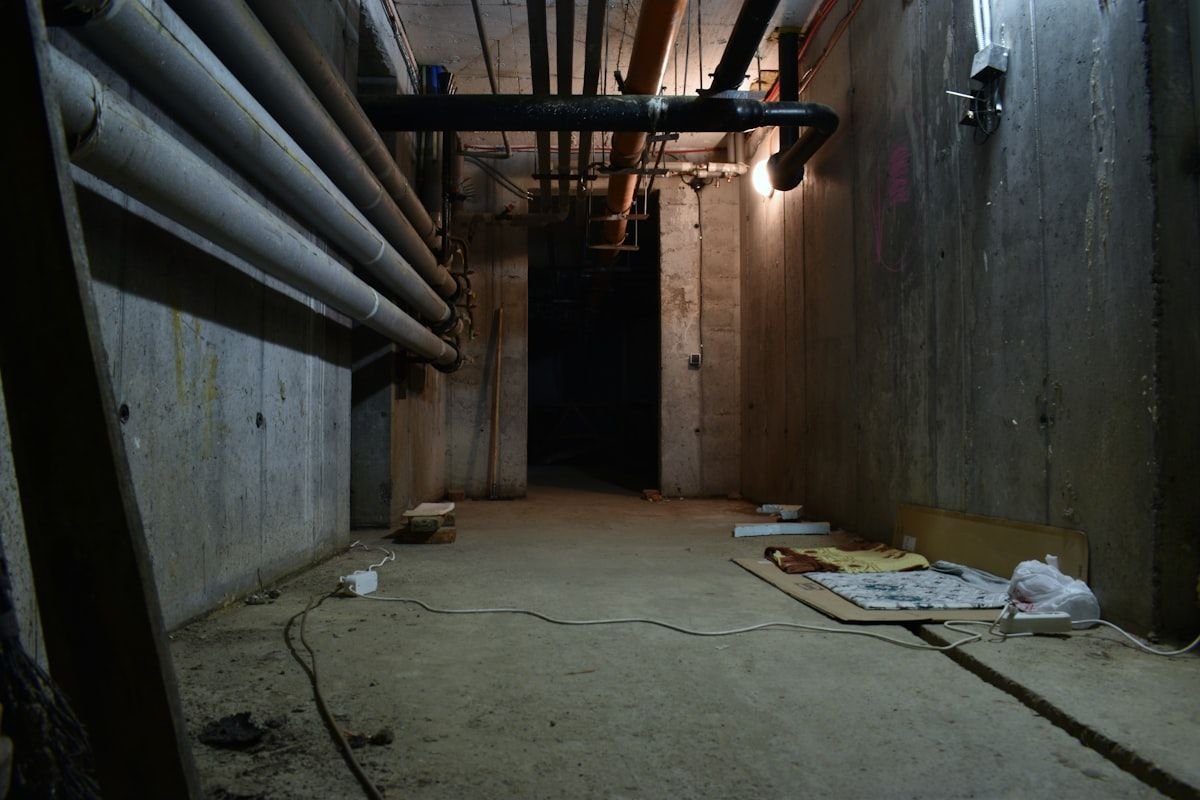

The best crawl space dehumidifier for most sealed spaces is a low-temperature-rated unit in the $800 to $1,500 range from Santa Fe, AprilAire, or AlorAir. For warm, tall, mildly damp spaces, a $250 oversized consumer unit does the job for a fraction of the price.
Which side of that split you land on has little to do with brand loyalty and everything to do with one number: the temperature down there in January. Sellers of $1,400 units rarely mention it, and neither do the reviews of $230 ones.
Two Routes, One Deciding Number
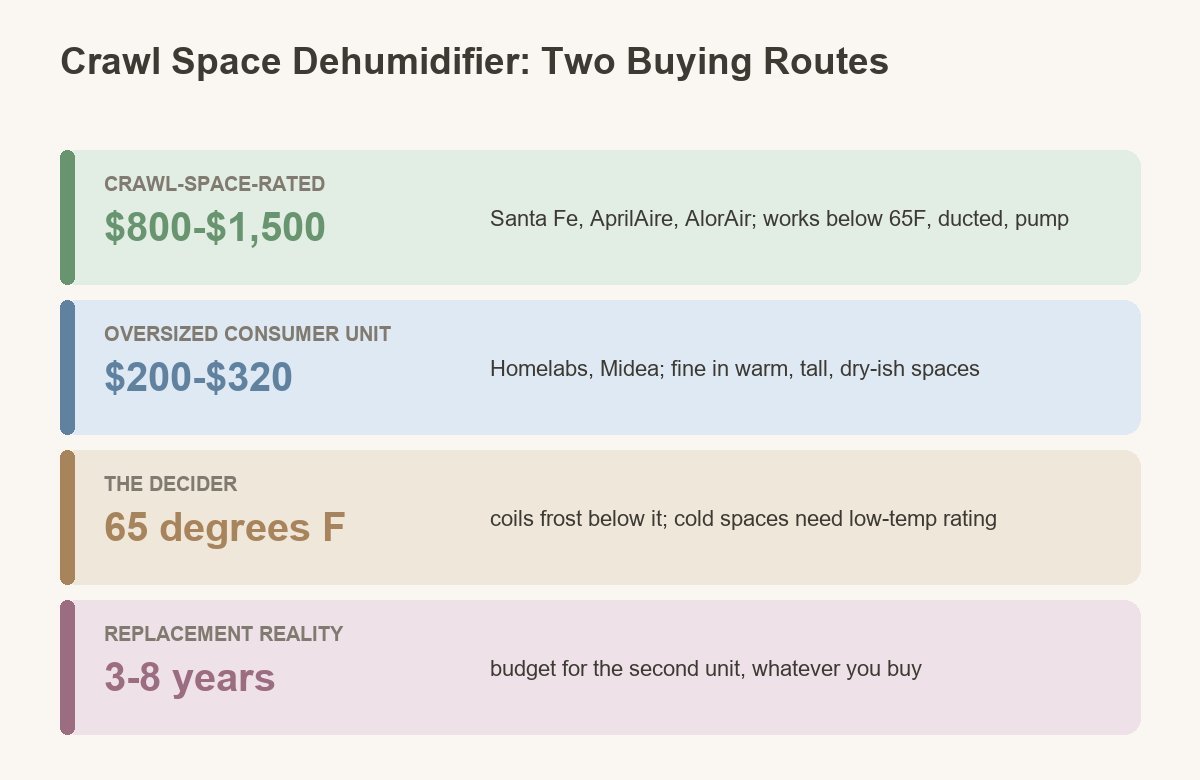
Standard dehumidifier coils frost up when air temperature drops below about 65°F, and ENERGY STAR’s guidance is explicit: spaces that fall below that line need a product specified for low-temperature use. That is the engineering difference the crawl-space-rated premium buys, along with ducting collars, a condensate pump, and a housing built to sit in dirt-floor humidity:
| Crawl-space-rated | Oversized consumer unit | |
|---|---|---|
| Price | $800–$1,500 | $200–$320 |
| Works below 65°F | Yes, by design | Poorly; coils frost and the compressor cycles |
| Drainage | Pump or gravity line included | Bucket, or a $40 add-on pump on some models |
| Clearance needed | Low-profile, made to sit in the pit | Upright; needs headroom near the access door |
| Fits | Sealed or encapsulated spaces, cold winters | Warm climates, tall vented spaces, mild dampness |
The budget route is not a compromise pick invented here; it is what owners keep reporting works:
“I was in a very similar situation with a damp crawl space and musty smell starting to creep into the house. I looked hard at the expensive crawl space specific units and honestly got scared off by the price and complexity. What worked for me was focusing on moisture control first and not overengineering it. A [Homelabs Dehumidifier](https://www.reddit.com/u/remediesblackboards/s/p4x5BBP1RG) sized larger than the crawl space made a noticeable difference within weeks. The air felt lighter and the…”
– r/BuyItForLife, January 2026 (44 upvotes)
The Models That Keep Coming Up
Three names dominate the crawl-space-rated category wherever installers and testers compare notes. Santa Fe Compact70 is the one HVAC technicians on hvac-talk default to for reliability, noting the brand moved to coated coils after industry-wide corrosion failures. AprilAire’s E080 and E100 get the same treatment from r/hvacadvice, where the E100 is the stock recommendation. AlorAir’s Sentinel series is the value play in the rated category, and the HD55S is the unit Bob Vila’s test team measured pulling their crawl space from 66 to 55 percent humidity inside 18 hours.
On the consumer side, the recurring names are Homelabs and Midea Cube 50-pint units. Nobody claims they are crawl space equipment; the case for them is arithmetic. At $250 against $1,300, you can replace the cheap unit four times before matching the rated one’s purchase price, and replacement is a subject this product category forces you to think about early.
Sizing: Count Pints, Not Square Feet
Size by moisture load, measured in pints per day, and lean bigger: a damp 1,500 to 2,000 square foot crawl space wants a unit rated around 50 to 70 pints under current test conditions. Square footage ratings on the box mislead, because a soggy 800-square-foot pit out-demands a dry 2,000-square-foot one.
Two sizing traps catch buyers. First, capacity numbers shrank a few years ago when test conditions changed to cooler air; an old “70-pint” and a new “50-pint” can be the same machine, which explains why spec sheets seem to contradict each other in confusing threads. Second, undersizing costs twice: a small unit at 100 percent duty cycle dies young and never reaches target humidity, while an oversized one coasts. ENERGY STAR’s sizing charts say it plainly: better to oversize.
The target is 50 to 55 percent relative humidity on a $15 hygrometer, comfortably under the 60 percent line where mold gets going, without paying to chase desert-dry air that the dirt will just re-moisten.
Lifespan: The Number Nobody Prints on the Box
Plan on 3 to 8 years, whatever you spend. The rated units aim for the top of that range and back it with 5-to-6-year warranties; consumer units cluster at the bottom, and owner patience with them is blunt:
“Big big caveat before you buy one. Dehumidifiers (at least the ones made on this side of the century) do not last more than 3 years max. That is just a gamble you have to be willing to take, doesn’t matter how expensive or cheap it is. So I’d say don’t spend more than roughly around 300 bucks on one. Also [size up heavy](http://youtube.com/post/UgkxytH9TW1EwG7Wruj52GBETlUZWC85m_pO?si=PNhZ_h7VFsXicsHU), your basement might be smaller but with the levels of humidity, you need it to be hefty and s…”
– r/heatpumps, June 2026 (120 upvotes)
The technicians’ version of the same warning is more specific: cooling coils corrode in the acidic condensate environment, and coil failure is the death certificate on most units. It is why Santa Fe’s switch to coated coils gets discussed like news in trade forums, and why a long parts warranty on the coil specifically is worth more than any feature on the spec sheet. Whichever route you take, write the purchase date on the housing and treat the machine as a wear item with a funded replacement, not a permanent fixture.
Install Details That Decide Whether It Works
A dehumidifier only fixes a crawl space that is ready for one. Down a sealed, moisture-managed space, it maintains; over bare dirt with open vents, it dehumidifies the neighborhood (the seal-first order and its price are covered in our encapsulation cost breakdown). Ground cover and vent sealing come first, and the unit is the finishing component.
Then solve water twice. The condensate has to leave: a gravity line to a drain or sump beats a pump, and a pump beats a bucket by more than convenience, because a bucket-drained unit in a space you enter through a 16-by-24-inch hatch gets emptied enthusiastically for three weeks and unplugged by October. Set the unit on blocks above the liner, give it a dedicated outlet, and put the hygrometer at the far end of the space from the machine, where the reading is earned, not local.
Crawl Space Dehumidifier FAQ
Is it worth putting a dehumidifier in a crawl space?
Yes, once the space is sealed against ground moisture and outside air; it is the component that holds humidity at the 50-to-55-percent target year round. In an unsealed space with bare dirt, spend the money on a vapor barrier first, because the dehumidifier will lose that fight.
What size dehumidifier does a 2,000 sq ft crawl space need?
A damp 2,000-square-foot crawl space needs roughly 50 to 70 pints per day of capacity under current ratings, and more if standing moisture or open vents feed it. When in doubt between two sizes, ENERGY STAR’s own sizing advice is to take the bigger one.
What do Consumer Reports and testers recommend?
Consumer Reports tests portable household dehumidifiers, not pit-installed crawl space units, so “the CR pick” for this job does not exist. The tested data that does: Bob Vila’s team measured the AlorAir HD55S dropping a crawl space from 66 to 55 percent humidity in under 18 hours, and trade-forum consensus backs Santa Fe and AprilAire for longevity.
What is the number one rated crawl space dehumidifier?
No single unit holds that title across sources, but Santa Fe Compact70 comes closest to a consensus among installers, with AprilAire E100 the runner-up and AlorAir Sentinel HD55S the price-to-performance pick. Match the choice to your winter temperature and drainage plan before comparing the three.