
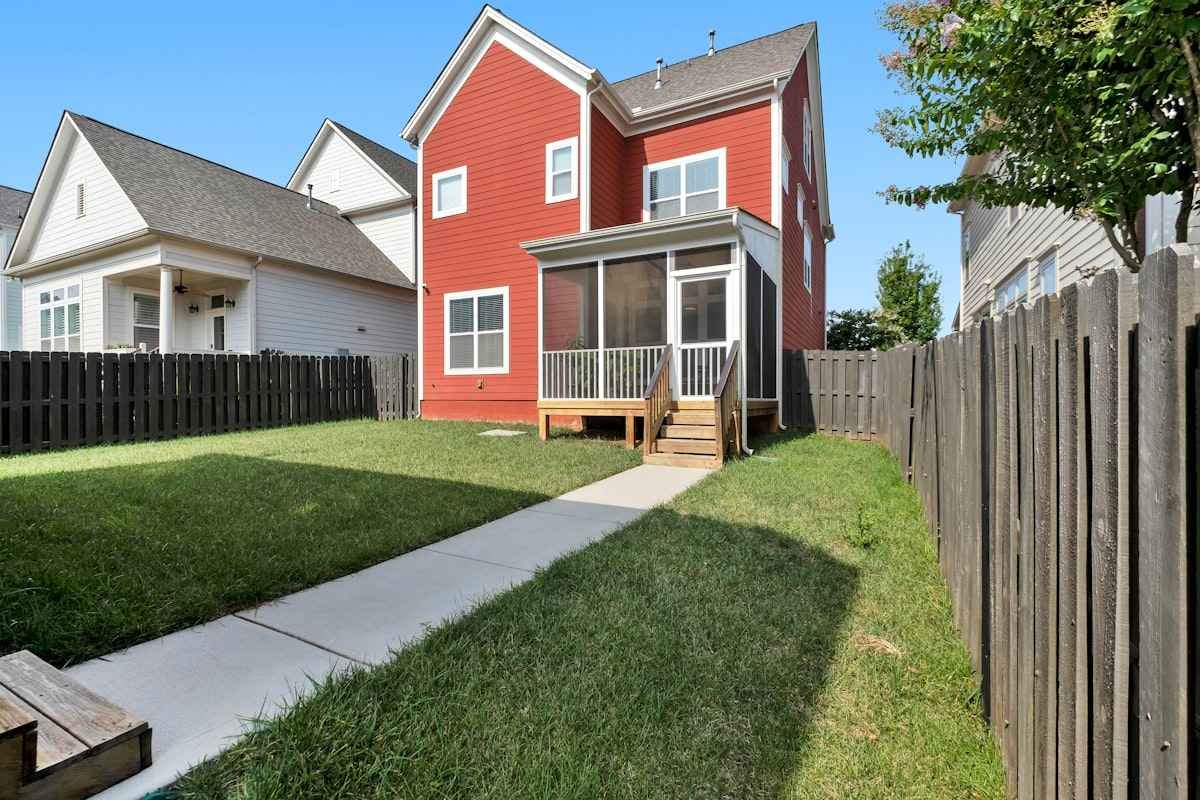

The slope for yard drainage is 5 percent beside the house, meaning the ground falls 6 inches over the first 10 feet from the foundation, then a 2 percent minimum across open lawn, about a quarter inch per foot, reports Yellow Keys Realty Property Management. Drainage pipes and swales hold 1 to 2 percent.
Those three numbers settle most of the arguments a wet yard starts. The measuring takes two stakes and a string; the regrading takes topsoil and a rake weekend; and knowing which zone you are standing in tells you which number applies.
Three Zones, Three Numbers
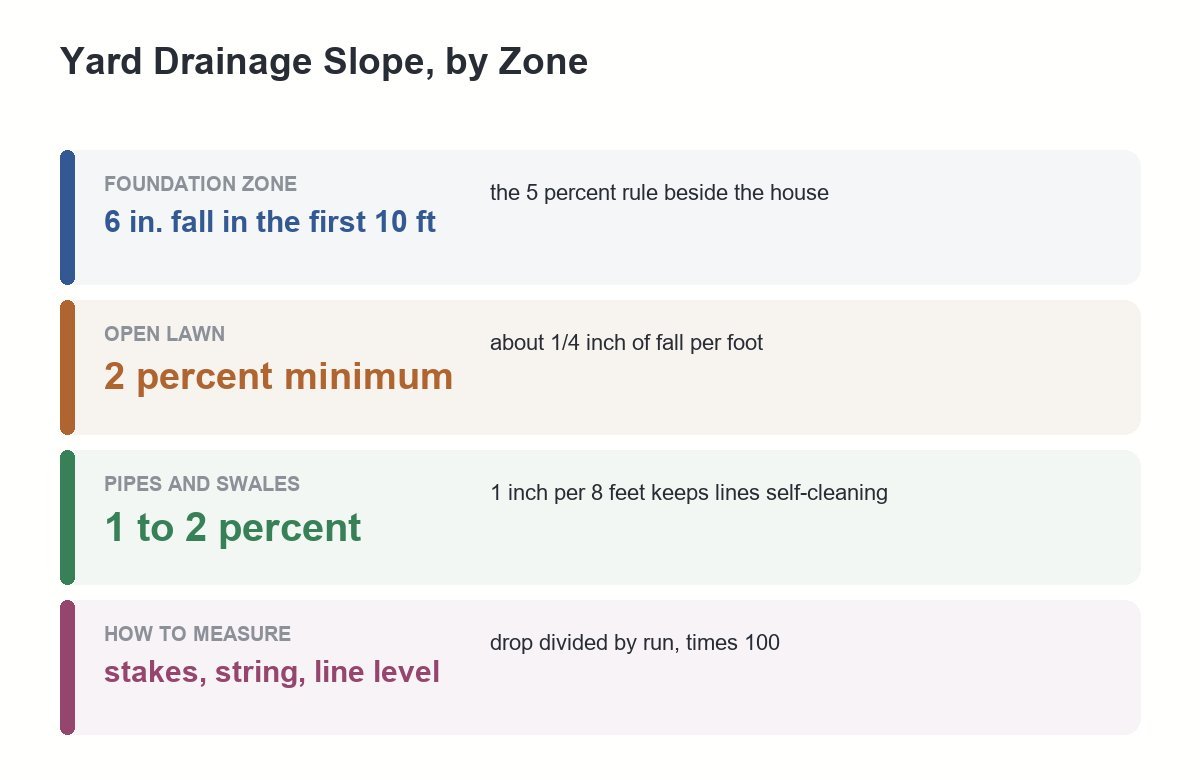
The foundation zone gets the strict rule. The model residential code calls for grade falling at least 6 inches within the first 10 feet of the wall, and the logic is blunt: this is the water that ends up in basements, and drainage guides for wet-basement homes lead with the same 6-in-10 figure. Where a lot line or hardscape makes 10 feet impossible, the fall has to happen faster or a swale has to carry the water sideways.
Open lawn needs only enough tilt that water keeps walking: 2 percent as the working minimum, one foot of fall across a 50-foot yard. Below about 1 percent, mowing dips and thatch stall the sheet flow and the birdbaths return. Above roughly 12 percent, lawns get hard to mow and erosion starts winning, which is retaining-wall and groundcover territory.
Pipes and swales carry water in a channel, so they need the least: 1 percent minimum, 2 percent where the run allows. Flatter silts shut; much steeper is fine for water but wastes trench depth on long runs.
What 1 and 2 Percent Mean in Inches
Percent slope is drop divided by run, times 100, with both in the same unit. One percent is 1 foot of fall per 100 feet, which works out to about 1 inch per 8 feet. Two percent doubles it: roughly 1 inch of fall every 4 feet, or a quarter inch per foot.
The worked example most yards need: a downspout line to a pop-up emitter 24 feet away at 2 percent wants 24 × 0.02 = 0.48 feet, call it 6 inches of total drop. If the yard only gives you 3 inches over that run, the line still works at 1 percent; if it gives you nothing, no amount of pipe fixes it and the water needs a different destination.
Measuring: Two Stakes, a String, and a Level
Drive a stake at the high point and one at the low point, tie a string at ground level on the uphill stake, and pull it tight to the downhill stake. Hang a $5 line level on the string, raise or lower the string on the downhill stake until the bubble centers, then measure from the string down to the ground at the downhill stake. That distance is your drop; the string length is your run; divide and multiply by 100.
Twenty minutes of this around the house perimeter maps the whole problem. Anywhere the tape reads less than 6 inches of fall in the first 10 feet, water is loitering against the foundation, and the spots where the ground tilts toward the wall explain themselves.
Fixing a Bad Grade
Regrading the foundation zone is shovel work, not engineering: cart in topsoil (not gravel, which lets water through to the wall), build the grade up against the foundation to create the fall, tamp in lifts, and keep the finished soil at least 6 inches below siding or the brick weep holes so the fix does not invite rot or termites in place of water. Seed or sod, then remeasure after the first hard rain settles it. A pickup load of topsoil and a weekend covers most single-wall problems; whole-yard regrades with equipment quote in the $1,000-to-$3,000 range.
Buried utilities, window wells, and vent pipes set the limits, and the neighbor’s lot sets the hardest one. Where the adjacent property sits higher, no legal amount of your regrading reverses the flow, and buyers stare at exactly this situation:
“Landscaping experts, what would you do with this negative slope in the backyard? We are trying to decide on a home purchase, and we love everything about this house except the negative backyard slope makes us nervous. I’ve read about regrading it with retaining walls and using drainage hardware such as French drains as a solution. But it’s hard for me to picture how that would fit for this yard. I would love to also hear input on rough estimates for getting this backyard into shape – I would as…”
– r/landscaping, January 2026 (50 upvotes)
The playbook for a yard that slopes toward the house from beyond your control: regrade the first 10 feet to push water back out, catch what arrives anyway with a swale or interception drain across the flow line, and give the collected water a piped route around the house to wherever gravity still cooperates. Slope handles the water you can redirect; hardware handles the water you cannot.
Swales: Slope in a Shallow Channel
A swale is a wide, shallow grass channel that borrows slope where the whole yard has little to give: instead of tilting the entire lawn 2 percent, you shape one gentle trough that falls 1 to 2 percent along its own length and let the rest of the yard drain sideways into it over short distances. Cut 6 to 12 inches deep and several feet wide, seeded like the rest of the lawn, it mows like lawn and works like pipe.
Swales suit the two cases regrading handles worst: long flat yards where 2 percent everywhere would mean moving mountains of soil, and cross-slopes that deliver a neighbor’s water along a whole property line. The end of the swale needs the same thing every drain needs, a legal low place for the water to finish.
Yard Drainage Slope FAQ
Can you grade a yard yourself?
Yes for the foundation zone and small low spots: topsoil, a rake, a tamper, and the string-line check are the whole toolkit. Whole-yard regrades, cuts near big trees, and anything involving retaining walls justify equipment and a contractor.
How do you calculate a 2 percent slope?
Multiply the run by 0.02 in the same unit: a 30-foot run needs 0.6 feet, about 7 inches of fall. In reverse, divide measured drop by run and multiply by 100 to grade what a yard already does.
What is the minimum slope on concrete and patios?
Hard surfaces shed water at 1 percent minimum, an eighth inch per foot, with a quarter inch per foot the comfortable standard pitch away from the house. Existing slabs that pond can sometimes be mudjacked back into pitch for less than replacement.
When is the best time to regrade a yard?
Late spring through early fall, when soil is dry enough to work and grass has a growing season left to root. Regrading into saturated soil compacts it into new low spots, and a fall regrade without established grass erodes over winter.